Archive

Tag Archives: tropical architecture

‘The Influence of Fry and Drew’ Conference, Abstract 13

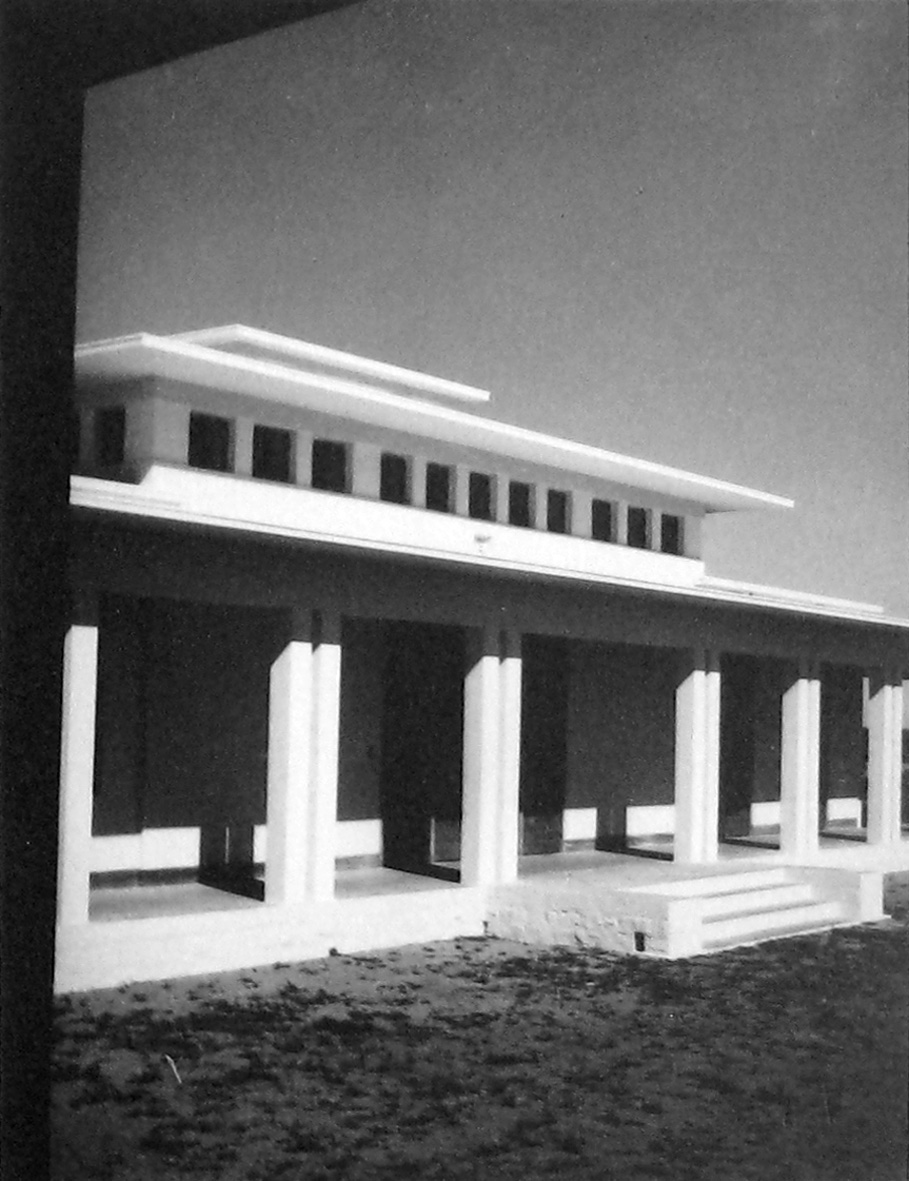
Jorge Figueira and Bruno Gil, ‘Dry and Humid and Everywhere: The work of Amâncio (Pancho) Guedes in Mozambique’

In the seminal Tropical Architecture in the dry and humid zones, published in 1964 by Maxwell Fry and Jane Drew, the work of Amâncio Guedes (“Pancho” Guedes, Lisbon, 1925), in Mozambique, appears recurrently as an example of the themes aimed by the authors. The relationship between Pancho’s work and the concerns of Fry and Drew is umbilical, even if the Portuguese architect is more corrosive and incendiary than pedagogical.

Our presentation aims to contextualize and problematize the works of Pancho Guedes referenced by Fry and Drew, as part of his vast production between the early 1950’s and 1975, an itinerary that ends with the decolonization process of the “Portuguese Africa” ​​in 1974. Pancho’s work refers to the condition of Portugal as a colonial power blasted by a great artistic, experimental, “climatological” voracity, which Fry and Drew capture in Tropical Architecture…, demonstrating a particular geo-culture within the colonial process in Africa. Accordingly, we sustain that the general invocation of the post-colonialism – “can the subaltern speak?” – finds in Pancho Guedes a particular resonance. Pancho is a colonizer colonized by modern architecture, from which he is always in a desire/rejection process. All his work is envisioned, in the manner of Team 10 and beyond Team 10, and certainly under the influence of the theses by Fry and Drew, to mourn the more dogmatic aspects of modern architecture, showing affection towards the locality, using techniques and styles that aim to adapt or lacerate the modern canon towards the local. The archaic, primitive and vernacular recurrently appear in his work, more in the manner of an “automatic writing” than an analytical mode. The high point of this trip is the publication that he imagines of 1001 portas do caniço (doors from the slums of Lourenço Marques/Maputo), photographed relentlessly in very beautiful slides.

..

Jorge Figueira graduated in Architecture at the University of Porto, 1992. PhD Degree at the University of Coimbra, 2009, with a thesis entitled The Perfect Periphery. Post-modernity in Portuguese Architecture, 1960-1980. Director and Assistant Professor at the University of Coimbra’s Department of Architecture. Researcher at the Social Studies Centre (University of Coimbra). Professor at the PhD Programme in the Faculty of Architecture of University of Porto. Coordinator at the University of Coimbra of the Red PHI Patrimonio Historico-Cultural Iberoamericano. Curator of international exhibitions such as “Álvaro Siza. Modern Redux”, Instituto Tomie Ohtake, Sao Paulo, Brazil, 2008. Editor of Álvaro Siza. Modern Redux, Hatje Cantz (Berlin). Author of several books on contemporary architecture, including O Arquitecto Azul, Coimbra University Press, 2010. Has published texts in Arquitectura Viva, Casabella and A+U and has a column on architectural criticism in Público newspaper.

Bruno Gil graduated in Architecture at the University of Coimbra, Portugal, 2005. Following the graduation thesis entitled “Architecture School, Today” he continues research in that subject. Currently, he is developing his PhD at the Centre for Social Studies and at the Department of Architecture of the University of Coimbra, with a grant from the Foundation for Science and Technology, Portugal. His thesis focuses on issues related to the practice of architectural research, identifying disciplinary specificities, research cultures, topics and methods. He is a contributor at the University of Coimbra to the Red PHI Patrimonio Historico-Cultural Iberoamericano. He has participated in diverse international conferences and workshops, published texts in architecture magazines and was co-founder of the NU magazine and its director between 2003 and 2004.

‘The Influence of Fry and Drew’ Conference, Abstract 11

José Luís Possolo de Saldanha, ‘Luís Possolo – The Portuguesespeaking Architect at the 1st AA Course in Tropical Architecture’

Luís Gonzaga Pedroso Possolo (Lisbon, 1924) was the only Portuguese‐speaking architect at the 1954/55 first edition of the Architectural Association’s Course in Tropical Architecture, held under Maxwell Fry.

Possolo’s performance seems to have been of a high standard there. In his report for the Portuguese Overseas Affairs Undersecretary of State, he points out that from all 120 designs by the students in class, only seven were selected for an exhibition at the AA ‐ Possolo being the only one to have two designs shown.

The grading panel at the course was made of Fry, Jane Drew, and J. Mckay Spence (who was Deputy Director for the Department). All grading reports on Possolo’s designs are extant, as well as his AA Diploma and a number of interesting documents ‐ such as his letters to, and from, Fry, Drew, Drake & Lasdun, upon finishing his Course at the AA, that show he was close to being hired by the office. However, he chose instead to return to Portugal, where he worked at the Overseas Planning Office (Gabinete de Urbanização do Ultramar) and produced a number of fine designs for Portuguese Africa.

Possolo’s auspicious period at the GUU then led him to privately design a number of highly creative projects – two of which were particularly important in Mozambique and Angola’s development and modernisation: the buildings for the Cambambe Dam, in Angola, and the Nacala Cement Factory, a mile north of the Mozambican city and port of Nacala.

In Possolo’s papers, we also find sketches deriving from projects by Fry and Drew, and a number of black‐and‐white photographs of tropical architecture by British offices. These provide evidence of the young architect’s keenness in following tropical architecture along the guidelines of the AA course. This also clearly comes through in his own built projects for Africa.

..

José Luís Possolo de Saldanha graduated in architecture at the Universidade Técnica de Lisboa Faculty of Architecture in 1990. He held a scholarship (1999–2002) from Fundação Calouste Gulbenkian for his PhD, which he presented in 2003 at the University of Seville Superior Technical School of Architecture.

He has lectured in Architecture since 1996, and is an Assistant Professor with tenure in the Architecture and Urbanism Department at ISCTE-IUL (University Institute of Lisbon), where he has been teaching since 2006. He is presently President of the Pedagogic Council of this Higher Education Institution for the 2013–2014 biennium.

José Luís Saldanha is a member of the Dinâmia-CET Research Centre at ISCTE-IUL and has presented papers and authored, or co-authored, articles, books and chapters of books on a wide range of architectural themes, such as landscape, building design and tropical architecture. He has also been active in designing architecture for private and institutional clients in continental and insular parts of Portugal.

‘The Influence of Fry and Drew’ Conference, Abstract 10

Rachel Lee, ‘Searching for the Social in the Tropical’

Tropical architecture was institutionalised as a professional field in the metropolis of mid-twentieth century London. Drawing on theories developed over two centuries by military and medical experts, and augmented by the experiences of modern architects and planners who had worked in Britain’s colonial territories, tropical architecture is generally understood as a climate-centric approach to building in the ‘tropics’.

This conception, however, may be too reductive. Several of the key protagonists involved in the institutionalisation of tropical architecture were not exclusively concerned with the climatic aspects of building in tropical regions. Perhaps in contrast to the hygiene engineers who preceded them, they shared a commitment to creating buildings that attempted to understand and respond to the social needs of the users e.g. in the West Indies Robert Gardner-Medwin endeavoured to create buildings that suited the social customs as well as the climatic conditions and the building materials; in Chandigarh Fry and Drew made social surveys, the results of which influenced the designs of buildings such as shops, houses and cinemas; and in 1950, as the Federal Republic of India’s Director of Housing, Otto Koenigsberger began conducting an extensive social survey of Delhi.

With a view to creating a more nuanced understanding of the history of tropical architecture, this paper will attempt to illuminate the role that social issues played in the development of the field. While taking into account recent scholarship that has highlighted tropical architecture’s inextricable links to decolonisation, it will address to what extent tropical architecture was stripped of social concerns and examine why, despite the more inclusive interests of some of the figures key to its development, it was reduced to a climate-based technoscientific field.

..

Rachel Lee is a research associate at the Brandenburgische Technische Universitaet Cottbus and a lecturer at the Technische Universitaet Berlin, where she is currently completing her doctorate on Otto Koenigsberger’s works and networks in exile. She is also a member of MOD Institute – an urban research and design collective based in Bangalore and Berlin.

‘The Influence of Fry and Drew’ Conference, Abstract 9

Antony Moulis, ‘Designing with landform and climate: Fry and Drew’s contribution to the Chandigarh master plan’

In the book Tropical Architecture in the Humid Zone (1956) Maxwell Fry and Jane Drew strongly criticise both ‘Garden City’ and ‘grid-iron’ layouts as ‘unrealistic’ to housing and town planning in the tropical context. Key to their own planning precepts is a practical concern for the relationship of landform and climate – the prevention of erosion, the securing of road drainage and respect for the natural contours – leading to housing layouts subtly adjusted to the prevailing conditions. For Fry and Drew such an approach emerged productively from their work begun in the British government’s West African colonies in 1944 and continued at Chandigarh, India, between 1951 and 1954. Their specific critique of both Garden City and grid-iron forms – the prevailing planning approaches in mid-20th century modernism – could be viewed as a direct legacy of their experiences in Chandigarh, where the partners found themselves working within the constraints of the city’s famous master plan, drawn by the Swiss-French architect Le Corbusier, which was broadly understood as a rational gridded revision of the original Garden City plan devised by the US planner Albert Mayer. Yet subtle adjustments of the city’s gridded layout to account for features of the land reveal the greater agency of Fry and Drew in the master plan’s formation and speak of their knowledge and experience of planning in the tropics already gained from their West African work up to 1950.

Based on research of the architects’ archives held by the RIBA and the V&A Museum, this paper gathers evidence of Fry and Drew’s contribution to the Chandigarh master plan, drawing upon testimony of both partners of events surrounding the master plan’s making in early 1951. By seeing Chandigarh’s overall layout in context with the architects’ own strategies for housing and town planning in the tropics published between 1947 and 1956 the paper will argue the key role of Fry and Drew in substantiating the Chandigarh master plan as more than simply an abstract conceptualisation of city form.

..

Antony Moulis is Associate Professor and Director of Research in the School of Architecture at the University of Queensland, Australia. His research on practices of design in mid-twentieth century modern architecture includes archival research at the Fondation Le Corbusier, the Alvar Aalto Academy, and the Canadian Architectural Archives. His architectural writing for professional and academic journals appears in ARQ, AA Files, Architectural Theory Review, Architecture Australia, Monument, Architectural Review Australia, and The Journal of Architecture. He is currently a Chief Investigator on an Australian Research Council Discovery project on eminent Australian architect John Andrews, known for his work in North America in the 1960s and ‘70s, including Gund Hall at Harvard. Moulis co-convened the 2011 Conference of the Society of Architectural Historians, Australia & New Zealand, and was awarded Best Paper at the Society’s 2010 Conference for his research of the collaborative links between Jorn Utzon and Le Corbusier.

‘The Influence of Fry and Drew’ Conference, Keynote 3

Jiat-Hwee Chang, ‘Contextualizing Fry and Drew’s Tropical Architecture: Climate as Agency’

Influence acts in both directions. While Maxwell Fry and Jane Drew were indeed influential figures in the fields of modern architecture, town planning and tropical architecture, they were undoubtedly also shaped by various forms of external influences. This paper will explore some of these influences on Fry and Drew. The focus of this paper is, however, not so much on the influence of personae – such as teachers, mentors, patrons, colleagues and friends of Fry and Drew – but with the conditions of possibility – specifically historical structure, socio-political conditions and technoscientific infrastructure – that shaped the ways Fry and Drew produced tropical architecture in Africa and Asia during the mid-twentieth century.

Through a close reading of two books by Fry and Drew – Village Housing in the Tropics (1947) and Tropical Architecture in the Humid Zone (1956) – this paper seeks to understand what were the influences on Fry and Drew’s discourse and practice of tropical architecture. Broadly speaking, this paper will explore two main forms of influence on Fry and Drew. One, it situates Fry and Drew’s tropical architecture in the longer genealogy of European, particularly British, buildings in the tropics. While Fry and Drew’s work in the tropics contributed to the institutionalisation of tropical architecture in the mid-twentieth century and was posited as something new and modern, this paper argues that their work was inextricably linked to prior colonial “tropical architecture” and, in particular, carried historically sedimented meanings of tropicality. Two, this paper locates the influences on Fry and Drew’s tropical architecture within the mid-twentieth century moment. Specifically, it shows how Fry and Drew’s tropical architecture was undergirded by the technoscientific infrastructure of building research in climatic design. This paper also argues that the socio-political conditions of decolonisation and development in the British Empire/Commonwealth facilitated Fry and Drew’s production of tropical architecture.

Drawing on the notion of what science studies scholars James Rodger Fleming and Vladimir Jankovic call “climate as agency” that translates matters of concern into matters of fact, this paper seeks to show that, common to the two aforementioned broad forms of influence, the tropical climate in tropical architecture was more than a statistical index of weather trends. Tropical climate was elevated as a prime consideration in the design and construction of tropical architecture because it was seen as an agency and a force that informed social habits, affected health, shaped socio-economic progress and determined the welfare of a territory’s population.

..

Chang Jiat Hwee is Assistant Professor at the Department of Architecture, National University of Singapore. He obtained his Ph.D. in Architecture from the University of California at Berkeley in 2009. His interdisciplinary research on (post)colonial architectural history and theory, and the socio-technical aspects of sustainability in the built environment have been published as various book chapters and journal articles. He is currently working on a book titled A Genealogy of Tropical Architecture: Colonialism, Ecology and Nature (to be published by Archi-text series, Routledge). He is the co-editor of Non West Modernist Past (2011) and a special issue of Singapore Journal of Tropical Geography on “tropical spatialities”(2011). He is also the author of two monographs on contemporary architecture in Singapore.

Village Housing in the Tropics: With Special Reference to West Africa

The seminal book on Tropical Architecture by Jane Drew and Maxwell Fry has been republished by Routledge 66 years after its first edition was bravely produced by Lund Humpries.

villagehousing

The slender volume loaded with Fry’s cartoons and sketches became an instant hit, with its engaging insights and empirical findings.  It was not aimed at the specialist or technician, rather the generalist and interested reader looking for quick tips to solve familiar problems. The book gives pragmatic advice on the siting of villages, housing orientation and matters relating to sanitation and health. Although the content was far from novel or radical, it presented previously dry and mundane material in a manner that was easy to understand, and encouraged greater attention to be given to the everyday housing problems of West Africa.

The book was used by Fry and Drew as a promotional tool,  they included a copy along with their CV’s when applying to be considered for the University of Ibadan project and it almost certainly influenced their consideration for Chandigarh. It set them apart from others working in tropical regions,  and with its emphasis on village housing firmly aligned them with the Colonial Office’s desire to promote ‘Development and Welfare’.

It almost goes without saying, but the publication was a product of its time and formed part of the colonial enterprise. Within the front and back endpapers of the book a map of the world is coloured to highlight Britain’s Colonial territories, highlighting where the book’s advice could be dispensed and treating all ‘tropical’ territories as one and the same irrespective of their specific contexts and climatic variations.

Available to purchase here: Village Housing in the Tropics: With Special Reference to West Africa (Studies in International Planning History)

‘The Influence of Fry and Drew’ Conference, Abstract 5

Jacopo Galli, ‘Edwin Maxwell Fry and Jane Drew – Architecture as a Climatic Device’.

With their numerous designs in West Africa from 1949 to 1960 Edwin Maxwell Fry and Jane Drew established an innovative design system that was later conceptualized in their book Tropical Architecture in the Dry and Humid Tropics in 1964. What is now known as Tropical Architecture consisted in a process of transculturalization of European modernism that was heavily influenced by climatic and social concerns. This design system can been seen as the sum and intersection of different climatic devices that were specifically thought in order to respond to one or more climatic inputs. Otto Koenisberger saw African vernacular architecture as a pedagogic model for the design of climatic devices: materials and technologies were used in order to achieve a balance with the environment.

Fry & Drew applied this concept and generated an impressive amount of architectural devices that were modified and overlapped in an anti-vernacular way. This can be considered an embryonic step towards a quantitative architecture not solely based on the designer’s genius but on a set of scientific data that influenced and transformed architecture.

This assumption does not affect the audacity and boldness of design: the research on innovative building materials or the regeneration of historical building techniques. Every design choice in Tropical Architecture was taken respecting the concepts of convenience and opportunity, shading devices or breathing walls took form based solely on climate and are a great example of anti-vernacular regional modernism.

Through a critical redrawing of the buildings it is possible to comprehend design mechanisms in order to verify how the different devices were used in response to the different climatic conditions. The research does not intend to verify the technological functionality of the devices but the architectural coherence displayed in their use. Understanding this design system allows us to retrace how architectural design could be shaped by climatic factors and scientific data, in order to comprehend an important step in the history of transnational modernism.

..

Jacopo Galli is a PhD candidate at IUAV University in Venice. He holds a bachelor degree in Architecture from the University of Parma and a masters degree in Sustainable Architecture from IUAV University in Venice. He is currently working on a dissertation that investigates British Tropical architecture in West Africa of the 1940s and ’50s as an innovative design system representing an embryonic stage of climate responsive design. The dissertation is particularly focused on the book Tropical Architecture in the Dry and Humid Tropics seen as the masterpiece of Edwin Maxwell Fry’s and Jane Drew’s entire career. The analysis of the book will be carried out through an understanding of the main influences on Fry and Drew’s African designs such as Tropical Medicine and Colonial Technologies and through a critical redrawing and analysis of the buildings used as examples in the manual.

­­

‘The Influence of Fry and Drew’ Conference, Abstract 3

Łukasz Stanek, ‘Tropical Architecture as Cold War Discourse in Post-Independence Ghana (1960–1966)’.

While scholars have convincingly linked the genealogy of tropical architecture to the colonial networks of the British Empire within the processes of decolonization, the role of Cold War dynamics in this genealogy has been much less recognized. This paper fills in this gap by discussing the cosmopolitan architectural practices in Ghana during the presidency of Kwame Nkrumah (1960–1966), with the specific focus on the Accra International Trade Fair. This ensemble was designed by architects and engineers from socialist Poland according to the principles of “tropical architecture” as advocated by Maxwell Fry and Jane Drew: the translation of modernist architecture according to local climate, technology, and society. The construction of the Fair was a part of broader debates on “building in the tropics” in the Soviet Union and Poland, in response to the engagements of professionals from socialist countries in Europe in Africa and Asia since the late 1950s. Yet in spite of being one of the most prominent ensembles in Nkrumah’s Accra, the Trade Fair was never included to publications about “tropical architecture” nor was it presented in the journal “Western African Architect and Builder” which promoted “tropical architecture” well into the 1970s. This absence needs to be seen as expressing the “intellectual division of labor” specific for the Cold War that allowed acknowledging the work of architects from socialist countries as technological objects, but not as architectural ones.

Based on archival research and fieldwork in Poland, Hungary, Croatia, and Ghana, this talk will show how the discourse on “tropical architecture” offered a way for expressing ideological and economic antagonisms among architectural practices in mid-1960s Accra. At the same time, this paper will signal points of connection among practitioners from both sides of the Iron Curtain in early post-independence Ghana, including the School of Architecture in Kumasi, where Fry and Drew would discuss the principles of tropical architecture with colleagues from Hungary and Yugoslavia.

..

Łukasz Stanek is the 2011–2013 Mellon Post-Doctoral Fellow at the Center for Advanced Studies in Visual Arts (CASVA), National Gallery in Washington and Lecturer at the Manchester Architecture Research Centre, University of Manchester. Stanek authored Henri Lefebvre on Space: Architecture, Urban Research, and the Production of Theory (University of Minnesota Press, 2011) and he is currently editing Lefebvre’s unpublished book about architecture, Vers une architecture de la jouissance (1973). Stanek’s second field of research is the transfer of architecture from socialist countries to Africa and the Middle East during the Cold War. On this topic, he published ‘Miastoprojekt Goes Abroad. Transfer of Architectural Labour from Socialist Poland to Iraq (1958–1989)’ in The Journal of Architecture (17:3, 2012) and the book Postmodernism Is Almost All Right. Polish Architecture After Socialist Globalization (Fundacja Bęc-Zmiana Warsaw, 2012). He has taught at the ETH Zurich and Harvard Graduate School of Design.

‘The Influence of Fry and Drew’ Conference, Abstract 2

Ana Tostões and Zara Ferreira, ‘How to be Modern and Design with Climate: Fry and Drew’s Legacy and the School Programme in Mozambique (1955-1975)’.

Maxwell Fry (1899-1987) and Jane Drew (1911-1996) headed an essential role on the design with climate issue. They contributed to reveal the possibility of a Modern Movement architecture applied to the tropics showing what was beyond the Brazilian Modern and its formal answer. An efficient and technical approach was achieved connecting design tools with sanitarian requirements, establishing a methodological and pedagogical brand disclosed by their research, lessons, publications (Fry; Drew, 1964) and buildings (Kultermann, 2000, 54).

Their action was reflected on the development of the Modern Movement architecture in the former African Portuguese colonies, throughout the ’50s and ’60s, namely in Mozambique: in the scope of the African investment overseas conducted by the “Estado Novo” dictatorship (1926-1974) the educational programme was the main focus following other African countries strategies, according to updated UNESCO policies.

Though, in the beginning the high schools buildings were designed in the metropolis, Lisbon, through the Colonial Urbanization Office (GUC), soon the role would be taken by the local offices receiving influences from the Tropical Architecture in Dry and Humid Zones at the Architectural Association course, in London, sponsored by GUC to their employees. At the same time, two facts come together: the wave of Portuguese architects’ emigration to African colonies and the increasing autonomy of these territories (Tostões; Oliveira, 2010). So, one may say that Fry and Drew prepared a whole generation of Portuguese architects skilled on tropical climates design methods.

In Mozambique, it gave rise to the development of the Public Works Department, where a school trail-blazer concept was developed by Mesquita (1919-?). Widely developed between 1955 and 1975 (the year of the colonies independence), seeking for an efficient energetic performance and comfort in a tropical climate, a modus operandi has been conceived and applied (Ferreira, 2012).

The paper aims to demonstrate how the Modern Movement ideology has been locally interpreted, following Fry and Drew knowledge and pedagogy. Their influence will be analyzed in order to enlighten the school building culture using some case studies.

References:

FERREIRA, Zara, O Moderno e o Clima na África Lusófona. Arquitectura escolar em Moçambique: o programa de Fernando Mesquita (1955-1975). Dissertation to obtain the degree of Master in Architecture. Lisbon: IST-UTL, 2012.

FRY, Maxwell, DREW, Jane, Tropical Architecture in the Dry and Humid Zones. London: BT Batsford, 1964.

KULTERMANN, Udo; FRAMPTON, Kenneth, World Architecture 1900-2000: A Critical Mosaic. Central and Southern Africa, Vol. 6, China Architecture & Building Press, Springer-Verlag Wien New York, 2000

TOSTÕES, Ana; OLIVEIRA, Maria Manuel, “Transcontinental Modernism. M&G as an Unité d’habitation and a factory complex in Mozambique”, DOCOMOMO International Journal 43 – 2010/2 Brasilia 1960-2010, Winter 2010, pp. 70-73.

..

Ana Tostões is an architect, architectural historian and chair of Docomomo International (www.docomomo.com). She is Associate Professor with Habilitation at IST-UTL, Lisbon, where she is in charge of the architectural PhD programme. Her research field is the history of architecture and the city of the twentieth century, in which she develops an operative view, oriented towards the conservation of modern architecture, focusing especially on post-war architectural culture and on the relations between European, African and American production. On these topics she has published books and scientific articles and curated exhibitions. She’s actually coordinating the research project (PTDC/AUR-AQI/103229/2008) EWV: Exchanging World Visions. The project aims to study Sub-Sahara African architecture and planning mostly built in Angola and Mozambique during the modern movement period.

Contact: ana.tostoes@ist.utl.pt

Zara Ferreira is an Intern Architect and Research Fellow at Instituto Superior Técnico (IST-UTL), Master in Architecture at IST-UTL with a dissertation entitled The Modern and the Climate in the Lusophone Africa. School buildings in Mozambique: the Fernando Mesquita concept (1955-1975). Based on the systematic analysis of case studies, on which she carries out the analysis and the interpretation of the systems and technologies designed to respond to specific levels of comfort for the tropical climate, along with the analysis of the organization of the built environment and the functional typology, the essay aims to contribute for the characterization of the school’s architectural program (developed under the scope of the research project EWV: Exchanging World Visions).

Contact: zara.c.ferreira@ist.utl.pt

Designing Buildings in 15 Minutes: A day in the life of Otto Koenigsberger, Government Architect to the Govt. of H.H. the Maharaja of Mysore

by Rachel Lee

The following extract is from a private letter written by the architect, planner and educator Otto Koenigsberger (1908-1999) to his family in 1940.  He probably typed it in his small room in the bungalow he shared with the Brinitzer family at 42 Infantry Road, Bangalore, India. Like the Brinitzers, Koenigsberger, a native Berliner with a Jewish background, was in exile.

  1948_Koenigsberger and colleagues at the PWD

Due to a fortuitous family connection, in 1939 Koenigsberger had been contracted to work as an architect in Princely Mysore, a South Indian state with a limited amount of independence from British colonial rule. Thus his boss was not a member of the British Raj, but the ambitious Dewan (Prime Minister) Mirza Ismail, whose favourite pastime was building. In November 1939 Koenigsberger was promoted to Government Architect, the highest position for an architect in the state. As the humorous extract reveals, although his job kept him very busy, it did not prevent Koenigsberger from trying to build up a private practice or enjoying himself in his new home . . .

“I shall give you a short review of one day in the life of the Government Architect to the Govt. of H.H. the Maharaja of Mysore.

My boy appears at 6:30 am in my room in order to wake me up. This has the result that I go on sleeping till quarter to or quarter past seven. Which of the two depends on the situation whether I must go and see the Dewan in his Bungalow or not. He belongs to those immorally hard working people whom I thoroughly dislike and has already one hour of hard work finished when I come to see him at 7:30. The next item is an enormous breakfast at 8 and instruction of my private draughtsman at 8:30 – Yes I have a private draughtsman and ‘secretary’. He is an Angloindian with the nice name Eric J. Crane, is rather shy, not too bright, and of course very unreliable. He comes for three hours in the morning and three in the afternoon and tries hard to learn how to do architectural drawings, so that I may be well armed and prepared when the great wave of private work comes of which I am daydreaming.

If there are no other inspections (on most days there are, my average is about 30 miles a day inside Bangalore only) I go to the office between 9 and 10 in order to have some quiet hours before my six men arrive at 11.

1940_Serum Institute

The morning post brings about 5 to 6 requests for designs per day, say one hospital, one bungalow for an officer, one railway station, one cinema, and a number of smaller tasks and alterations. In addition comes a tray full of files, for all building plans, small or big must go through my hands before they can be sanctioned by Govt. In Europe I would have worked about a week to design a hospital and about another week or fortnight to prepare the drawings. Here the main idea and the sketch must be ready in ten to fifteen minutes and then the assistant or draftsman must prepare the plans within two to four days. Of-course these designs cannot be so well worked out as mine were at home. To keep up at least a certain standard of exactness and efficiency I must permanently go round from one to the other to correct the plans and to tell them what they must do. In the intervals between my wanderings from one drawing board to another I try to attend to my files, to answer letters, and to make a number of sketches and small plans which I can finish myself in less time than it would need to explain to somebody else how to do them.

1940_Dispensary Bangalore

At 1:15pm I go home for lunch and for new instructions for my home-draftsman and back to the office at 2 or 2:15. The afternoon is usually filled with visitors who want all sorts of technical instructions or come discussing of new building schemes. Of-course only a very small percentage of our many designs will be built, and if they are it will take at least half a year or a year till they are started. That gives the Dewan who plays the role of ‘Bauherr’ [client] in this game ample time to ask for new schemes and accordingly revised designs.

Usually I am home at 6 in the afternoon. I sit down for a late but very big tea which usually takes about half an hour, not because I eat so much, but because I am just lazy and enjoy my rest. Every second day a Kanareese lesson follows from 6:45 to 8 or 8:15. If there is no lesson this time should be spent with learning what we had the day before, but so far I have always found an excuse not to learn so that the result of a fortnight of lessons with a very good teacher is very poor.          

1939_Municipal Swimming Pool

Dinner is celebrated from 8:30 to 9:30 when we hear the news from England. As it usually is a very good and rich dinner you can imagine that there is not much energy left for letterwriting in the evening.          

This description of my life is unadequate in two points: (1) it sounds boasting and at the same time complaining. But it is certainly not meant to do so. I thoroughly enjoy my work. I only tried to explain that a day of permanent designing is somewhat exhausting. (2) It gives the picture of rather a dull and narrow (English for ‘spiessig’) life. But actually I am meeting interesting new people nearly every day, studying a most interesting country, reading a few good books (for instance the latest Aldous Huxley ‘After many a Summer,’ which I enjoyed very much), seeing a film once in a while and hearing a good deal of Indian and European (gramophone) music.”[1]

Note: Although Koenigsberger’s native language was German, the outbreak of World War II forced him to communicate with his family, who were by then living in the USA and UK, in English – letters in German were censored or confiscated.

 The images are reproduced with the permission of the Koenigsberger family.

Email Contact: rachel.lee@gmx.net


[1] Koenigsberger Papers at the Jewish Museum Berlin: Extract from a letter from Otto Koenigsberger to Kaethe Koenigsberger dated 7 February 1940