Archive

Africa


“Diaspora Remittance Flows: Restitution, Culture and Capital – ASAUK Biennial Conference 2022” 

We are pleased to announce the launch of the 2022 ASAUK biennial conference titled: “Diaspora Remittance Flows: Restitution, Culture and Capital”. This is an innovative conference which seeks to harness the global two-year involvement with online communications with our physical engagement with conferencing which we hope will return in 2022. This conference is conceived to enable our research colleagues in Africa (Ibadan, Nigeria and Nairobi, Kenya) to be part of the research conversation at the 29th ASAUK biennial conference, via the zoom media platform. We also will be running a smaller traditional in-person conference in Liverpool addressing this and other ASAUK member-determined themes. 

Running from August 31st – September 4th, 2022, the ASAUK Biennial conference will be a unique two-part conference. With British Academy funding, the first part will take place entirely online and involve ASAUK research colleagues based in Ibadan and Nairobi engaging in the conference themes from Africa based platforms shared across Africa and Liverpool in the UK. This will be followed by a smaller, traditional in-person conference, hosted by the ASAUK at the University of Liverpool. 

We invite you to attend the online conference, which is entirely free, and also to come to Liverpool for the ‘in-person’ conference, taking place from Friday 2nd – Sunday 4th September. The Liverpool conference will have a smaller audience, and conference panel requirements planned to pre-empt possible ongoing Covid health advice on conference size and appropriately spaced and ventilated conference facilities. Taking this into account, there will be online access to the physical Liverpool conference for a reduced fee. 

THE ONLINE CONFERENCE  31st August – 2nd September 

IBADAN-NAIROBI-LIVERPOOL  

Restitution, Culture and Capital

This is an entirely free to attend conference (with registration required).

Hosted by ASAUK colleagues at the IFRA Institute, at the University of Ibadan and the BIEA, Nairobi, the online conference has been directly funded by the British Academy, with generous supplementary funding from the BIEA. It will be delivered entirely online from both Ibadan and Nairobi, using the Zoom platform. Working closely with the Institutes in Ibadan and Nairobi, these interactive conferences will be broadcast on two consecutive days, from Ibadan on Wednesday 31st August and Nairobi on Thursday, 1st September. The final part of the online conference will be broadcast from Liverpool on Friday 2nd September, jointly chaired by the ASAUK and RAS presidents. 

We expect to curate and edit the key papers, from Ibadan, Nairobi and Liverpool that will be discussed at this unique online conference series. These with support from the British Academy will form the basis of the ASAUK publication Restitution Culture and Capital in Africa and the Diaspora, a trans-national conversation which will elaborate on the themes of the conference through the publication of the keynote papers and also the responses as recorded by participants at the three conference platforms.  

The panel session themes and keynotes for the three day online conference are as follows:

HOSTED ONLINE FROM IFRA, UNIVERSITY OF IBADAN

Curated by Vincent Hiribarren, Director IFRA Ibadan

Ibadan Session 1. DIASPORA FLOWS OF CULTURAL ARTEFACTS TO AND FROM AFRICA

Confirmed Keynote Speakers: Zachary Kingdon, Shadreck Chirikure

TBC David Adjaye

Ibadan Session 2 DIASPORA FLOWS OF PEOPLES AND CULTURES TO AND FROM AFRICA

Confirmed Keynote Speakers: Saheed Aderinto, Peju Layiwola  

TBC David Olusoga, Akosua Adomako Ampofo

HOSTED ONLINE FROM BIEA NAIROBI

Curated by Ambreena Manji + Freda Nkirote, Director of BIEA Nairobi

Nairobi Session 1 RESTITUTIONARY FUTURES: LAND JUSTICE

Confirmed Keynote Speaker: Parselelo Kantai

Nairobi Session 2 RESTITUTIONARY FUTURES: A JUST HOME

Confirmed Keynote Speakers: Prabha Kotiswaran 

LIVERPOOL HOSTED CONCLUDING SESSION

Curated by Ola Uduku and Arunma Oteh

African Diasporas, remittances and capital in a post-Covid era and Viewing the European Black Diaspora in the 2020s 

Confirmed Liverpool Keynote Speakers

Onyekachi Wambu Afford UK, Tunde Zack-Williams ASAUK

TBC Miatta Fahnbulleh, New Economics Foundation,

Prior to the online sessions keynote speakers will discuss their papers with Africa-based ECRs in workshop format.

THE LIVERPOOL ASAUK 29th BIENNIAL CONFERENCE

FRIDAY 2ND – SUNDAY 4TH September 2022

The ‘in-person’ Liverpool Conference follows the traditional panel theme format. Whilst the panel theme titled: Diaspora: Restitution, Culture and Capital, follows on directly from the online conference, we invite proposals for other panel themes.

As this is planned to be a smaller conference we call on panel proposers to ensure all panel proposals are sent in to the ASAUK conference team by 31st March, 2022. All proposals need to have the names of the 3 – 4 paper givers, and their abstracts submitted by the 31st March deadline. This will enable us to plan the conference space and facilities required. It will also mean that we can work to ensure that any documentation required for proposed international participants who might need this will get processed on time. We realise that this is different from the traditional conference format but hope you will join us for this unique, innovative conference in 2022. The 30th April is the later deadline for individual paper proposals. Due to the smaller conference format, space for individual papers will be limited and we encourage paper givers to consider working with emerging panel themes which will announce from February onwards.   

The 29th ASAUK biennial conference dinner will be held at Liverpool University’s Victoria Gallery and Museum on Saturday 3rd September. This will also be the venue for announcement and awards ceremony for the Audrey Richards prize, the Fage and Oliver prize and the distinguished Africanist awards ceremony. 

For more information about the 29th ASAUK conferencePlease contact the conference organisation team via the email address: asaukconference22@gmail.comPanel proposals, comprising the 3 – 4 papers with abstracts, can also now be sent to this address.   

We will be providing further information as the conference details develop on our website and via social media.

Thank you 

Ola Uduku ASAUK President

Shared Heritage Africa: Call for Applications: Digital Fellowships March-September 2022: https://sha.architectuul.com

We are pleased to announce an open call for 6 Digital Fellowships, to be awarded to students and young professionals in architecture related fields or with demonstrable interest in architecture, who are based in Ghana, Uganda or Nigeria.

Shared Heritage Africa: Rediscovering Masterpieces

The documentation and investigation of buildings can tell us a lot about how politics works, and a lot about the nature of the relationship between state and society – a concern of all partner organisations. The project focuses on the rediscovery of post-war modern buildings from the 1950-1970s. These fall in the period of independence from colonial rule, here from the United Kingdom (Ghana 1957, Nigeria 1960 and Uganda 1962), and have a great educational and socio-political significance. One focus of our discussions with the respective universities, which were founded by the majority during this period of independence and for which new campuses were usually built, among others:

  • Kwame Nkrumah University of Science and Technology (KNUST), Kumasi, Ghana (1952/1961),
  • University of Lagos (UNILAG), Lagos, Nigeria (1962),
  • University of Nigeria (UNN) (formerly Nigeria College of Arts Science and Technology), Nsukka, Nigeria,(1950s),
  • Busitema University (formerly National College of Agricultural Mechanisation), Busitema, Uganda (1968),
  • Kyambogo University (formerly Uganda Polytechnic), Kampala, Uganda (1958).Digital Fellowship ProgramThe 6 month long digital fellowship program involves participants working on documentation, investigation and representation of those post-war modernist buildings from the 1950-1970s in Ghana, Nigeria and Uganda. The fellowship program focuses on development of written and visual material on those buildings through scientific writing, photography and digital publishing using different media (text, photo, film and internet).The fellows will be involved in online tutoring and in-person activities undertaken over the period. They will contribute to the online platform Architectuul and the new digest/Blog “Shared Heritage Africa”, allowing for exchange with the professional actors and society, locally and globally. The results shall be presented and discussed at the 17th International DOCOMOMO Conference (IDC) in Valencia (Spain) in September 2022. Each fellow will receive a travel grant for joining the conference.

  • EligibilityPlease note the following conditions for participation:
    • –  Students and young professionals in architecture related fields or with demonstrable interest inarchitecture and other related disciplines, such as: Architecture, Urban Design, History, Social Science,Journalism, Urban Studies, Creative Writing, are eligible to participate.
    • –  If they are based in Ghana, Uganda or Nigeria.
    • –  Strong written communication skills and/or photography and/or digital publishing skills are required.
    • –  Previous experience conducting and communicating ideas or research publicly (blogs, articles,dissertations) is desirable.

Full Details and Application Form: https://sha.architectuul.com

Michele Tenzon

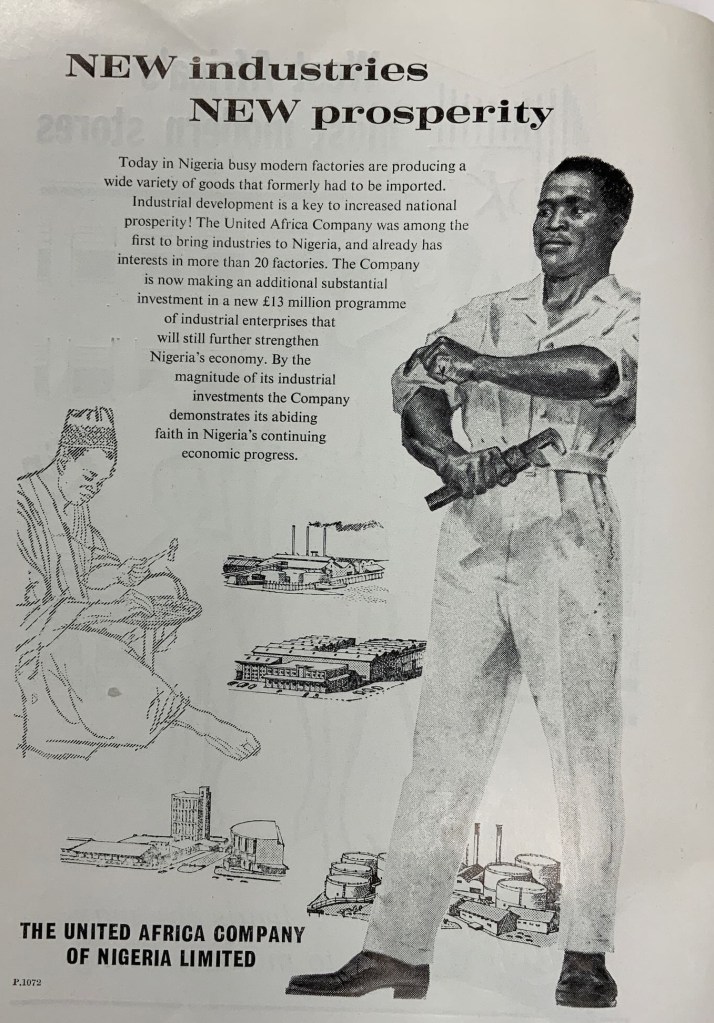
Eager to secure the provision of raw materials at low cost to its flourishing soap factories in Liverpool, Lever Brothers and the United Africa Company (UAC) acquired land concessions from colonial states across the oil palm belt in West Africa. Beginning from the early 1910s, subsidiaries such as the Huilieries du Congo Belge (HCB, later Huilever and Plantations du Congo), and Pamol, established oil palm plantations in today’s DR Congo, Congo-Brazzaville, Nigeria, Ghana and Sierra Leone.

Plantation workers holding a bunch of fruit of Elaeis Guineensis (African oil palm). Oil is derived from fruit’s outer layer and cracked kernel. The photo was taken near the Alberta plantation in the Belgian Congo, probably in the 1930s or 1940s.
Agronomists selected oil palm varieties to maximise the quantity of oil and facilitate the cracking of the kernels.
Plan of a plantation on the Benin river in Nigeria showing the subdivision of the planted area in square sectors; the location of the oil mill and wharfs where palm oil was extracted and loaded on boats; and the area where worker houses were built.


Historians such as Jules Marchal lengthily detailed the brutality of Lever Brother’s exploitation especially in the Belgian Congo, the forced resettlement of local population, and the violent repression of “uncooperative workers”. However, this attitude uneasily coexisted with a paternalistic, but probably genuine, hope that plantations would bring “progress and civilisation”. Such hope – Benoit Henriet argues – was compromised by the overriding need to turn a profit but it requires to be analysed beyond oversimplifying narratives of predatory capitalism.

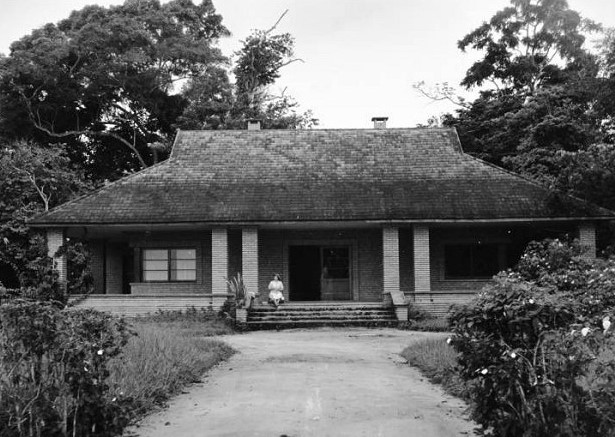
Our initial exploration of the rich UAC archival collection revealed that plantations had been the locus of a wide array of experiments combining agronomic knowledge with political, economic, social, and cultural tools. The plans and photos of worker houses and communal facilities, and the numerous written exchanges on the social aspects of work organisation and the daily life of workers in the plantation shows that architecture played a relevant role in giving tangible form to the company’s largely unfulfilled ambitions to widespread social development.

Diorama showing two HCB oil palm plantations presented at the Ghent Universal and International Exhibition in 1913.
“Model houses” for workers in the Brabanta plantation, Belgian Congo.
Native dwelling quarters in an unidentified Huilever plantation.
Views of worker houses and public facilities in Leverville, Belgian Congo.


While the construction of villages for plantation workers such as Leverville offers the occasion for a critical reflection on the role of architecture in private colonial exploitation, other documents from the UAC archives suggest that plantations had been the testing ground for innovative spatial planning models. Indeed, over the course of the 20th century, changes in plantation management and spatial structure overlapped with the evolution of ideas on social engineering and rural development.

In the 1930s and 1940s for example – as Jonathan Robins highlights – in response to the well grounded critiques on the social and environmental sustainability of plantations in West Africa, UAC proposed plans for a reformulation of plantation organisational system. The model they proposed would later influence policy recommendations given by international organisations such as the World Bank to developing countries across the globe. The experimental plantation model, the Nucleus Estate-Smallholder (NES) model, claimed to combine the virtues of the plantation system of management with the “social attractions” of peasant agriculture. This farming system entailed a spatial structure in which a nucleus, composed of a plantation established on a land concession and managed by UAC, is surrounded by further plantation sectors operated by smallholders.

The extent to which this and other models were successful in improving the living condition of local farmers or rather were functional smokescreens for the perpetuation of colonial or neo-colonial extractivism remains an highly debated topic. Certainly, plantations remains, both at the architectural and territorial scale, a fascinating subject which we will continue to explore in the following months and an opportunity to explore the multiple intersections between development ideologies, colonial and post colonial histories, and architectural and planning knowledges.


Henriet, B. (2021) Colonial impotence: virtue and violence in a Congolese Concession (1911-1940), De Gruyter Oldenburg.

Robins, J.E. (2021) Oil palm: a global history, University of North Carolina Press.

Marchal, J. (2008) Lord Leverhulme’s ghosts, Verso. First published in French as (2001) Travail force’ pour l’huile de palme de Lord Leverhulme: l’histoire du Congo 1910-1945, vol.3, Paula Bellings.

For the past months, we have been exploring the vast United Africa Company (UAC) archive held at Unilever in Port Sunlight. The archive documents decades of commercial activity in West Africa, which left a significant imprint on the built and natural environment. The UAC extracted raw materials such as palm oil and timber, but also exported finished goods such as cars, building materials, and refrigerators. The UAC also sold British products in its department stores across Ghana, Nigeria, and Sierra Leone. Meanwhile, it operated its own shipping line, named Palm Line, that ferried goods between the UK and West Africa. We have come across a variety of different materials, ranging from maps documenting the company’s palm oil plantations in the Congo and architectural drawings showing the modern Kingsway stores in Lagos and Freetown, to detailed notes related to the design of the UAC’s port, Burutu, in the Niger Delta.

Tropical hardwood at Sapele, Nigeria
African Timber and Plywood Concessions in Ghana, ca. 1955

One aspect of the UAC I have been focusing on these past months is the company’s timber operations in Ghana and Nigeria. In the early twentieth century, the UAC founded the African Timber Company (later the African Timber and Plywood Company), located in Sapele, Nigeria. Through a range of concession agreements with local chiefs, they managed to consolidate vast areas of territory around Sapele from which they extracted a wide range of different tropical hardwoods for export to the UK. At the same time, the company began operating in Ghana (then still the Gold Coast), in Samreboi, a hundred miles inland from the port of Takoradi. After World War II, they also built a plywood factory in Sapele—the first of its kind in this area and described as ‘the largest industrial plant in West Africa’—and began producing plywood at a large scale. Using photographs and written documentation, I have begun to explore the construction of these two company towns and their wider infrastructure. While the factories and processing plants were built using prefabricated steel sheds made by Arcon (also responsible for prefabricated houses in the UK during the postwar period), the bungalows for the company’s British employees can be described as traditional. Later, a Timber Research Laboratory was added, as well as showrooms, and several local facilities such as a (plywood) cinema and clubhouse. Through felling hundreds of thousands of logs every year, the company irrevocably left an imprint on these two areas in Ghana and Nigeria and had a devastating impact on the natural environment.

The plywood factory in Sapele, Nigeria
Sapele, Nigeria, in the 1950s
The Timber Research Laboratory at Sapele, Nigeria

What is interesting is how the work of the African Timber and Plywood Company aligns with the British government’s focus on ‘empire timber’, or the push to use timber in Britain from different parts of the empire for furniture as well as architecture and interior design. While the government attempted to promote empire timber through a variety of exhibitions in the first decades of the twentieth century, the UAC archive reveals how widespread the use of tropical hardwood and plywood produced in Sapele and Samreboi was during the postwar period. Often marketed as giving ‘a feeling of warmth’, it was used for modern furniture made by the Conran Design Group, doors, window frames, and outside paneling for a variety of council housing, but also as interior decoration and flooring in buildings such as the Commonwealth Institute in London and the Commonwealth Royal Pool in Edinburgh. The former headquarters of the UAC in London, United Africa House at Blackfriars, is another case in point: the building’s interior functioned as a display of tropical timber, ranging from mahogany to African walnut and Sapele hardwood—all produced by the company.

Modular furniture designed by the Conran Design Group, made of African walnut
Different types of tropical hardwood used for the interior of United Africa House, London, 1960s

Another fascinating aspect is the shift to production for the local, West African market in the 1960s and ‘70s, after Independence. Aside from furniture, one innovation was ATP Systems Building, a prefabricated building system using tropical hardwood and plywood. The company promoted this as an affordable, quick, and flexible way to build without requiring much technical knowledge. Documents I found in the archive point out that ATP Systems Building was widely deployed in, for example, Warri, a rapidly growing oil town in Nigeria, to build houses, offices, and schools.

The ATP Showroom in Benin City, Nigeria (originally built for the Lagos Trade Fair of 1962)
An ATP employee selling an ATP Systems Building bungalow in Nigeria, ca. 1970

Overall, the archive of the African Timber and Plywood company demonstrates, once again, how (modern) architectural construction in Britain was shaped by colonialism and, conversely, how British companies continued to impact design in the former colonies after independence. Many questions, however, are still unanswered. How, for example, was the work of the timber companies related to the colonial government’s efforts to promote empire timber from Nigeria? How should we understand the widespread use of (colonial) timber in postwar Britain? What prompted the shift to focus on the Nigerian market after Independence? How successful was ATP Systems Building? Over the coming months, we will continue to explore these issues.

During the past month we’ve continued our exploratory work in the Unilever archive pursuing a broad scoping exercise to determine and survey what is contained within Storeroom Number 4. The archive catalogue is extensive, detailed, and provides incredibly useful descriptions of what lies within – but inevitably there are unexpected items and fine details that remain beyond the limits of the usual cataloguing descriptions. 

East Street, Freetown, 1905

Our sampling has examined a wide range of materials, including the large photographic albums from the late 19th and early 20thC. These carefully preserved documents reveal the early ventures in the Oil Rivers, the exploits of the Niger Company, the development of Freetown, and new buildings in Ghana. The albums have provided important details of the early trading stations that transitioned from boat hulks to riverbank factories and stores of the Niger Delta, Burutu, and beyond. The collection includes photographs of everyday street scenes, new stores, and wharf extensions, we well as major political events. The images from Freetown, Sierra Leone, by photographer Alphonso Sylvester Lisk-Carew (1887–1969) taken in 1905, reveal a systematic street-by-street catalogue of the burgeoning town, and details of new store being built for Peter Ratcliffe Ltd. Most of the various trading companies produced and retained extensive photographic records, including, for example G. B. Ollivant with its Manchester warehouses filled with calico and wax prints ready for export to the coast.  Palm oil was the main export commodity being shipped from West Africa, and William Hesketh Lever’s plantations in Congo are an essential part of this story. We’ve uncovered some early photos of the plantations and worker housing at ‘Leverville’ (now Lusanga). 

Housing at Samreboi

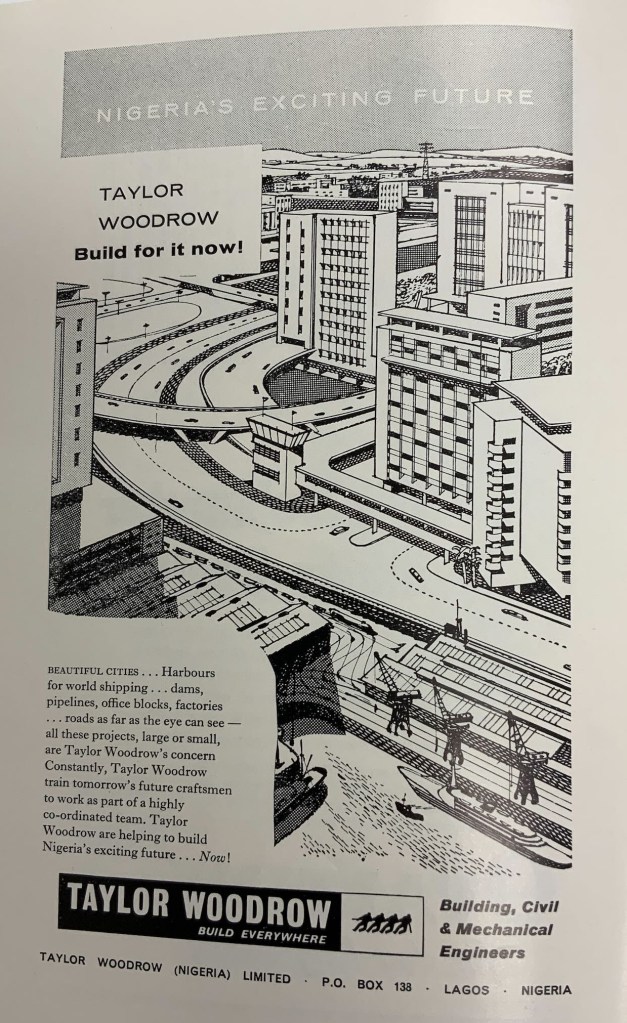
We’ve began to review the timber processing factories and associated settlements of Sapele and Samreboi. Trading as the African Timber and Plywood Company the archive includes an important set of material on the creation of these sawmills, processing plants, and associated staff housing and facilities. The Company was also involved in developing a series of experimental prefabricated and kit housing. We’re especially interested in the relationship the UAC had with construction and building materials companies/contractors, and we’ve reviewed the archival files connected to Taylor Woodrow. The UAC was a shareholder in this major construction company, and we’d like to examine how the two enterprises collaborated to deliver their building programmes and wider ambitions. The complex web of UAC businesses and shareholding arrangements becomes ever more complex and entangled. 

Management Housing at Samreboi

A significant portion of the UAC archive is devoted to brewing and breweries. The UAC established collaborative ventures with Heineken and Guinness to produce the famous Star beer and a range of malt-flavoured beverages. We’ve found some extraordinary designs for worker welfare facilities designed by Godwin and Hopwood at the Lagos brewery, as well as factory layouts and extensive promotional material. This is another example of the UAC working with specialist producers, spreading its risk, and also creating new business for its various subsidiaries. A similar model was deployed with UAC Motors that imported various vehicles and acted as agents, spare suppliers, and repair garages for the manufacturers in Europe and US. 

Godwin and Hopwood Lagos Brewery Welfare Block

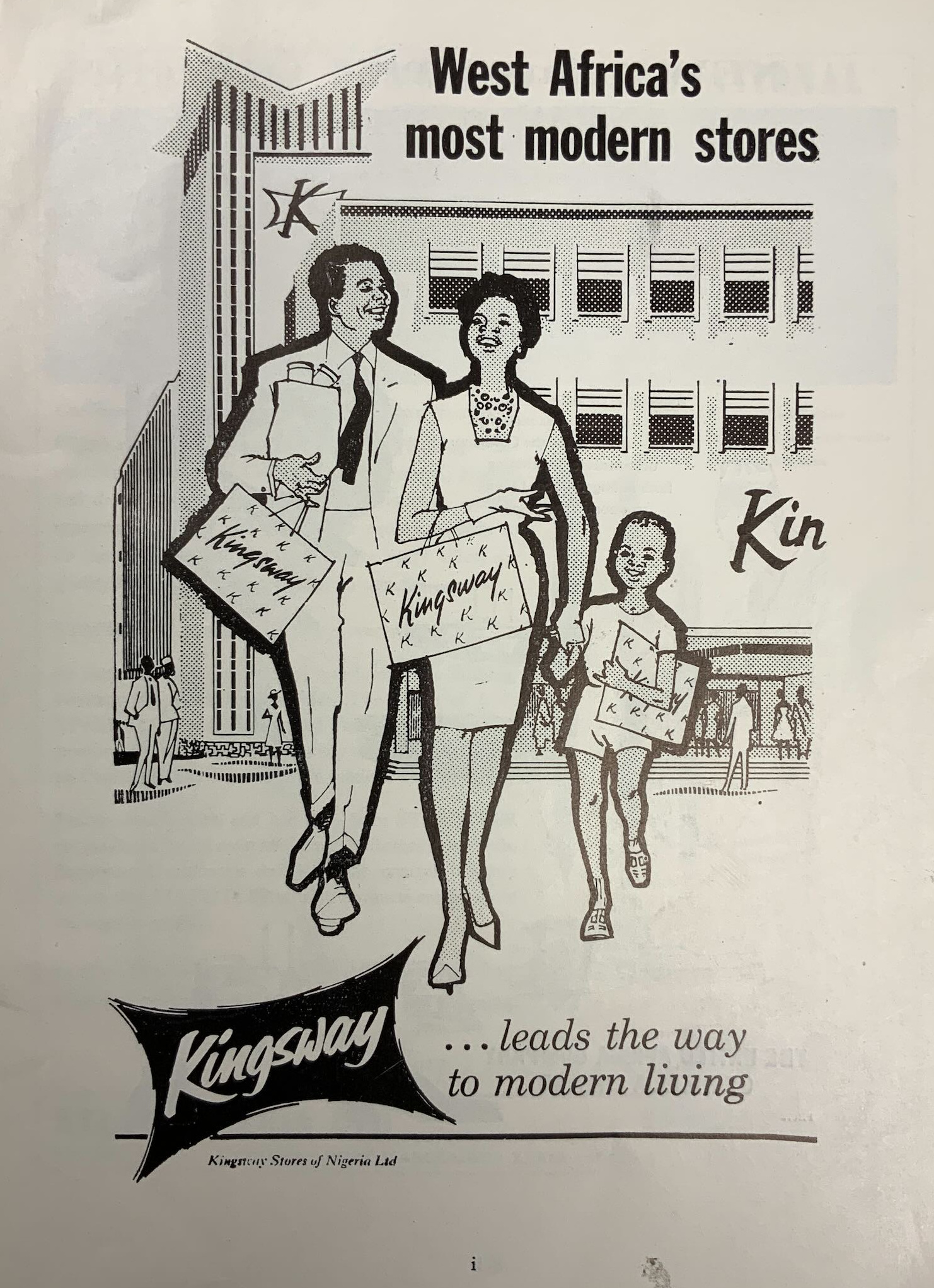
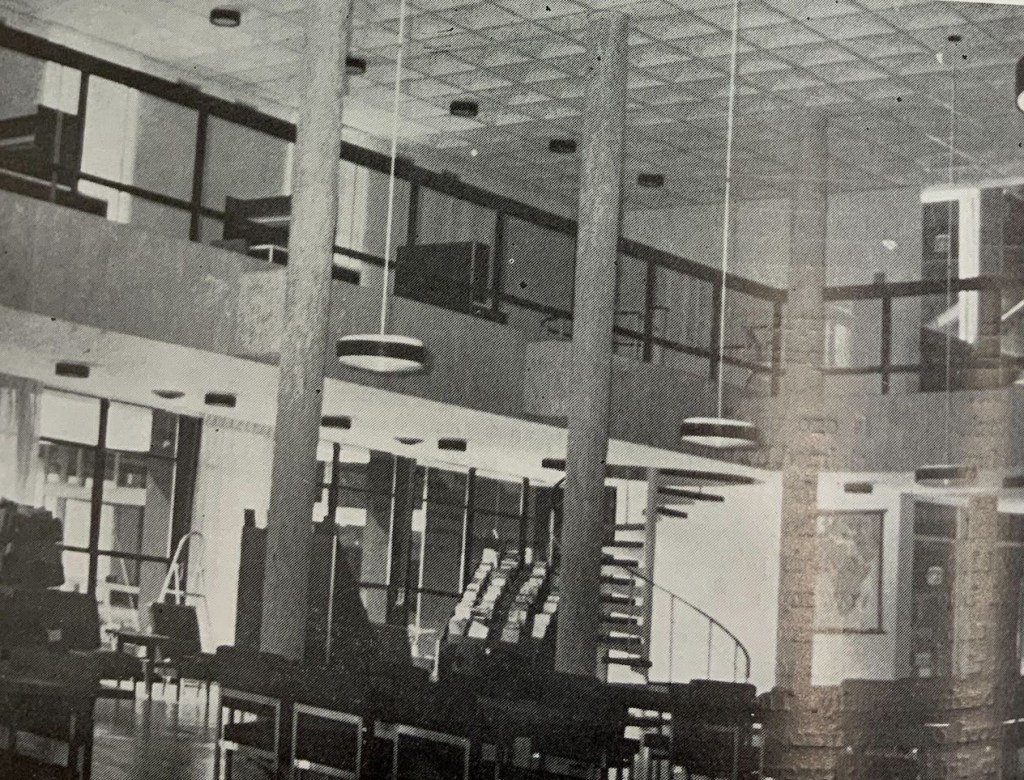
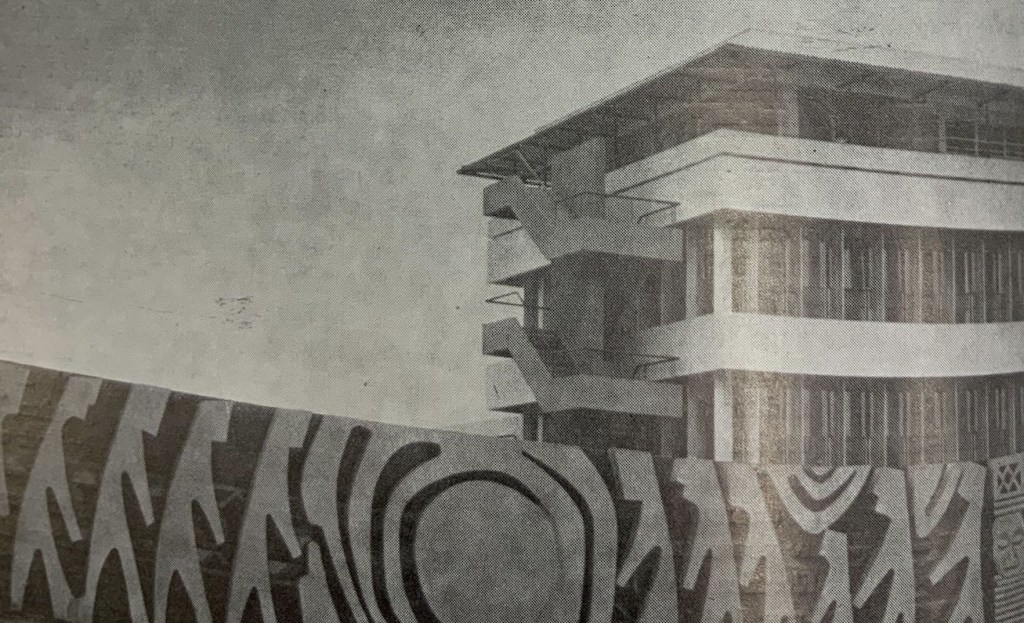
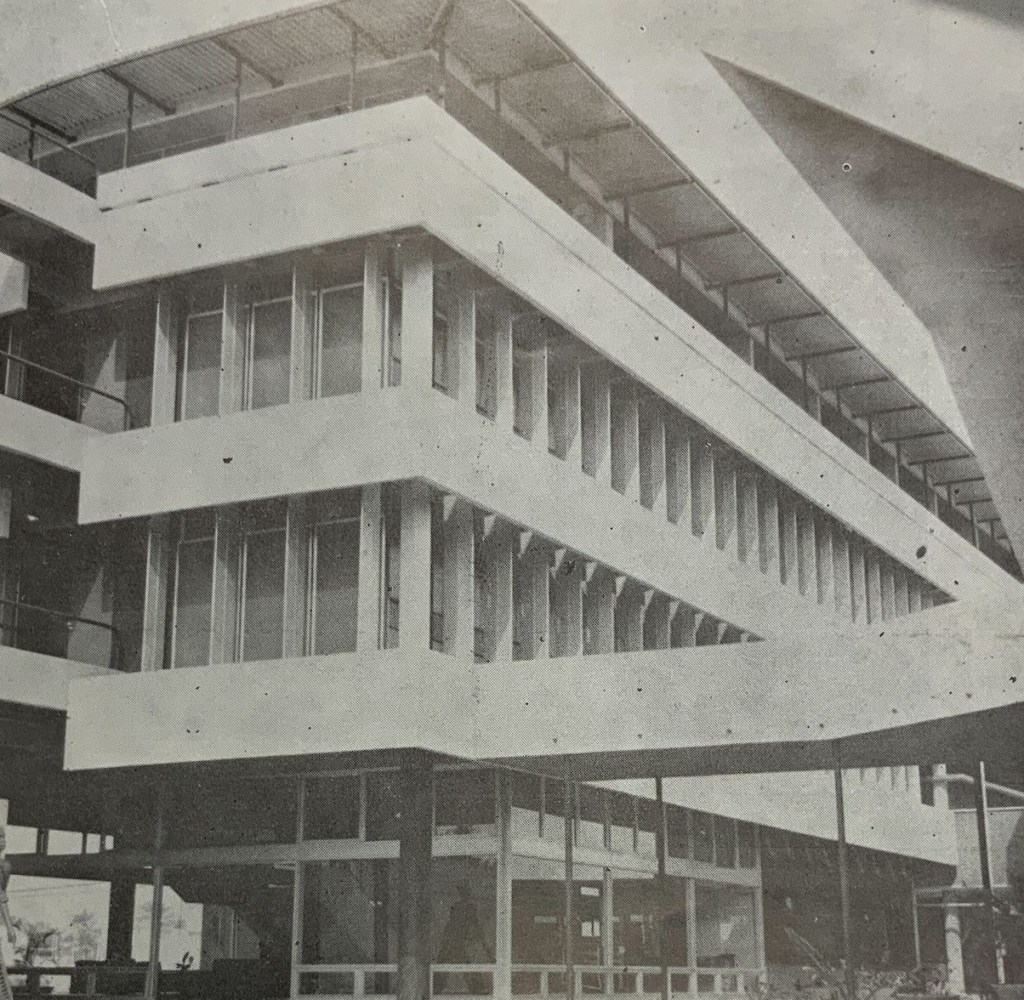
Retail and Wholesale business remained a core part of the UAC enterprise with the Kingsway Department stores being the most prominent and well-known retailer. Some excellent work has already been done on Kingsway, but the extensive archival material reveals a lot more to examine.  Major photographic collections and architectural drawings devoted this array of shops and their lavish interior displays have been carefully preserved. The largest and most famous branches were at Accra and Lagos, but other lesser-known stores at, for example, Apapa (designed by T P Bennett, 1960) and Jos, clearly warrant further research and investigation. 

Sketch for Apapa Kingsway Store, by TP Bennett
Kingsway Stores at Jos, Nigeria

Our archival trawling exercise will continue until Christmas 2021 and we’re hoping that by that time we’ll have a clearer picture of the overall collection and the areas/themes we’ll continue to investigate to much greater depths. 

We’ve been making good progress on our latest research on the UAC architecture. Here’s a quick selection of material from our recent twitter feeds. Next week we’ll be joined by Dr. Michele Tenzon which will finally bring the entire research team together in one place. You can expect to see some of Michele’s maps and visual representations of the UAC activity here very soon.

Corrugated iron mosque, Bansang Gambia. C1958.

From a collection of photographs taken by the United Africa Company @LivUniArch @iaindjackson @RixtWoudstra

Originally tweeted by Ewan Harrison (@EwanMHarrison) on September 22, 2021.

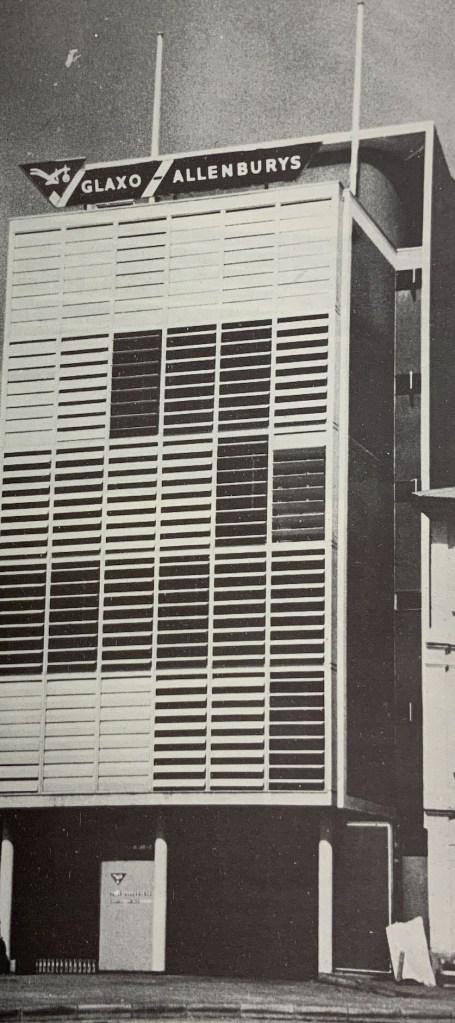
It’s a major design departure from the old Kingsway on Lagos Marina. Any ideas who designed this building? #UacArchive #Lagos #Kingsway

Originally tweeted by iainjackson (@iaindjackson) on September 30, 2021.

Crucibles, Vectors, Catalysts: Envisioning the Modern City

Hosted online across two days in March 2021, the Hyundai Tate Research Centre: Transnational and Liverpool School of Architecture’s “Crucibles, Vectors, Catalysts: Envisioning the Modern City” seminar investigated 20th century identities for postcolonial and post-independence cityscapes in Africa, South Asia and the Middle East.

Convened by Iain Jackson, Professor at the Liverpool School of Architecture, Clara Kim, the Daskalopoulos Senior Curator for International Art at Tate Modern and Nabila Abdel Nabi, Curator for International Art at Tate Modern; the seminar explored stories from these ‘highly charged moment[s] in the history of city making or shaping’.[1]

The seminar specifically positions cities as incubators for the generation of national identity and for ‘Modernity’. However, were individual cities sufficient for such grand objectives, or were they more isolated and fragmented sites for local, yet innovative gestures? Presenters demonstrated examples where both centralised urban contexts (including major urban planning initiatives and more piecemeal developments) and wider networks proved valuable in creating or indeed reasserting national and regional identities.

The destructive process of creating mid-century urban environments defined many global contexts. Whether in response to the need for new national identities in postcolonial contexts, reconstruction and housing following the devastating effects of war and a baby boom or strategies to address perceived ‘blight’ and urban flight, urban renewal, with its top-down, Bauhausian, car-focused, and federally funded backbone epitomised Modernity.

Some cities benefitted from a relatively early reconsideration of the blank slate approach to city planning. Lukasz Stanek described how Miastoprojekt, a Krakow-based state planning office of designers envisioned the future of post-revolutionary Baghdad through their experiences with reconstructing historic Warsaw after the Second World War.[2]

Using architectural and design services as a politically and financially motivated form of state aid during the Cold War, the Miastoprojekt plans rejected key aspects of Baghdad’s first modern city plan, including the demolition of the city’s Ottoman era historic and vernacular architecture, and tripling the size of the city at a local level without consideration for expansion through regional developments.[3]

Miastroprojekt’s legacy continued beyond the Baghdad planning commissions through design work and education with Polish and Czechoslovakian architects teaching Polish perspectives of Modernism in Iraqi universities. By the 1990s, with the fall of communism, Polish designers reversed Miastroprojekt’s strategy and were thinking Warsaw through Baghdad to revitalise their cities.

Big plans were not constrained to single urban environments. Fahran Karim’s ‘archaeology of the future’ presentation explored the role of a foreign designer in creating Pakistani nationalism; Greek architect and planner Constantinos Doxiaidis. Karim asks, “How do you represent a country without a past. Fractured geographically into East and West wings… 1000 miles of India between it?”[4]

Doxiaidis preferred stark Modernism, justified through statistical analysis and designed without classical Islamic aesthetic details. He utilised plan forms, practical details and building types that he believed (or presented) to be essentially Islamic.[5] Doxiaidis planned refugee settlements and Islamabad to include ’gossip squares’, souks, Dochala huts and central mosques.

Despite conducting ethnographic fieldwork and survey (aerial photography), Doxiaidis imported his understanding of Islamic community planning and architecture from his research in the middle east and projected the needs and traditions of widely dispersed refugees on narrow local contexts. Unsurprisingly, the communities adapted or removed many of Doxiaidis’ design features or simply did not use the spaces created for them, preferring to adapt their homes or build vernacular sites suited to their cultural preferences instead. While in practice, many of these adaptations and rejections were practical, Doxiadis’ technical expertise and foreign perspective failed to deliver built environments that suited and sustained the needs and preferences of Pakistan’s new citizens.[6]

Considering what was happening between East and West Pakistan, Ram Rahman shared a richly illustrated and personal view of the cultural and political context for his father Habib Rahman’s contributions to the ‘Nehruvian post-independence renaissance of Delhi.’

Habib Rahman, a young MIT-trained Bauhausian architect, was recruited by Nehru to work in Delhi, where he organised an international low-cost housing exhibition in 1954, including plans and a model for his own design for low-cost housing. Rahman’s house design was reproduced across India 100,000’s of times to address a critical housing shortage.

Rahman was a prolific designer and his work, including the World Health Organisation headquarters building of 1963 (demolished) and later designs for three monumental tombs epitomised Indian modernity.

Professional training and architectural education were key vectors for transnational exchange and development in postcolonial contexts. However, as Patrick Zamarian described in his presentation, the development of the Department of Tropical Architecture (DTA) at the Architectural Association (AA) in London was related as much to the independent administrative structure of the AA and its struggling economic position in the 1950’s as it was to meeting the challenges of Modern design in foreign contexts.

Zamarian recognised the problematic and homogenizing term ‘Tropical Architecture’ and then described the global networks of designers, patrons and educators who delivered training for a generation of British and international students, with a curriculum based on technological solutions for climatic design and a Modern design aesthetic that disregarded local aesthetic and cultural traditions.[7]

When the department visited Ghana, “these ideas for Tropical Architecture fell apart. [The curriculum] shifted from a generic science-based approach to a local and sensitive one, focused increasingly on housing, planning and eventually sustainable development.”[8]

Ola Uduku’s exploration of Modernist Lagos focused on the cumulative impacts of the DTA trained architects, engineers and Italian contractors who contributed to the rapid development of the marina district for independent Nigeria’s first capital city.[9] Although Lagos benefitted from major infrastructure improvements, the architecture described in Uduku’s presentation was piecemeal and demonstrated the evolution and intensification of development for the district from colonial centre to financial district.

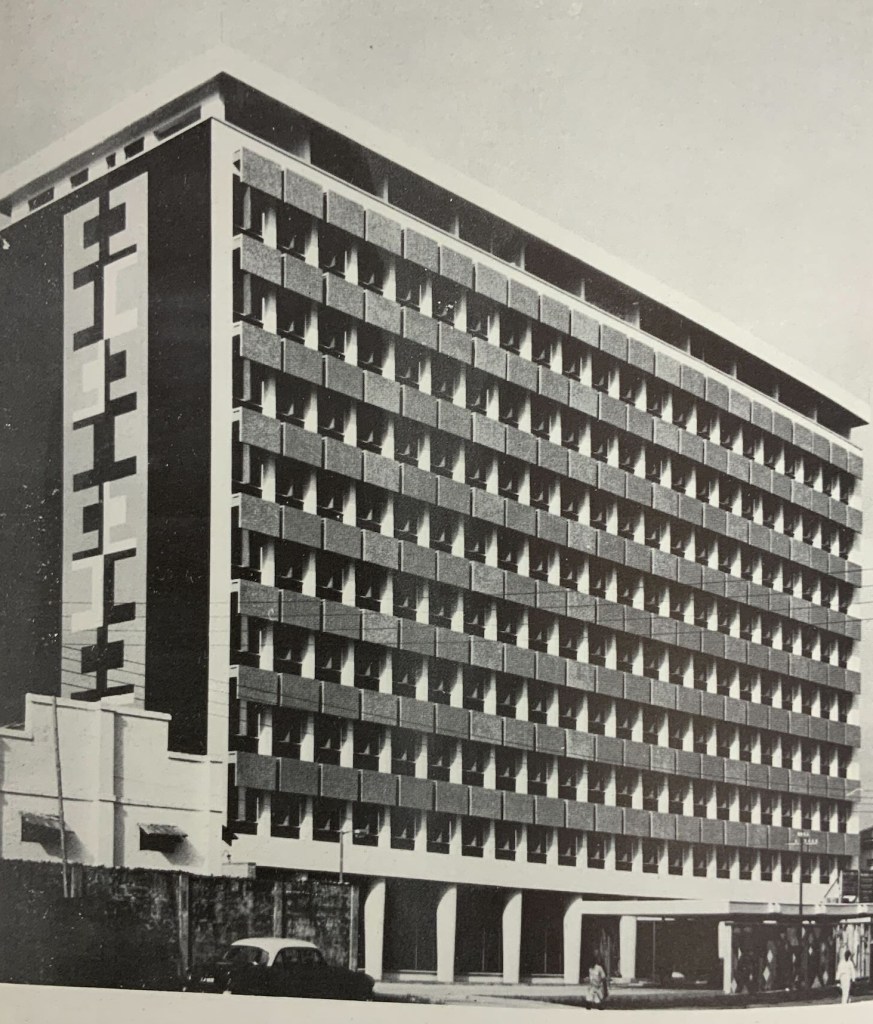
Examples include Maxwell Fry and Jane Drew’s Co-operative Bank Lagos (1959) and the Architects Co-Partnership’s Bristol Hotel.[10] A Lagos building that encapsulated the international design collaborations for the time is the James Cubbitt and Partners’ Elder Dempster Lines building (1961), which introduced sleek modern lines, natural cross-ventilation, engineering innovations (pile foundations) contributed by Ove Arup and a distinctive funnel-shaped top structure alongside a notable collection of Nigerian artworks in the lobby. Nigerian designs for the time include Oluwole Olumuyiwa’s Crusader House (1955) and elegant villas outside Lagos by Obi Obembe Associates.

In other contexts, a national approach to recreating identity was accomplished through the redevelopment of pilgrimage networks and tourist destinations, including hotels and museums.

Talinn Grigor introduced the Society for National Heritage (SNH) and the role of the Shah’r in asserting the hegemony of the ruling class and Iranian elite (and recreating national identity) through the demolition and reconstruction of over 40 historic mausoleums to encourage secular and cultural tourism.[11] Examples include the mausoleums of Ferdawsi (1934) in Tus and Hafiz (1938) in Shiraz. Grigor argues that these new Modern mausoleums were integral to the creation of an aspirational middle-class culture in Iran, becoming a network for national tourism that remains today.

The Shah’r and the tremendous wealth generated by the Iranian oil industry funded the design and construction of avant-garde Modern environments and later more traditionally inspired art and architectural contexts, culminating in the uniquely Iranian expression of modernism inspired by traditional wind towers for the Tehran Museum of Contemporary Art (Kamran Diba, 1977).[12]

Lahbib el Moumni and Imad Dahmani’s presentation on post-independence Moroccan architecture included a second example of state-sponsored activities to promote tourism with Modern architecture. This was developed through hotels constructed outside urban centres in the country’s dramatic landscapes. Examples of exquisite and richly contextual forms from architects Abdeslem Faraoui and Patrice de Mazieres include the Hotel Les Gorges du Dadès (1974) and Hotel at Taliouine (1971-72) were shared, both to demonstrate the value of these sites and to explore the challenges of engaging communities with their recent past. [13]

The expressive and contextual Modernism of Morocco was certainly not isolated for post-colonial contexts. Amin Alsaden’s presentation demonstrates how urban renewal programmes in Baghdad in the 1950s created a sense of cultural and heritage loss, which predicated a culturally specific interpretation of Modern art and architecture for the city. He focused particularly on the work of architect Rifat Chadirji who merged globalism and regionalism in his designs.[14]

Alsaden described Rifat’s earliest buildings as somewhat derivative but noted that through the 1960’s his designs evolved to incorporate traditional shapes and plan forms, marrying social needs to social forms, and incorporating the narrow round arch form, in both elevation and plan.

Anna Tostoes’ presentation on the work of Amâncio (Pancho) Guedes in Mozambican cities clearly demonstrates how the architect’s designs coupled global technical, aesthetic, and cultural movements for the time with traditional and vernacular forms to create unique buildings for Maputo which continue to engage with local communities, including the Saipal Bakery (1954), Smiling Lion Building (1954-55) and the Abreu Santos and Rocha Building (1953-56).[15]

These Guedes landmarks remain relevant to 21st century contexts, but many other postcolonial buildings have been heavily altered or demolished. In my experience as a built heritage professional, architecture of the recent past, whether in postcolonial contexts, Europe, or the Americas is especially vulnerable to inappropriate alterations and loss.

Coupled with the experimental, academic, inefficient and sometimes foreign or dehumanising aspects of mid-century Modern architecture and urban renewal, it can be difficult ‘to love’ and costly to restore for sustainable 21st century purposes. Outside losses from the traumatic impact of military conflict or political maneuvering, it comes as no surprise that the architecture that has sustained and remains relevant to local communities is the architecture that originally engaged with its local context and traditions.

These landmark buildings need champions like Mémoire des Architectes Modernes Marocain’s (MAMMA) and DoCoMoMo to promote their value against ever greater development pressures. “Crucibles, Vectors and Catalysts” moved the discussion forward, but there are clearly collaborative opportunities for research and advocacy to be progressed.

Heather McGrath Alcock is PhD researcher at University of Liverpool’s School of Architecture studying the global development of planned company towns. Heather returned to academia after twenty years as a built heritage practitioner based in New York City and later London and the Wirral. Heather had the opportunity to work on landmarks of the Modern movement, including the United Nations Headquarters in Manhattan, a thematic survey of mid-century modern houses in New Canaan, Connecticut started by “the Harvard Five”, and the former Pan American Building at 200 Park Avenue, Manhattan.

References

Daechsel, Markus. 2011. ‘Seeing like an expert, failing like a state? Interpreting the fate of a satellite town in early post-colonial Pakistan.’ in Marcel Maussen, Veit Bader and Annelies Moors (eds.), Colonial and Post-Colonial Governance of Islam (Amsterdam University Press).

Talinn, Grigor. 2004. ‘Recultivating “Good Taste”: The Early Pahlavi Modernists and Their Society for National Heritage’, Iranian Studies, 37: 17-45.

Uduku, Ola. 2006. ‘Modernist architecture and ‘the tropical’ in West Africa: The tropical architecture movement in West Africa, 1948–1970’, Habitat International, 30: 396-411.


[1] Jackson, Ian. “Introductory remarks for Crucibles session” from “Crucibles, Vectors, Catalysts: Envisioning the Modern City”. Online. 2nd March 2021.

[2] In his presentation, “Rupture, Transition and Continuity in Baghdad’s Master Plans: From Minoprio to Miastoprojekt” on 2nd March 2021, Stanek noted that the Iraqi coup which toppled the monarchy in 1958 instigated a new era of collaboration with Eastern European architects and planners; networks established to “compete with and confront Western European and American hegemony to establish a new independent Iraq through its capital city Baghdad.”

[3] Baghdad’s first modern city plan was completed in 1956 by the British architect and town planner Sir Charles Anthony Minoprio, Hugh Spencley and Peter Macfarlane for the country’s Western aligned Hashemite monarchy.

[4] Karim, Fahran. “Archaeology of the Future: Constantinos Doxiaidis in East and West Pakistan”, from Crucibles, Vectors, Catalysts: Envisioning the Modern City seminar, Session 2, Vectors; 2nd March 2021.

[5] Ibid. According to Fahran Karim, Doxiaidis’ patron Ayub Khan “subscribed to a social theory of development but weakened democracy to validate his authoritarian rule because he felt that the poor, uneducated [masses] couldn’t participate in democracy.” 

[6] According to Markus Daechsel in his 2011 contribution ‘Seeing Like an Expert, Failing Like a State?

Interpreting the Fate of a Satellite Town in Early Post-Colonial Pakistan’, in Colonial and Post-Colonial Governance of Islam, ed. by Marcel Maussen, Veit Bader and Annelies Moors (Amsterdam University Press, 2011), p 159-160, there were many problems associated with the rapid and uneven development of the refugee settlements (lack of basic services (running water, electricity, sewers) and infrastructure (storm sewers), unfinished civil engineering works and the relatively poor refugee communities could not afford rents for the shop spaces, so were not used.

[7] Including Michael Pattrick, Director of the AA in the 1950’s who saw the new department as a way to improve the Association’s finances and academic standing, to Maxwell Fry who supervised the first few years of the department and then culminating in Otto H. Königsberger’s (1908 – 1999) leadership. From Zamarian, Patrick. “Global Perspectives and Private Concerns: The AA’s Department of Tropical Architecture”, from Crucibles, Vectors, Catalysts: Envisioning the Modern City. Online. 2nd March 2021. 

[8] Ibid. 

[9] Lagos was the original capital city for independent Nigeria. However, it is now the capital of Lagos State since the Nigerian capital city moved to Abuja in 1991.  

[10] Ola Uduku, ‘Modernist Architecture and ‘the Tropical’ in West Africa: The Tropical Architecture Movement in West Africa, 1948–1970’, Habitat International, 30 (2006), 399.

[11] In ‘Recultivating “Good Taste”: The Early Pahlavi Modernists and Their Society for National Heritage’, Iranian Studies (2004), Talinn Grigor noted that “For the modernists, therefore, the control over the physical and conceptual “heritage” enabled them to erase the immediate past to construct the “progressive” future. Destruction of building-as-representation [traditional sites of religious pilgrimage] proved central to the construction of the pending utopian future. Architecture was imperative to the success of the [Society for National Heritage] SNH’s modernizing agenda.”

[12] The Museum opened months before the revolution started which saw the monarchy overthrown and exiled from the country.

[13] While more ancient histories and built heritage are preserved and underpin 21st century cultural identity in Morocco, the architecture of the mid-twentieth century has been over-looked, inappropriately altered or destroyed. Mémoire des Architectes Modernes Marocain (MAMMA) was created in 2016 by young architects concerned with the loss of these sites. 

[14] Alsaden noted in his 9th March 2021 presentation “Syntheses Across Disciplines: Rifat Chadirji and Art-Architecture Liaisons in Modern Baghdad” for Crucibles, Vectors and Catalysts: Envisioning the Modern City, Chadirji was part of the elite bohemian culture of Baghdad, which included artists and architects who were educated in Europe and America. Against the backdrop of political turmoil, they created a vibrant, creative society that embraced Modernism ‘as an act of rebellion against the legacy of British architects who had used Neo-classical designs with orientalist tropes’. 

[15] Tostoes, Ana. “Correspondences, Transfers and Memory: Maputo’s ’Age of Concrete’”, from Crucible, Vectors, Catalysts: Envisioning the Modern City seminar, Session 2, Vectors; 2nd March 2021.

Join Joe Osae-Addo, Coleman Jordan and Jacopo Galli as they introduce the latest ArchiAfrika Pavilion and exhibitions, followed by a series of presentations from the https://registerarchitecturelandscape.uk/course-of-empire . This is going to be a rare treat, and it’s all live via Youtube if you can’t get to Venice in time.