Archive

British Colonial Architecture

Urban Narratives (Simulizi Mijini) Symposium

Urban Narratives (Simulizi Mijini) Symposium was held at the British Council building in downtown Dar es Salam on 1st April. Accompanying the event was a small exhibition of short stories – compiled by Masters students from TU Berlin and Ardhi University. During the past four weeks the students have been exploring and mapping the city as well as interviewing and recording the everyday and extra-ordinary narratives of life in the city. The result is a very special collection with some insightful, and often deeply moving, recollections. The stories should be on-line soon and we’ll post a link to them.

The symposium was arranged in 15-minute presentation slots, so the pace was fast and varied, starting with the international perspective (Jackson on India and Ghana, Lagae on curating an open air architecture museum in Lumbumbashi, Adanali offering a wonderful but at times disturbing insight into the plight of Istanbul, see http://reclaimistanbul.com).

IMG_0182

Yasar Adanali presentation

Part 2 considered the Eastern and Southern African context with Hannah Le Roux considering the notion of movement and heritage in South Africa and Johannesburg in particular. She also shared a wonderful image from the South African Automobile Association revealing the road networks that traversed the continent in the 1950s. Joy Mboya spoke about a festival created by local communities called Nai ni Who http://nainiwho.co.ke. This was followed by a discussion of the neighboring island of Zanzibar by Muhammad Juma, and the problems of preserving and building, in and around the historical context of Stonetown. Zanzibar was explored further after lunch with a project that is seeking to catalogue and document the built fabric of stonetown as well as associated memories and stories.

IMG_0185

Colonial Road Networks of Africa

Annika Seifert shared the vision for the new DARCH building and exhibition spaces located in The Old Boma, including how the material was selected and curated (https://www.facebook.com/DARCHTZ/). The new museum located in a historical colonial building, located opposite the Zanzibar ferry terminal, will be a great resource for the city with its roof top café and ‘public space’.

DSCF1183

The Old Boma

The session and roundtable was wrapped up by Walter Bgoya, who kept things lively, very entertaining and sharply to the point. It was a very enjoyable day and stoked lots of ideas for future research as well as fuelling the desire to take action. As Muhammad Juma reminded us, it is never too late to start campaigning for heritage and making the case to protect and preserve our built environment.

Fabrications Journal: Tropical Zone: people, practices and pedagogies (27:2)

Two decades of architectural debate on environmental issues have cast new light on climatic responses, with very different interpretations of the meanings and constructions of the ‘tropical’ zone. Colonial, modernist and regional responses have been scrutinised as genealogically linked. Scientific discourses, cultural prejudices and social approaches intertwined to produce a resilient dialectic that has been reproduced, augmented or interrogated in research. This issue of Fabrications invites contributors to address the theme of the tropical zone as an architectural construct created and disseminated by a range of actors including educators, practitioners and their clientele, and state and institutional networks. Who were they/what were these and how did they approach this subject? What was their contribution to architectural production? How was that contribution received? How is it viewed retroactively in the light of new scholarship?

This issue anticipates papers that interrogate the term, its application and its imprint in regional histories, during the colonial and modern periods and after decolonisation in environments identified by the descriptor ‘tropical’. However, it also seeks new definitions of the term and its usage, in the context of contemporary environmental debates. It looks for new analyses of discursive trends from metropolitan centres of imperialism, from former colonies and from regions that regard themselves as climatically distinct. This issue is also open to papers that discuss how an understanding of the tropical zone relates to green architecture and new techno-scientific building processes, both in terms of aesthetics and politics.

Guidelines for Authors

Papers should be submitted online at  www.edmgr.com/rfab  by 10 October 2016, 6-9000 words, full details at http://www.tandfonline.com/toc/rfab20/current

Good bye Kumasi, Accra, Ghana….

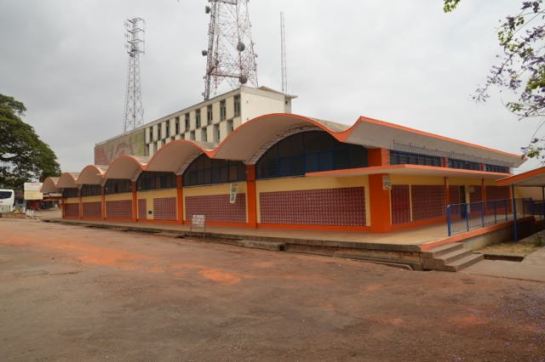
We revisited the Manhyia Palace archives and made notes on the relevant documents to be consulted before dashing off to board the local propeller plane back to Accra. Gazing at the dusty spread of Kumasi – we wondered whether the current airport terminal was adjacent to the original Norman and Dawburn small airport project designed in the 1950s? Suggestions of an earlier architectural history seemed to be revealed in the present day profiles of the domestic airport buildings viewed as we taxied down the empty runway for takeoff.

IMG_0144

‘Tropical Modernism’ on the 10GHC note, The Bank of Ghana in Accra

Accra was in the grips of a major traffic jam, cooler and drier than Kumasi, it proved overbearingly hot to spend more than half an hour getting from the airport to Jamestown to see the exhibition of the Delft-Accra, urban transformation collaboration project we visited on our arrival in Ghana. We met a transformed space and were given a tour by curator and ArchiAfrika member Joe Addo. Joe also spoke of his further plans for the activation of various parts of the Jamestown neighbourhood. A further visit to the National Museum offices, and another slow trip on Accra’s congested highway to the international airport concluded the trip, with Ghana’s independence day holidays over the weekend we weren’t the only ones heading out of town.

Our project continues; the Ghanaian team (Prof. Rexford Assasie Oppong and Irene Appeaning Addo) will begin planning their research trip to the UK in the autumn, and we have considerable sources to continue consulting in the meantime.


Notes from Kumasi Part 3

At the KNUST campus the library and Great Hall complex work very well within their elevated landscape setting. The Gerlach and Gillies-Reyburn’s muscular grey abstract ‘kente’ cloth brutalist hall and library extension is arranged in a ‘quad’. The complex overlooks the campus, facing a formal axis that leads to the administrative and teaching blocks. The composition is completed on its south flank by an architectural gem, which we discovered is the original KNUST library block. Is this James Cubitt’s riposte to Fry and Drew’s Ibadan Library?

DSC_0246

DSC_0276

The Old Library Block

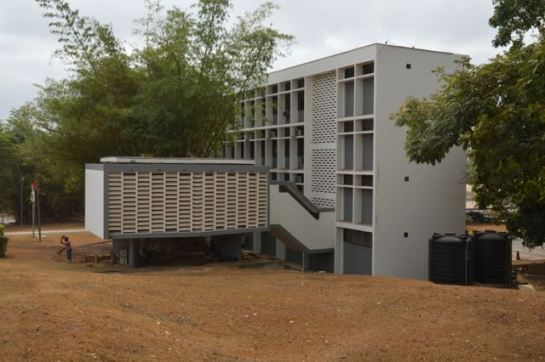
The ‘old’ KNUST library presents an essay in tropical architectural design. Still sitting on its cast, fluted piloti this four storey structure employs screen walling, operable louver windows, and shading devices to both demonstrate and celebrate the possibilities of creating a successful architectural resolution to the needs of passive design. Its forlorn main entrance, clad in travertine, and superseded by the Gerlach and Gillies-Reyburn entrance to the East, shows the quality of materials employed in specific areas of its design.


DSC_0101

Administration Offices and Meeting Room

Inside, much of the Library building seems frozen in time. Reading carrels lie empty whilst the daylight filled reading spaces, with custom built, empty journal shelves have few readers, and ageing academic book collections. The e-resource room however has been kitted out with desktop computers and seems to be the most used student space in the building. A second “IT” floor was being planned, and the new desktop computers were just being commissioned, in spaces flooded with artificial light, closed to the exterior with floor to ceiling fabric curtains – only this space in the building needed fans for cooling. Meanwhile the offices at the top floor with their no longer used spiral staircase took one to another world of naturally cross ventilated office space, and custom designed insect screens – demonstrating that climate responsive design in the tropics still works. One hopes its on-going transformation doesn’t forget this idea.

Notes from Kumasi Part 2

The KNUST campus continued to delight as we explored its many building types, landscape and wildlife. The staff housing [over twenty different types], is generally low density bungalows generously positioned along the sweeping roads to the west of the campus. The Vice-Chancellor’s lodge is also set amongst the staff housing, its pierced screen providing shading to the verandah-cum-corridor behind.

DSC_0219

Vice-Chancellor’s Lodge

At Unity Hall, the two high-rise accommodation blocks dominate the arrangement, but they also frame the quadrangle that contains badminton courts, refectory and other social spaces. The space is also commandeered for laundry drying and we observed architecture students surveying the landscaped elements with their drawing boards set up under the shade of the loggia. Just a short walk from Unity is the sports track and Paa Joe Stadium. The seating is set within the raked landscape and the grandstand has a graceful concertinaed concrete roof that reduces in depth as it cantilevers over the seating.

DSC_0229

Unity Hall

We were fortunate enough to view the architectural drawings of these buildings – but sadly, the climate has rendered them in a poor state and plans for digitization must be urgently progressed to preserve this important archive of material.

DSC_0264

Paa Joe Stadium

Off campus we visited the Manhyia Palace built in 1925. Upon returning from exile the Ashantehene Nana Prempeh 1 was offered the building by the British (the former palace having been destroyed in the ‘War of the Golden Stool’ in 1900). The palace is now a museum with some excellent artifacts and collections. The palace grounds also contain the Manhyia archives, managed by the West African Studies department of Legon University. The archives contain records dating back to 1926 including many documents on land development, sanitation, state buildings and town planning. We’re looking forward to seeing what this archive holds – an initial inspection revealed many plans and previously untapped material!

DSC_0221

Manhyia Palace Museum

Notes from Kumasi

Leaving Accra we departed for Kumasi– there was a change of pace in this dusty Ashanti city. Flying in, the low-rise collection of housing and settlements spreads across the horizon. The city has a hotter, inland climate, but the KNUST campus has this relieved somewhat by its lush mature vegetation. A visit to the recently restored KNUST Staff Club and walk around the campus to the ‘central area’, gave a good feel, and introduction to KNUST.

DSC_0939

KNUST Senior Staff Club House, designed by Cubitt

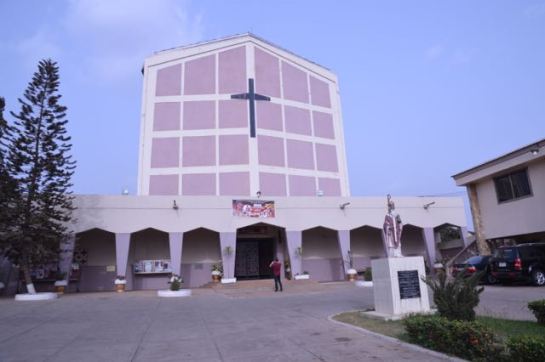
The following day united us with more visiting staff from University of Edinburgh and we set off on an extended excursion to various buildings in Kumasi city. Fry and Drew’s Prempeh College and Opoku Ware schools, are visited first and present us with a first hand view of this couples’ best exemplars of institutional tropical modernism. Visits followed to Nickson’s Anglican Cathedral, a towering structure, with less external architectural sophistication than F+D’s educational oeuvres, but provided interiors that successfully captured the spirit of high Anglicanism in its light-filled interior.

DSC_0997

Anglican Cathedral, Kumasi, designed by R. Nickson from 1950

A dusk-tinted view of the campus concluded the day’s visitations, its welcome calm was a good antidote to the ‘busy-ness’ of the town. The buildings at the ‘Tech’, as it is colloquially called, sat sedately in their lush tropical setting, showing off Scott and Cubitt’s earliest university campus in Africa.

The historic ‘central’ administrative area of Kumasi formed the focus of the next day. The post office and Ghana electricity building suggest they are examples of late ‘PWD’ post war architecture, whilst the historic memorial to the West Africa Frontier Force, soldiers who fell in WW1 in Abbysinia (Ethiopia) and Burma (Myamaar) give us pause for remembrance. Walking up towards the military museum we find that although it is closed, we can still pay officially for a visit and take the chance. More than an hour later, we are overwhelmed with the sheer military-related history this deceptively small former garrison fort contained. As a colleague commented, “this gave [me] the context” to this city.

DSC_0024

Kumasi GPO, designed by PWD?

Visits to the Asawasi and Fanti Town districts, the latter adjoining the Cathedral area, gave good examples of early housing layouts in Kumasi designs by known planners in some cases. At Fanti Town we inadvertently came across the’ coffin district’, and attempted a stop at the Bantana district of the town to photograph circular hut housing we had identified the day before. The military museum guide had confirmed that these historic huts still provided accommodation for the army. As the garrison was still camped at the site we could not investigate this much further.

Notes from Accra Part 2

Our journey continued with visits to Tessano ‘East’ which had a few remnants of the original site and service planned estate, best exemplified by the police station and a few administrative blocks, which often defined the colonial housing plan layout. A visit to the University of Ghana, at Legon followed. Designed in the late 1940s by Harrison Barnes and Hubbard, the leafy campus sits upon on a hill, high above Central Accra. The campus architecture has a curious oriental aesthetic which defines the its identity, with a number of significant buildings including the Balme Library and the Main Hall. In the African Studies department we joined our British Academy project associate, Dr Irene Appeaning Addo, for a very productive meeting.

DSC_0905

Tisano East Police Quarters


DSC_0917

The Grand Hall and Tower at Legon University, Accra

A trip to the Korle Gonno Housing Estate followed, using then new drained highway over the Korle Bu inlet and past the University of Ghana Hospital. The Korle Gonno Estate demonstrated a very early example of decant housing as from conversations with an older resident of the estate it was found out that many of the original residents had been moved from the Jamestown area of Accra to Korle Gonnu, a few miles down the coast. The estate was more intact than Tessano, with a number of the original buildings still evident.

DSC_0928

Korle Gono Housing Estate: regulated street patterns and services

Korle-gono

Korle-Gono Model, c.1920? Photograph held in the National Archives, Kew, UK.

A walk around the “Ringway” estate ,where we resided took us to the “Osu” layout and a road which had a pair of suspected James Cubitt-designed residences . A second visit just before departure from Accra confirmed this, although their external facades had been significantly altered. The pair of residences are now in use by the diplomatic corps.

Notes from Accra

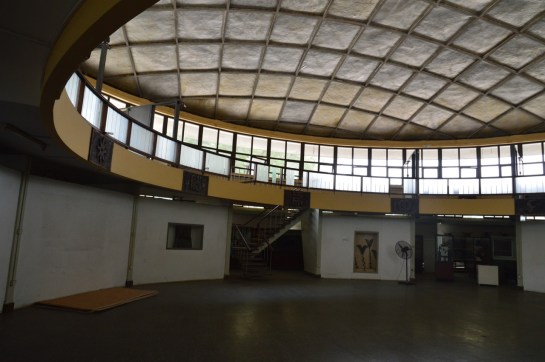
Iain Jackson and Ola Uduku have spent the last two days in Accra catching up with 20th century architecture, and meeting with contacts as part of the British Academy funded ‘From Colonial Gold Coast to Tropical Ghana’ architecture project. Tuesday 23rd February was spent visiting the Ghana National Museum complex, the gem in the crown being Denys Lasdun’s prefabricated dome shaped museum, currently closed for refurbishment. The imagination and vision of the building were still clearly there in our viewing of the stripped down structure ready for conservation.

DSC_0820.jpg

Our next stop took us to Nickson and Borys’ Children’s library building nearer to Central Accra. This had been sympathetically restored, and again was a great demonstration exemplar of ‘West African Modern’ and the developmental vision of the departing colonial government to establish libraries that were open to all citizens. The upper area remained devoid of activity but had potential to be a great multipurpose programme space.

DSC_0801.jpg

Children’s Library

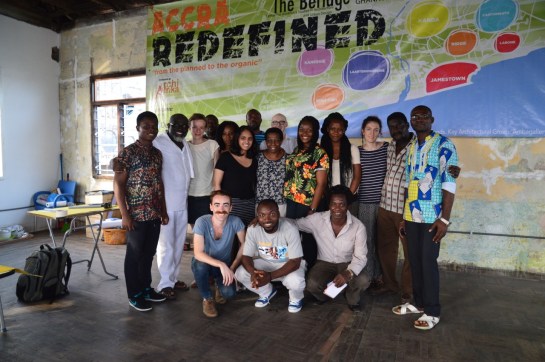
The final visit of the day was to Joe Osae-Addo’s Archi-Africa – TuDelft Berlage Architecture school studio, in Accra’s Jamestown neighbourhood, on the urban fabric of everyday life in Accra. The impromptu crit we were invited to take part in was an enjoyable experience and the schemes were full of promise.

DSC_0832.jpg

TU Delft and Archi-Africa in the newly converted Jamestown Studio

Day two involved visits to Jamestown – as a walking visit this time to take in early 20th century colonial PWD, and also warehouse architecture in the neighbourhood. A visit to Adabraka also yielded a few examples of early PWD worker housing, which was followed by an afternoon visit to Achimota School, which conveyed the height of the colonial education project with architectural symbolism and style. A few later additions to the campus by Nickson and Borys and other’s also fitted well into the College’s narrative of colonial imperialism and privilege. The final visit for the day was to Scott House, which lived up to its deified tropical modernism status, whilst the Western Tessano neighbourhood had transformed into an upper class gated area, that unexpectedly gave us a glimpse of an earlier [likely Cubitt?] designed semi detached housing unit, currently undergoing a further 21st century upgrade..

DSC_0863.jpg

One of the few surviving examples of its type in Adabraka

We will be moving onto Kumasi on Friday and will update from there early next week.


As part of the Envisioning the Indian City project we have been invited to produce a short set of podcasts for the ‘Realise’ series at Liverpool University. Each podcast is devoted to one of the cities we have been researching [Goa, Pondicherry, Kolkata and Chandigarh] for the past few years in collaboration with Jadavpur University in Kolkata.

india-backing

You may listen to us here: https://www.liverpool.ac.uk/realise-podcast/ and read more about the project here: https://eticproject.wordpress.com

This gallery contains 3 photos.

Originally posted on Envisioning the Indian City:
Standing on the Esplanade crossing, looking down Lenin Sarani with the “Tipu Sultan” mosque on our left, Kawshik Aki pressed his shutter. Bringing his camera down from his eyes he looked at the preview, shook his head, took a step to the left and clicked again.Meanwhile I stood…