Archive

Ghana

Adefola Toye writes:

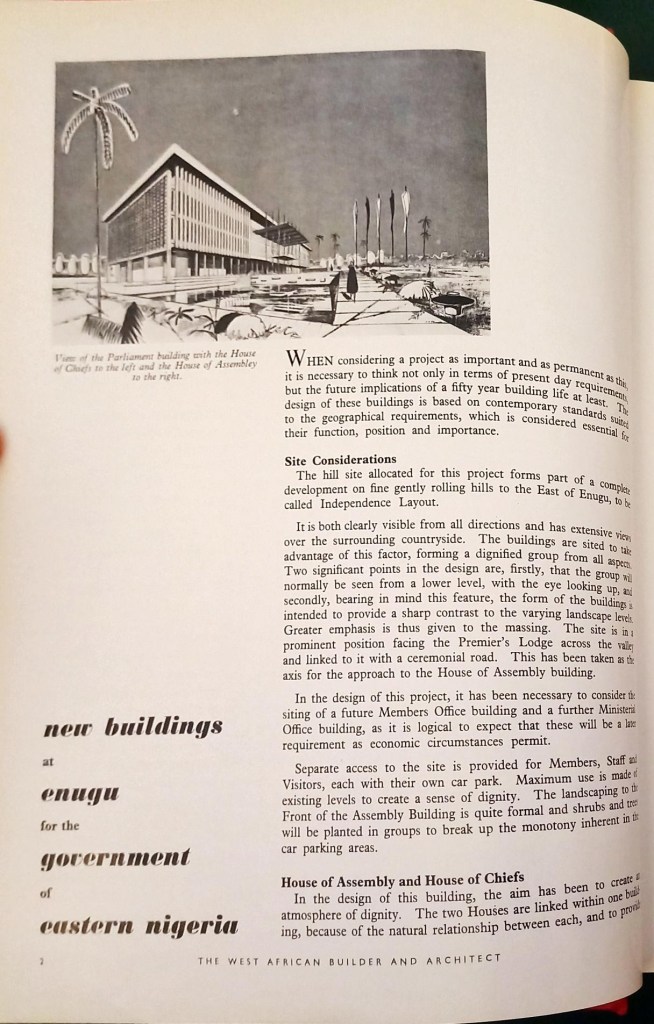
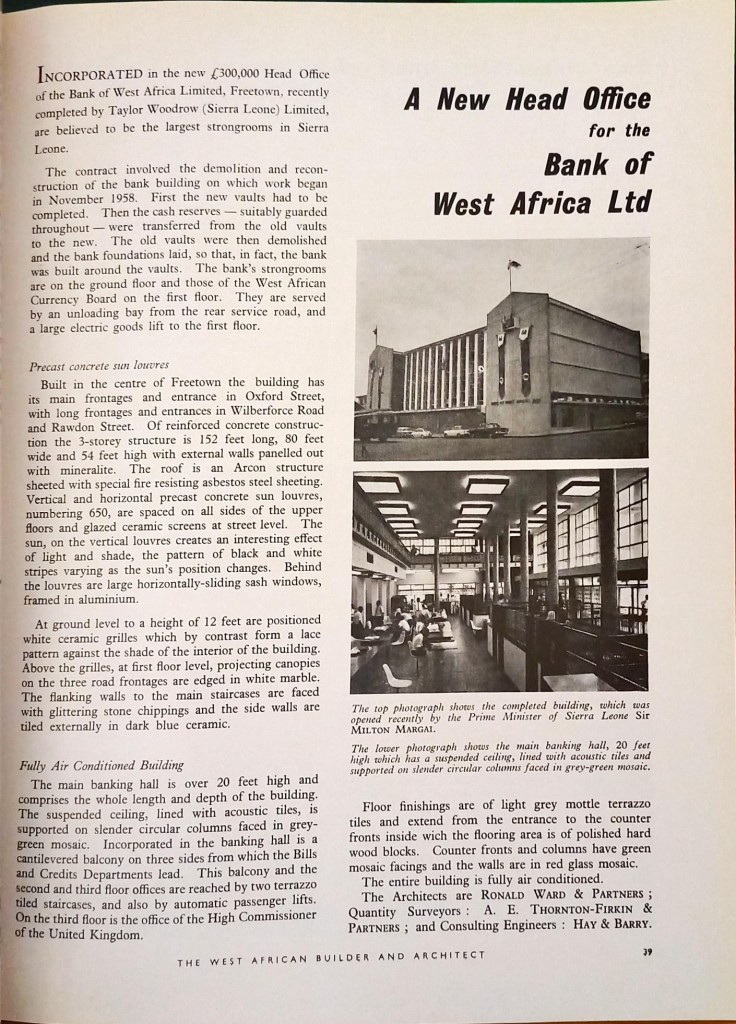
The first architectural journal in West Africa, The West African Builder and Architect (WABA) was published in 8 volumes between 1961 and 1968, and covered the field of architecture and building in the region. Nation-building programmes had started in newly independent West African nations by the early 1960s. These projects were centred on large-scale infrastructure projects for national development, which sparked a boom in design and construction. In contrast to earlierโ€ฏarchitectureโ€ฏjournals on colonial Africa that wereโ€ฏpublishedโ€ฏforโ€ฏaโ€ฏmetropolitan readership,i WABA wasโ€ฏfoundedโ€ฏbyโ€ฏand forโ€ฏprofessionals based in Westโ€ฏAfricanโ€ฏcountries to share information on practice in the developing industry and encourage cooperation among practitioners. iiย 

The journal began with an editorial panel of British architects: Kennett Scott in Ghana, and Anthony Halliday and Robin Atkinson of Fry & Drew and Partners in Nigeria.iiiโ€ฏโ€ฏOluwole Olumuyiwa,โ€ฏoneโ€ฏofโ€ฏtheโ€ฏfew Nigerianโ€ฏarchitectsโ€ฏwhoโ€ฏstudiedโ€ฏabroadโ€ฏandโ€ฏestablished practices upon their return,โ€ฏwasโ€ฏtheโ€ฏonlyโ€ฏWestโ€ฏAfricanโ€ฏonโ€ฏtheโ€ฏpanel. Among the WABA’s target audience was the modest number of engineering and architecture students studying in West Africa. It aspired to equip them with valuable information regarding their future careers that were specific to their environment.โ€ฏย 

Published articles included news on new projects finished in Ghana, Nigeria, Liberia, and Sierra Leone as well as articles by skilled professionals discussing contemporary design and building methods in West Africa. Regular publication features included technical reviews of new products, updates on developmentโ€ฏwork in the countries covered, and advertising placements.  

Atโ€ฏthatโ€ฏtime,โ€ฏBritishโ€ฏpracticesโ€ฏoperatingโ€ฏsinceโ€ฏtheโ€ฏ1940sโ€ฏdominatedโ€ฏtheโ€ฏarchitecture field in the region.โ€ฏ Theyโ€ฏcompletedโ€ฏlateโ€ฏcolonialโ€ฏbuildings usingโ€ฏtropical modernistโ€ฏdesigns. This group of foreign architecturalโ€ฏfirms,โ€ฏincluding James Cubittโ€ฏ& Partners, Kennettโ€ฏScott Associates,โ€ฏArchitectsโ€™ Co-Partnership,โ€ฏFry,โ€ฏ Drewโ€ฏ&โ€ฏPartners,โ€ฏetc.,โ€ฏ producedโ€ฏa significant numberโ€ฏofโ€ฏthe newโ€ฏstructures publishedโ€ฏinโ€ฏtheโ€ฏ WABAโ€ฏjournal.โ€ฏThe projectsโ€ฏofโ€ฏthe generalโ€ฏcontractor, Taylorโ€ฏWoodrow andโ€ฏthe engineeringโ€ฏconsultant,โ€ฏOve Arup &โ€ฏPartnersโ€ฏwereโ€ฏalsoโ€ฏlisted. Buildings for government organisations, corporations, and residences,โ€ฏconstitutedโ€ฏtheโ€ฏbulkโ€ฏofโ€ฏtheโ€ฏreportedโ€ฏprojects. Facilities for telecommunications, transportโ€ฏandโ€ฏhealthcareโ€ฏwereโ€ฏalso mentioned.โ€ฏย 

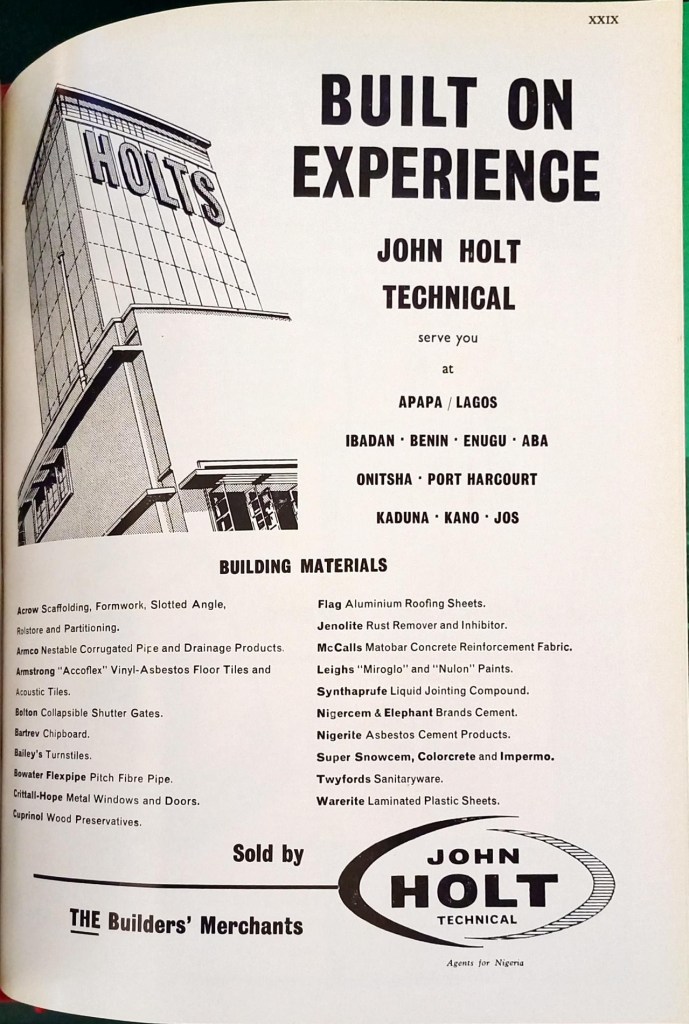
The WABA journal served as a reference for the purchase and sale of building supplies and services through advert placements, advertisers index and buyersโ€™ guides. Advertisements in volumes 1 and 2 of the journal reflect the state of the construction industry in the early 1960s independent West Africa. As the regionโ€™s manufacturing industry was in its cradle, building supplies and equipment were primarily imported and distributed by West African-based agents. Most of the distributors’ advertisements in the journal were from multinational corporations that were at the forefront of trade in colonial West Africa such as United Africa Company, GBO (G.B. Ollivant) and CFAO (Compagnieโ€ฏFranรงaiseโ€ฏde l’Afriqueโ€ฏOccidentale). GBO Building Department for example was a former subsidiary of British merchant GB Ollivant and had been operating in Nigeria since the late 19th century. Vivian, Younger & Bond Ltd and John Holt Technical were among more well-known suppliers with numerous locations throughout West Africa.ย 

By constructing new facilities and forming partnerships with public and private organisations, foreign manufacturers also expanded their presence in West Africa. In their various local factories, International Paints (West Africa) Ltd., Dorman Long (Ghana) Ltd., and Nigerite (in Nigeria) produced paint, steel, and asbestos sheets respectively. The headlines of these corporations’ advertisements in WABA highlighted the launch of new plants and their support of the local economy. Additionally, advertisements for locally produced goods included the clause “made in Ghana” or “made in Nigeria.”. There was a minimal presence of indigenous manufacturing companies. NIGERCEM-Nigeriaโ€™s first locally owned cement factory was the only producer to include this feat in its advertisement. 

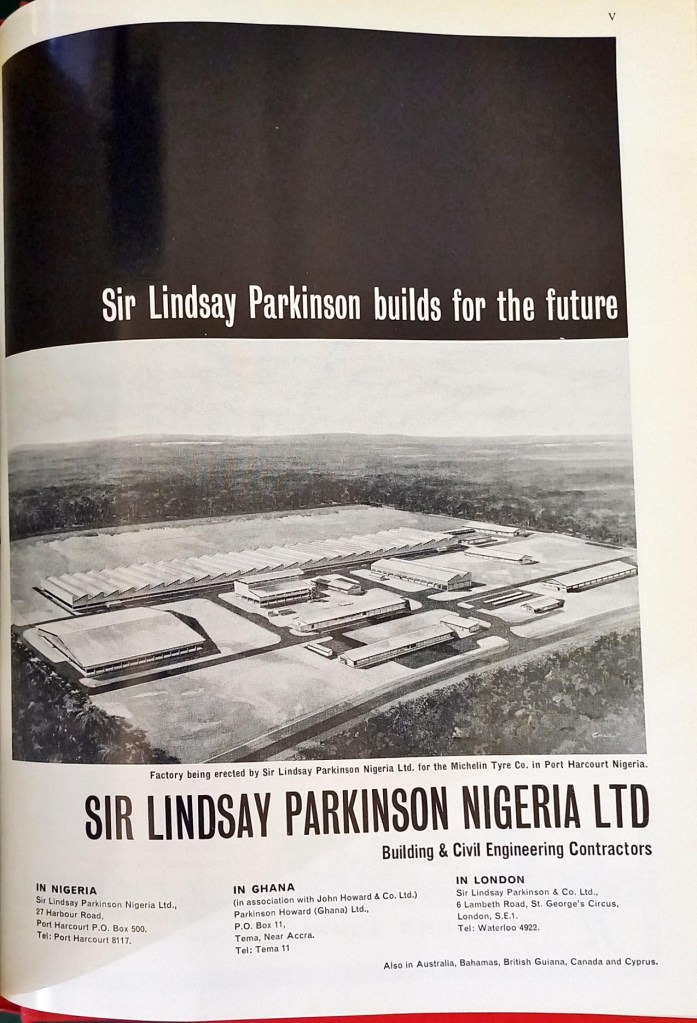
Some organizations used their advertisements to highlight their importance and reputation in the sector. Advertisements for general contractors and subcontractors were designed to appear as portfolios of completed and continuing projects. The advertisement pages for the metal component company Henry Hope & Sons Ltd always showed an image of a brand-new building fittedโ€ฏwith their curtainwalls and/or sun breakers.โ€ฏ This was displayed alongside a brief overview of the building including its location and architect’s name.  
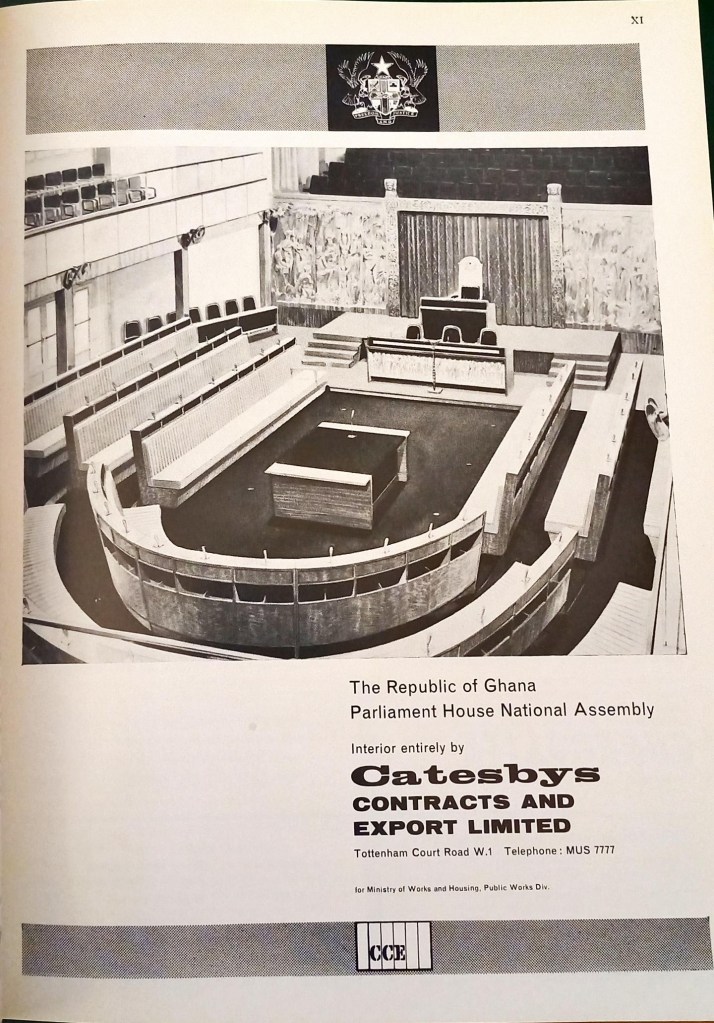
The journal adverts reflected companiesโ€™ recognition of their role in nation-building. Multinational corporations boasted of their delight and pride in partaking in the โ€œprogressโ€ and โ€œgrowthโ€ of the economy and the future of new countries. Was this marketing approach merely chosen to appeal to the development-oriented nature of the new market, or was it implemented to emulate previous advertisements by foreign businesses (like UAC) in response to criticism of neo-colonialism? ivย ย 

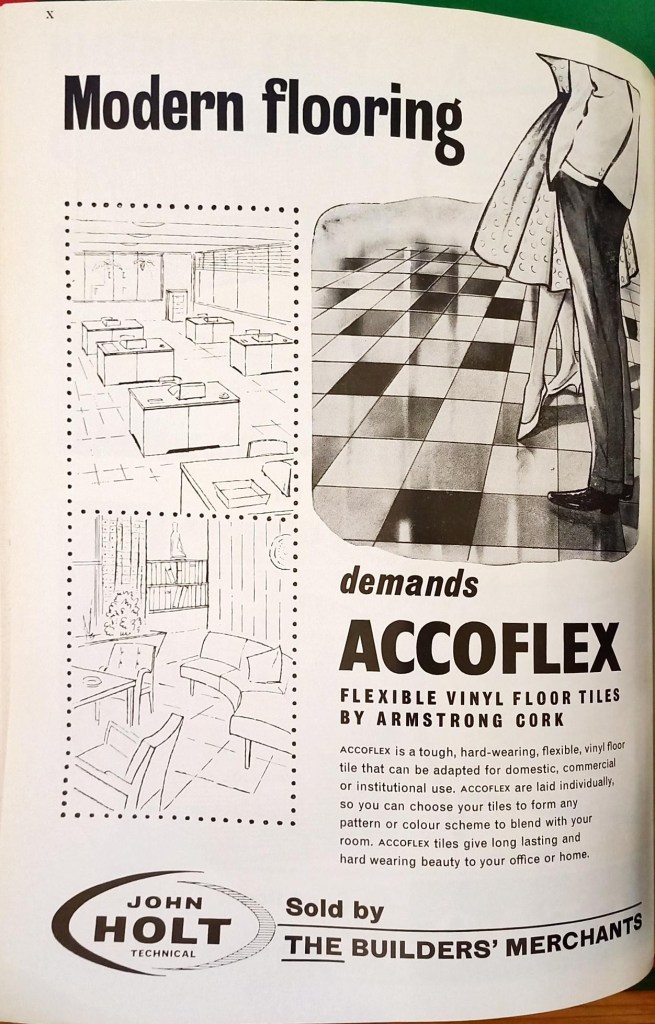
Companies targeted their advertisements not only at professionals but also at citizens in West Africa. These advertisements directed at building occupants first appeared in the 1962 issues and frequently alluded to modernity. Adverts for flooring, sanitary fittings, and appliances included large texts with phrases like “gracefully modern” and “modern living.” This contrasted with building supplies adverts-directed at professionals-which hardlyโ€ฏreferenced modern living. The late colonial era’s โ€˜africanizationโ€™ programmes aided the growth of the middle class by giving priority to the education and employment of Africans by public and private sector organisations. Likewise, housing initiatives launched by government agencies like the Ghana Housing Corporation and the Nigerian LEDB (Lagos Executive Development Board) in the 1950s attracted this demographic. They were characterised by their higher economic and educational status, as well as a household lifestyle distinct from the traditional communal family structure.v Was the reference to a modern lifestyle a marketing strategy to attract the West African middle class who had adopted a western-oriented lifestyle? 

The WABA journal provides an account of the building sectorโ€™s development in independent West Africa. The journal advertising demonstrated how companies promoted their products to appeal to both individual and national ideals of growth while navigating the shifting socio-political landscape. 

i See Hannah le Roux and Ola Uduku, โ€˜The Media and the Modern Movement in Nigeria and the Gold Coastโ€™, NKA (Brooklyn, N.Y.), 2004.19 (2004), 46โ€“49.  

ii โ€˜Introductionโ€™, The West African Builder and Architect, 1:1 (1961), 1. 

iii In 1961, the Nigerian office of Fry, Drew and Partners became Fry, Drew, Atkinson Architects Nigeria under the leadership of Robin Atkinson.  โ€˜Nigeria Developmentsโ€™, The West African Builder and Architect, 1.4 (1961), 108.  

iv Bianca Murillo, โ€˜โ€œThe Devil We Knowโ€: Gold Coast Consumers, Local Employees, and the United Africa Company, 1940โ€“1960โ€™, Enterprise & Society, 12.2 (2011), 317โ€“55  

v Daniel Immerwahr, โ€˜The Politics of Architecture and Urbanism in Postcolonial Lagos, 1960-1986โ€™, Journal of African Cultural Studies, 19.2 (2007), 165โ€“86 (p.175) 
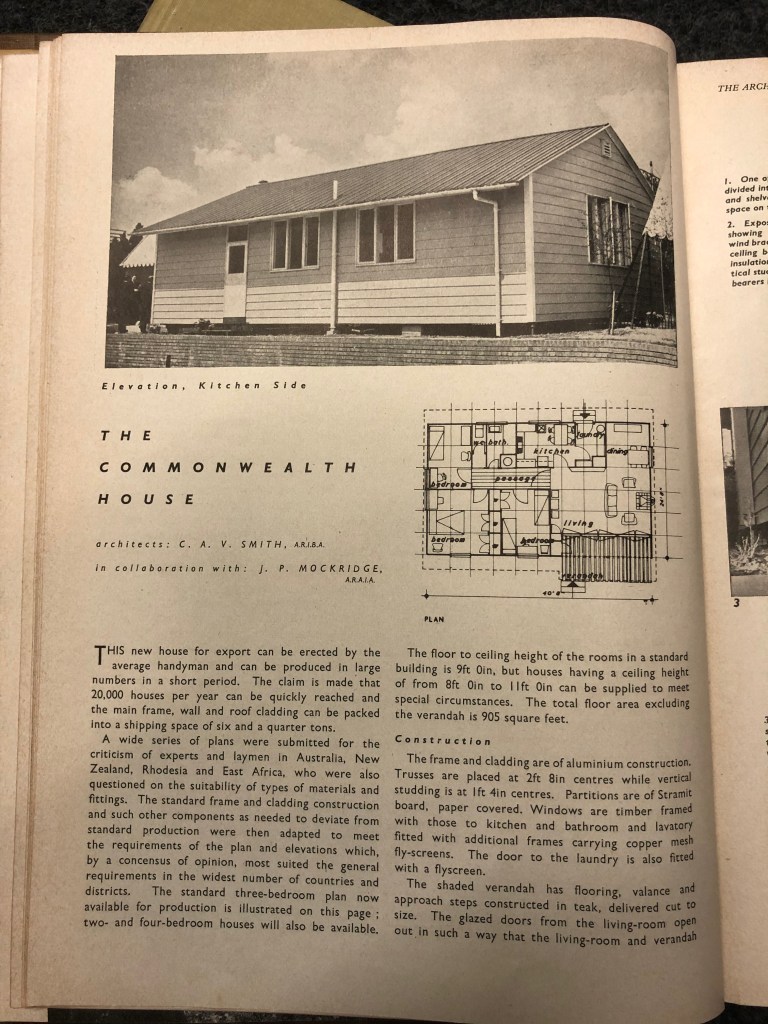
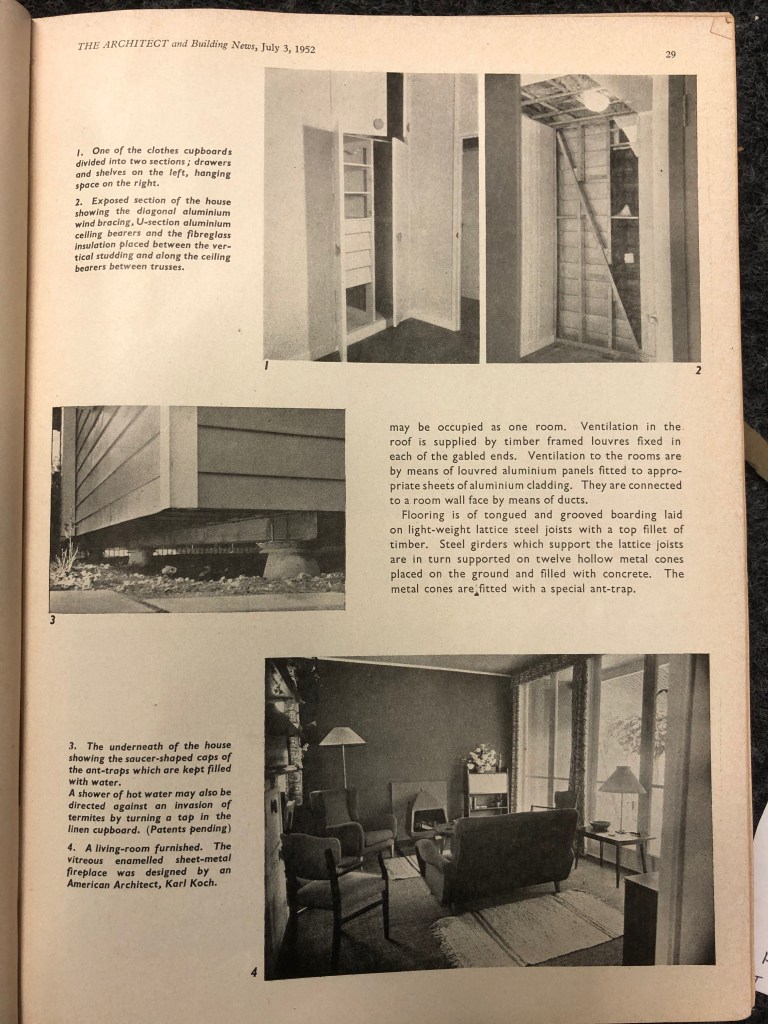
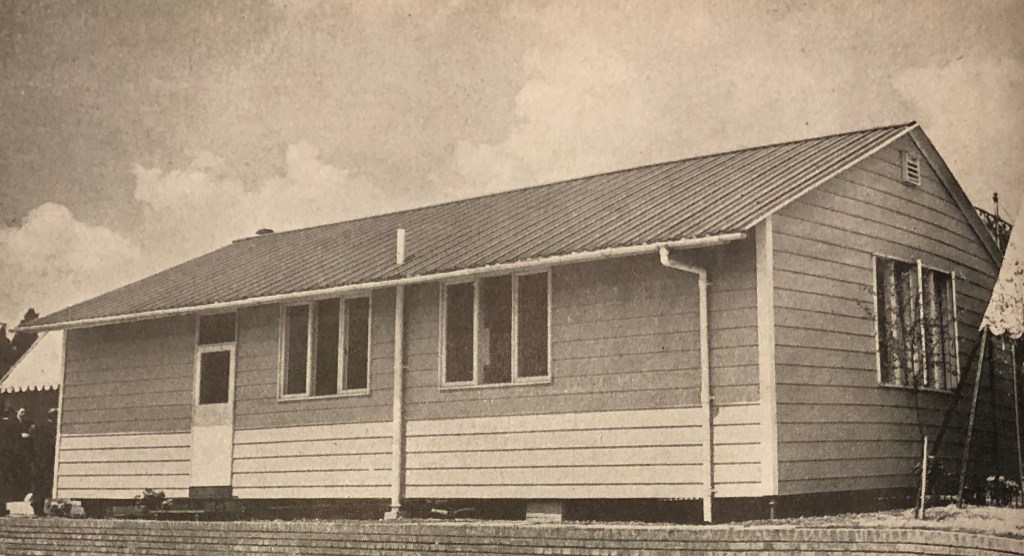
In theย Architect and Building News from July 1952 there’s an intriguing article for a partially-prefabricated โ€˜Commonwealth Houseโ€™.

The house could be easily shipped and โ€˜erected by the average handymanโ€™, aided by a standardised kit of parts would make manufacturing simple and predictable.ย 

The house was designed by Charles A. V. Smith with John Pearce Mockridge, following a consultation with potential makers and inhabitants. The architects adjusted their designs to suit a consensus – resulting in a house very much designed by committee with a predictable, if utilitarian and efficient, floor plan.

The brief was to develop a house that would be suitable across the geographical and climatic zones of Australia, New Zealand, Rhodesia (now Zimbabwe), and East Africa. Over 20,000 units were expected to be built per year to meet the demand for emigrating workers and their families eager to escape war-torn Britain for opportunities elsewhere.ย 

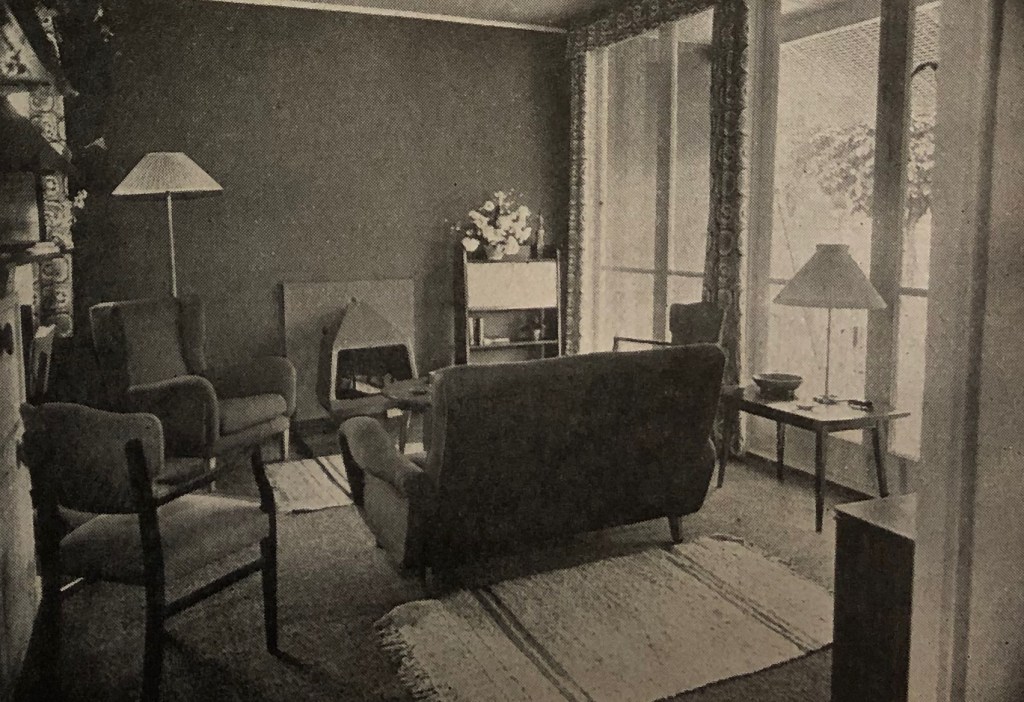
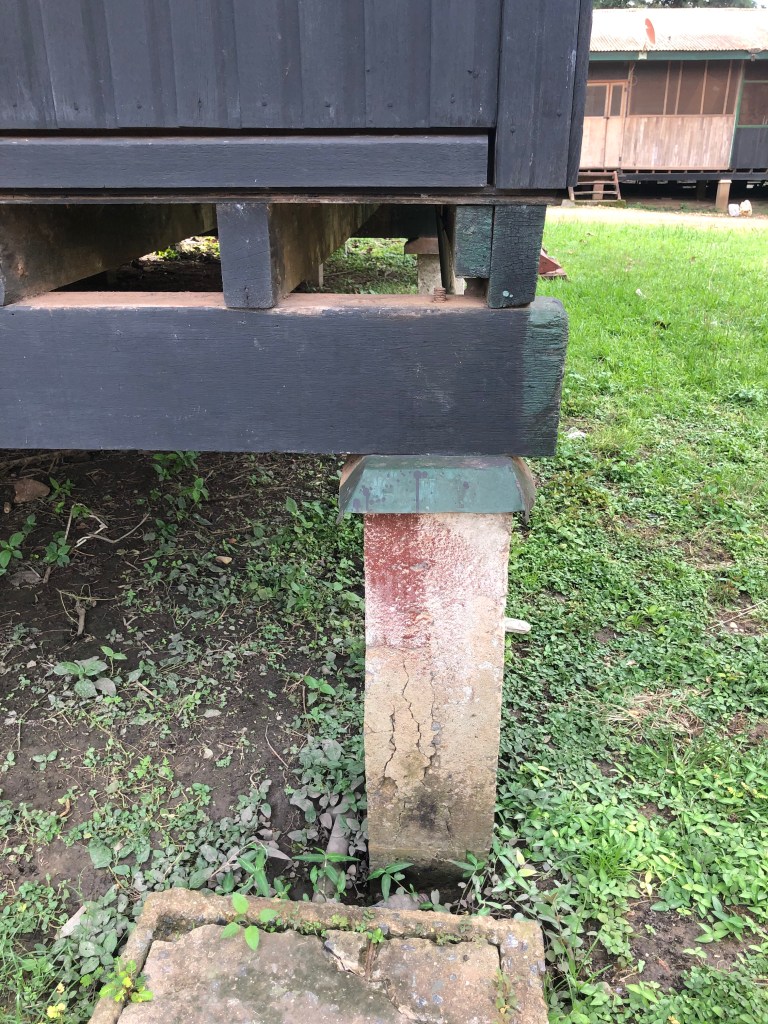
The house had an aluminium frame structure, and the cladding materials could vary depending on availability and final conditions. It was placed on concrete posts with an ant-trap to resist termite attack. The prototype erected on Great West Road in Hounslow was fitted out with furniture and a fireplace designed by American architect Carl Koch (1912-1998), who later pioneered several prefabricated house designs in the US.ย 

Theย Commonwealth Houseย design was very similar to houses we saw in the timber saw-mill town of Samreboi in Ghana – even down to the ant-trap detailing.ย 

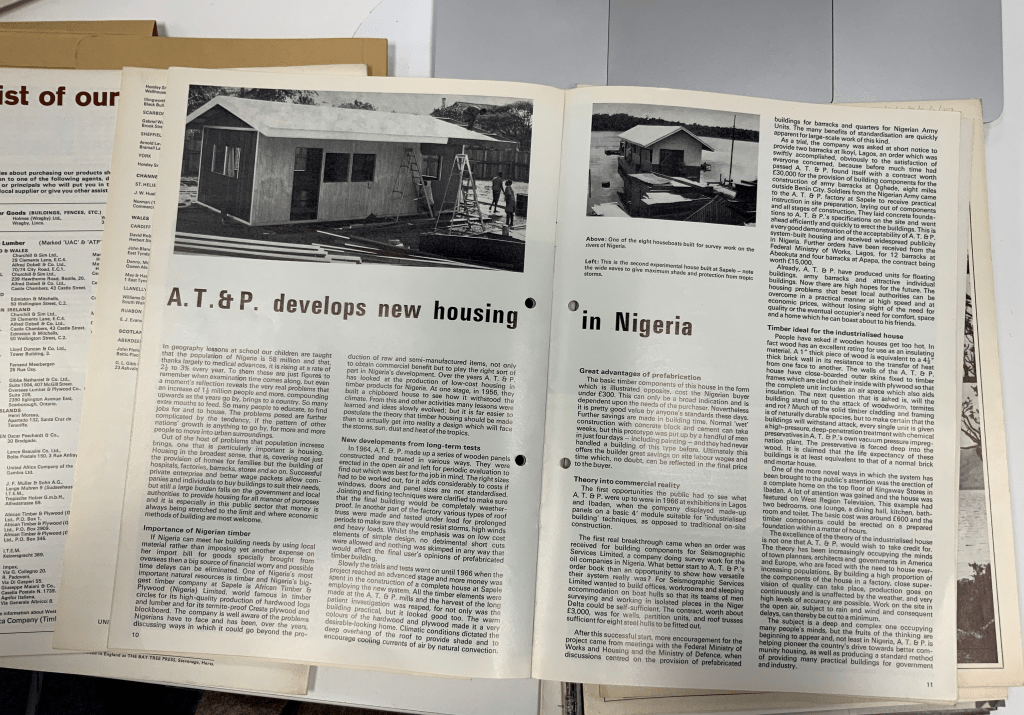
The African Timber and Plywood Company (AT&P), who owned the mill and were responsible for most of the housing, were also attempting to develop their own housing kits and to expand into new products and markets.ย 

By 1954 AT&P had begun to discuss prefabrication techniques and processes at both Samreboi and their larger station at Sapele in Nigeria. The drive and urgency for this type of production was heightened by increased competition and political efforts to quickly improve housing standards in West Africa. The Dutch firm Schokbeton had been awarded a large order for prefabricated housing in Ghana, and contractors Taylor Woodrow were eager to expand their building products export wing.

Architect Edric Neel (1914-1952) developed a consortium of architectural consultants with Taylor Woodrow in 1944 to research new structures that could be quickly assembled and fabricated. The group was called Arcon and their first project was a temporary prefabricated house. The system developed into a set of lightweight tubular steel components that could be easily welded together. The faรงade, if required, could be made of local materials, metal sheets, or cement board cladding, as required. The system was intended for export and into โ€˜tropical conditionsโ€™ in particular. The units could be readily scaled and used to assemble large factories and sheds with large spans. Many of the factories and mills (including those at Samreboi) utilised this standardised and low-risk approach to construction.
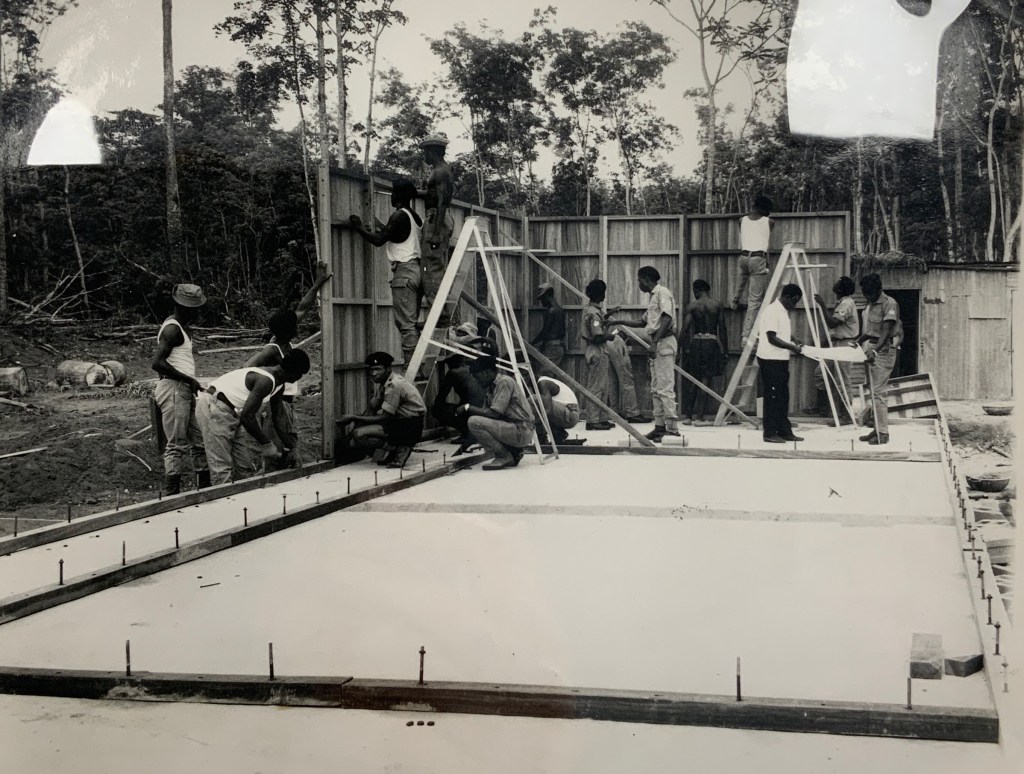
Over the next 15 years AT&P began developing a series of prefabricated houses, but rather than developing a frame and cladding approach they created integrated wall panels (like flat-pack furniture) with modular dimensions so that windows and doors could be added where required. They called it the AT&P System Building, and priced a small house at ยฃ500 โ€“ compared to the ยฃ1200 Schokbeton model. 

The system was adopted for military projects and housing, and continued to be deployed into the 1970s with AT&P developing many different variations and types.

Inรชs Nunes is a PhD student at University of Coimbra, Portugal and is investigating, “The Social Within the Tropical: Jane Drew and Minnette de Silva designing an inclusive modernism in the tropics”. Here’s an update on a recent visit to the RIBA archive.

โ€œMy dearest, darling Janeโ€: unfolding Fry and Drew Papers

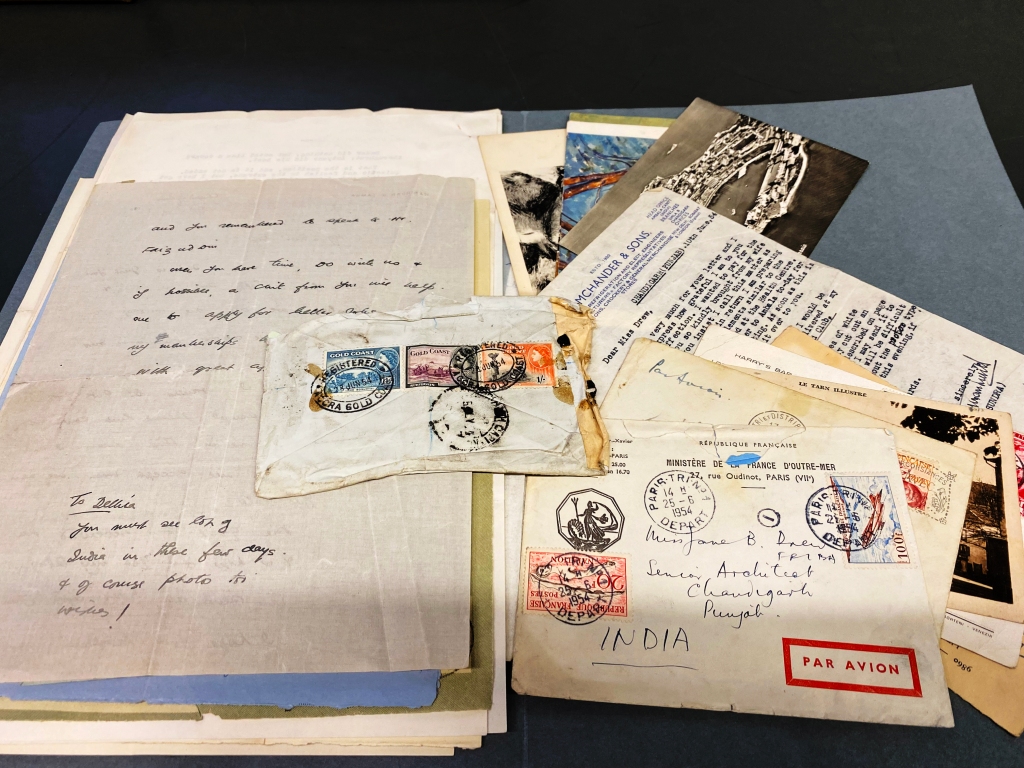
In a conversational tone, Maxwell Fry addresses Jane Drew from the โ€˜remoteโ€™ mid-1940s Accra. โ€œDarling Maxโ€, she replicates. Their correspondence, a lively itinerary from West Africa, India, Iran, or Mauritius, belongs to a treasure chest named Fry and Drew Papers. It is accessible, along with unrivaled archival material, in the RIBA Architecture Study Rooms of theย Victoria & Albert Museumย (London).

Love notes handwritten on hotel letterheads, diaries displaying candid reflections about life, and memoirs manuscripted on paper bags are entangled with professional-wise material. Included are lectures and articles revealing narratives about architecture, extraordinarily illustrated with colourful drawings or sharp pencil sketches. Both are complemented by miscellaneous data: postcards, press cuttings, administrative files, address booksโ€ฆ The characters gain life in every opened box. Their voices echo through calligraphies, signatures, ideas.

In its uniqueness, Fry and Drew Papers are an overwhelming resource regarding the life and work of both architects and an efficient record of the dynamic of their global scope partnership. Even so, it excels. Flexible and embracing enough to accommodate diverse interests and aims, unpublished personal letters, diaries, and autobiographies provide captivating details to any enthusiast โ€“ for instance,ย Fryโ€™s diary was only made accessible in 2021.ย Furthermore, the archive is a source of knowledge about British historiography and significant architectural thematics: the MARS Group, the Modern Movement, Tropical Architecture, and Chandigarh are noteworthy.

Overall, the research was a privilege and the expectations were exceeded. My deep gratitude to Dr. Shireen Mahdavi for supporting this endeavour. The wealth of these primary sources allows an experience that couldnโ€™t have been more rewarding. By immersing in Fry and Drewโ€™s universe, how inspiring becomes their lifetime of respect and companionship, the robustness of their practice, and the profound vow to โ€œproduce towns and housing that will be loved, lived in and cared forโ€ (Drew, F&D/27/2).

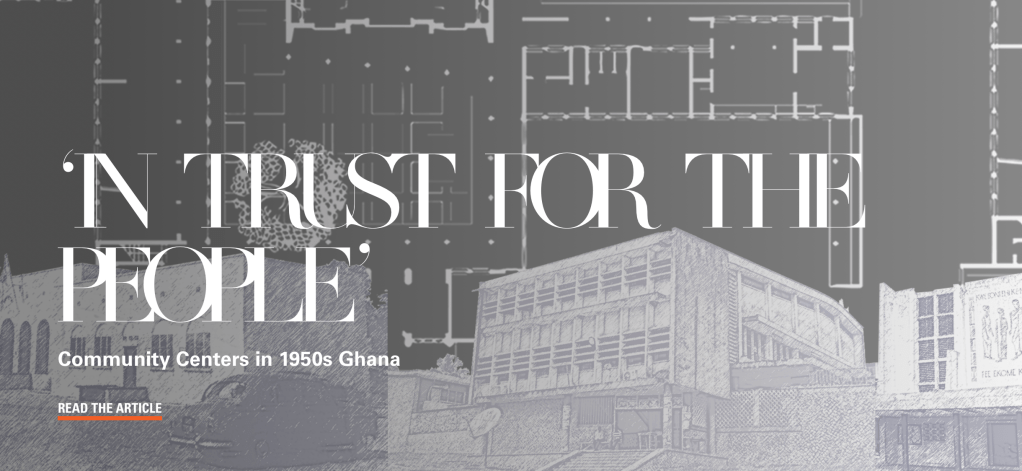
Have a look at the latest article from Design233 on Community Centers in Ghana, including the Accra Community Centre (paid for by the UAC) and Tarkwa Community Center (paid for by the Manganese Mining Company) – both designed by Fry and Drew. In addition to these modernist works the more formal and classically inspired centre at Kyebi is discussed – this centre is more of a mystery… We know it was funded by the Consolidated African Selection Trust (CAST)- but who designed it, and why did CAST commission such a lavish project?

Invented Modernisms: Getting to Grips with Modernity in Three African State Buildings
Kuukuwa Manful,ย Innocent Batsani-Ncube,ย Julia Gallagher

Jubilee House, Accra, Ghana.ย Source: Julia Gallagher, March 2019

This article examines recent attempts to create specifically African forms of modernist political architecture that draw on โ€˜traditionalโ€™ or โ€˜pre-colonialโ€™ aesthetic forms and ideas. Taking examples of three prestigious structures โ€“ the presidential palace in Ghana, the parliament in Malawi and the Northern Cape regional parliament in South Africa โ€“ the article shows how vernacular ideas have been incorporated into state-of-the-art political architecture, producing new or explicitly โ€˜Africanโ€™ forms of modernism. It explores how such buildings, which draw on โ€˜invented traditionsโ€™, are used alongside conventional, monolithic representations of the state to produce โ€˜invented modernismsโ€™ that both uphold and question the African state as a project of modernity.

Read the full article here: https://doi.org/10.1111/cura.12505

The George Padmore Library: A Potential Attribution 

Text by Dr Ewan Harrison

George Padmore Library in Accra ,Ghana

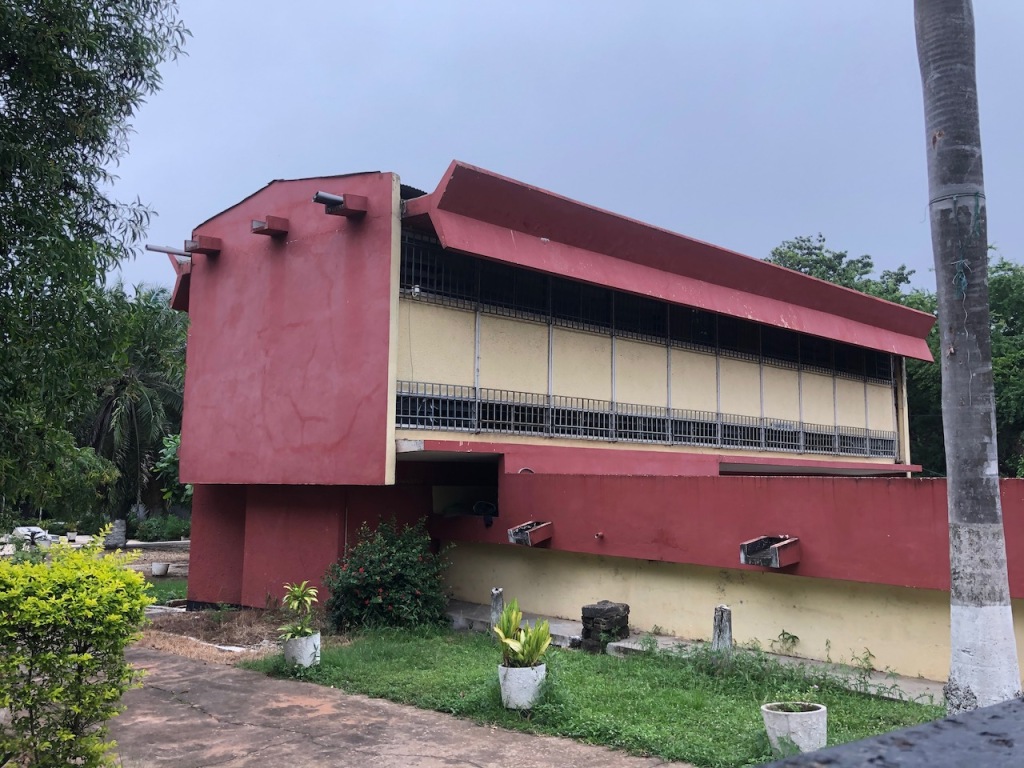
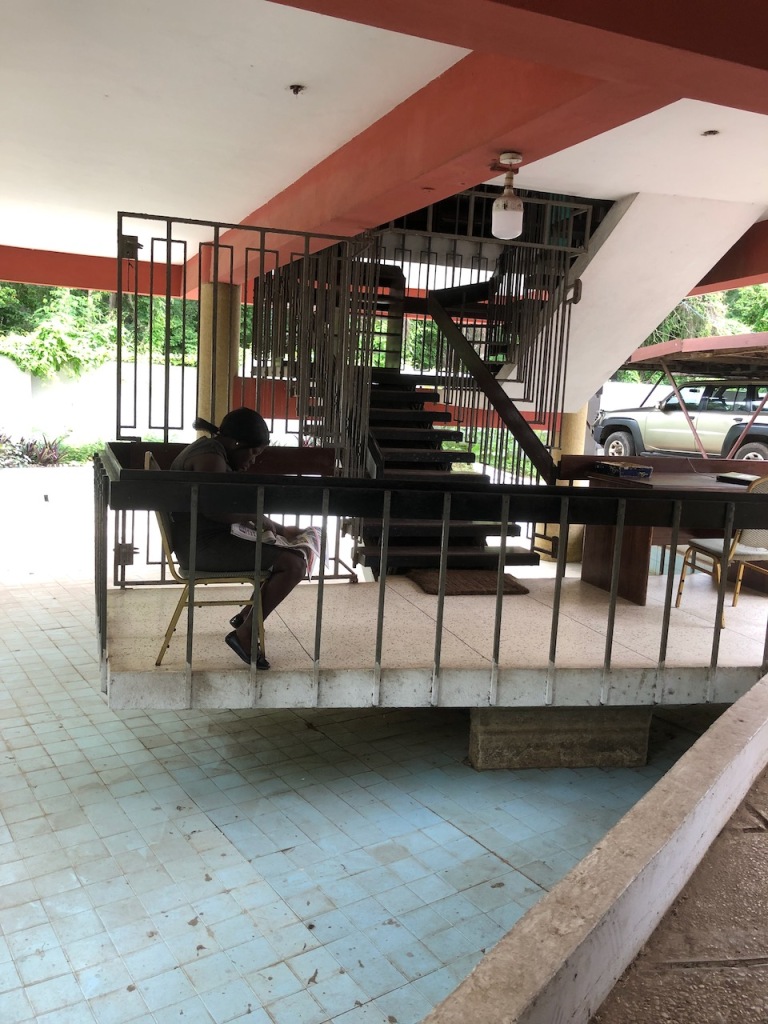
The George Padmore Library in Accra is a dynamic composition. Its principal block houses a fan-shaped reading room that extends from an apsidal end wall. This is raised up on pilotis, and is entered via a delicately wrought cantilevered staircase that itself springs from a fan-shaped expanse of terrazzo floating above a reflective pool. Externally, the facades are defined by horizontals of louvred glazing which allow for free air circulation, keeping the reading room at a comfortable temperature, and a strongly modelled canopy with sculpturally expressed rain water outflows. The building was established by the first president of the republic of Ghana, Kwame Nkrumah, in memory of the pan-Africanist writer, journalist and activist George Padmore. Padmore, who was born in Trinidiad, Nkrumah during the 5th Pan Africanist Conference, held in Manchester in 1945, and on Ghanaโ€™s independence, Padmore moved to Ghana to work for Nkrumahโ€™s government as a diplomatic adviser. Sometime following Padmoreโ€™s death, Nkrumahโ€™s government built the library in his memory, to house Padmoreโ€™s archive and a growing African studies library collection. The Library continues to function as Ghanaโ€™s primary deposit library to this day. 

Reflecting Pool and staircase of George Padmore Library

Before visiting, I had assumed that the building was likely designed by Nickson & Borys. Responsible for the design of both the Accra Central Library complex and the nearby Ghana National Archives building in the late 1950s, the practice might have seemed the natural fit for a commission to design a bespoke library in Accra at this date. However, on visiting the George Padmore Memorial Library, after having recently spent time in both of Nickson & Borys libraries in the city, the manifest differences in both spatial planning and design between those and the George Padmore Memorial Library became clear. Whilst both the Accra Central Library and the National Library are simple, cubic buildings, the architect of the George Padmore seems to have rejected the rectilinear in their handling of the main reading room. The Nickson & Borys buildings use brise-soliel and pierced concrete walls to dissolve the wall plane: creating lightweight buildings. In contrast, the George Padmore is a heavier, starker, more sculptural composition: much of its drama comes from strongly modelled canopies and sculptural concrete rainwater outflows, and its main facades feature long planes of unbroken concrete. 

Curved gable and reflecting pool of George Padmore Library

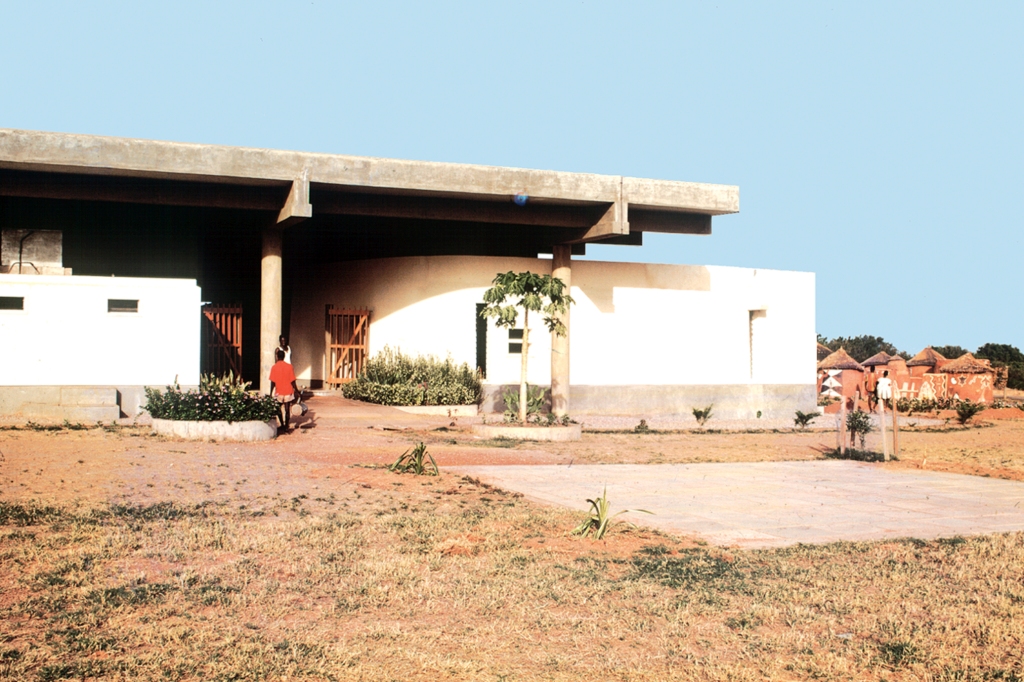
This points to another possible attribution, a design by Max Bond Jnr (1935-2009). The scion of a prominent African-American family, Bond studied architecture at the Harvard School of Design before working at Le Corbusierโ€™s Paris atelier (1958-61) and the New York practice Pedersen and Tiley (1961-64). Bond believed that African-American culture should โ€˜hark back to Africa,โ€™[1] and thus in 1963 wrote to Nkrumah asking for a job. By 1964 Bond was established in Accra as an employee of the Ghana National Contracting Corporation, the stateโ€™s contractor, working on designs for buildings at the government complex at Flagstaff House. Two of the precepts he outlined as central to his practice in Ghana were a โ€˜responsiveness to climate,โ€™ and โ€˜modern buildings for new institutions.โ€™[2] Bondโ€™s most famous commission for the GNCC, the design of a public library at Bolgatanga, in the countryโ€™s arid northern region, strongly evidences these concerns. The Bolgatanga library project, which features four discrete volumes โ€“ two library reading rooms, a lecture hall and an administration block โ€“ under a free-standing roof designed to maximise cooling air circulation throughout the complex, is very different in its massing to the George Padmore Memorial Library. But there is something in Bondโ€™s heavy roof at the Bolgatanga Library, in his handling of the oval wall of the Lecture Hall, and the sculptural treatment of the rainwater goods which show clear affinities with the George Padmore Memorial Library. And there are reasons beyond the stylistic to suggest Bondโ€™s authorship of the building. Padmoreโ€™s intellectual project, and, it can be argued, much of Kwame Nkrumahโ€™s political one, resolved around drawing attention to the shared heritage and struggles of Africans and the African diaspora throughout the Atlantic world. In this context, a design by an African-American architect, resident in Ghana, might have seemed especially suitable. 

Image of Bolgatanga Library: https://www.davisbrodybond.com/bolgatanga

Neither the Accra Town Planning archives, the papers of the Ghana Library Board or the archive of the Padmore Memorial Library itself shed much light on the buildingโ€™s authorship, although a letter in the National Archives of Accra politely rebuffing an offer from Nickson & Borys to fund a memorial plaque to Padmore is certainly suggestive that the buildingโ€™s patrons didnโ€™t think a practice headed by European emigres a suitable one to design a memorial to a titan of Pan-Africanism (dated 1961, this letter makes no  mention of the project for the Library, suggesting that it predates the libraryโ€™s construction). Questions remain, however. The Bolgatanga Library was extensively published, if the Padmore is by Bond, why wouldnโ€™t he have seen that it too received attention in architectural publications? Why wouldnโ€™t he accord it a central place in his Ghanian oeuvre? Was this perhaps a collaborative job, an awkward collaboration with one of the expatriate architectural practices that Nkrumah wished to side-line, practices like Nickson & Borys? Or with Eastern European or Yugoslavian architects employed by the GNCC? The last might be the most likely, given Ghanaโ€™s political culture in the early 1960s, and Padmoreโ€™s own long, if increasingly fractious, association with the Communist Party. Conclusive answer may well lie in the collections of the Avery Library at Columbia, which holds Max Bond Jnrโ€™s archives, or in the private papers of Kwame Nkrumah. For now, a tentative attribution will have to suffice. 

George Padmore Library Interior: Photo Iain Jackson

[1] J, Max Bond Jnr and the Approproation of Modernism in a Library Design in Ghana 

[2] J, Max Bond Jnr and the Approproation of Modernism in a Library Design in Ghana

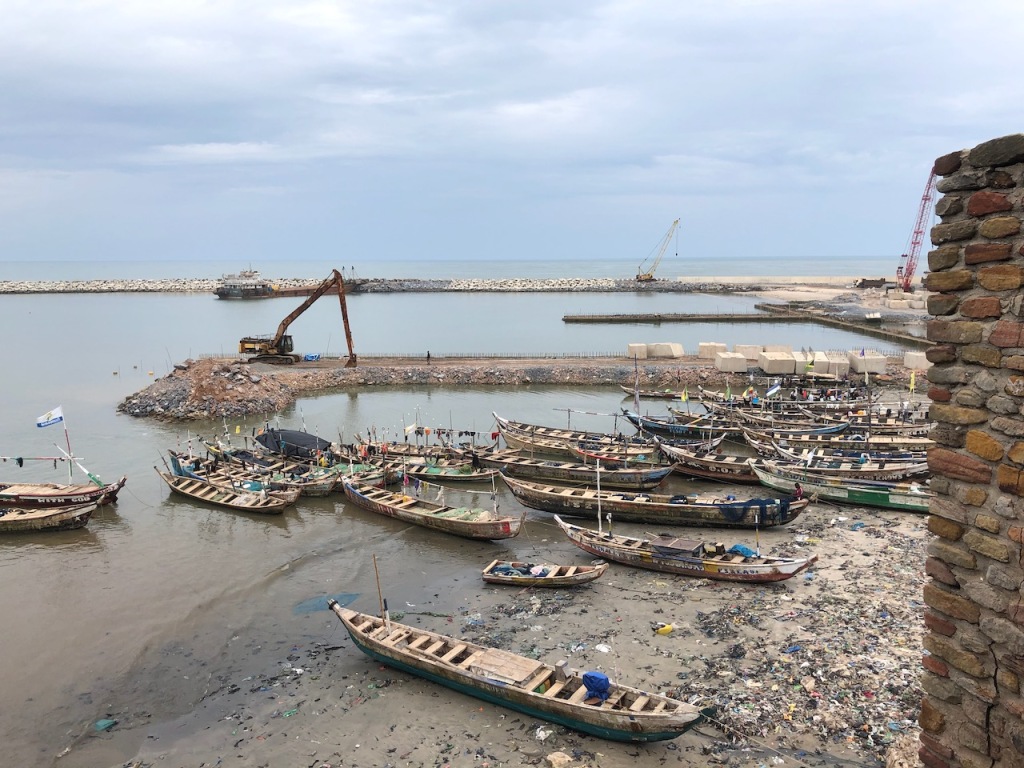
Returning to Accra after a 30 month break, I was expecting there to be changes, but not on the scale I witnessed. Three major projects have commenced โ€“ the new cathedral; the Marine Drive project; and the new fishing harbour. When completed they will have a drastic impact on the city and how it is experienced. Marine Drive, in particular, promises some spectacular changes to the much neglected and large sea front.ย For a port city Accra has never really utilised its enviable position overlooking the sea with its refreshing breeze, until now.ย The scale of the Marine Drive project is vast and incorporates the set design piece of Independence Square as its focal point.ย ย 

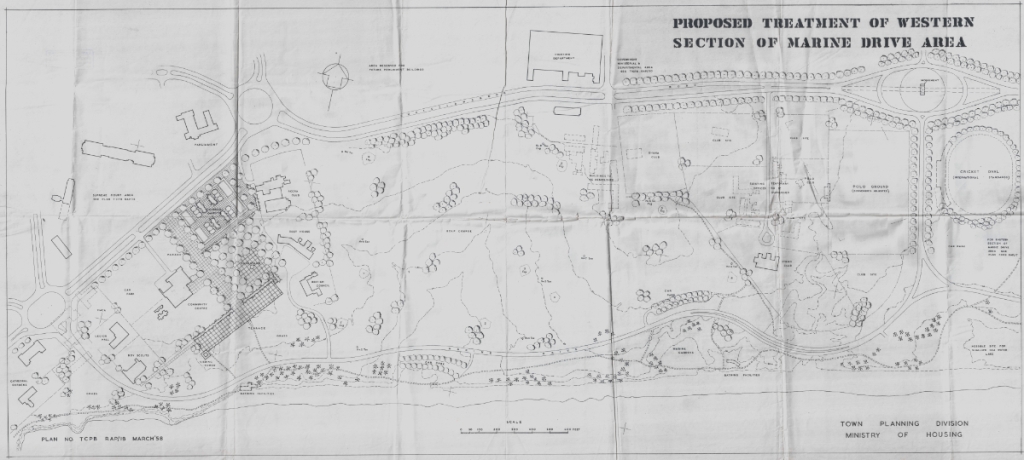
The project for Marine Drive initially commenced back inย 1958 with Geoffrey Jellicoe as lead designer, and various other projects have been mooted since. Jellicoeโ€™s proposal centred around the Community Centre, and also utilised the cricket stadium and polo pitch on the current site of Black Star Square, as well as a golf course and series of club houses.

1958 plan for Marine Drive: source PRAAD

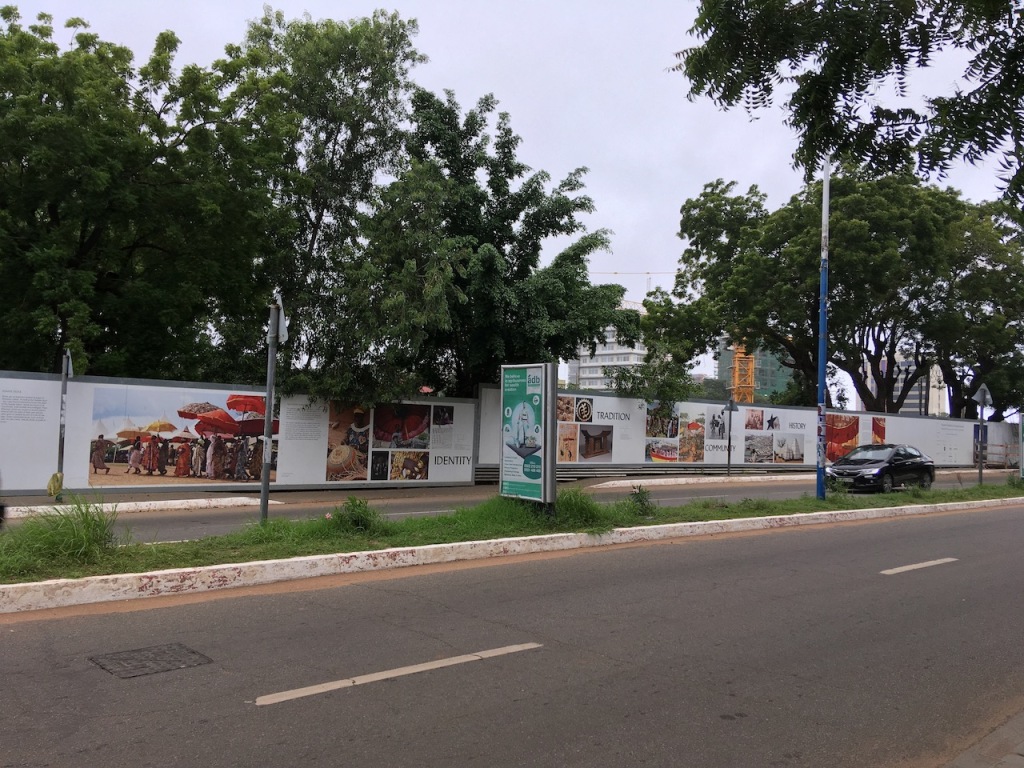
After so many other false starts it looks like Marine Drive is finally going to happen this time, with Sir David Adjaye as the lead architect. Whereas Jellicoe’s design was mainly concerned with providing sport facilities to the Colonial residents, the new proposal includes provision for other leisure facilities including beach bars, shopping, a promenade, and a series of residential and commercial towers. Sir David’s practice is also designing the new Accra cathedral and initial ground works have also commenced, with the site hoarded off and clad with architectural renderings explaining the project’s concept.

A rendering of the new Marine Drive project: towers around Black Star Square.
Current view of Black Star Square

The fishing harbour project has resulted in an extension of the old breakwater wall along with some major engineering works linking the shore to the harbour, as shown above.

Itโ€™s impressive that the city is conducting works of this scale, ambition, and vision. Weโ€™ll continue to record the developments here and to document the changes.

We also revisited the classic modernist constellation of the law court, library, and community centre. Whilst the library is still in use the community centre is not, other than as a store. Itโ€™s looking particularly tired, and the building fabric is beginning to deteriorate. Its future is uncertain, and as it sits within the Marine Drive development area discussed above it isnโ€™t clear what, if any, itโ€™s role will be. Even the beautiful Ghana Club is potentially at risk from the new development. Itโ€™s been mooted that the club might have to be physically moved to a new site. Itโ€™s not an impossible solution as the upper level is a timber structure with louvred facades. It could be jacked up and rolled to a new location, but equally itโ€™s also disappointing that these older structures were not incorporated and woven into the new plans.ย 

The 1951 victory for Kwame Nkrumahโ€™s Convention Peopleโ€™sParty resulted in some major shifts in the procurement of new infrastructure and housing. For the electorate, housing was one of the most important issues and Nkrumahโ€™s government was quick to recognize this potency.ย 

His plan, announced in 1952, was to build a new port city, complete with innovative and improved housing at the highest standards. Located only 18 miles from the centre of Accra, the new city of Tema would demonstrate Nkrumahโ€™s commitment to industrial development and that Ghana was at the centre of a pan-African vision.  

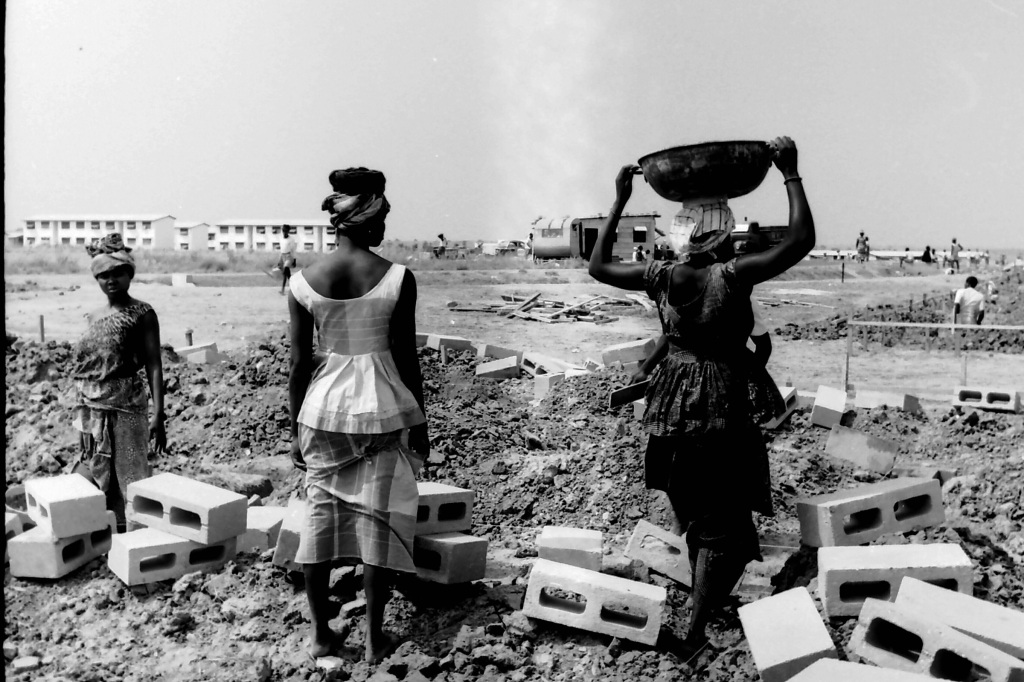
Tema under construction: female labour force transporting blocks and cement

Tema was part of a wider industrialization project that included a new aluminum smelting plant and hydroelectric power station on the Volta River. It was a major project involving international financial backing and set out the major ambition Nkrumah had for the nation during the advent of independence. ย For such a major project, very little is known about the first team of architects and planners responsible for the execution and delivery.

To read the full article go to https://www.design233.com/articles/pioneer-ghanaian-architects-theodore-shealtiel-clerk and more extraordinary images of Tema under construction in the 1950s.

Have a look at https://www.design233.com/articles/from-buckman-to-turkson for my article on some lesser known Ghanaian architects, including John Buckman and Peter Nathaniel Kwegyir Turkson. I uncovered Turkson’s architecture thesis project in the University of Liverpool archives and discuss his plans for a new Parliament Assembly building in Accra.

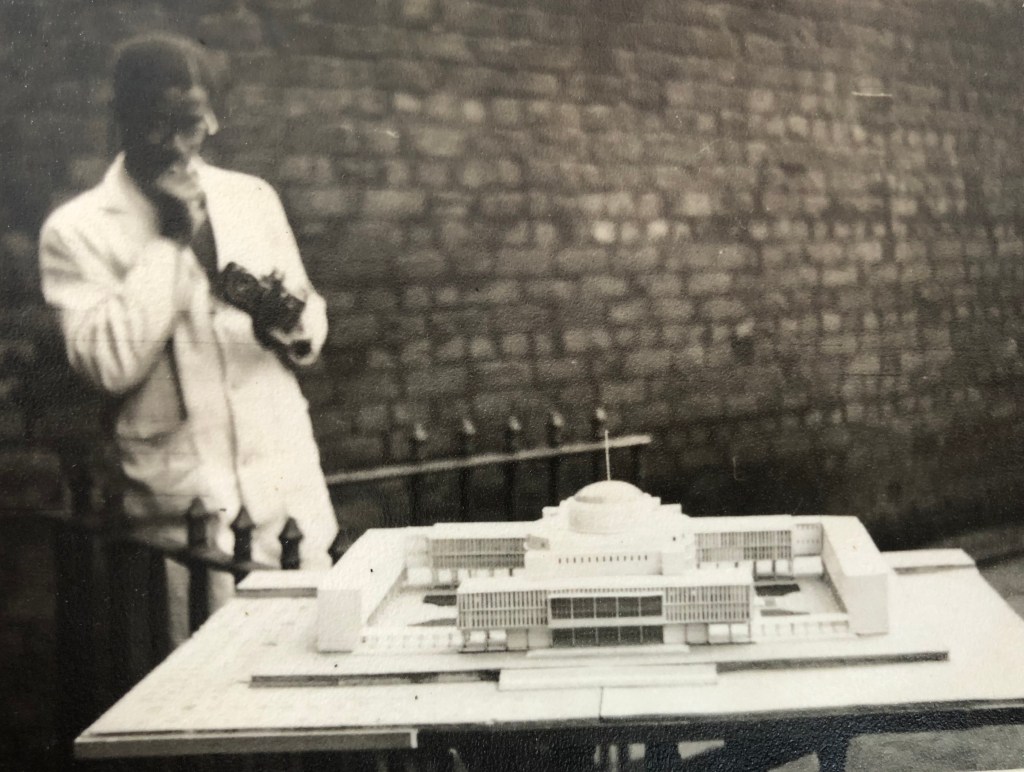
Peter Turkson in Liverpool with his architectural model for a new parliament building in Accra, 1954.

Turkson wanted a design that was โ€˜classic in character and at the same time distinctly modern in feeling and detailโ€ฆ[exhibiting] the spirit of modern timesโ€™.ย 

Proposal for the Accra Assembly building, by Peter Turkson, 1954

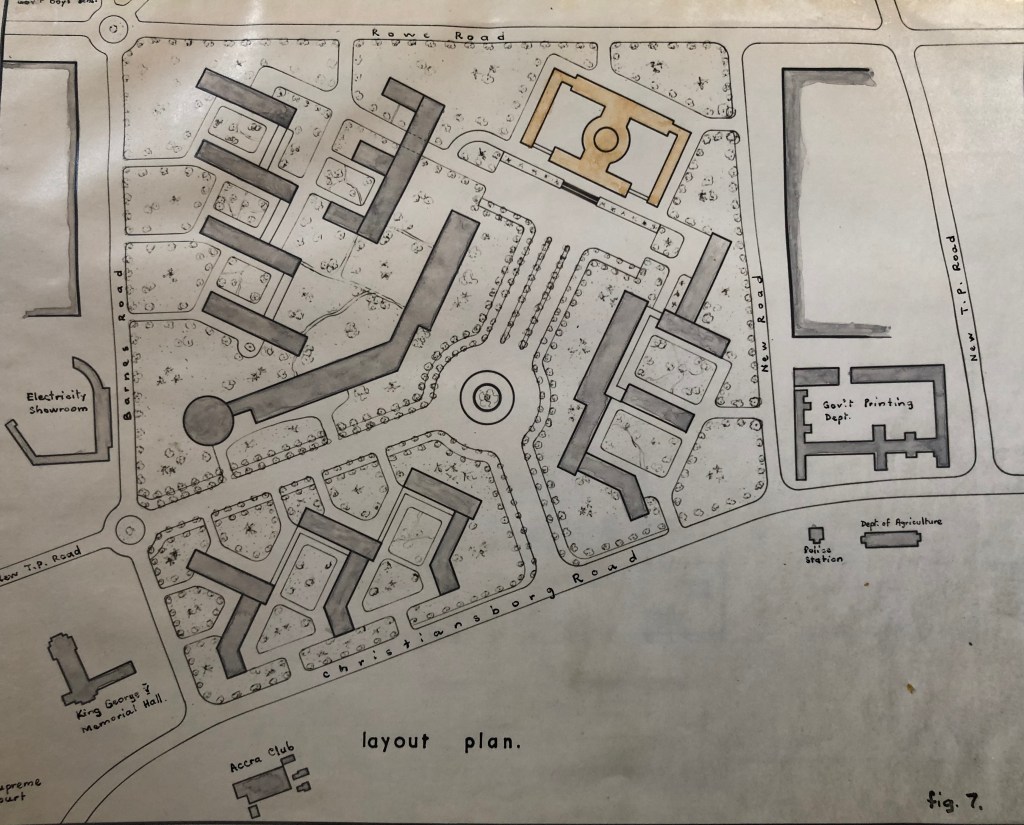
Turksonโ€™s solution proposed using a โ€˜sandcreteโ€™ (laterite soil mixed with cement) block wall along with a brise-soleil frame of fixed vertical and horizontal fins. Topping the structure and reflecting the chamber below was a reinforced concrete dome clad in copper, whilst some of the walls would be clad with faience finish. The plan was symmetrical forming two courtyards with a central drum for the debating chamber and library above.ย 

Site plan showing the proposed location of the new Assembly on Accra’s Barnes Road and Christianborg Road.

Recent years have seen an upsurge of academic, curatorial and critical interest in postwar art in Britain and around the world. This has included addressing the question of how we define what โ€œpostwarโ€ is and how expansively we might think about the period and its cultural significance. This series of Paul Mellon Centre research seminars will showcase new perspectives on the arts of postwar Britain as an interdisciplinary and transcultural terrain of research. Talks in the series engage with the issues of empire and worldmaking, with questions of migration, the environment and with the intersections of art, technology and new media.

The sixth and last in a series of summer research seminars onย The Arts of Postwar Britain 1945โ€“1965ย with Iain Jackson and Rixt Woudstra.ย 13th July 2022, 6pm-7.30pm, Paul Mellon Centre

  • 25 May to 13 July 2022
  • A series of summer research seminars to be held on Wednesdays from May to July 2022
  • Paul Mellon Centre [online and in person]

Iain Jackson โ€“ Modern Architecture in West Africa: Schools, Sculptures and Magazines

This paper is concerned with modernist architecture in โ€œBritish West Africaโ€ produced in the aftermath of World War Two and the independence period of these countries.

These experimental and often provocative structures were designed for climatic comfort, as well as becoming didactic vehicles for ideas sharing ideas of a modern and liberated Africa.

The paper will discuss attempts at forming a โ€œBauhausโ€ Art School in Accra, followed by various commissions of libraries, community centres and museums that attempted to blend the most radical architectural designs with decoration, murals and sculptures. The West African context seemingly presented a โ€œblank canvasโ€ for newly qualified architects eager to โ€œexperimentโ€ in ways that would be impossible in Britain. Whilst these buildings were often presented as symbols of an emerging nationalism and expectation of liberation, they also reveal the ongoing neo-colonial methods, with many relying on the patronage of multinationals such as the United Africa Company.

Finally, the paper will discuss how these projects were reported and shared, especially through the high-brow magazine Nigeria, which regularly featured extensive articles written by the architects on the latest designs.

The result was a diverse and extremely fertile context that reveals an often-overlooked set of important structures responding to a period of political flux and cultural exchange.

Rixt Woudstra โ€“ โ€œA feeling of warmthโ€: Tropical Timber, Modern Interiors and the United Africa Company in Postwar Britain

In 1960, the new, modernist headquarters of the United Africa Company (UAC), one of the leading British trading businesses extracting palm oil, cocoa and other raw goods from West Africa since the late nineteenth century, opened near Blackfriars Bridge in central London. While the structureโ€™s grey concrete and glass exterior appeared cold, inside the architects used a strikingly large variety of gleaming tropical timbers. The doors, floors and panelling, as well as most of the furniture, were made of honey-coloured idigbo, pinkish makore, fine-textured guarea, reddish-brown sapele and deep-brown African mahogany โ€“ all logged by one of the companyโ€™s subsidiaries, the African Timber and Plywood Company, in Nigeria and Ghana. Although an exceptional example, it was certainly not the only building containing exotic timbers in postwar Britain; tropical wood could be seen in and on the outside of university building, civic centres, housing estates, sport facilities and offices.

Scholars have explored how Jamaican and Honduran mahogany, sourced by enslaved workers, left an imprint on British domestic interiors and furniture design in the late seventeenth and eighteenth century. Less well known, however, is that โ€œempire timberโ€ โ€“ and later, โ€œworld woodsโ€ โ€“ continued to permeate British design and interior architecture well into the twentieth century. This talk focuses on the commercial activities of the UAC in Nigeria and Ghana during the 1950s and โ€™60s and considers how tropical timber was deployed to soften or provide a decorative element to modernism, often perceived as cold and austere. Moreover, examining tropical timber and tracing where and by whom it was logged, how it was processed, sawn, shipped and sold, enables us to see how British postwar modernism was dependent on imperial and neo-imperial networks of extraction and colonial labour.

The full programme details are here: https://www.paul-mellon-centre.ac.uk/whats-on/forthcoming/liquid-crystal-concrete/event-group and you may book tickets here: https://www.eventbrite.co.uk/e/liquid-crystal-concrete-postwar-colonialism-tickets-333553967897