Architectures of Informal Empire in Architectural Theory Review
Recent efforts to understand the pervasiveness of empire and its legacies have done little to reorient and expand the geographic or theoretical focus of scholarship, often downplaying the broad range of political, commercial, and cultural relationships that empire was built upon. Yet imperial ambitions were almost always accompanied by multiple economic and civilisational claims that preceded or did not amount to direct colonisation. Aptly named the “Age of Empire” by Eric Hobsbawm, the nineteenth century witnessed unprecedented travel and exchanges made possible by the advances in technology and industry of the century, that served to advance economic and cultural aims simultaneously. A wide range of private and state actors, including missionaries, merchants, explorers, archaeologists, doctors, nurses, and scientists thus helped expand, articulate, and consolidate both the reach of western “civilisation” as a standard and the petrification of indigenous civilisations as backwards and “other.” Neither have all imperial activities been recognised as such. Some empires, like the United States, engaged in similar processes driven wholly by private actors, without the apparatus of a colonial state, while positioning themselves as “anti-imperial.” And some regions, like the Eastern Mediterranean, while never “formally” colonised—depending on our definition of colonialism—were significantly shaped by “informal” foreign interests. But almost three decades since Mark Crinson introduced the history of informal imperialism into architectural history, such areas remain marginal in studies of colonial architecture and urbanism. In these areas that were the site of informal or inter-imperial contestation, or that were subject to what Ann Laura Stoler calls “affective” security regimes, the projects of private actors often led to extensive economic, material, and spatial configurations whose reverberations continue to be felt, even today. Architecture, as an embodiment of territorial, political, economic, and cultural imaginations, was integral both to these processes and to their contemporary endurance.
This issue seeks to explore the boundaries of what can be considered “colonial” in histories of architecture and urbanism, in the past as in the present. It asks how we can define and describe the architectural and urban projects that accompany imperial ambitions, both formal or informal, and their spatial, material, and cultural imprint on the territories in which they are implemented. How can we meaningfully question the legacies of missionary projects, of infrastructural concessions, or developmental aid, to mention only a few examples, especially when such projects came without a colonial state? What do we learn about the entanglement of architecture and political power if we begin from the buildings and sites around which proto-imperial and para-imperial processes took place, rather than from the study of a single or formal imperial state?
We welcome contributions that explore new theoretical questions and methodological approaches to the study of architectures of informal empire—that foreground the affective power of buildings in the past or present; the entanglements of state and non-state actors in informally colonised regions; instances of intra- or inter-imperial contestation or collaboration, including with local elites; or the broader cultural and/or economic relationships inscribed in space that survive after the dismantling of colonial states. We also encourage empirical contributions that focus on geographies and actors that have remained marginal in the scholarship on colonial architecture and urbanism, that can dislodge the primacy of the single colonial state. By expanding our understanding of the “colonial” in architectural history, we hope to gain new insights into the contemporary and enduring manifestations of empire in the built environment—a necessary starting point for any true attempts at future decolonisation.
A visit to Venice to attend the inaugural AFRAHUAN session at the Teatro Piccolo at the Arsenale as part of the Carnivale Proceedings of the Venice Biennale proved an apt occasion to visit and view Venice in full exhibition and tourist mode.
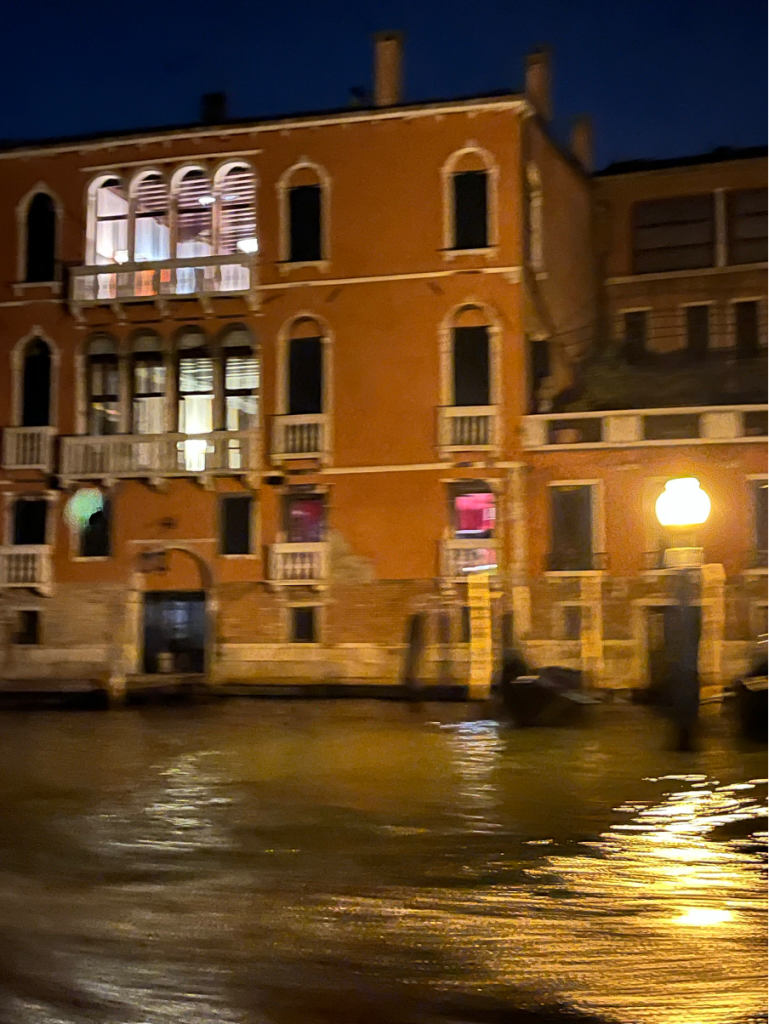
Venice is indeed a city like no other. No cars, no bicycles, lots of passageways, canals, and tourists. One adjusts to this city of walkers, traders and tourists all jostling for space in alleyways that are literally not wide enough to swing a cat. The green canal water both enticing and goading the unwary walker to come to its banks.
Arsenale Arriving in Venice at night
A walk to the Arsenale gave a better viewpoint of the wide vista of Venice as a series of islands with canals as fingers out to the grand canal. The adaptive reuse of various parts of this still living city is clear. The Arsenale itself remains the home of the Italian navy and a museum dedicated to the armed force still exists with the occasional boat dropping by.
The main part of the old Arsenale building however now has been occupied by the architecture biennale, this year curated by Lesley Lokko and involving your writer and a wide set of architects, writers and artistes with Africa focused research. The ‘carnivale’ exhibition is no mean feat, a work of immense dedication, creativity and focus. The curation is superb and content more than can be taken in at one go. One easily gets immersed in what it offers up with names one knows and has heard of contributing to this rich tapestry of art. Fortunately the accompanying catalogue means one can refer back to installations and events missed or glossed over in the viewing of the exhibition.
AFRAUHN AT THE CARNIVALE…
The African Architectural and Urban History Network (AFRAUHN) had its debut at a session at the Carnivale at the Biennale. Curator Lesley Lokko introduced our session which had two parts, the first involved speakers Ikem Okoye (Delaware, USA), Kuukuwa Manful (Michigan University, USA) and Neal Shasore (London School of Architecture), with Ola Uduku (Liverpool University) chairing, where the session focused on a discussion on the remit of AFRAUHN which is to help encourage and advocate for Architectural Research in Africa, and support new generations of indigenous historians and researchers in Architectural History and urbanism. After Ikem Okoye’s introduction both Kuukuwa and Neal were able to discuss their different approaches to, and hopes for Africa-related Architectural Research.
AFRAUHN Session [Courtesy of Venice Biennale]Lesley Lokko Introducing the AFRAUHN Session [Courtesy of Venice Biennale]
The second session chaired by Huda Tayob (Unversity of Manchester) involved all speakers from the earlier session and also Murray Fraser (University College London). This session was a roundtable where the speakers responded to Huda Tayob’s questions which considered specific issues and challenges to scholarship in African Architectural History and its situatedness within the wider context of global research and challenging normative notions of historical research and scholarship.
AFRAUHN 2nd Session [Courtesy of Venice Bienale]AFRAUHN 2nd Session [Courtesy of Venice Bienale]
The entire session was recorded and will be published by the Venice Architecture Biennale before the end of September 2023. Due to the events related to air traffic control problems in the UK unfortunately several of the invited AFRAUHN team were unable to attend the session, and others arrived late due to flight delays. It is hoped we will be able to include their recorded contributions to the final video output from the session.
IUAV (University of Venice)
On Wednesday, the day after the Carnivale discussion we were fortunate to reconvene at a meeting room at the IUAV (University of Venice), thanks to Dr Jacopo Galli, who has researched into African modernism and was involved in the curation of the exhibition Africa Big Change, in Milan and has worked with Manchester School of Architecture on the analysis of schools in West Africa. IUAV has sites across Venice, and we met at the C’a Tron campus, a Venetian villa owned by the wealthy Tron Family before being gifted to the State. Post meeting tours took us to the Carlo Scarpa-influenced main campus of the IUAV, a repurposed convent which still has parts which are owned by the church. The campus also has a significant architectural library including book volumes and periodicals accessible and in regular use by its students.
IUAV
Unlike the exclusive arrival to the watery city a few days earlier, the trip back to the airport was by airport water taxi, which proved to be a bus trip stopping at many of the archipelago of islands which constitute Venice, including Murano, famous for its glass works and San Michael. Approaching Marco Polo Airport Venice by water seemed a very apt way to leave the city.
We are delighted to be able to host Professor Ayo Olukoju (Institute of African and Diaspora studies, University of Lagos) and Professor Sam Ntewusu (Institute of African Studies University of Ghana) who are visiting the University of Liverpool and also the Unilever Archives to explore the possibilities of future collaborative research and teaching activities across our institutions and others in NW England.
Both Professors are historians who have worked with archival sources in their research in West Africa. They have generously agreed to share, through this seminar, the challenges and issues with working with archival material and sources from a West African perspective and also some of the hopes they have for future collaborations.
Do join us to hear their views and also join the conversation – how do we make the most of archives in the 21st century in different locations and places? Importantly do we need to decolonise the archive, and if so how?
Hosted by the AHUWA Research centre in association with Unilever Archives, School of History and Institutes of African Studies and African Diaspora Studies at the University of Ghana, and the University of Lagos
This is the first article in a series that considers reflections on the value of interpretation in combination with the technical practice of cataloguing, authored by CCA staff and invited scholars and introduced by Martien de Vletter. Here, we examine changing terminology. CCA cataloguer Jennifer Préfontaine considers context and the use of the term “peon” in cataloguing the Pierre Jeanneret fonds, and Michele Tenzon, Ewan Harrison, Iain Jackson, Claire Tunstall, and Rixt Woudstra sift through reworkings that were made in the development of the United Africa Company archives.
The Importance of Context
Jennifer Préfontaine weighs meaning and intent when cataloguing archival materials
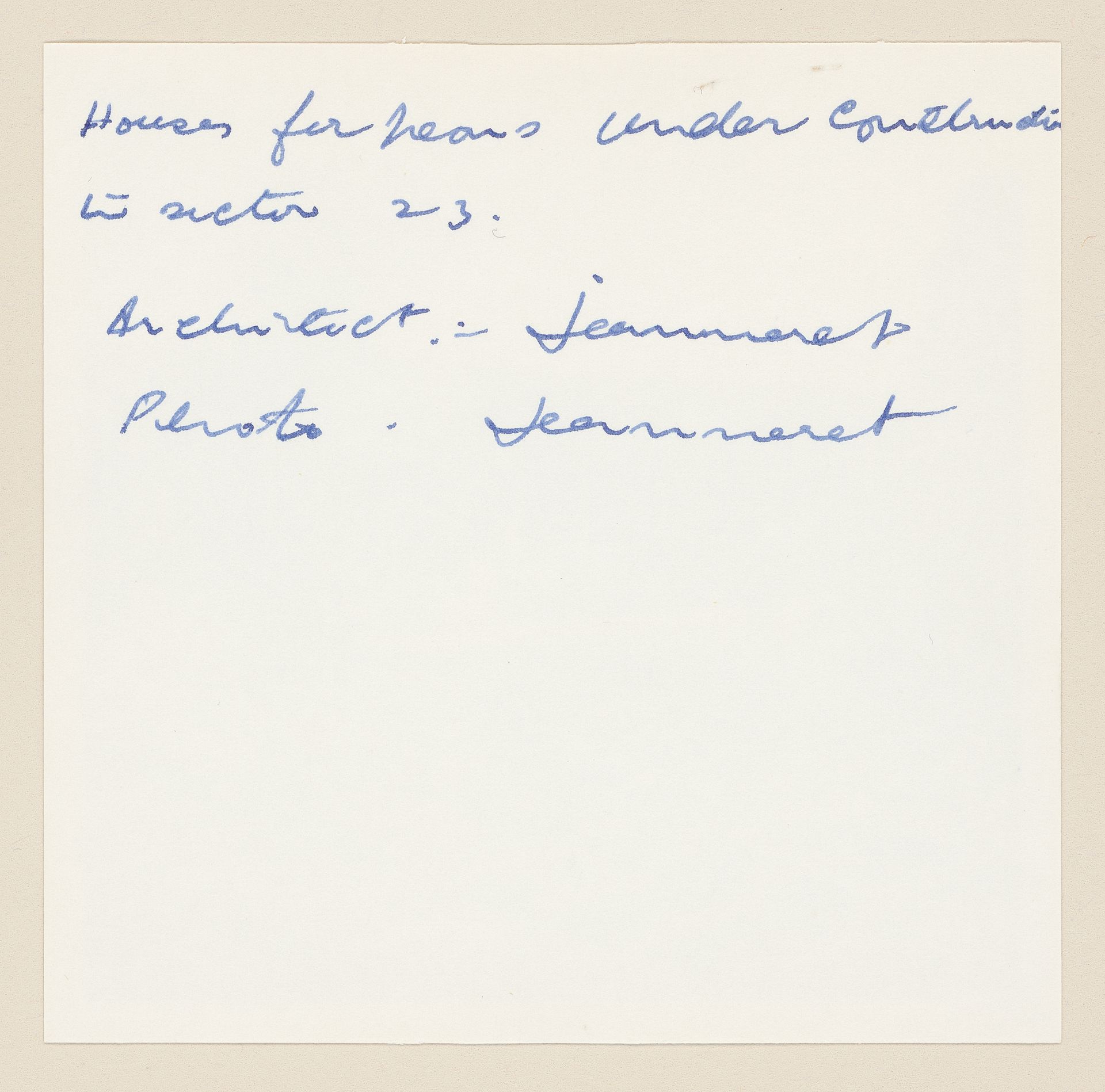
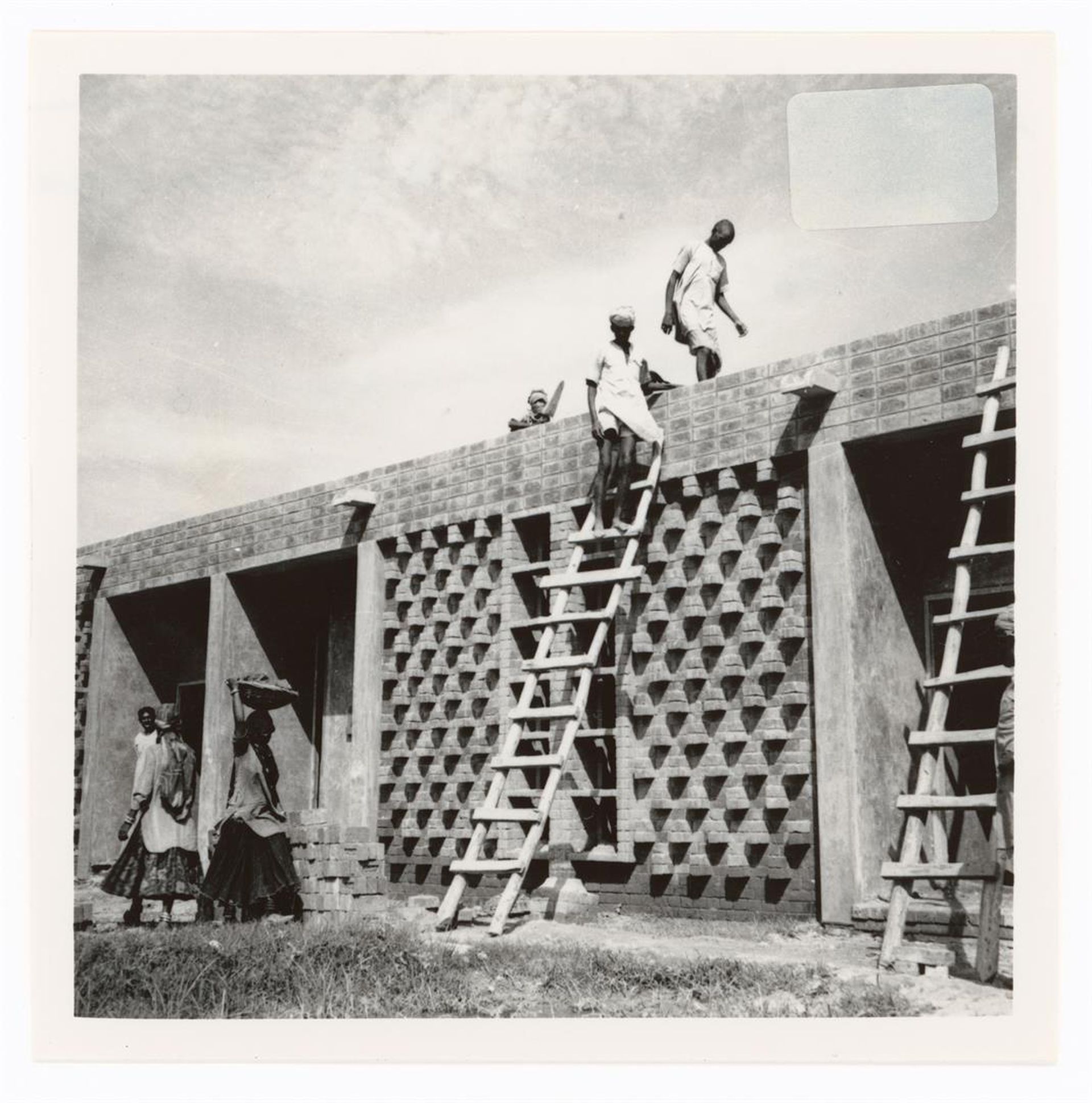
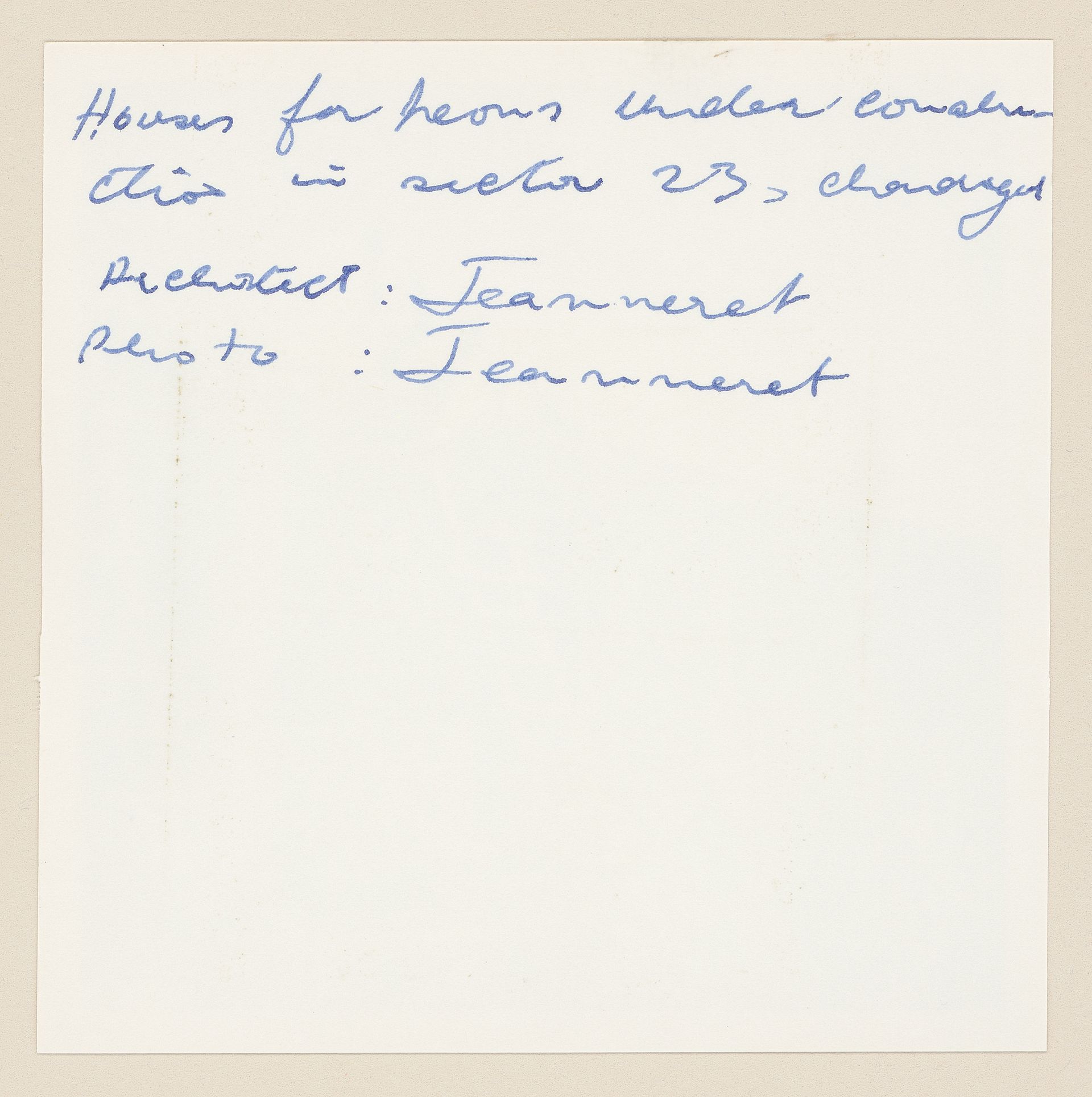
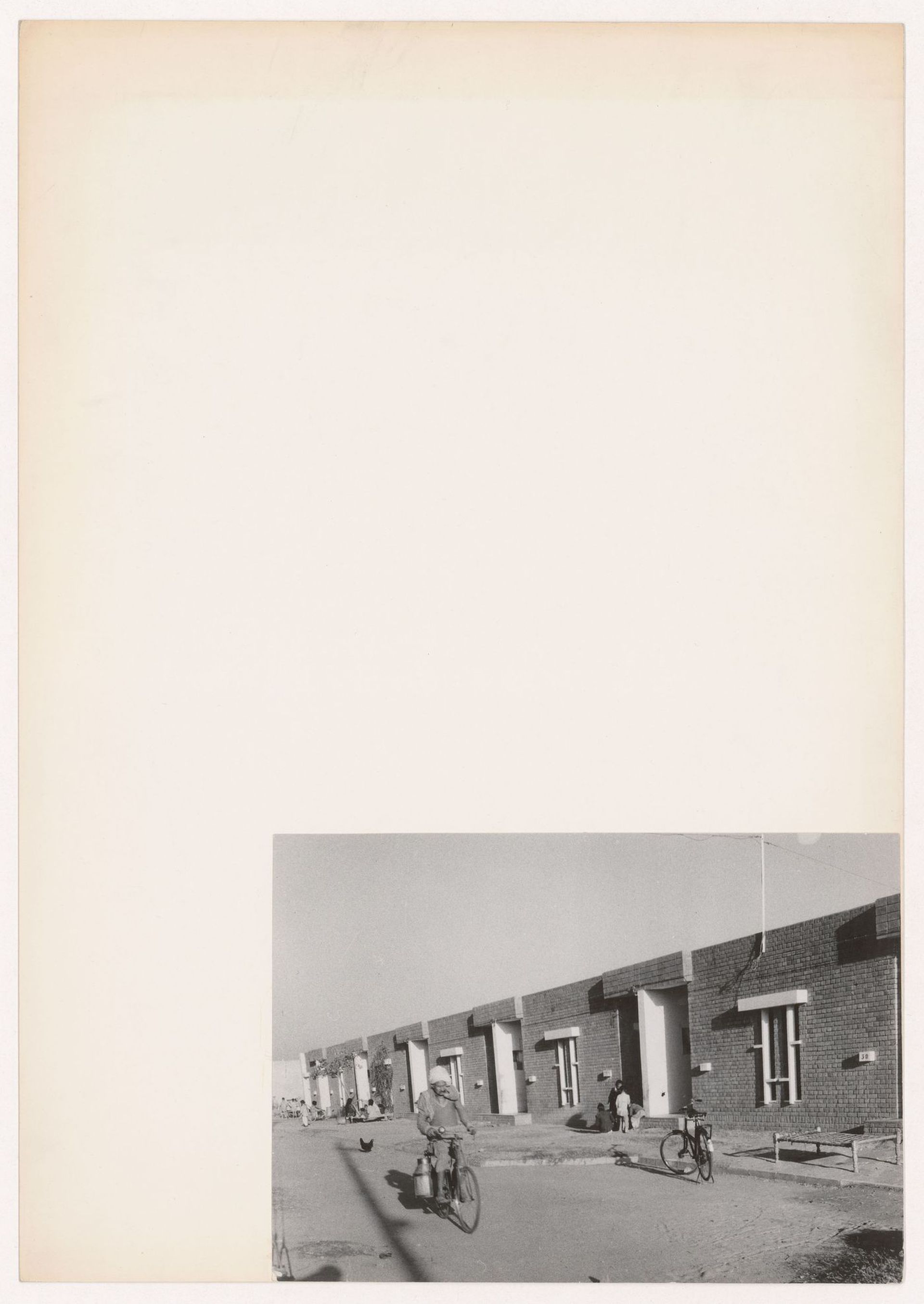
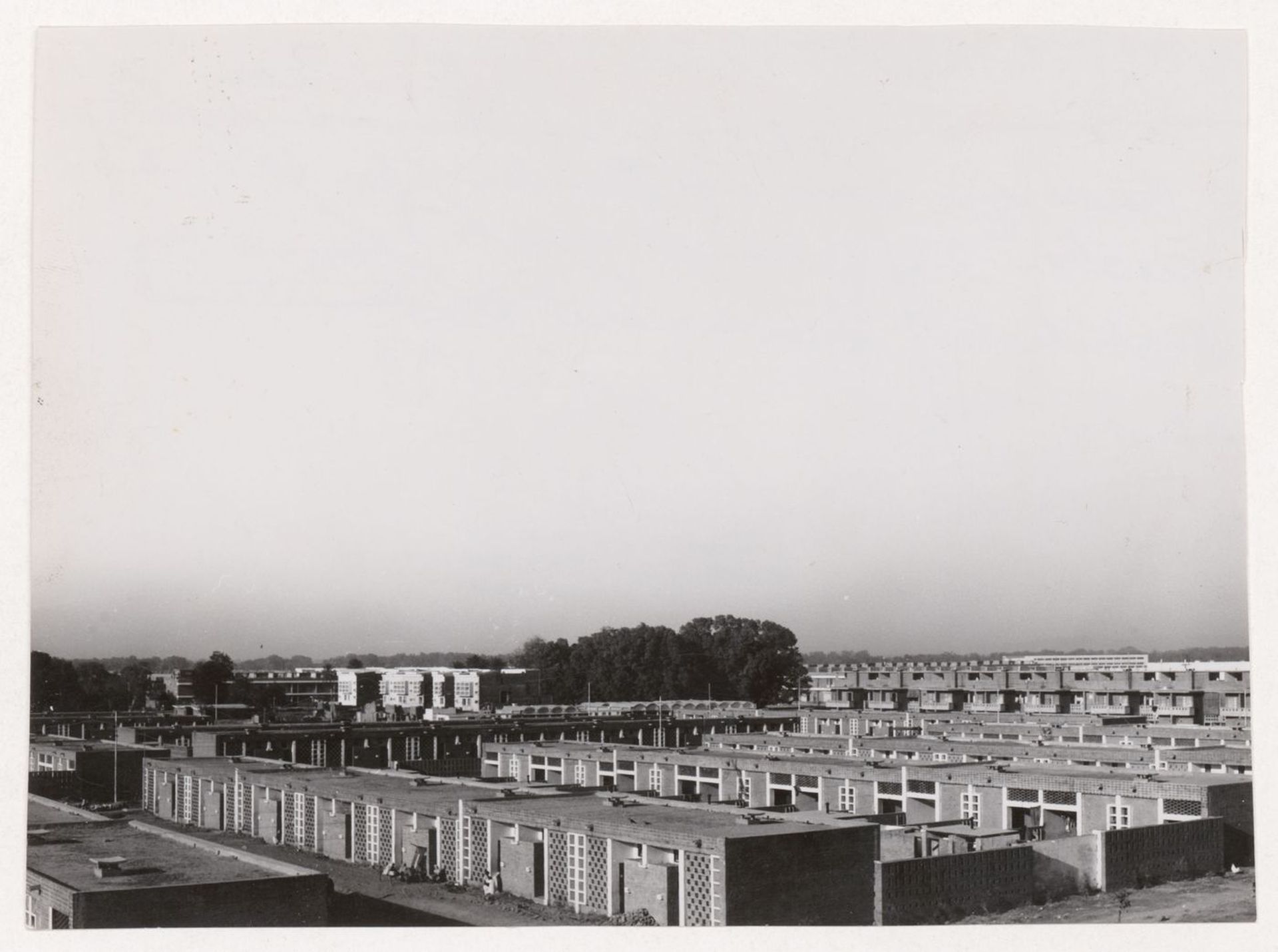
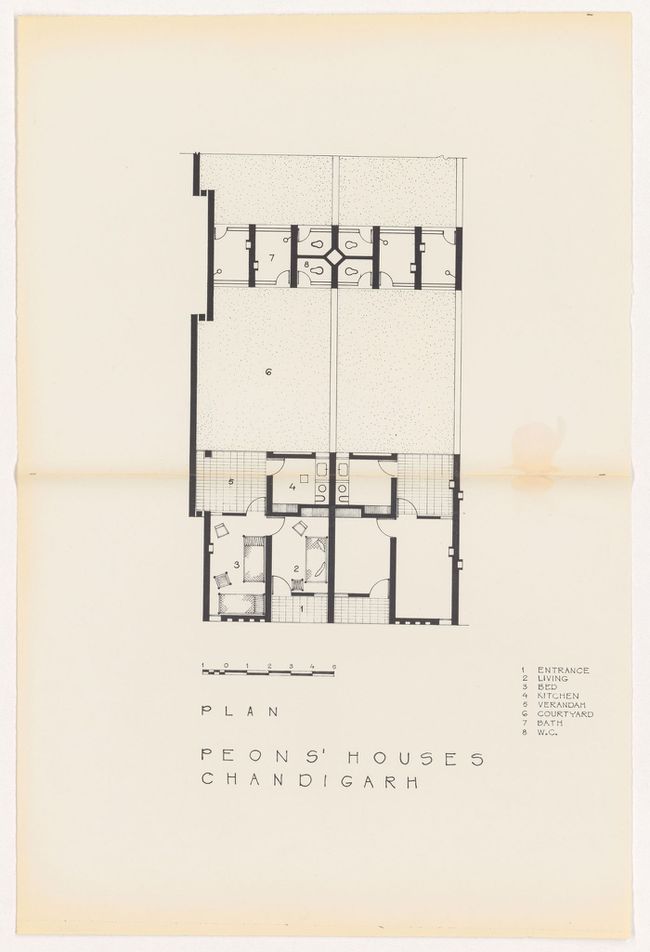
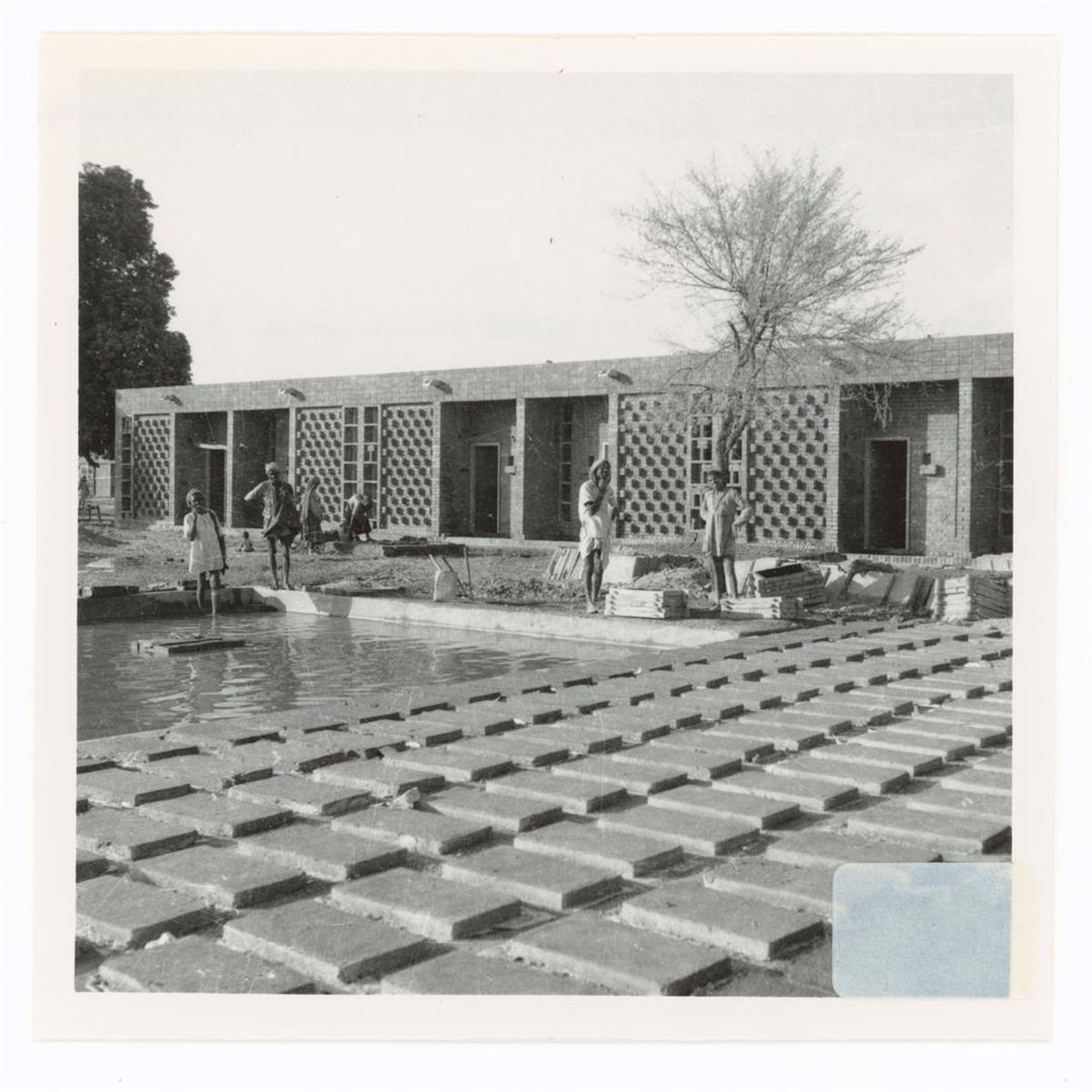
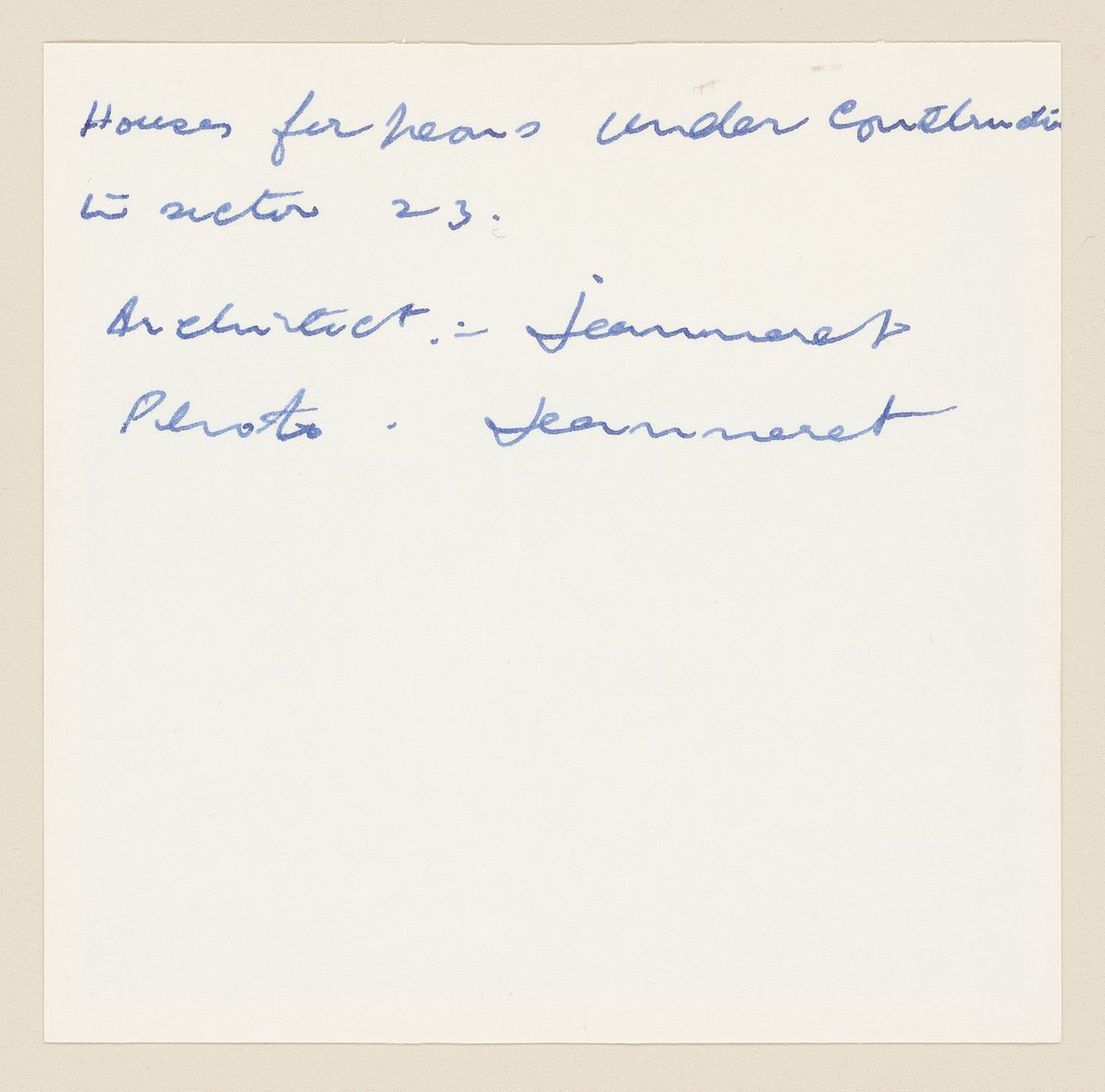
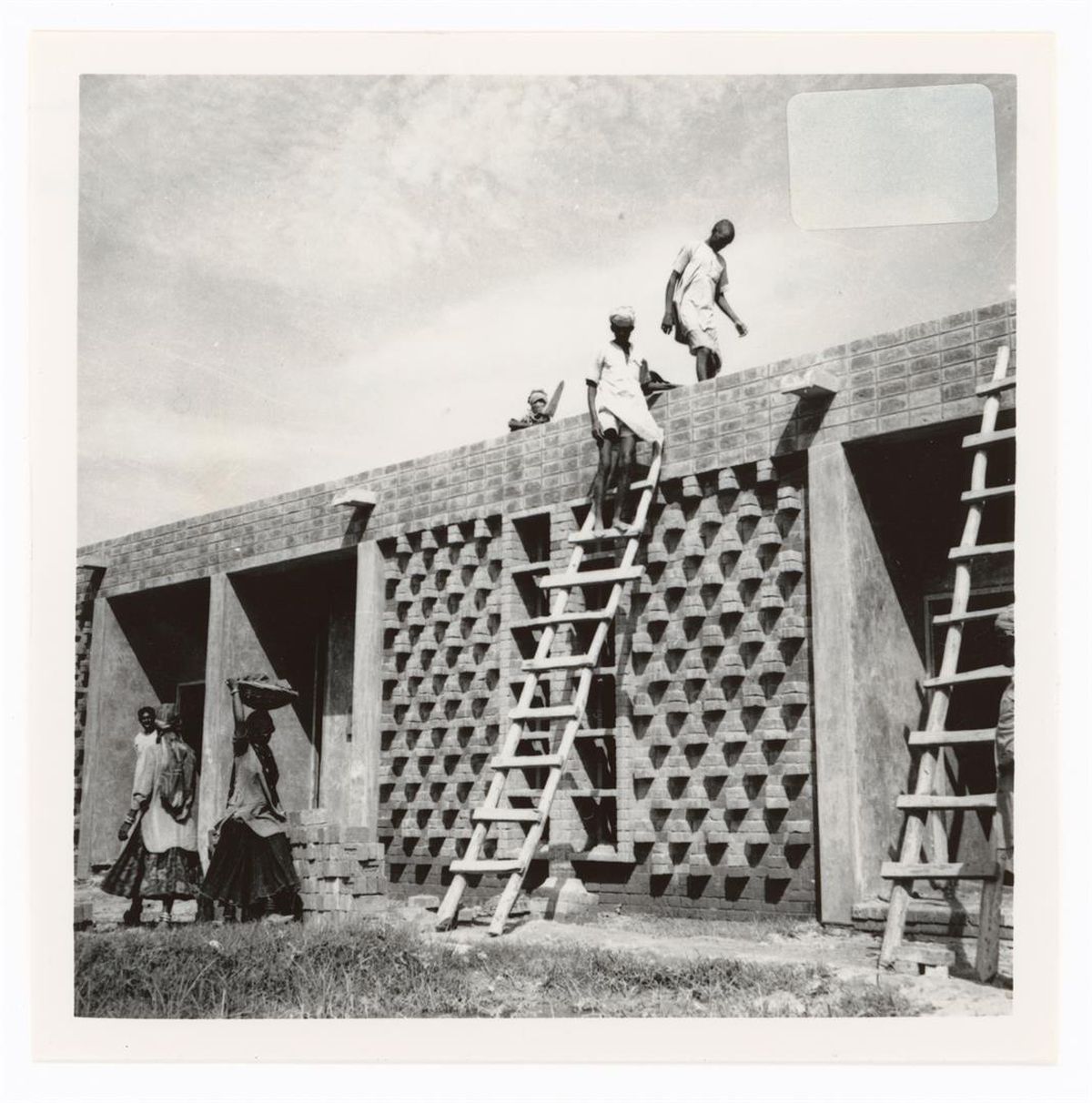
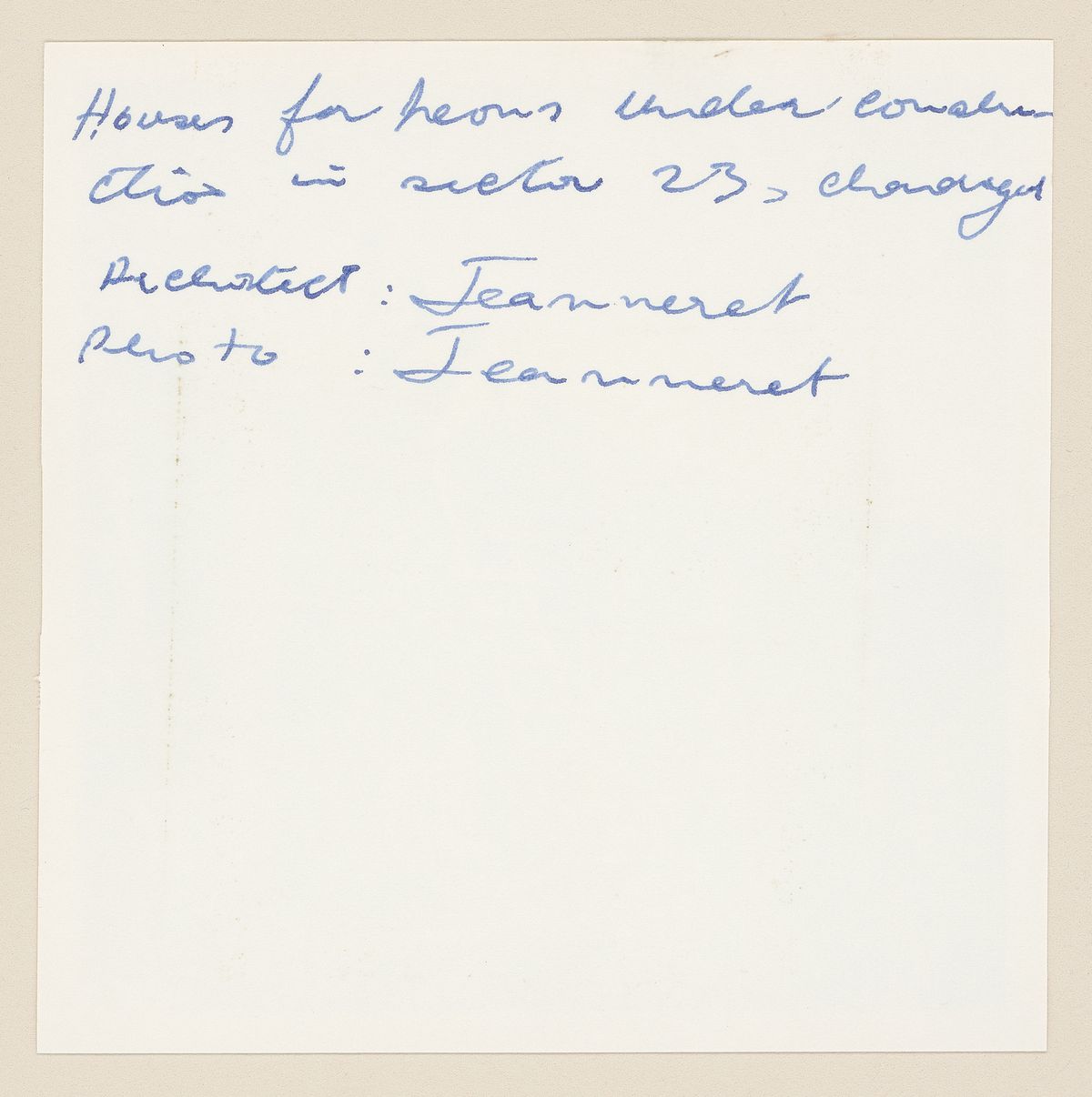
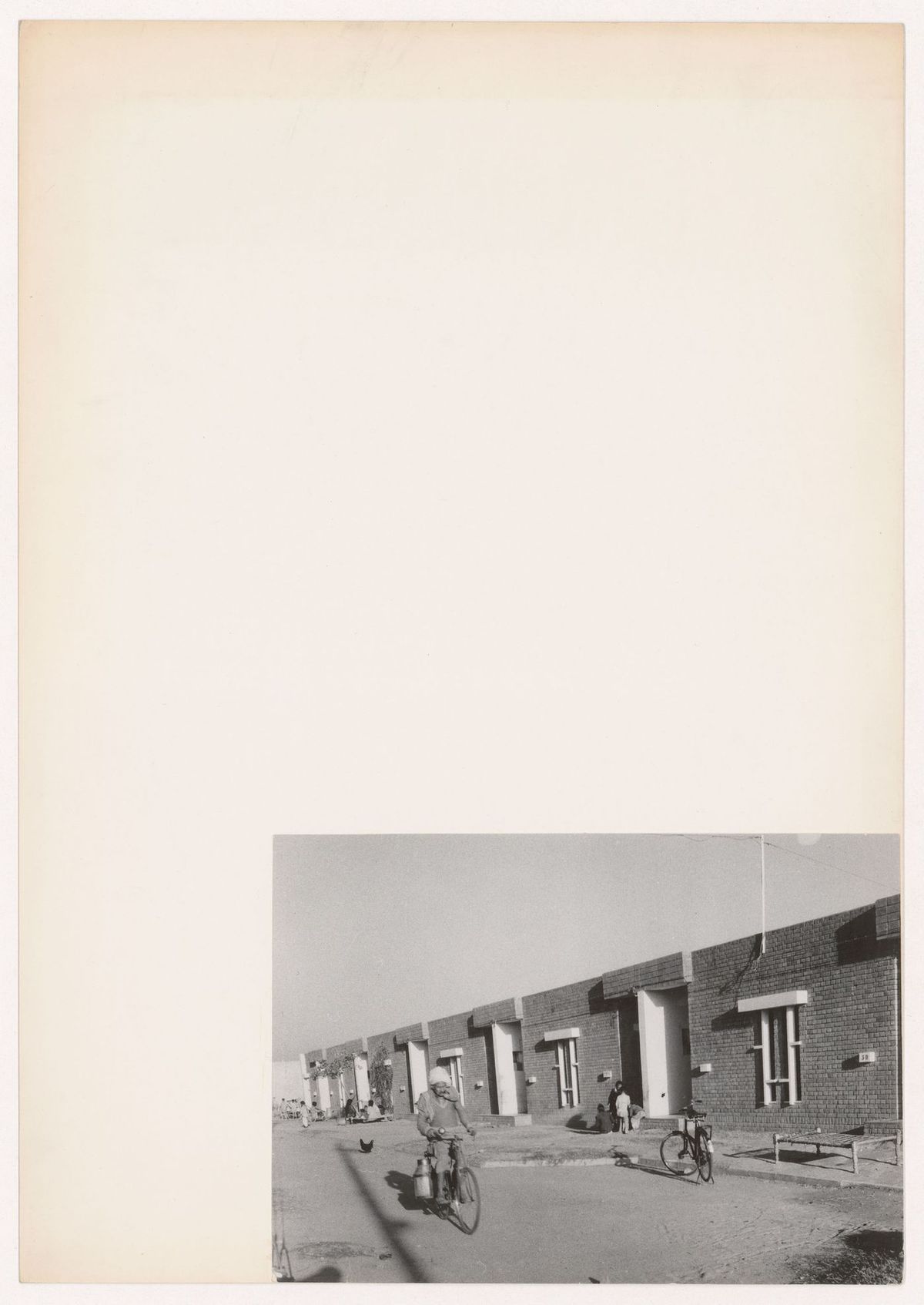
During Sangeeta Bagga’s Find and Tell residency in June 2019, we—the cataloguers at the CCA—came across material using a word with which we were uncertain. A plan drawing, held in the Pierre Jeanneret fonds that Bagga was studying, labels “Peons’ Houses” as the title of a project in Chandigarh, from 1952.1 From definitions found in print and online dictionaries, we felt that “peon” could be understood as harmful in some contexts but neutral in others. A word can have different meanings, different geographies, and even different histories, in particular colonial histories. In cataloguing work, the choice of vocabulary has important implications in how researchers access and understand information. We needed to consider, is there a problem with the use of the word “peon” when identifying people?
We learned that the word “peon” has different meanings and origins depending on where and when the term is used. Among other definitions, it means a labourer or a non-specialized worker.2 In Latin America, especially in Mexico, a “peon” has additionally come to denote a labourer that has an obligation to work for their employer until their debt was paid off.3 This type of “labor practice”4 has served as the basis of what would become known as “peonage” in the period after the abolition of enslavement in the United States, where many African American freedmen and freedwomen with limited options were forced and bound into this system that maintained an involuntary servitude.56 It seems within this American context that the use of this word in cataloguing should be reassessed. However, comparatively, in South Asian countries, particularly in India and Sri Lanka, the word “peon,” brought by the Portuguese, historically meant a foot soldier or a police officer.7 These days, it refers, in an Indian context, to a messenger or attendant, especially in an office,8 designating the entry-level position in governmental and non-governmental organizations.910
Considering that the materials from the Pierre Jeanneret fonds that include the word “peon” in their descriptions are related to Chandigarh, would it be acceptable to use the term despite the negative connotation it bears in another context, especially the American one? Shall we use a different term, or keep this “contentious” word with the possible addition of a contextual note?
As the CCA is an international institution located in North America, we wonder if it is preferable to remove a word that is potentially harmful from our descriptions, even if it remains in use and seemingly appropriate in other cultural contexts. What about the research behaviour of our users? Experts on Chandigarh, particularly on Le Corbusier and Pierre Jeanneret’s works, might be expecting the word “peon” and search for it in our catalogue. In order to understand the use of this term within the framework of the study of Indian architecture and society, we decided to reach out to experts of this field of research.
For Dr. Sangeeta Bagga,11 Principal at Chandigarh College of Architecture, Vikram Bhatt,12 author of Blueprint for a hack, Resorts of the Raj, and After the masters, and Dr. Vikramāditya Prakāsh,13 author of Chandigarh’s Le Corbusier and One Continuous Line, and editor of Rethinking Global Modernism, the word “peon” is an appropriate term used to designate an entry-level position at government levels in India. However, they point out that private corporations do not generally use the term anymore. Bhatt mentions that an equivalent word is “chaprasi,” and there might be other equivalent terms in other regions of India. Bagga argues that, although “office boy” is the term currently used in the private sector, “peon” still describes a position that allows people to work in dignity in a non-technical job, and people in India do not necessarily associate the word with a colonial background. It was institutionalized under the British period, but it still is in use today, without any negative connotations. Both Bhatt and Prakāsh acknowledge that while the term is still in use, it is not a word used in everyday conversation. To them, it could carry derogatory implications, depending on how it is used.
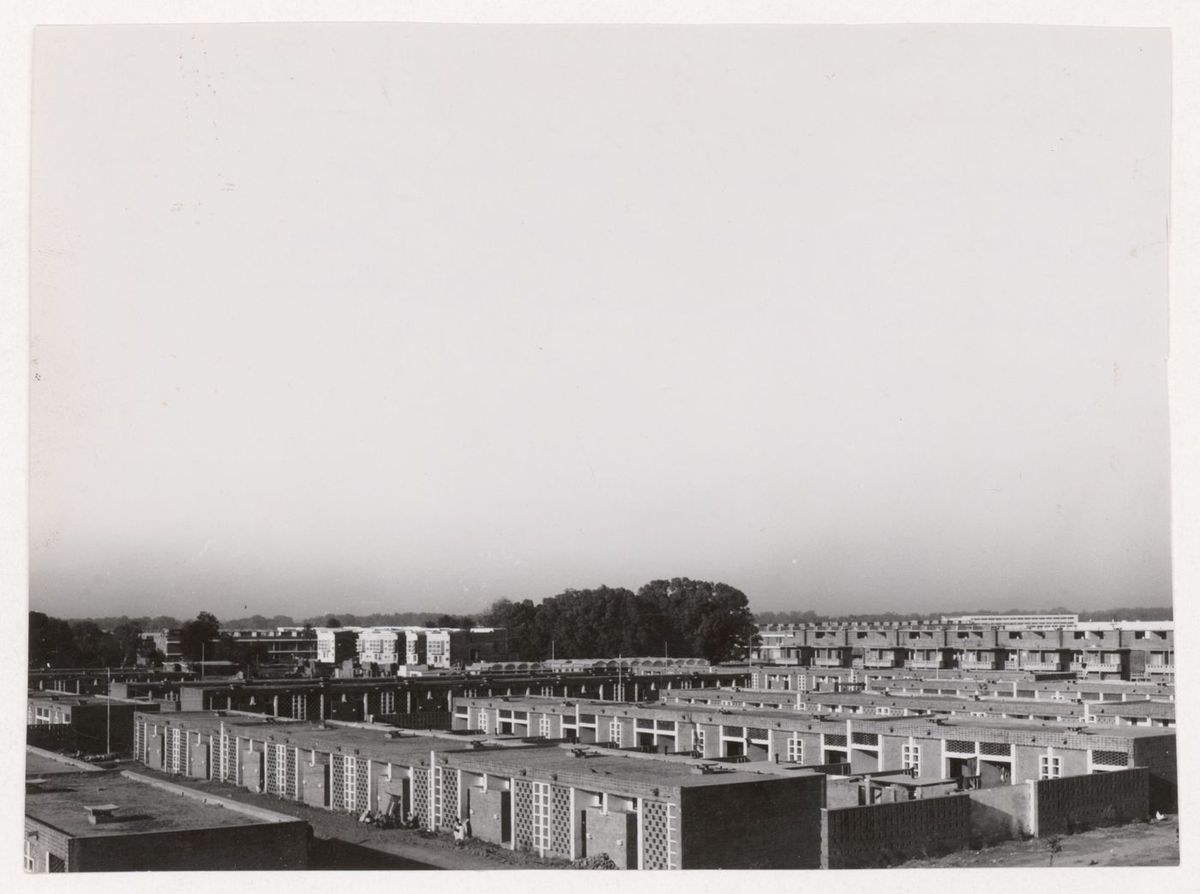
Bagga and Bhatt also mention that Chandigarh is a city that was laid down to a precise hierarchy initially with thirteen types of government housing in which the “peons” were at the lowest end.14 Bagga adds that with Jane Drew and Pierre Jeanneret’s work, it was the first time that the “peons” had planned housing accommodations.15 She underlines that the architectural drawings and other materials attest to this nomenclature; this type of housing was specifically called “peons’ houses,” as is depicted in the plan’s title. If the word is absent from the description, how would a researcher find it?
We might not be able to dissociate the use of the word from the context in which it appears. Prakāsh recommends keeping the term with respect to the Pierre Jeanneret fonds, noting that there is not a “right” interpretation of a word, certainly not based on an “original” meaning. For Bhatt, for as long as there have been contacts between the Western and Eastern worlds, languages have mutually influenced each other. With this in mind, Bhatt said that he would not be hesitant to use this word, but cataloguers should certainly recognize the different contexts in which it is used.
From these discussions, it seems apparent that the word “peon” carries different weights and meanings based on its context. All three experts recommend that we continue to use “peon” in our descriptions as part of the title field, and that we should add, if relevant, a contextual note explaining the word. As we recognize the importance of examining the changing meaning of words over time and context, especially when they are used in relation to how you refer to people directly, processes like this one, will help us set guidelines for more mindful descriptive work.
We would like to thank Sangeeta Bagga, Vikram Bhatt, and Vikramāditya Prakāsh for sharing their thoughts on this topic.
Reworking, Recaptioning, Moving Beyond
Michele Tenzon, Ewan Harrison, Iain Jackson, Claire Tunstall and Rixt Woudstra examine the Archives of the United Africa Company.
The Unilever Archives in Port Sunlight, United Kingdom, host a vast collection of items documenting the United Africa Company (UAC). A wholly owned subsidiary of Unilever, the UAC was a vast trading and manufacturing empire that itself in turn owned and managed numerous subsidiaries ranging from retail, textiles, timber, and raw material extraction mainly, but not exclusively in the British West African colonies. The scale of the UAC venture throughout the late nineteenth and twentieth century, the company’s role in colonial exploitation, as well as its economic and political manoeuvring into the post-Independence period, render its archive both a problematic and rich repository to catalogue and analyse. Archives have been the subject of a body of theoretical writing from post-colonial perspectives. This has framed the archive as both a locus of power and a technology of domination in and of itself. As the archive of the largest British business in West Africa, and one deeply implicated in the colonial patterns of resource and capital extraction in the region, the UAC archive can equally be theorised in this way. Yet, the UAC archive is also punctuated by moments of hesitancy, contestation, and challenges to the UAC’s attempted hegemony.
The UAC produced an archive as a by-product of the everyday transactions of business in the African colonies: its reports, board minutes, marketing plans, press releases, and ledgers have subsequently been ordered, catalogued, and cared for by a team of curators and archivists. But the UAC also pursued archival impulses of its own: UAC staff collected maps, African artworks and ephemera, personal correspondence and memoirs, as well as taking, collating and cataloguing thousands of photographs between 1880 and 1980. This impulse to collect and catalogue the African world around it shows the UAC’s attempts to impose an archival logic on the diverse, even unwieldy, business empire that it controlled, or attempted to control.
For architectural historians, the photographic collection is of particular interest with its bias towards recording buildings, places, people, and special events. The vast amount of visual material was produced by employees working for different subsidiary companies, each with their own objectives, vantage points, and outlooks. The contributors and content are also diverse in their geographical reach and emphasis, with records spanning vast tracts of the African continent, as well as smaller forays into the Middle East, India, and the Americas. Overall, and in coherence with the nature of a corporation which was indeed multiple, internally diverse, and geographically spread out, the collection appears as a corpus of interrelated but distinct archives each with their own provenance, consistency, detail, and granularity of data.
Considerable effort and expense were devoted to producing and presenting this photographic material. Each subsidiary produced its own documentary evidence by developing a visual record or compendium of their businesses that sat alongside the accounting records and lists. In providing sound evidence that business activity was taking place, the photographic medium was particularly useful to the parent company. Taken with a specific agenda and focus, the photographs were processed and printed before being selected to feature in specially produced albums and often accompanied by printed captions or handwritten comments. In many cases, the photographs became a surrogate for travel as many of the directors and business managers had never visited Africa and had no first-hand conception of what their business interests and assets looked like.
The images demonstrated that stores had been built, that goods were properly stocked on the shelfs and that everything was ‘as promised’. It provided reassurance for owners and shareholders, but also became a form of advertisement as is reflected by the careful organisation of these documents in the archive’s Public Relations folders. Through the photographs, distance and geographical separation seemed less important as the visual evidence which they offered ultimately delivered a sense of proximity by bringing a particular version of Africa back to the European shareholders. Photographs were meant to create a familiarity which could justify the company’s overseas presence and show that a colonial territory was ripe for development, therefore reassuring investors as well as European staff.
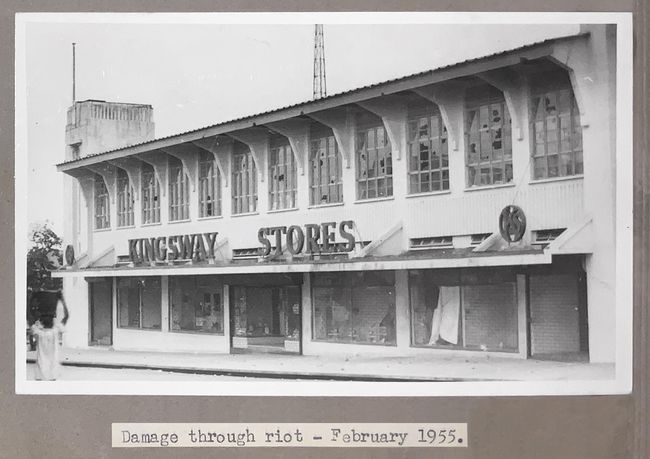
Because of the peculiar role of the photographic documentation for UAC’s activities, the forms of their collecting, defining, and claiming, offers a vantage point from which we can see how the company viewed, perceived, and chose to record the African social and physical environment. The image library was not fixed – it was added over time, revisited and modified. Titles were remade, notes were added, reflecting not only the transformation of the built environment, such as the extension or refurbishment of the company’s premises, or the acquisition or selling of properties, but also the shifting political situation after elections, riots, or strikes and the resulting legitimacy challenges that the company faced.
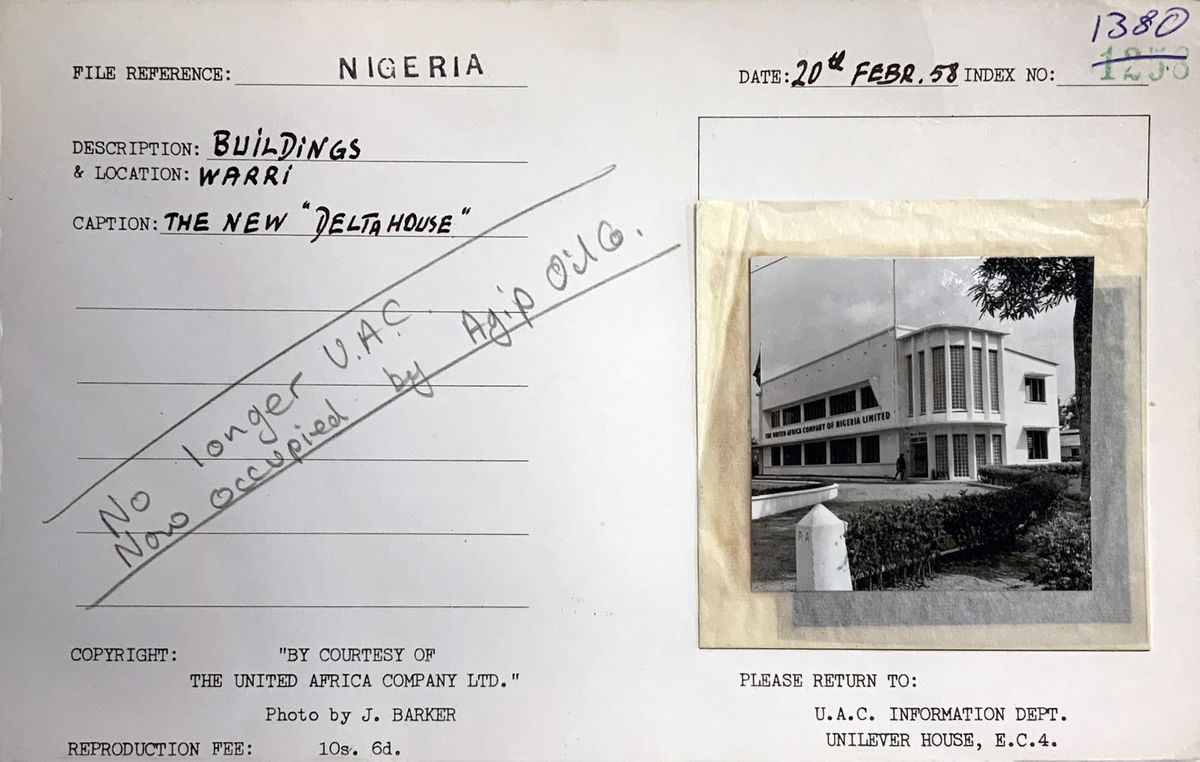
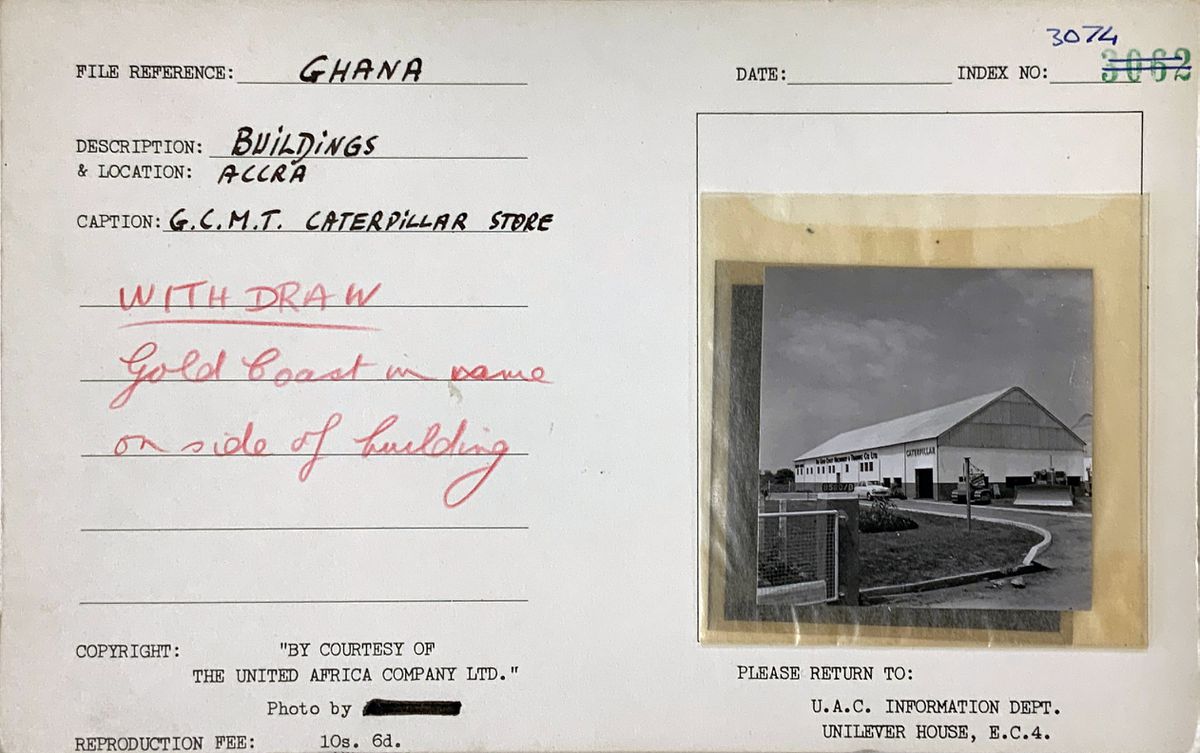
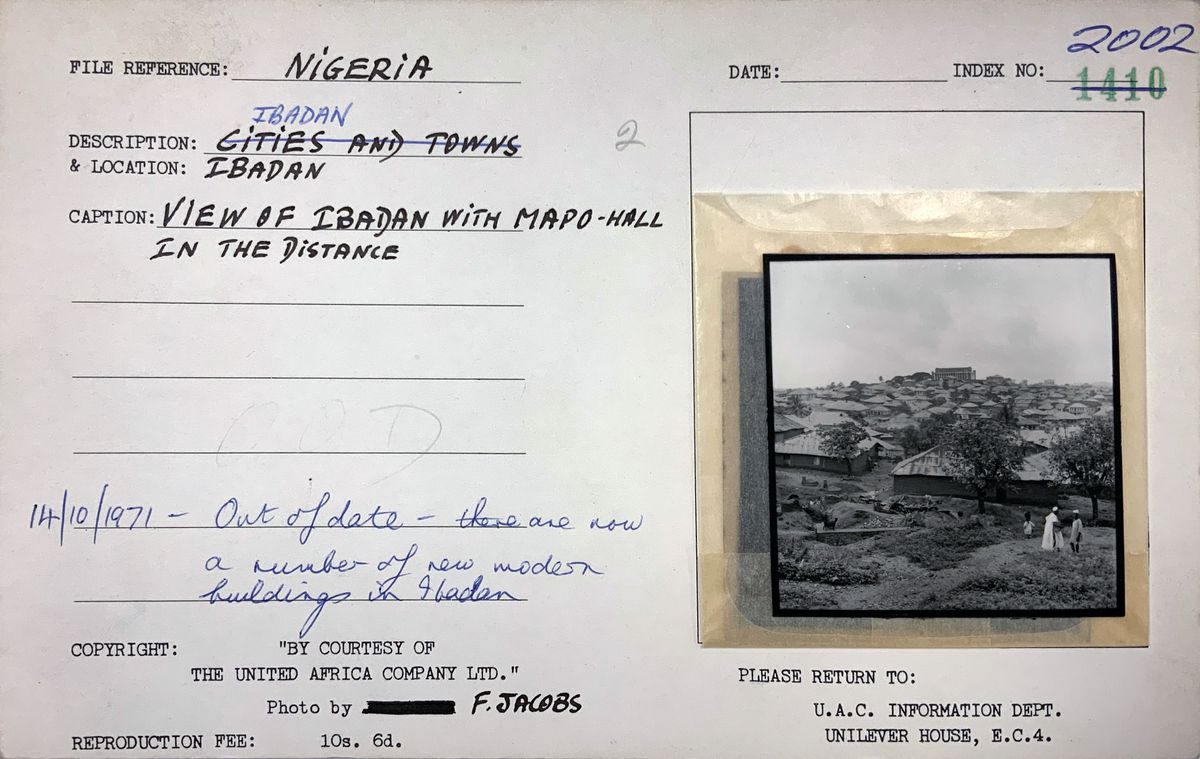
Such reworking of the archive is especially evident in those sections of the archive in which photographs have been selected and mounted onto cards, as a compiled photography library arranged first by country, then by themes. This collection was compiled to assist the production of marketing reports, company magazines, newsletters, press releases, and advertisements. The production of these publications and public relations material required the finest images and a cataloguing system allowing them to be quickly located. The notes written on the cards indicate that the UAC staff exercised a control towards what was deemed appropriate and suitable for the company’s image.
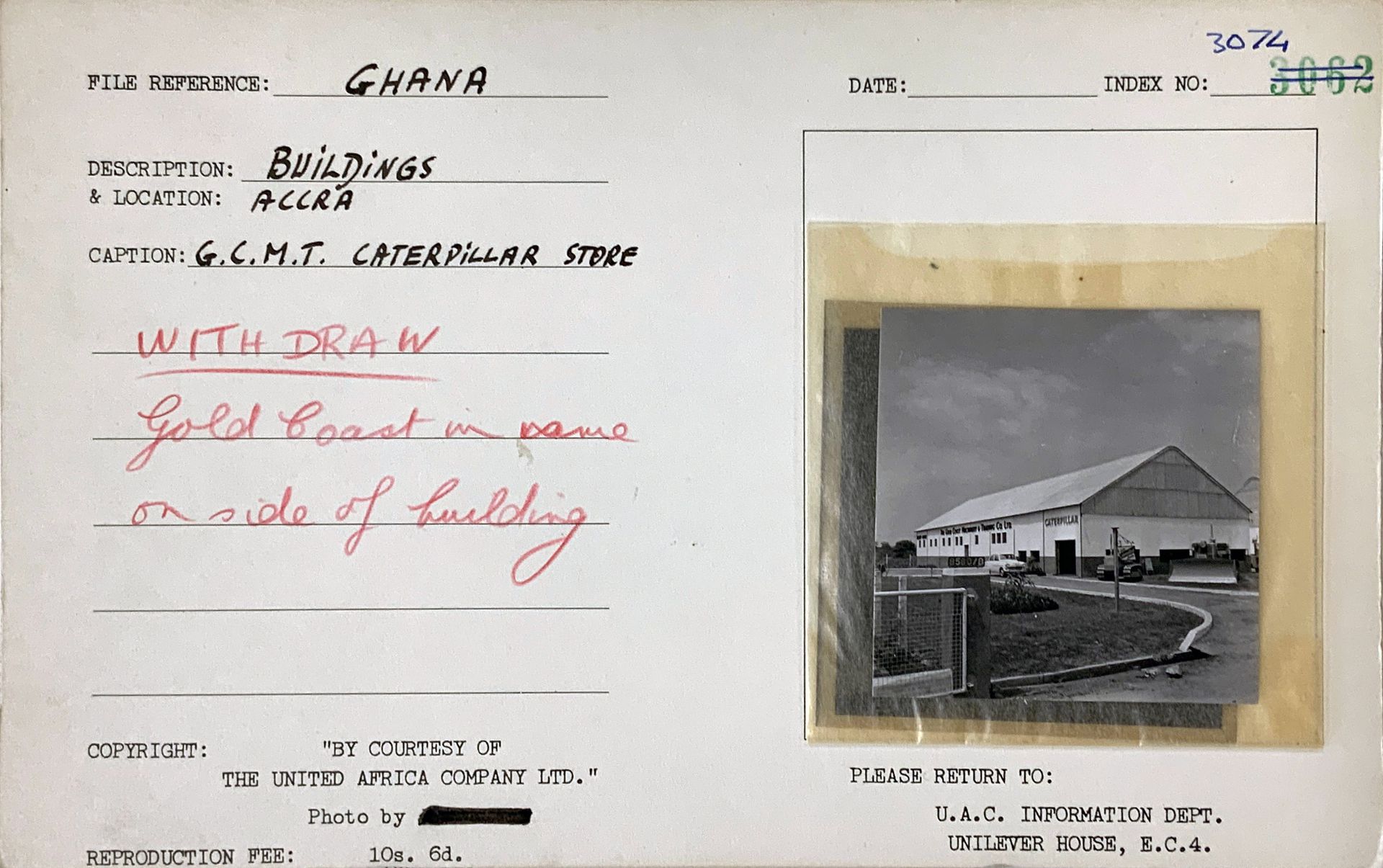
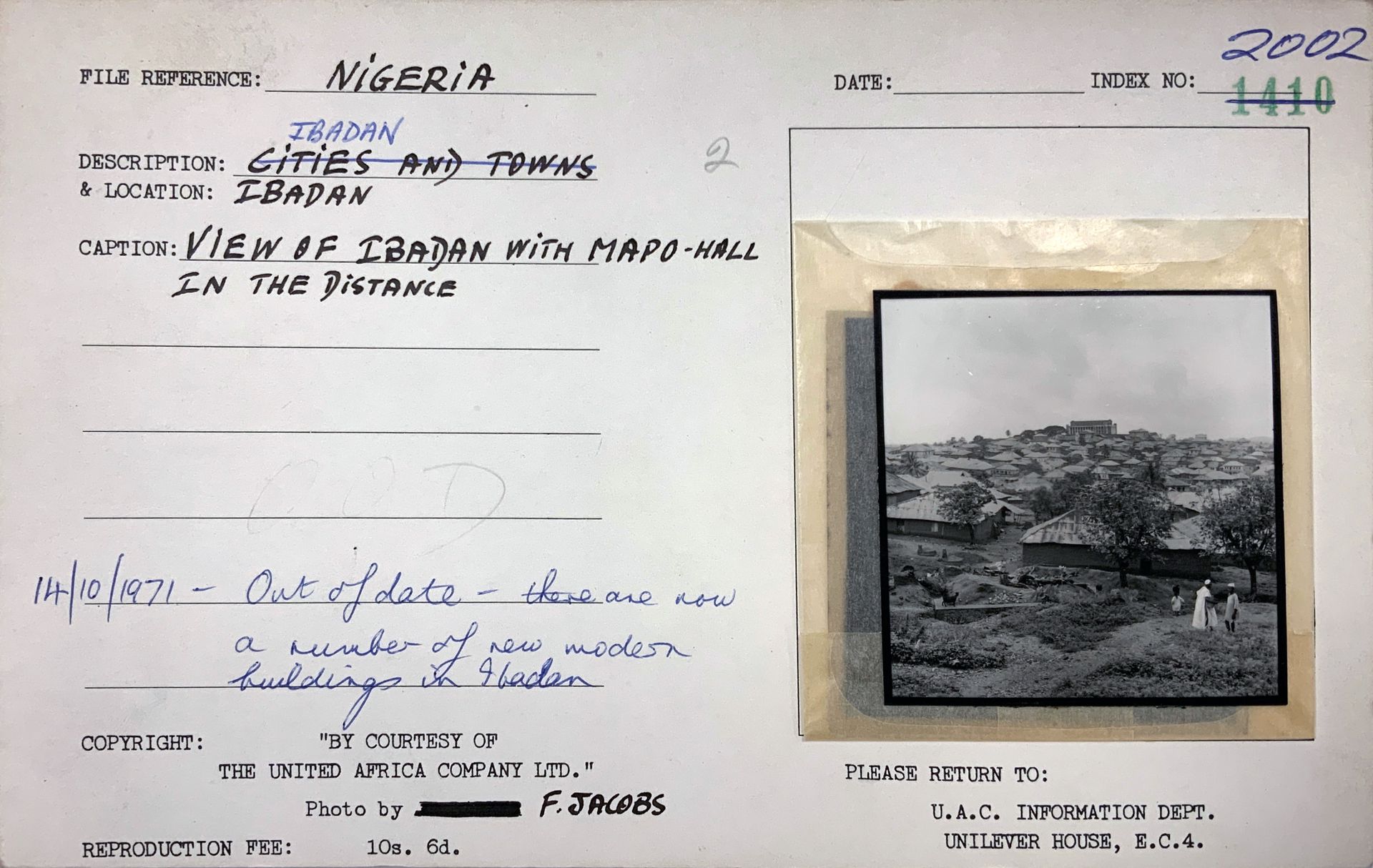
On some of these cards the captions were edited replacing terms which were perceived as outdated or inappropriate. Hence, an image described as “Native workers” was subsequently crossed out and replaced with “African workers”, before being relabelled again as “Employees”. In other instances, “African huts” was replaced by “African homes”, and “European Housing” was renamed “Management Housing” to reflect the Africanisation process of the 1950s – the recruitment and promotion of African staff within the company – which the UAC had embraced as a strategy to repair its legitimacy during the decolonisation phase. Some other images, instead, were marked as ‘to-be-withdrawn’ because the signage of shops of factories employed colonial toponyms which, after independence and for obvious reasons, had become offensive for African audiences. Whereas an image of Ibadan showing a district of low-rise houses built with adobe bricks was deemed no longer usable as it probably conveyed an unwanted sense of precariousness to the public and especially to potential investors.
We don’t know who exactly was making these decisions and how frequently the images were reassessed and relabelled. Unlike the archiving process where archivists generate titles, here they formed part of an image library. However, the fact that the photographs, rather than being re-mounted onto new cards were instead amended by striking through older labels, suggests that perhaps this context was considered valuable, if outdated. Nonetheless, letting this meta-analysis of the archive and its shifting cataloguing and labelling strategy to emerge, required challenging the traditional way in which archives are experienced.
Moving beyond the catalogue
We rarely get to see the archive in the way that one can peruse the books of a library. Instead, we experience it with no direct access to the stores and therefore no opportunity to examine the collection in person. In most cases, files are brought to the researcher after consulting a catalogue, making requests and completing slips and are examined one file at a time. While there are obvious reasons for such restrictions which aim at ensuring the integrity and safety of the material, the necessity of surveillance imposes an examination of the material in extremely compartmentalised or limited ways.
In our research project ‘The Architecture of the United Africa Company: Building Mercantile West Africa’ we have questioned this approach and attempted a different procedure that granted the research team access to the archival storage spaces. ‘Open access’ to the collection has been granted to the research team which has enabled browsing and the ability to quickly sample a box or file without even removing it from its location in the storeroom. The research team has been given extensive training in basic archive procedures, manual handling and health and safety. Retrieval slips were still completed and utilised, but the physical act of obtaining the files and accessing the store rooms was granted to the research team enabling the archive team to focus on their day to day work. The ability to compare boxes, view multiple files, or simply randomly ‘dip’ into boxes has enabled a far greater appreciation of the entire UAC collection, has accelerated our ability to ‘get through the material’, and also reduced the labour for the archives team. Viewing all the photograph albums on the shelves and to see how one album compares in size and scale to the others as well as the ability to visualise the files and their arrangement has helped us to understand the business structure in ways that would not have been possible otherwise.
This procedure, which was made possible by the prolonged collaboration between the academic team and the archive’s management team, has enabled a different working method to emerge. If the re-captioning of UAC’s photographic collection testifies how European capitalism coped with political change and pragmatically adapted itself to the shifting paradigms in the decolonisation phase, acknowledging such additional layers require ‘moving beyond’ the catalogue. The stratification of meanings and orientations which took the form of an almost curatorial approach to the cataloguing of the photographs reveals the biases and the shifting sensitivities of the actors involved in the production and management of the archive. However, such a critical interpretation of descriptive practices requires questioning the traditional interface between archivist and researchers, ultimately allowing engagement with the archive as a complete and stratified entity.
Notes
1 The term “peon” is also found on other material from the Pierre Jeanneret fonds.
2 The word has several meanings across times, languages, and cultures. Not all of them will be covered in this text. It also refers to the pawn in a chess game and to a low unit in some strategy computer games, for example.
3 William Wirt Howe, “The Peonage Cases,” Columbia Law Review 4, No. 4 (April 1904): 279.
4 Pete Daniel, “The Metamorphosis of Slavery, 1865-1900,” The Journal of American History 66, No. 1 (June 1979): 89.
5 Daniel, “The Metamorphosis of Slavery,” 1979.
6 Peonage is not exclusive to the United States. Various forms of “peonage” have existed or still exist across the world.
7 Collins English Dictionary, s.v. “peon,” accessed November 15, 2021, https://www.collinsdictionary.com/dictionary/english. Webster’s Third New International Dictionary of the English Language, Unabridged (1981), s.v. “peon.”
11 Dr. Sangeeta Bagga, Zoom meeting, November 19, 2021.
12 Vikram Bhatt, Zoom meeting, November 25, 2021.
13 Dr. Vikramāditya Prakāsh, Email exchanges, November 2021.
14 At the request of Jane Beverly Drew, one of the three architects with Pierre Jeanneret and Edwin Maxwell Fry responsible for the design of most of the government housing, an additional fourteenth type, known as “cheap houses,” was designed by Drew for, the previously unaccounted for, government employees who were earning the lowest-wage. Kiran Joshi, Documenting Chandigarh: The Indian Architecture of Pierre Jeanneret, Edwin Maxwell Fry, Jane Beverly Drew (Ahmedabad, India: Mapin Publishing Pvt Ltd.; Chandigarh, India: Chandigarh College of Architecture, 1999), Volume 1, 43. Sarbjit Bahga and Surinder Bahga, Le Corbusier and Pierre Jeanneret: Footprints on the Sands of Indian Architecture (New Delhi, India: Galgotia Publishing Company, 2000), 131.
15 Bagga also adds that this new housing typology for the “peons” continues to this day, with the same purpose, function, and responsibility of roles.
This edited collection of essays and image-driven pieces by anthropologists, archaeologists, architects, and historians examines the legacies of African architecture from around the time of independence through examples from different countries. Drawing on ethnography, archival research, and careful observation of buildings, remains, and people, the case studies seek to connect the colonial and postcolonial origins of modernist architecture, the historical processes they underwent, and their present use and habitation, adaptation, and decay.
Deriving from a workshop in connection with the 2015 exhibition “Forms of Freedom” at the National Museum in Oslo and the Venice Biennale, the volume combines recent developments in architectural history, the anthropology of modernism and of material culture, and contemporary archaeology to move beyond the admiration or preservation of prized architectural “heritage” and to complicate the contemplation—or critique—of “ruins” and “ruination.”
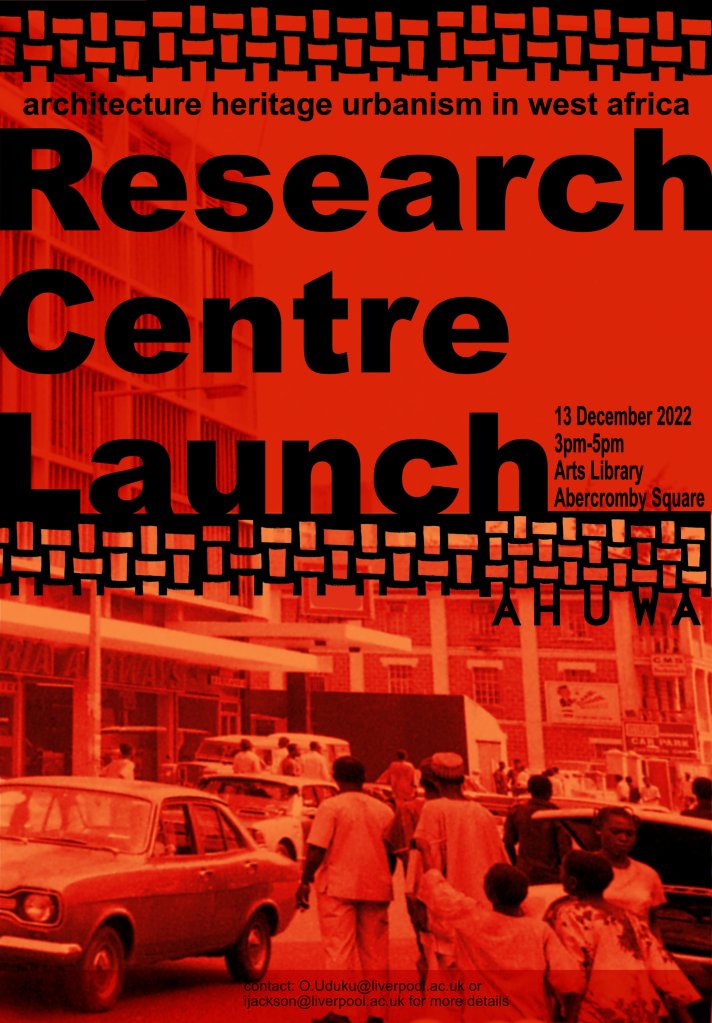
We have recently established a new research centre, based at the Liverpool School of Architecture called Architecture, Heritage, and Urbanism, in West Africa (AHUWA): https://ahuwa.org/ We’re hosting a launch event and would be honoured if you could join us on Tuesday 13th December, 3-5pm at the Arts Library, 19-23 Abercromby Square, Liverpool University for tea and cake.
Friends and colleagues from all of the North-West’s major collections, repositories, and archives with material on West Africa have been invited, and we’re excited to share ideas and build up new networks across the region and beyond.
If you could register here we’d appreciate it, and look forward to seeing you on the 13th. We’ll have an informal presentation at 3:30pm – please do come along and stay as long as you’re able. We’ll be on Zoom too from 3:30-4:00pm if you’d like to join us virtually for the presentation.
The latest issue of Planning Perspectives investigates the role international organizations such as the United Nations, the World Bank, and the Red Cross played in the architecture discourse and the rise of ‘global experts’. The collection of articles, co-edited by Filippo De Dominicis and Ines Tolic, explores development plans and housing schemes, but also events related to dissemination or training implemented especially, but not exclusively, during the decolonisation phase in the 1950s and 1960s and the so called ‘development decades’.
In an article published in open access which I co-authored with Axel Fisher, Foreign aid for rural development: village design and planning in post-independence Morocco, we asked ourselves to what degree the work of architects and urban planners was influenced by the shifting and competing development agendas of the United Nations’ technical assistance, the FAO – Food and Agriculture Organization, and the World Bank. We start from the analysis of architects’ involvement in three rather diverse rural development projects implemented in Morocco after the 1956 independence in which community development and infrastructure-driven approaches overlapped. In doing so, we question the architects’ capacity to translate the strategic objectives in functional programmes, and to make ‘spatialized politics’ most vividly palpable.
An annotated diary of my visit to the Democratic Republic of Congo: a brief stop in Kinshasa before flying to Kisangani and then, following the Congo River, a preliminary exploration of one the regions where the Huileries du Congo Belge – HCB had established its oil palm plantations.
This trip would have not been possible without the help of >>Istituto per la Bioeconomia – CNR and Forets (Formation et Recherche dans le Tshopo) – >>Cifor (Centre for International Forestry Research).
May 2022
Kinshasa — Me and Ottaviano landed in Kinshasa on a Monday morning. I had never crossed the Equator before.
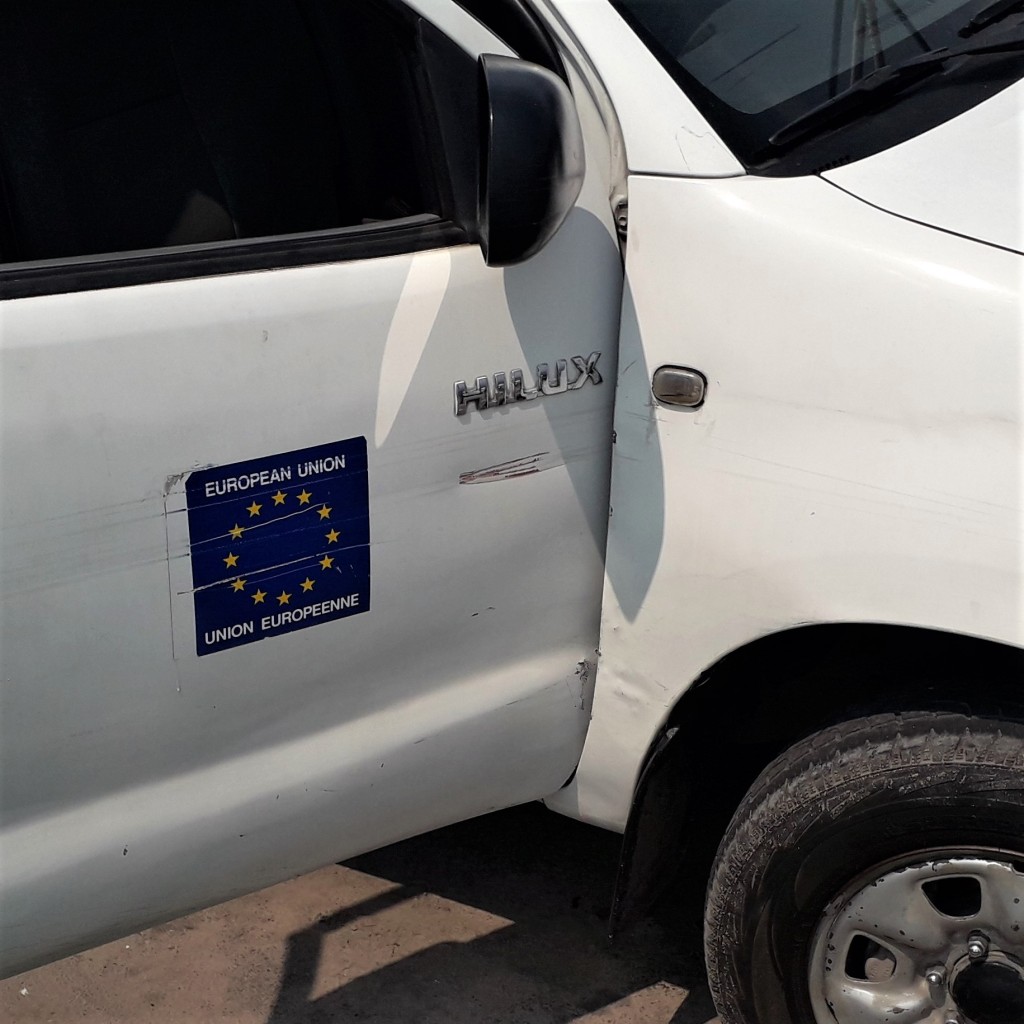
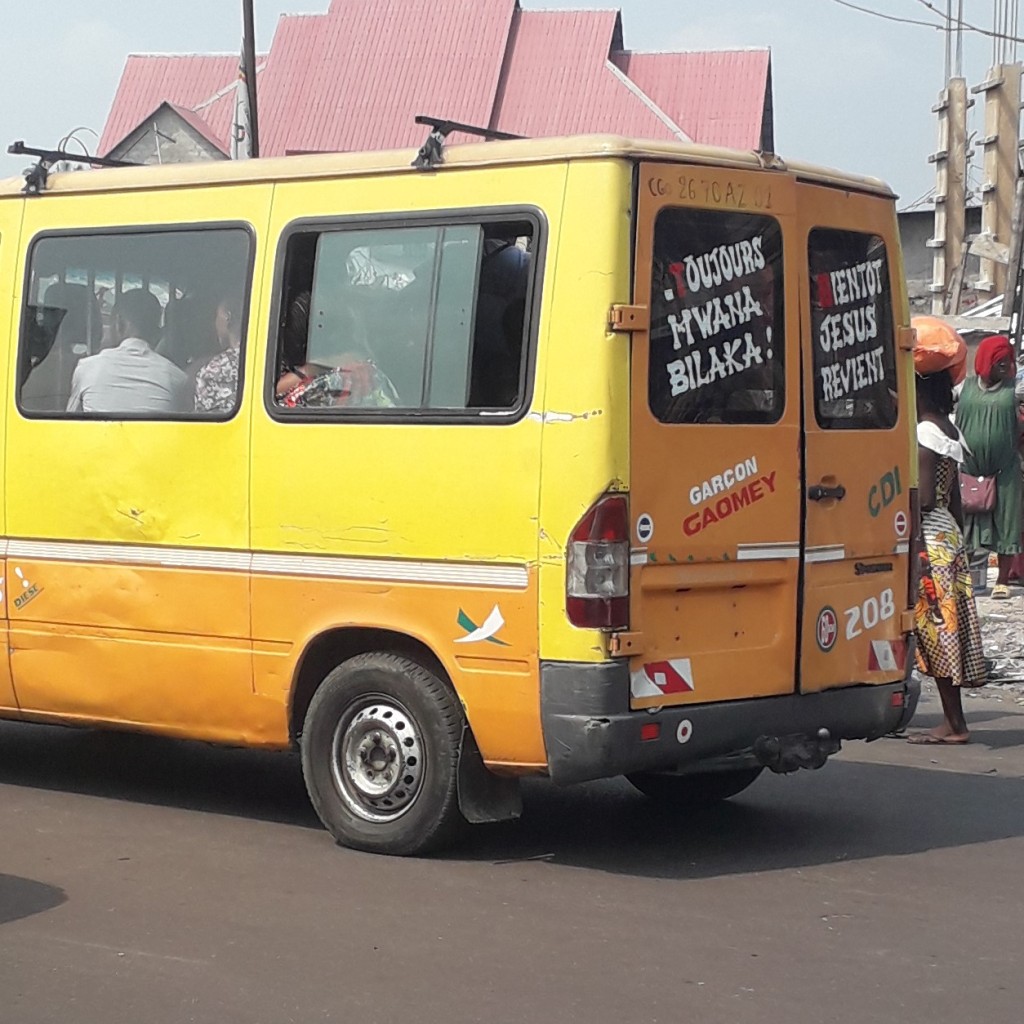
Papa Victor is waiting for us outside on a white Toyota jeep with a EU flag on the door and dents and scratches on all sides. A description that would fit most of the vehicles I travelled in during this trip and, as I came to discover, a stereotype for Westerners in this country. Victor is a tall, pleasant man who talk and laugh quietly even when we plunge into the suffocating traffic of Kinshasa. The 25 kilometers between the airport and my hotel in Gombe are an endless sequence of taxis, yellow Wokswagen vans running with the doors open to bring some air to the passengers squeezed inside, a multitude of weva moto-taxis, and trucks covered in sticky black dust.
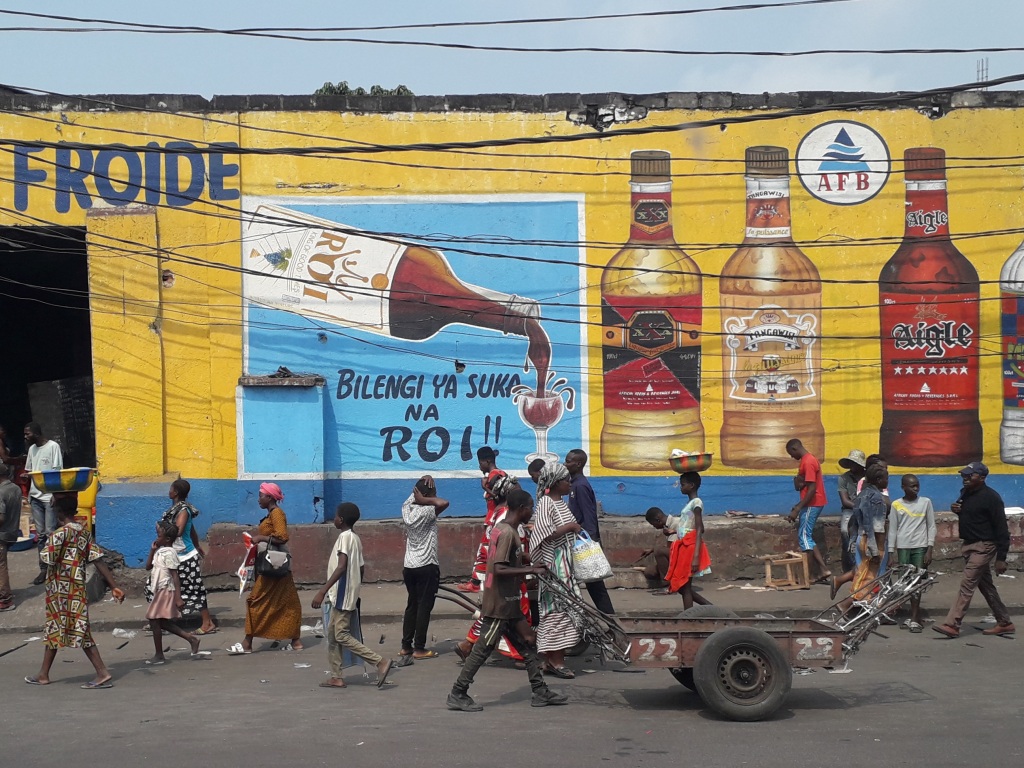
The two days in Kinshasa are chaotic. We meet with some people and don’t see much. I watch street scenes, buildings, and billboards passing by from the window of Victor’s car.
During the last night in the city, I meet my old friends and former colleagues Raphael, Paul, and Pietro – who became a real Kinois in the meanwhile. From the hall of my overpriced hotel Raphael, tells me with his usually sharp irony: “Il faut que tu sors de cette Leopoldville”. And so we drive away, leaving Gombe behind us. Paul, who has a thing for infrastructures, gives us a lecture from behind the wheel of his car while we cross the city. Boulevard du 30 Juin, which originally connected the two Stanley’s times settlements of Kintambo Ngaliema and Nshasha, and later became the first of the large avenues of the colonial capital [>>Kinshasa Then and Now]. Avenue des Huileries, pointing to the area formerly occupied by the Huileries du Congo Belge, now hosting its successor Marsavco.. And then, Matonge, the neighborhooud that everyone here calls the musical capital of the DRC. After having lived for years few hundred meters from Matonge (Brussels) – a product of Congolese diaspora in Belgium – I finally get to see its original counterpart.
It’s early in the morning when we leave again for the airport but the city is well awake.
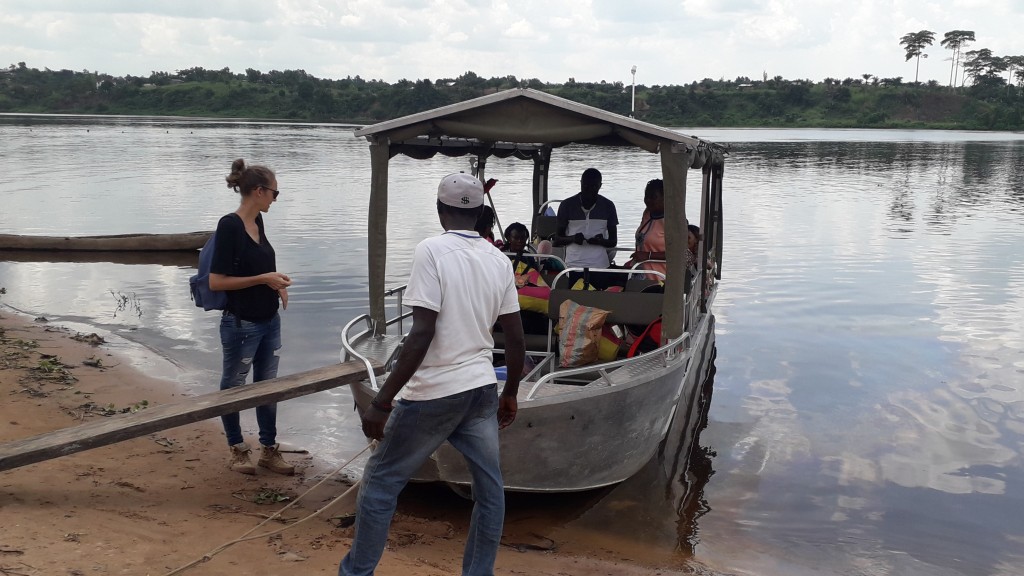
Congo River — After landing in Kisangani we are brought directly to the dock on the Tshopo river. The beach, as docks are locally called borrowing the word from English, is just a sandy stretch where dugout canoes and boats come ashore. We get on board of the canot rapide that Cifor made available for us and, following the Tshopo and Lindi rivers, we finally reach the Congo. Few kilometres upriver, the Wagenia/Boyoma falls, a one-hundred kilometres long sequence of cataracts, make the river impossible to navigate. After the falls, the Congo begins its ‘quiet’ descent of the 1,700 navigable kilometers dividing the place where we are navigating now from Kinshasa’s Pool Malebo before rushing again, through impressive rapids, up to Matadi and to the Ocean.
From this moment on, this broad, magnificient river, with its banks covered in thick vegetation, becomes the silent protagonist of the travel.
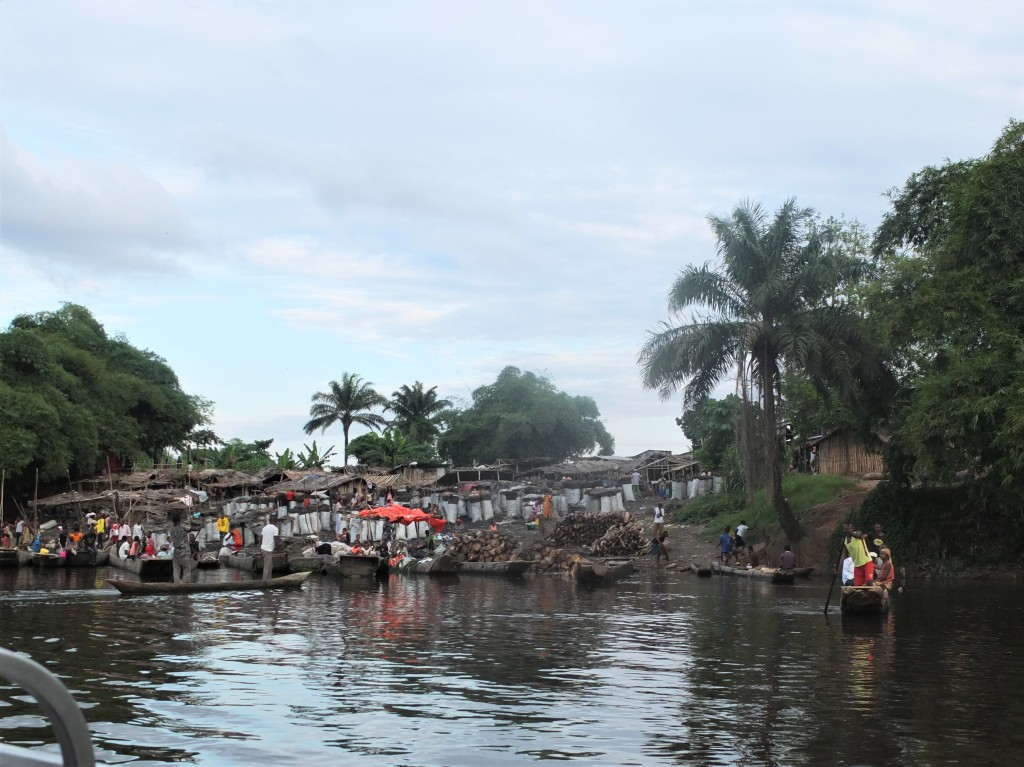
Moving along the river coast, the canot go past busy docks where pirogues – simple boats built by carving a single tree trunk and manouvred by one or two rowers – carry large, white sacks of coal to sell. Apart from our boat and the infrequent barges, the river is populated by these small crafts and by the noisy baleinières (‘whaler’), a wooden boat used for goods transport. Besides being painfully slow, the two half-sunken relics I could spot along the way, testify the scarce reliabilty of these bizarrely named boats.
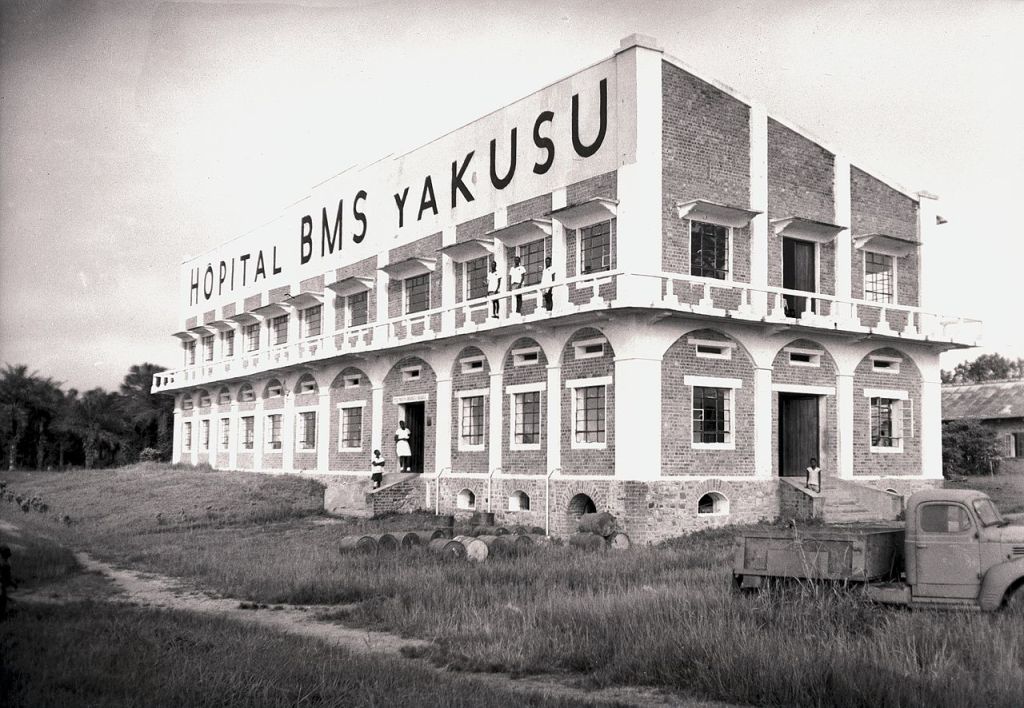
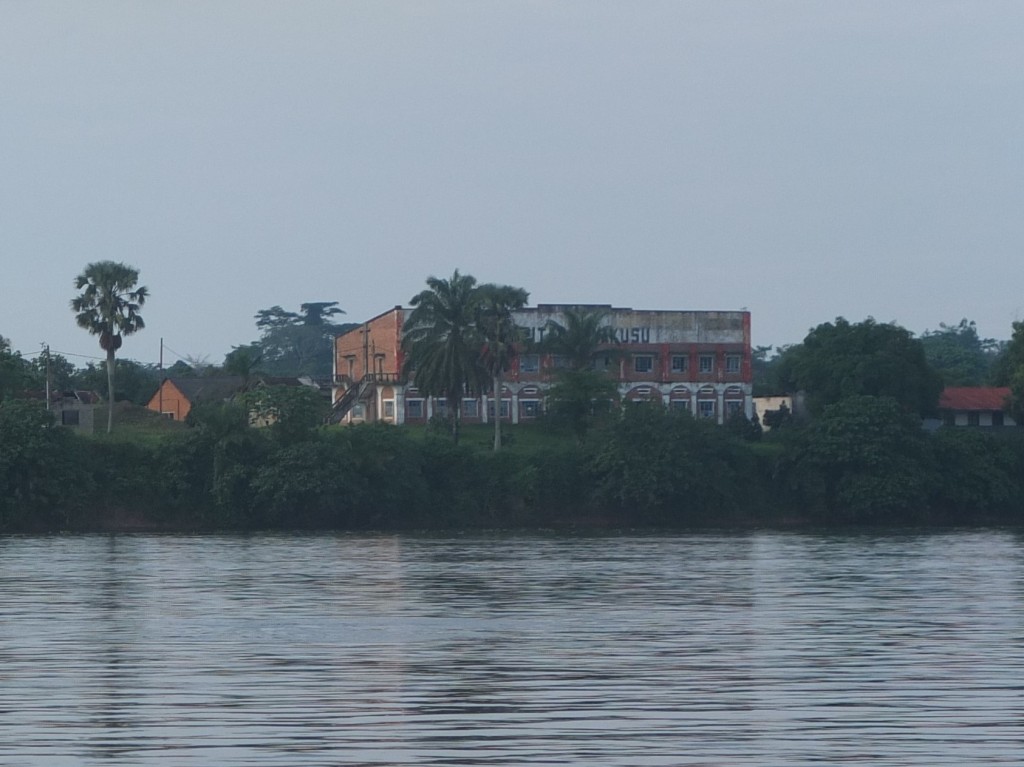
From the canot, on the right bank, flanked by colonial villas, I spot the prominent facade of the Yakusu hospital, a now run-down gem of the Baptist Missionary Society in the Belgian Congo and an important institution for the educational and medical history of the country [Nancy Rose Hunt,>>Colonial lexicon: of birth ritual, medicalization, and mobility in the Congo].
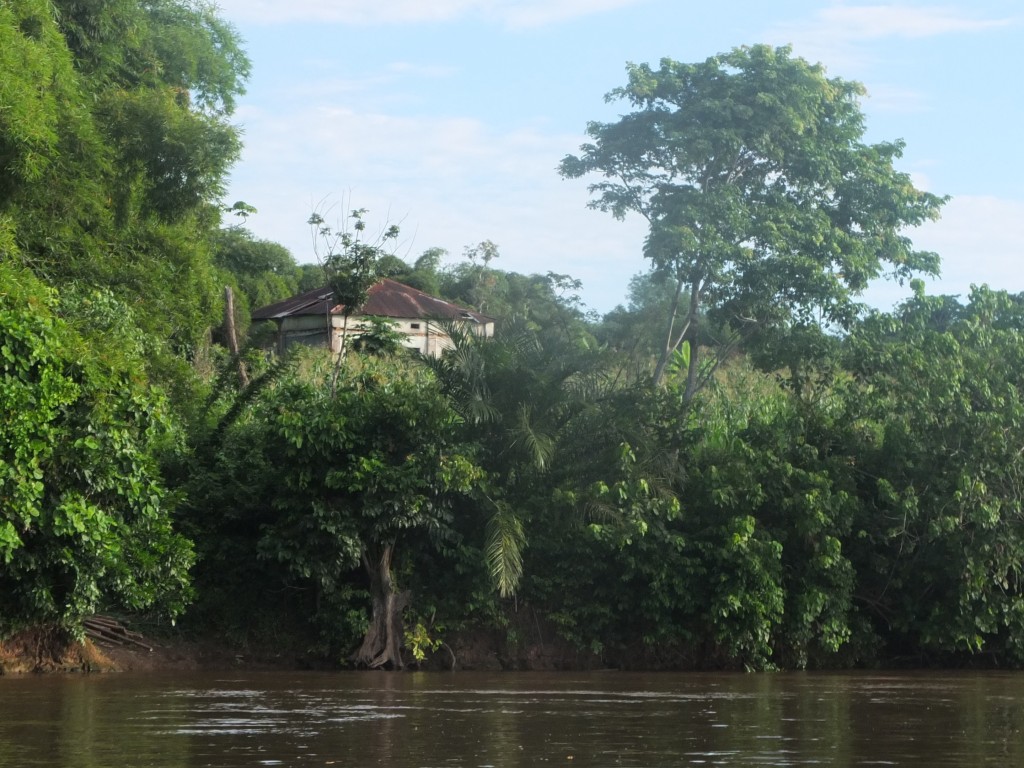
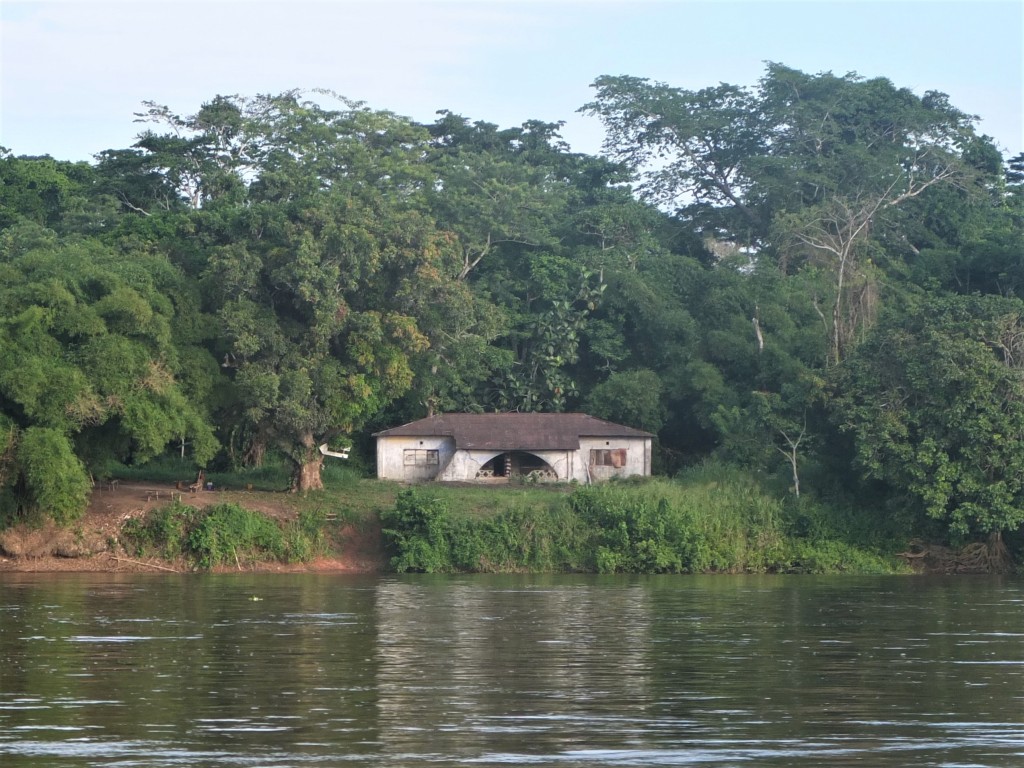
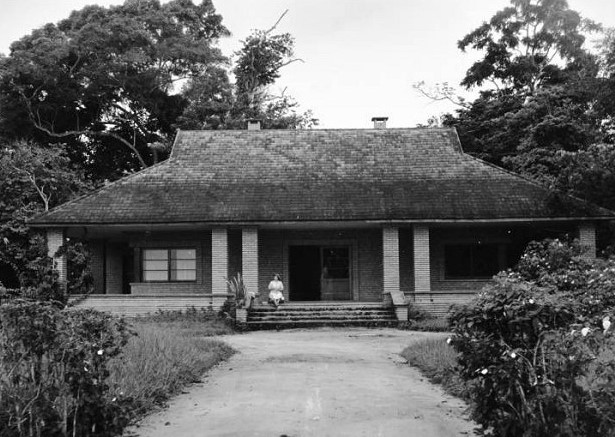
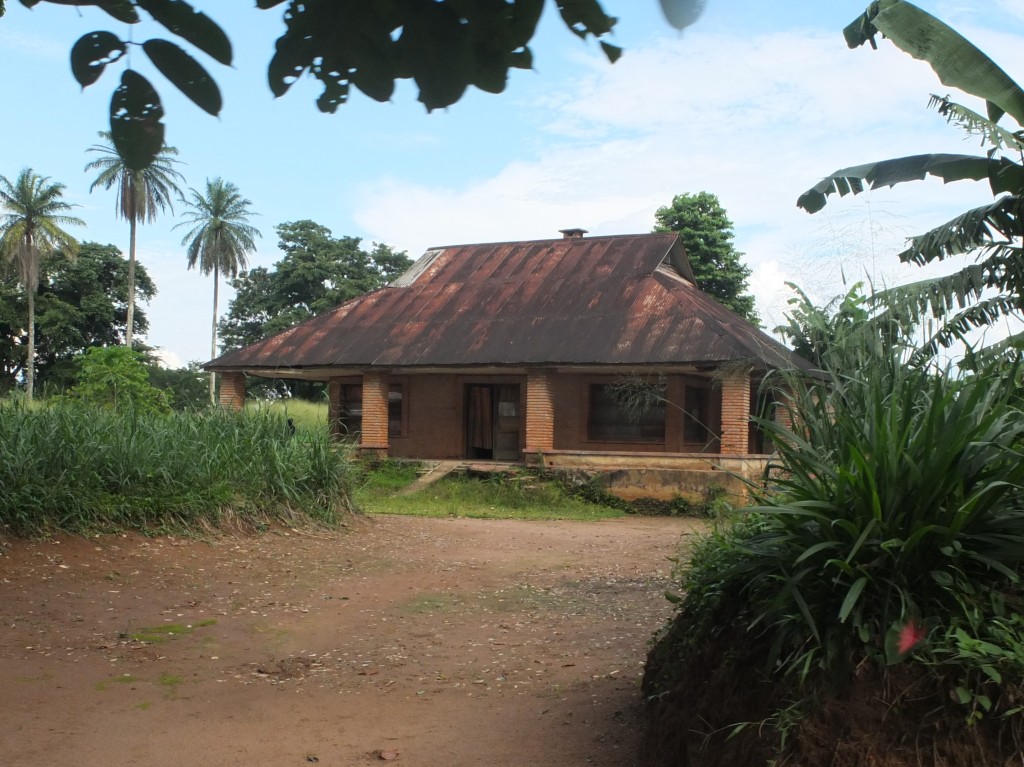
Further down the river, the Belgika, a private island owned by the heirs of a high-rank military chief under Mobutu dictatorship. Our boat speeds close to the coast; the waves agitate the fishermen’s pirogues moving under the branches of leaning trees. The shape of old buildings with porches facing the river vanishes rapidly behind the vegetation. >>During the colonial time, the island was a coffee and rubber plantation owned by the Comptoir Colonial Belgika. The company realised barracks for the workers and villas for the European technicians and now, half a century after it abrupty left the island, those buildings are occupied by the few hundred people still living on the island or are left in disrepair.
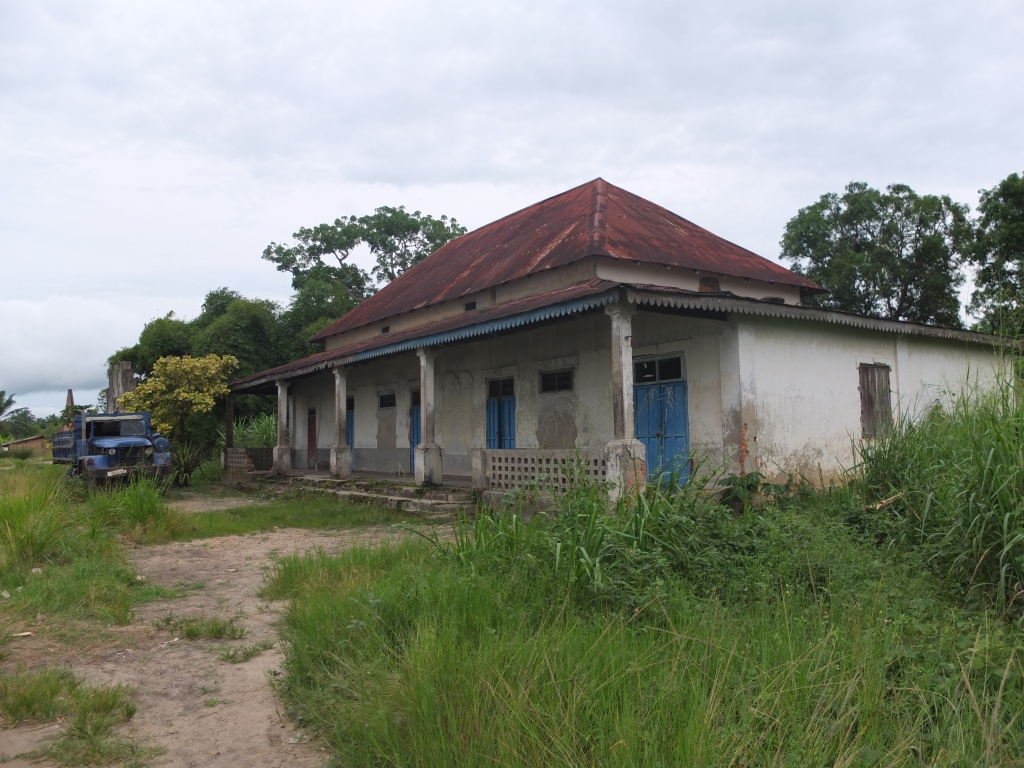
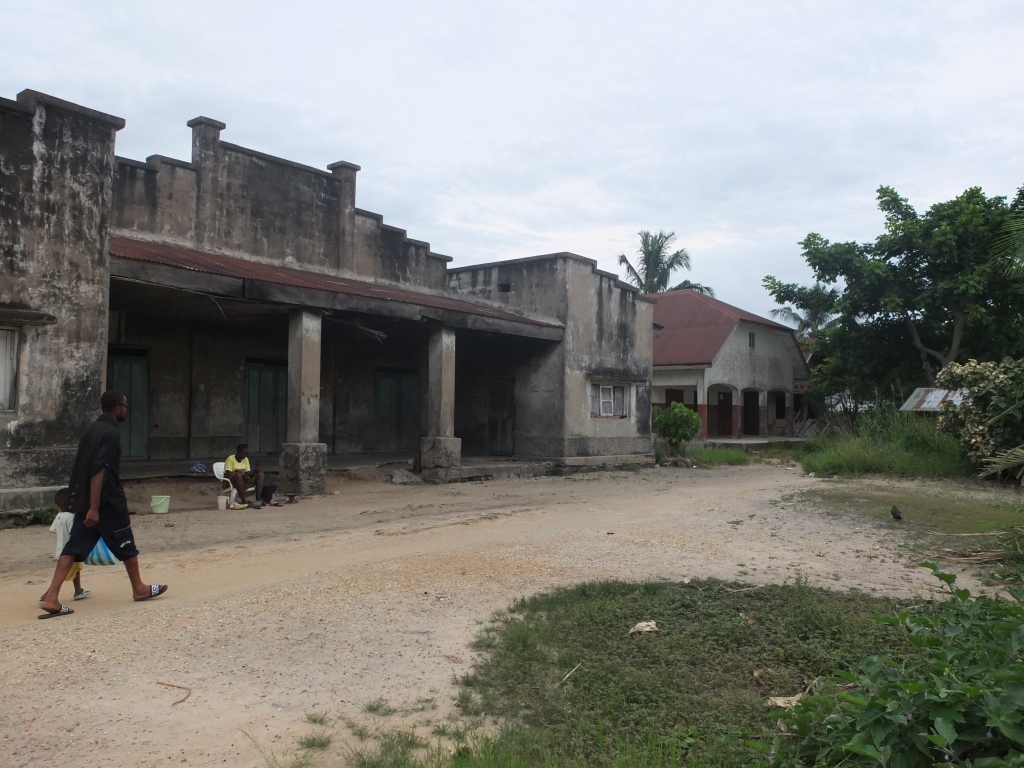
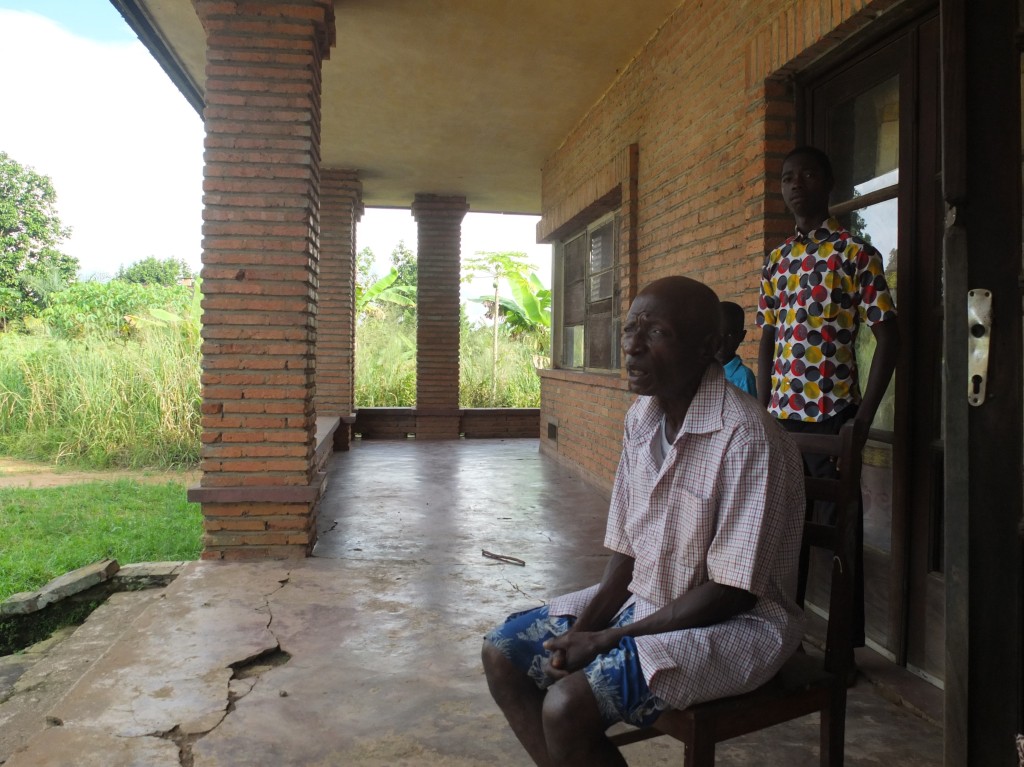
Yanonge — 50 kilometers downriver to Kisangani, we disembark in Yanonge, a small town built around a river dock and its market; a commercial gate to the river for the backland Opala territory and the Turumbu people. Up from the dock, over the steep river banks, I can read dates and names of European firms inscribed on the front of wharehouses now surrounded by the wooden stands of the weekly market. Along the riverfront, the traders’ villas and shops are almost untouched. Guélor, who shows me the place, lives in one of them with his family of five. The rest of the town is made of single-floor brick houses – the construction material coming from the local furnaces – and by simple clay, wood and straw houses. Outside the busy market area and the two main roads, people walk calmly in the shade of the many acacia and palm trees.
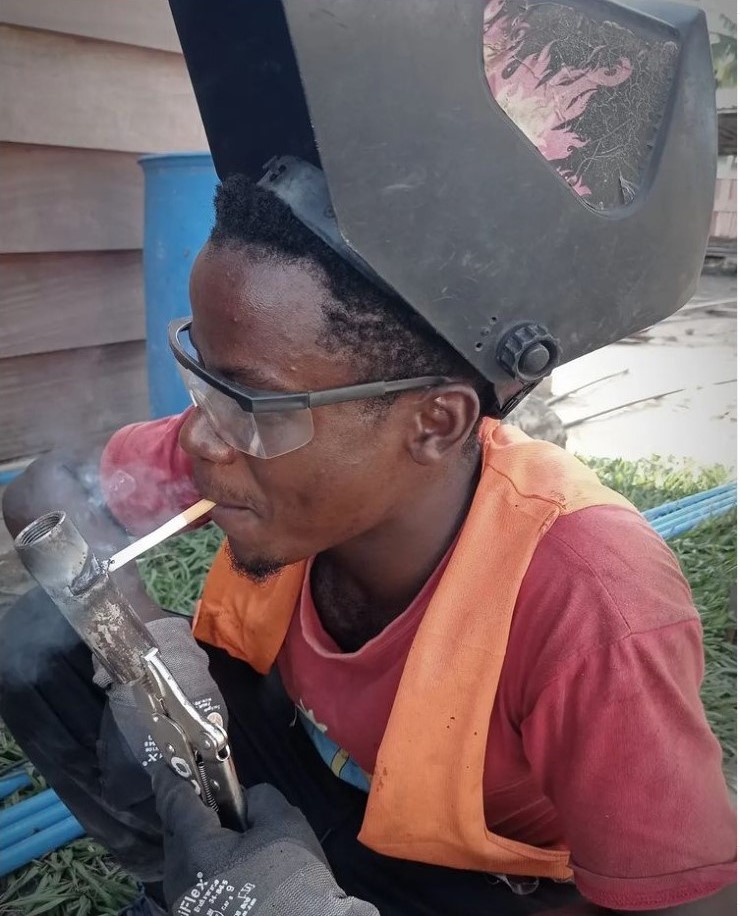
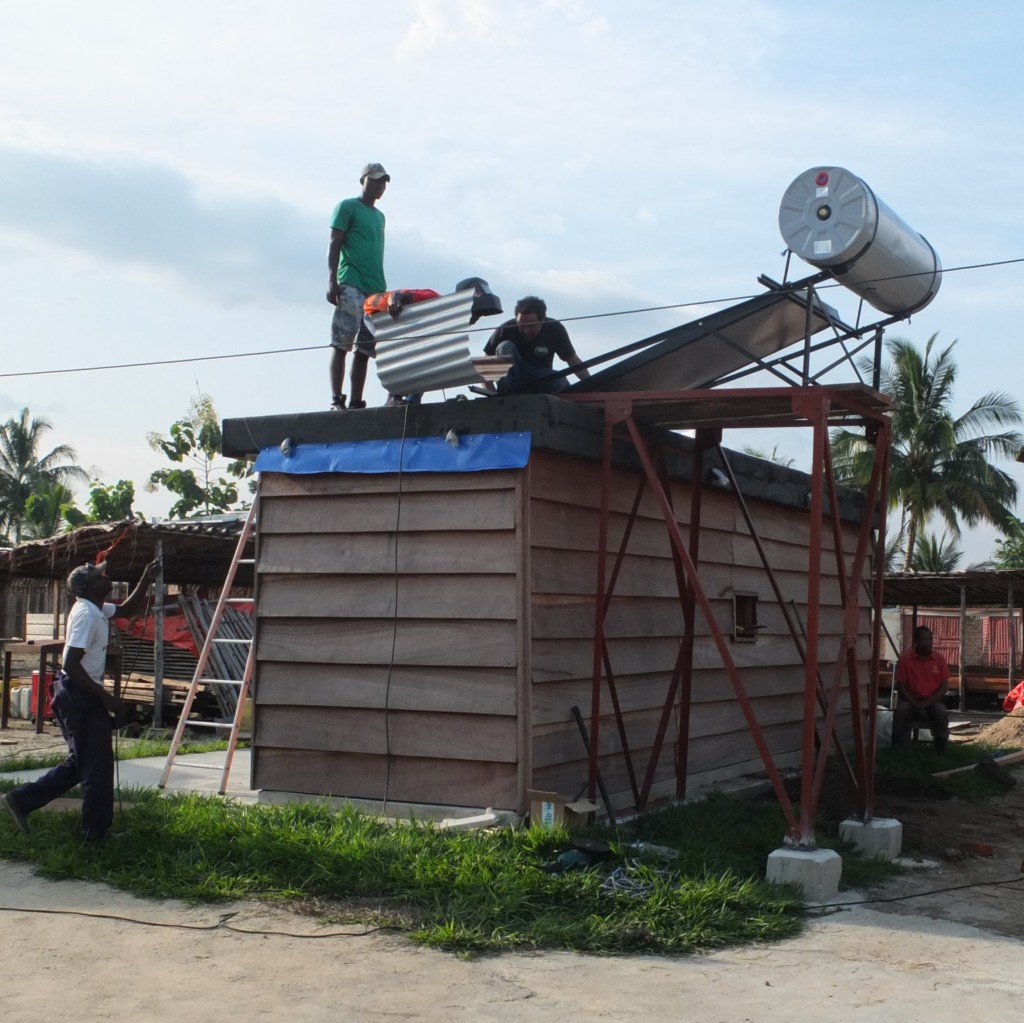
Since few years, Cifor established one of its bases in the town and carries our reforestation, agricultural and local development projects. Silvia, among the many other things, coordinates the construction of a small sawmill. A solar drying kiln is close to completion and an oddly sorted team of Congolese and Italians welds metal, cuts wood boards, make electrical and hydraulic connections, rushing to complete it before our departure. (My contribution to the works is barely symbolic). The aim is to prepare the way for a locally managed, and economically sustainable activity which, allowing to meet the quality standards required for exporting wood, would eventually offer a credible alternative to illegal logging [>>Forets]
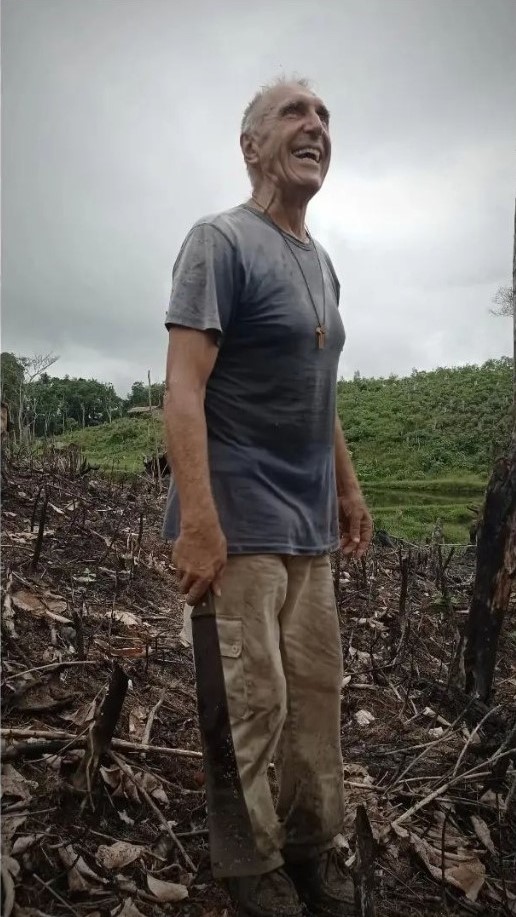
Fabrice lighting a cigarette with a welded piece / Vittorio at work: photos O.A.
During our days in Yanonge we stay at the local Catholic mission. Outside cities, missions often offers one of the few reasonably comfortable accommodations and in Yanonge, the Comboni community also gives the occasion for some peculiar encounters. Our early equatorial evenings are filled by the accounts of Father Vittorio, a truly remarkable character who spent 50 years in the Congolese rainforest, has unlimited energies, and a passion for >>improbable projects. When sitting in front of the usual plate of rice, pondu and tilapia, he starts talking and so I put my recorder on the table. I collect hours and hours of his improvised local history monologues in which he mixes personal memories with the accounts of the people among whom he have lived. “There weren’t many books in the places I have lived – he keeps saying, not without theatricality – but people love to talk to good listeners.”
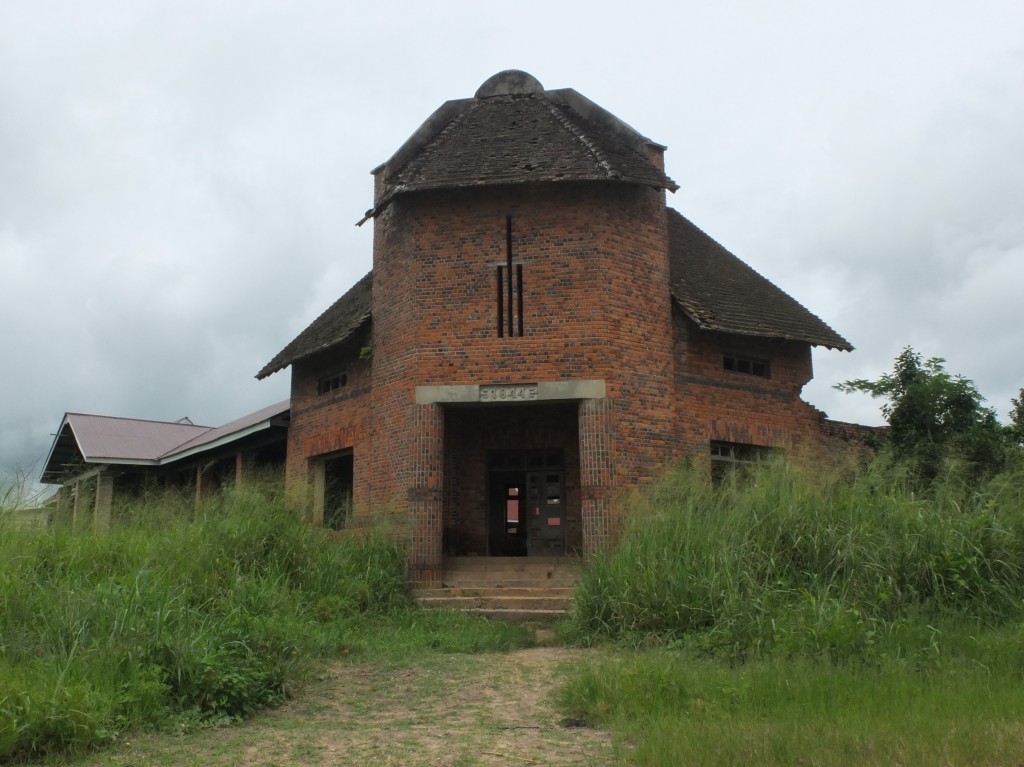
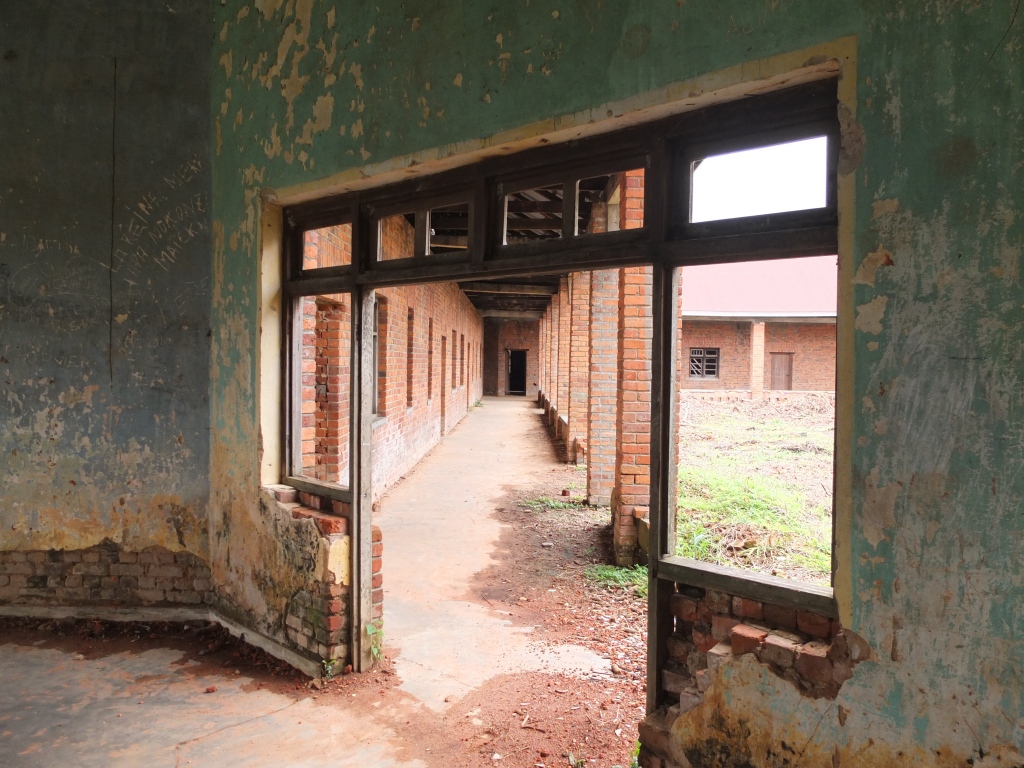
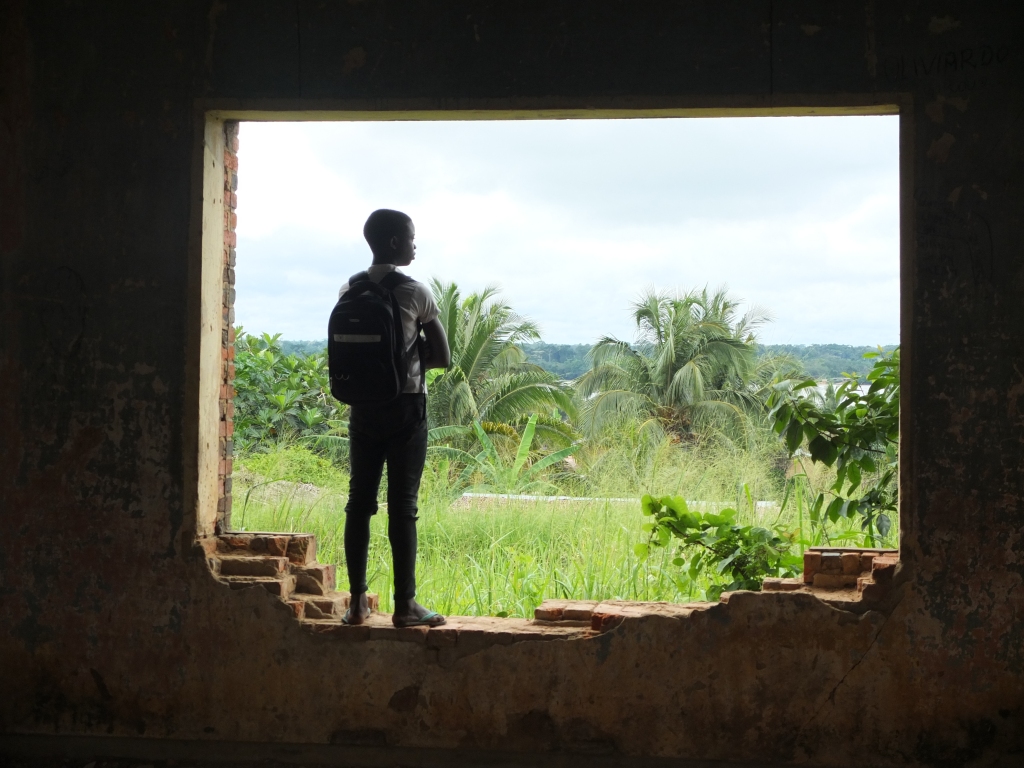
Here, the buildings have stories to tell too. The religious mission was established in the early days of the Belgian Congo and abandoned for decades after the brutal incursion in the convent by the Simba rebels in 1964. The concrete lintel mounted on rounded jambs – a motive that many times I saw in Brussels – at the entrance of what was the mission’s carpentry school is marked with the date ‘1944’. Behind the art-deco facade, a large room covered with an overly complex wooden trusses system. The three wings with porches on both sides form a courtyard and are in ruin. Part of the high-pitched roofs – a large ventilated chamber was originally left on top of classrooms to protect them from the heat – had been replaced; the rest had crumbled. Kids are everywhere, playing among the teetering walls. Our not so credible recommendations to stay away from the crumbling structures are (quite understandably) ignored. The mostly disappeared wood worshop is now a favourite spot for discreet nocturnal encounters and Paolo says that the large wood cutting machine built in Belgium in the 1940s was still bolted to the floor until not so long ago.
Private archive Vittorio Farronato
Next to this complex, the church and the old convent – now used as a school. The convent has a familiar shape that I had never had the chance to look closely before. A single-floor building – despite what the view from the outside may suggest – with a central corridor cutting longitudinally, facade-to-facade, through the building and rooms on both sides. Seen in cross-section, the corridor with openings placed at the ceiling level was meant to extract the hot air through natural ventilation. Next to this group of buildings and most probably coeval, a structure carrying a sign MATERNITE’ and two groups of identical brick houses which once hosted the school’s teachers.
The few days I planned on staying in this small town became more than a week as I’m stuck in bed, ill. “The full tropical experience” Iain writes me from Liverpool. I missed the boat for my next destination and I look for an alternative.
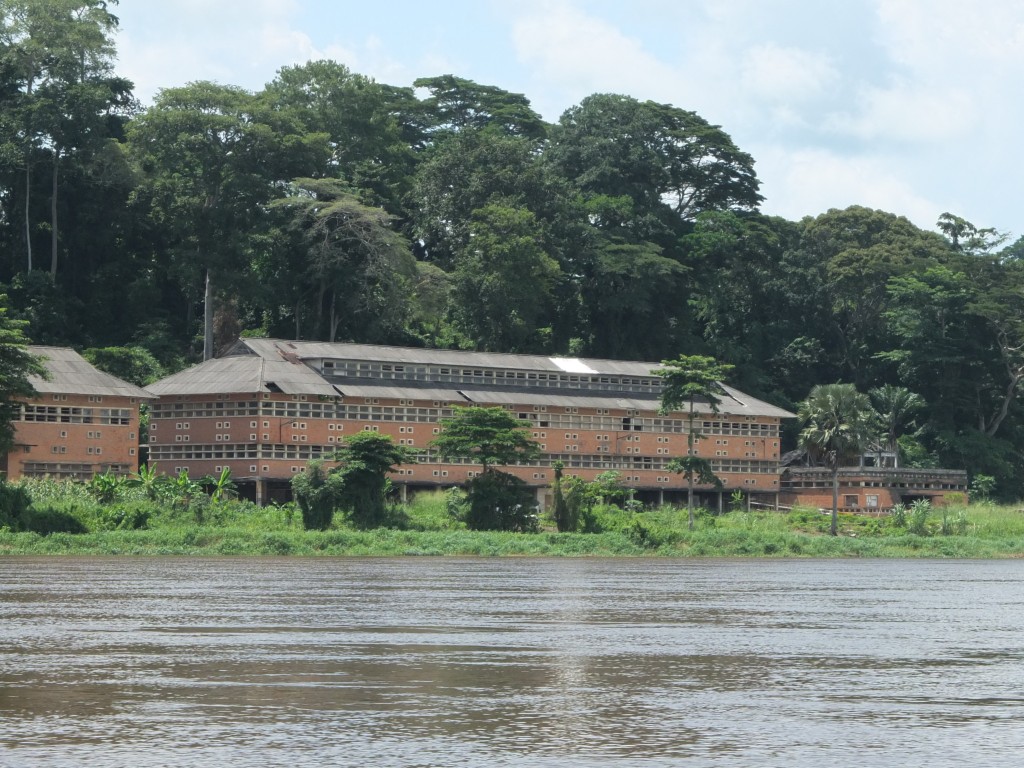
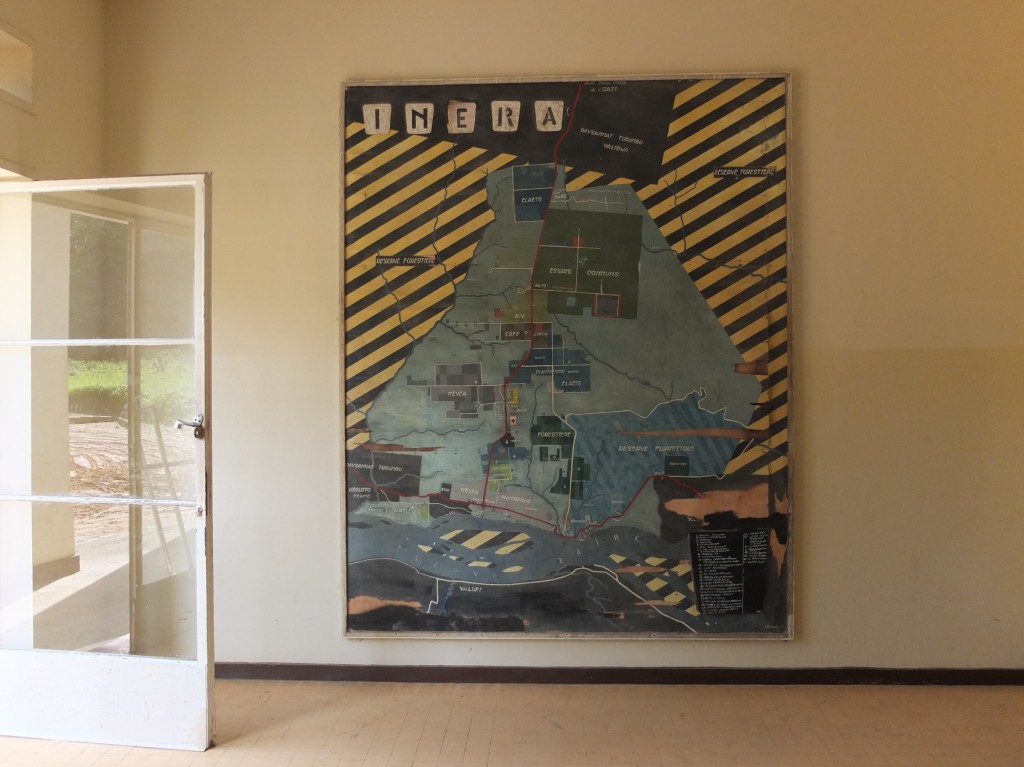
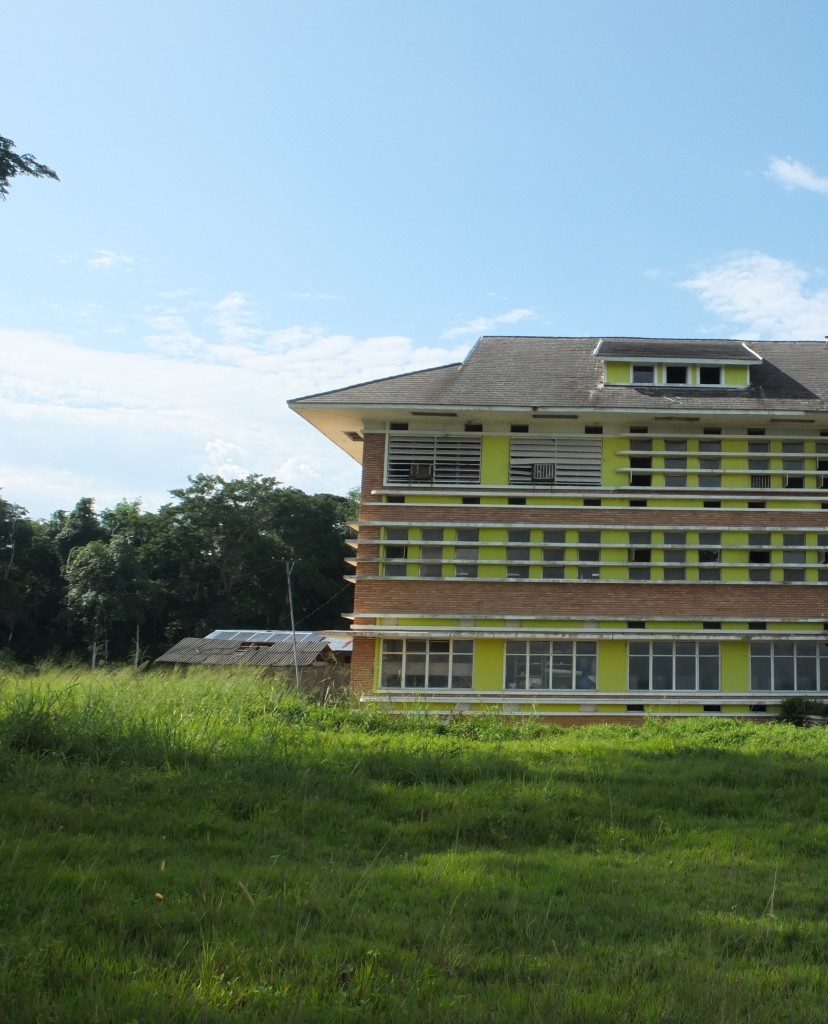
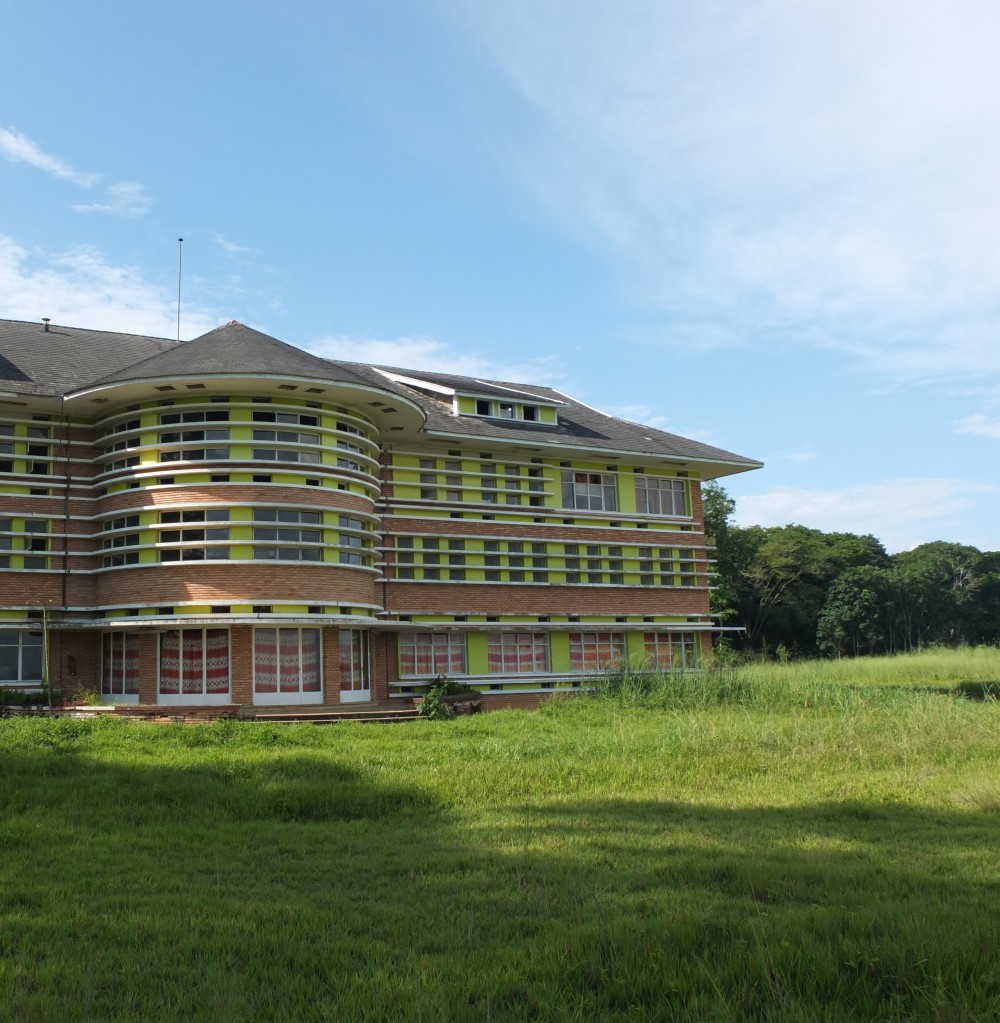
Yangambi — Sitting on the backseat of a motorbike running on a rutted dirt road, the lacking comfort is compensated by the view of riverine villages plunged in the luxuriant vegetation and by the glimpses of open horizon on the Congo river. When approaching the Yangambi reserve, the red brick walls of large villas appears on the side of the road, half concealed by the foliage of large ferns. The 250 villas built between 1933 and 1960 scattered across the reserve once housed the scientists and technicians of what was one of the largest ecological, biological, and agricultural research hubs in Africa, the >>Institut National pour les Etudes Agronomiques du Congo Belge – INEAC, later renamed INERA. The derelict storage tanks and the broken windows of the two large buildings facing the river port are the first visible signs of the now partly lost thriving life of this centre. But some sections of the research hub are >>still active.
During the few days I spend in Yangambi, Dorcas drive me from one section to the other of the reserve The library, inside the recently restored administrative building, has a large collection of magazines and publications dating back both to the colonial and Mobuto’s regimes as well as reports and correspondence documenting the exchanges that the institution had established with private companies such as the Huileries du Congo Belge and Lever Brothers. Even today, the centre carries out agronomic research and provide the germinated seeds of oil palm trees to smaller and larger >> Elaeis plantations in the country. The number of houses, communal facilites, and buildings dedicated to the different research sectors that I could brielfy see from the car or from the photographic albums stored in the library would definetely deserve to be explored with more attention but I’ve run out of time. The boat is waiting.
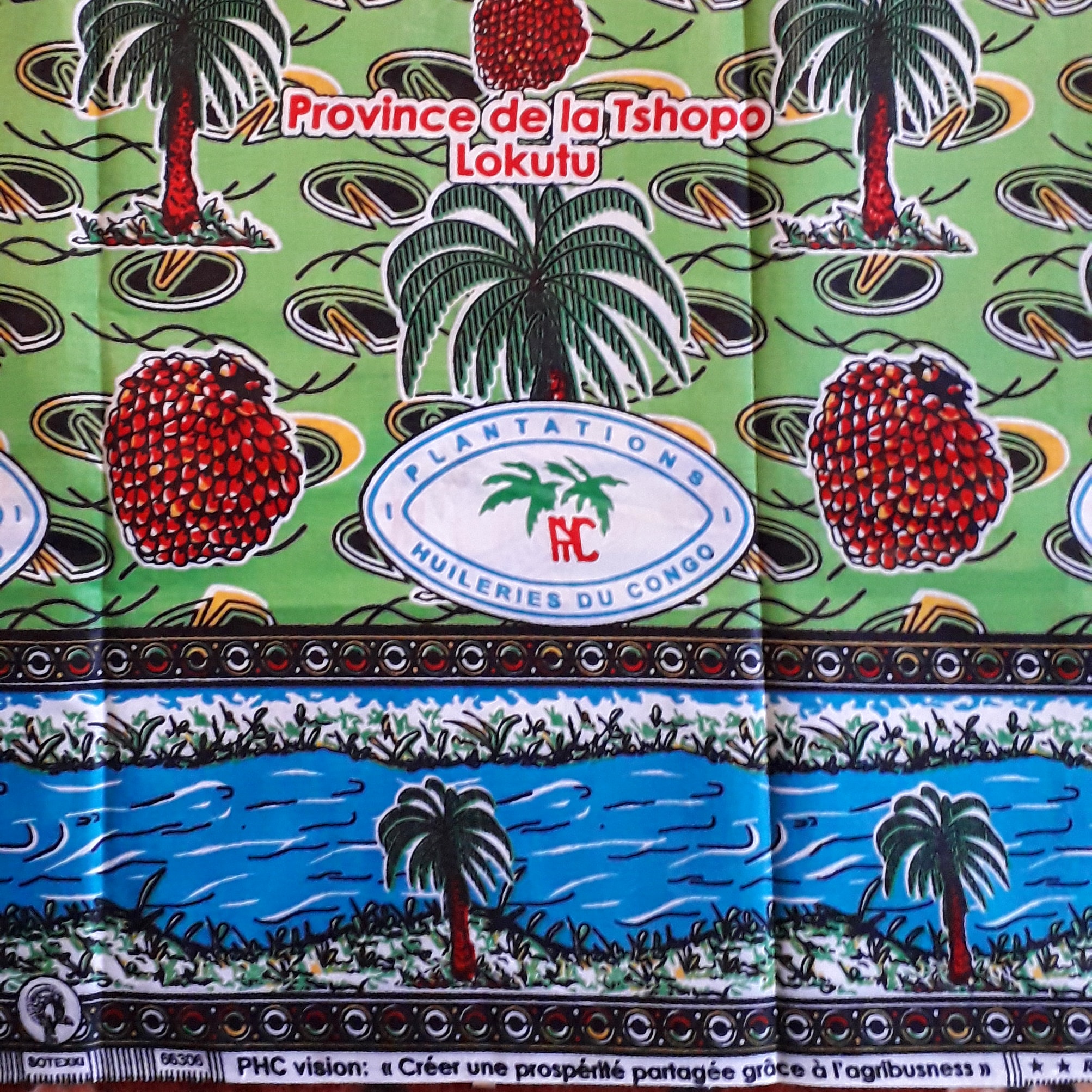
Kisangani — I’m already on the way back to Kinshasa when, during a two days stop in Kisangani that allows for a quick visit to the city, I find a piece of wax print fabric depicting the destination of my next trip to the DRC. In a small shop, one of the last selling locally produced Congolese wax fabric, among the most bizarelly decorated pieces of cloths, one is dedicated to the >>Plantation et Huileries du Congo, the company owning three of the former HCB plantation. Over a green background, the same palm tree and red oil palm bunch is repeated over and over. At the bottom, a sketched and colourful representation of the Congo River and its green banks along with some particularly >>optimistic mottoes of the company.
I greet the country carrying with me this small trace of the persisting signs of British-Belgian colonial capitalism in Congo. Lokutu (Elisabetha), Bumba (Alberta), and Lusanga (Leverville), three of the five company towns built by the Huileries du Congo Belge will be the subject of my next fieldwork in the coming months.
Jubilee House, Accra, Ghana. Source: Julia Gallagher, March 2019
This article examines recent attempts to create specifically African forms of modernist political architecture that draw on ‘traditional’ or ‘pre-colonial’ aesthetic forms and ideas. Taking examples of three prestigious structures – the presidential palace in Ghana, the parliament in Malawi and the Northern Cape regional parliament in South Africa – the article shows how vernacular ideas have been incorporated into state-of-the-art political architecture, producing new or explicitly ‘African’ forms of modernism. It explores how such buildings, which draw on ‘invented traditions’, are used alongside conventional, monolithic representations of the state to produce ‘invented modernisms’ that both uphold and question the African state as a project of modernity.
Arriving in the dead of the night there was not much to see at Lilongwe Airport. The trip to the city was a long, quiet drive on a single lane road with not much to indicate what the city would deliver. Hotel check in suggested this might be a ghost destination in a ghost town with large edifices and pretensions of grandeur.
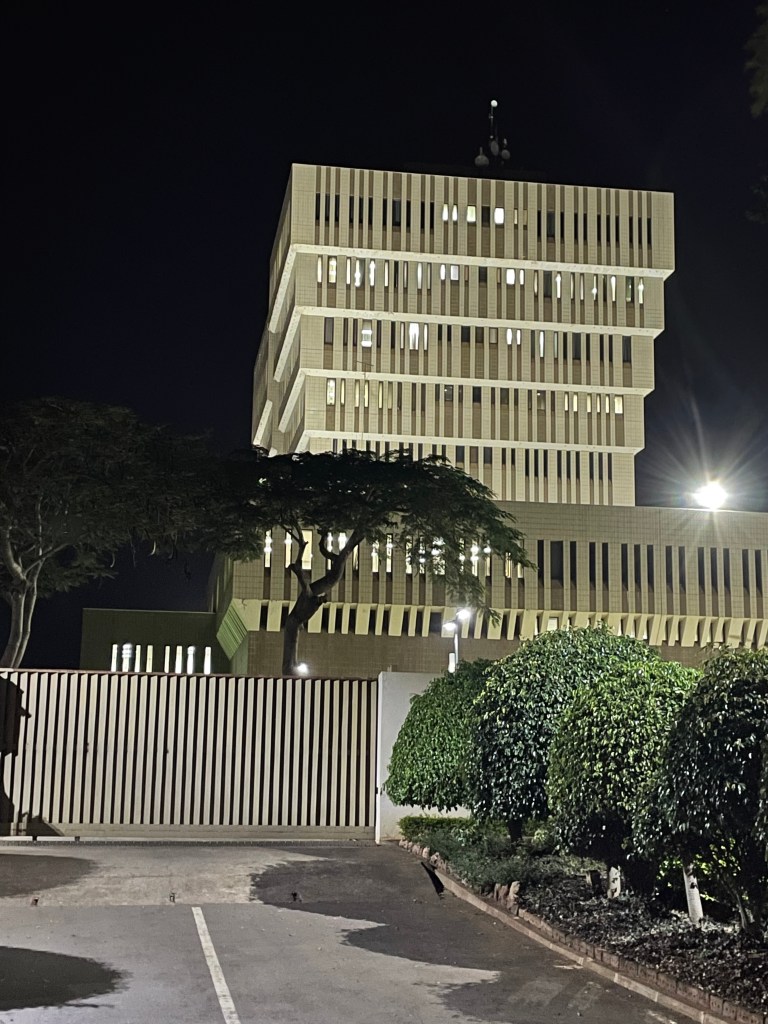
Later on at 7am in the morninig however, the city began its reveal. My hotel room at the Umodzi-President hotel set in the grounds of the lush green Umodzi Park gave the perfect vantage point of the modernist icon the Malawi Reserve Bank building (c. 1964 but who designed it? – apparently an exact copy of a building in South Africa), and also a view out to the Mausoleum to Malawi’s first president Kamuzu Hastings Banda.
The Malawi parliament Complex also got a detailed view from my Umodzi vantage point. More curious was the conference complex which forms part of the Umodzi Hotel – Park setting, and I suspect this might have been or is the setting for presidential and other political rallying in days gone by. Post-covid it seemed an empty stage set for a drama yet to unfold.
The field research trip that brought me to the city began in earnest later on that morning, not before a after a hotel room battle with climate and media control as both remote devices had only Chinese ideographic character instructions to follow. The Umodzi Hotel Park and facilities had been built through a Chinese arrangement…
Malawi National stadiumMalawi National stadium
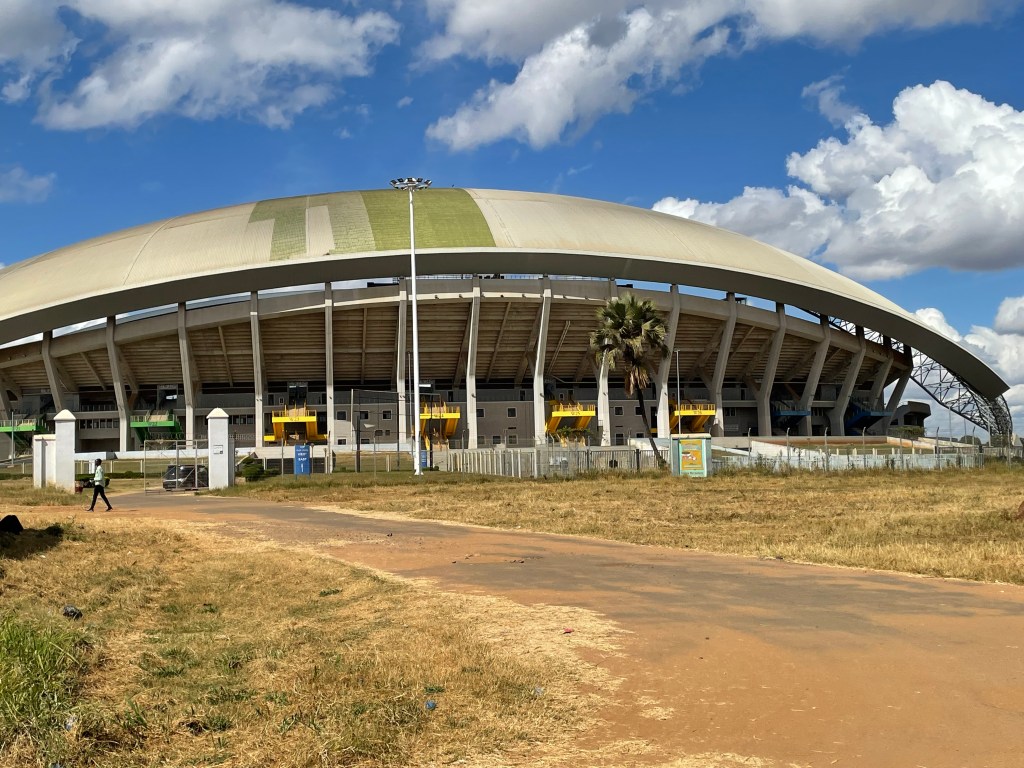
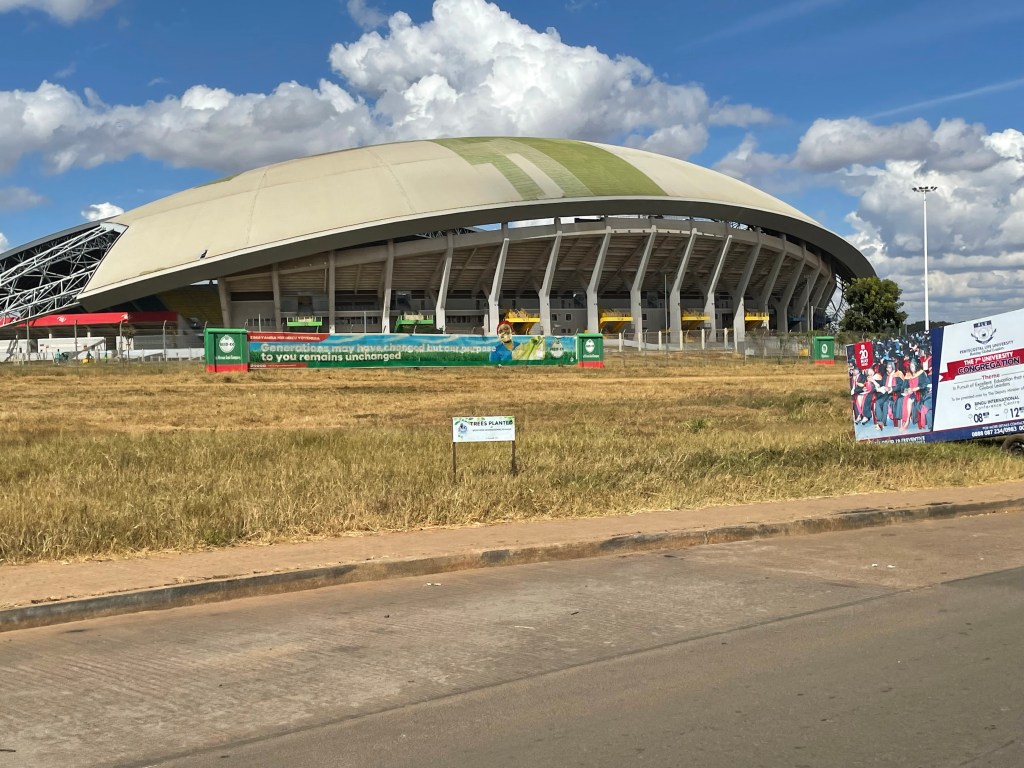
So the trip began in earnest, a visit to the first point of call meant a drive past the Malawi National stadium complex, a gift of the Chinese Government, certainly worthy of international architectural merit. Close by a gated community also developed during the stadium’s construction and now a high-end housing estate.
Villas in Lilongwe: High value housing
Lilongwe owes its masterplan to the dark days of apartheid and its layout is credited to South African planners who projected the segregation of residence by race and buffer zones to what had become Malawi’s capital city. The hard trace of this layout very much structures 21st century Lilongwe. Poorer Malawian and increasingly trans-African communities live the farthest out to the city centre whilst former European only (now mainly elite African) residents and Asian communities live the closest to the city centre.
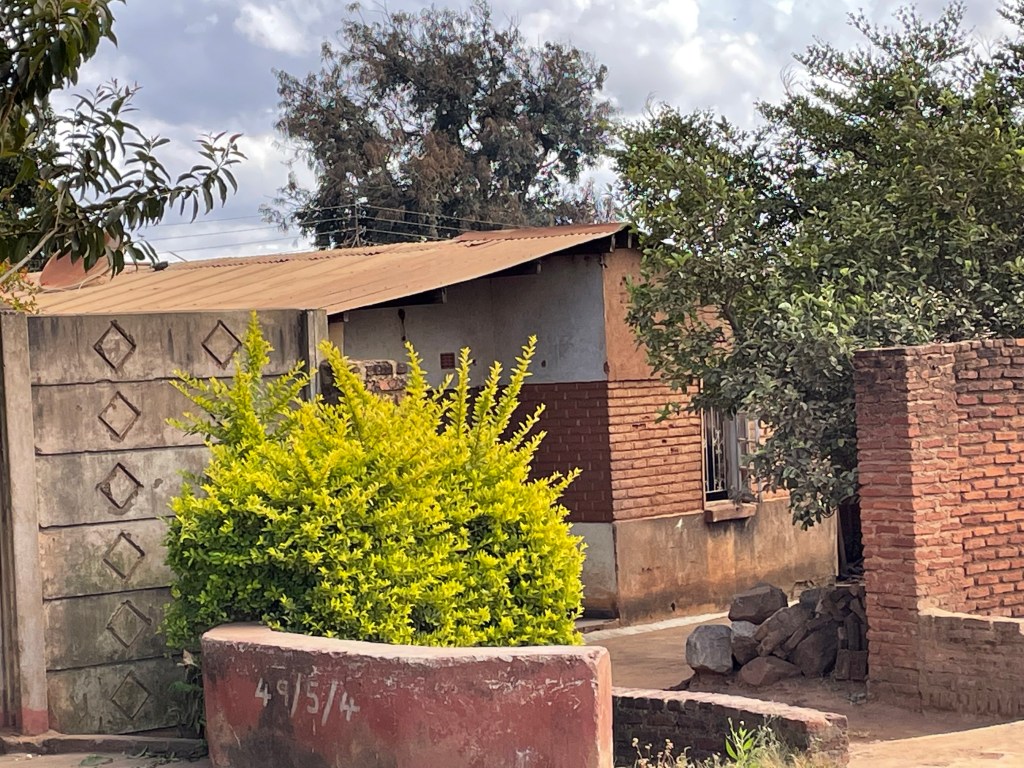
Local housing in Lilongwe despite sharing distance issues from the CBD, is certainly different from West Africa. ‘Formal’ housing uses much more burnt clay brick than in West Africa, locally made bricks are used for the majority of housing with ‘crittal hope’-style windows predominating glazing options. Corrugated Iron, and formed aluminium roofing as in West Africa predominate with an absence of asbestos or other cement fibre sheeting types. Building crafts and trades also seem particularly well established on the ground, might this be because as a landlocked country all importation is expensive and local labour is more valued. The other thought might be that the ‘grip’ of South Africa’s emphasis on non academic ‘technical/service’ education for non-whites has led to a better skilled and trained local technical workforce.
Low Cost Housing
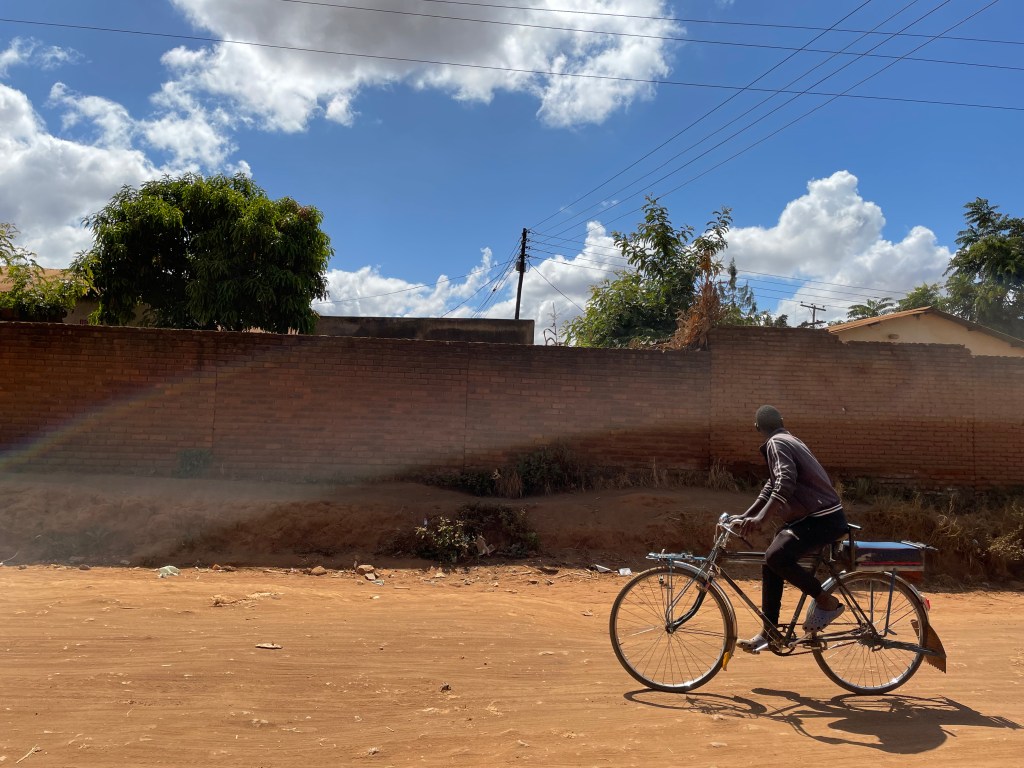
Transportation-wise also sustainable transport gurus might be in seventh heaven, the humble bicycle seemed the main form of transportation in many neighbourhoods with a locally welded handlebar for passengers to use. A range of second-hand imports also could be seen gracing the streets. Faster and more efficient than cars and cheaper than motorbikes given the exhorbitant cost of fuel.
bicycle transportationbicycle transportation
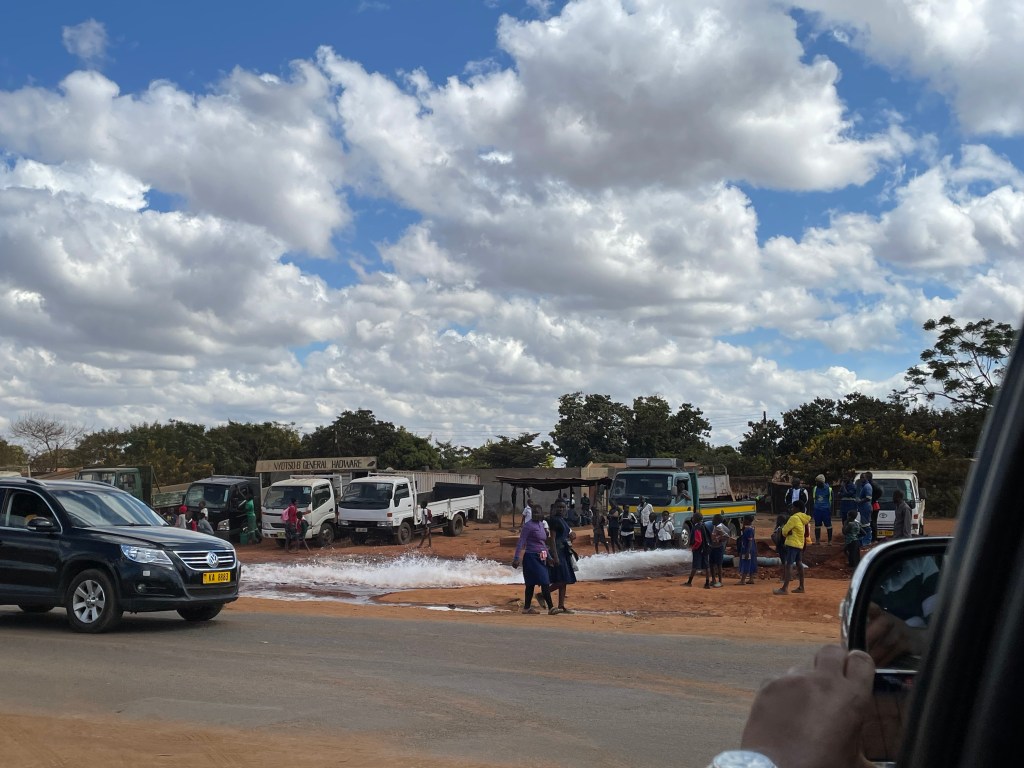
Great efforts were being made by Lilongwe local government and at national level to deliver services to all communities. Sanitation and water projects abounded. Contracts had interestingly been given to several international contractors including in a case we came across a water hydrant project for poorer neighbourhoods, run by a Chinese contracting firm.
Water Hydrant Installation.
This seems to be in keeping with the Chinese involvement in the development of the Lilongwe highways projects and future interchange. Not to be outdone there has also been investment by the Japanese in the Lilongwe International Airport upgrading and expansion project, with some interesting architectural results.
Viewing Lilongwe in a day was going to be a hard call, let’s say that it is certainly a green city and one that seemed genuinely peaceful and friendly. Its key problems seem to stem on a poor transportation system, predicated on the apartheid zoned settlement city which means that there remains very little interconnectivity to neighbourhoods and a non-existent prioritised public transport system to the city centre where unsurprisingly all the jobs remain located.
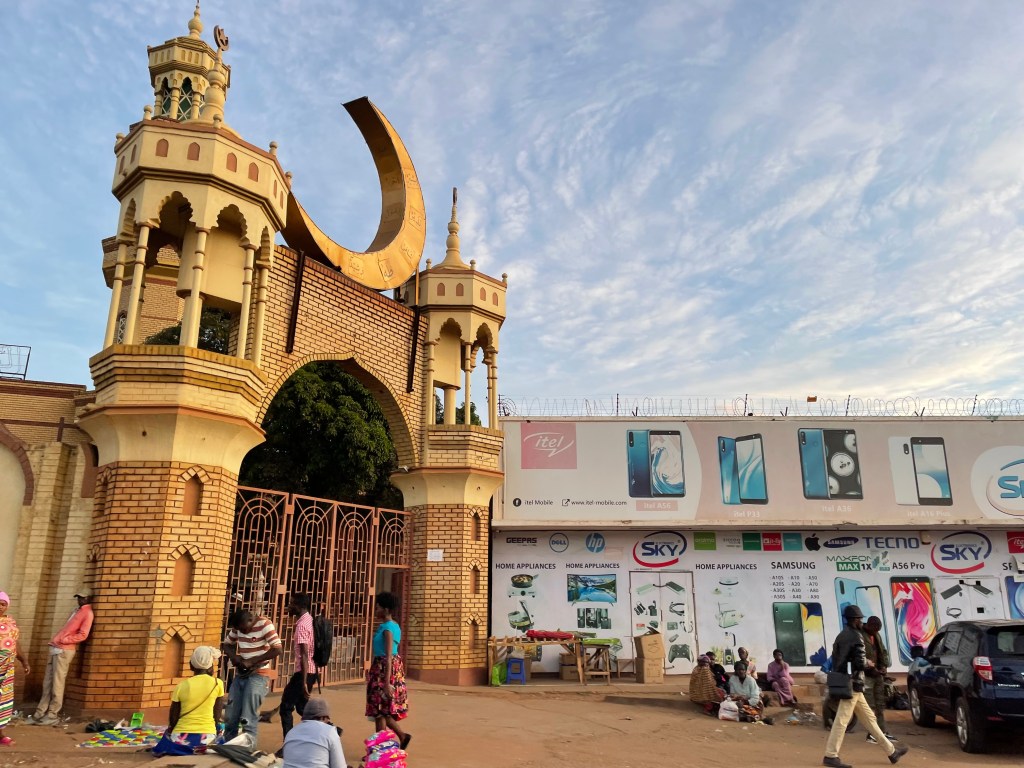
Mosque in Lilongwe
Foreign investment in the infrastructure and buildings in Lilongwe is truly international it is quite clear to see. If this was a former British colonial city, the trappings thereof are rapidly disappearing. Aid seems to come in many forms and many directions, the ‘Global East’ certainly being emergent. This investment seems now to be getting ‘grounded’ in infrastructure projects including a housing estate for the Chinese in Lilongwe close to the Presidential palace and the Chinese Embassy, a symbol of Sino-African friendship.
But to end as I began, my last stop was again to view the Malawian investment bank, a night time shot didn’t fail to impress. 1970s African modernism at its best.











 Transnational Architecture Group