Archive

Global Architecture

EAUH Helsinki 2016

European Association for Urban History 2016 Conference: 

Reinterpreting Cities

24-27 August 2016, Helsinki, Finland


CALL FOR PAPERS

Deadline: 31 October 2015

Session:

M19. Settler Cities: A Useful Concept to Reinterpret Transnational Urban History?

In the opening lines of his massive Replenishing the Earth: The Settler Revolution and the Rise of the Anglo World, 1783-1939, James Bellich presents a challenge to historians eager to reinterpret cities in a transnational framework: do cities like Chicago and Melbourne on opposite sides of the planet share characteristics by virtue of their foundation and political rule by white settlers intent on dwelling permanently upon lands forcibly taken from their indigenous inhabitants?
This panel will explore this question by calling upon scholars to reflect on the concept of “Settler Cities.” What defines such a city? Are their clear boundaries, or does the definition involve a subtle degrees of separation form the broader category of colonial city? Are there broad commonalities in the histories of these cities that merit singling them for scrutiny as a group? Are they best seen as a special subset of colonial cities or is there a way in which they expand or transcend that long-used concept? Are there webs of connections between these cities and between them and the imperial metropoles that make this concept especially useful as a subset of the new subfield of transnational urban history? What if we go beyond Bellich’s focus on the “Anglo World,” and consider Algiers, Elizabethvillle/Lubumbashi, Windhoek, Batavia, Jerusalem, and even Mexico City or Rio de Janeiro in the same universe as Cape Town, Chicago, Vancouver, San Francisco, Belfast, and Sydney? Are there non-western settler cities? Why did the settlers in some cities abandon their project of settlement while others stay, helping to cause some of the most intractable conflicts on earth?
Participants should not only bring their research on individual settler cities to the table, but also contemplate several themes underlying the concept of settler cities: especially dense connections and flows between these cities and between them and metropolitan hubs; the diversity of flows between these cities, including not only people, money, ideas, and urban practices, but also jurisprudential systems, organizational forms, urban economic structures, group identities, and political cultures; especially complex forms of urban politics that includes conflicts between settlers, between settlers and metropolitan governments as well as with indigenous people; real estate practices involving people who plan to invest in urban land for future generations unlike the more transient European populations of non-settler colonial cities; and interventions in urban spatial politics that include especially complex forms of segregation and law-of-conquest authoritarianism.

Keywords:
colonial cities, segregation, settler colonies, transnational urban history, urban politcs

Period:
Modern

Type:
Main session

Session organisers:
Carl Nightingale, University at Buffalo SUNY, United States of America
Vivian Bickford-Smith, University of Cape Town, South-Africa
Johan Lagae, University of Gent, Belgium

EAUH Helsinki 2016

European Association for Urban History 2016 Conference:

Reinterpreting Cities

24-27 August 2016, Helsinki, Finland


CALL FOR PAPERS

Deadline: 31 October 2015

Session:

Women on the Edge: Mobility and Regionalism from the Margins

 Leading Question: How did transnationally mobile female actors engage and shape the development of a regionalism discourse in the fields of architecture and planning in the twentieth century?

From the mid-twentieth century, the expanding discourses on regionalism in a globalizing field of architecture championed and eventually canonized the works of architects such as Charles Correa, Geoffrey Bawa and Muzharul Islam. In addition to working in emerging nation-states, the family backgrounds, educations and client bases of these architects ensured that they were actively involved in powerful transnational networks.

In this session we will investigate the significance of such transnational mobility in the development of the regionalism debate, shifting the focus critically from canonized male actors to “marginal” female actors—opening this term and the actors it may describe as platforms for debate—including architects, planners, patrons, and users, in order to explore the fringes of architectural and planning history. We aim to find a more inclusive angle from which to examine connections between transnational mobility, regionalism and local lived environments, as well as the geopolitical, social and economic events and processes that catalyzed their intersection.

As a factor of globalization that accompanied the modern colonial and postcolonial moments—whether a function of privileged access to international networks or the result of forced migration—transnationalism and an emerging landscape of cosmopolitan sites offered women new proving ground outside established social, cultural, and commercial spheres. We are particularly interested in the modalities of this peculiar confluence of labor, politics, and culture, noting as examples the practices of Jane Drew in West Africa, Catherine Bauer in India, Minnette de Silva in Hong Kong, and Erica Mann in Kenya, which were contoured by transgressions of the borders of colonies and new nations. We also see that the transnationalism of certain female figures—Jacqueline Tyrwhitt, Sibyl Moholy-Nagy, Margaret Michaelis—resulted in their profound discursive engagement in modernist debates on regionalism and vernacular or everyday architecture. By studying village housing in the Gold Coast and anonymous architecture in North America and Europe, establishing cottage industries in rural Kenya, or writing histories on Asian regional architecture, many of these agents operated independently of the expected dialogical frameworks between colony and postcolony.

We seek papers that explore the roles, practices, and networks of transnational female actors from the margins; the reception and transmission of their work; and their imbrication with architecture and urbanism discourses on regionalism and the vernacular in the twentieth century.

Keywords:

gender, global south, mobility, postcolonial, regionalism

Period:

Modern

Type:

Specialist session

Session organisers:

Anooradha Iyer Siddiqi, New York University, USA

Rachel Lee, TU Berlin, Germany

Submission Guidelines:

  • Paper proposals can only be submitted online. Proposals and texts sent by post or email will not be considered. To submit a paper proposal, please create a user account on the abstract system on the EAUH2016 website https://eauh2016.net/.
  • Abstracts of paper proposals should not exceed 300 words.
  • Deadline for paper proposals submission: October 31, 2015
  • Notification of paper acceptance: December 15, 2015

The 20th Century Urbanism and Landscape in Africa conference recently held at the Edinburgh School of Landscape Architecture (ESALA), University of Edinburgh. It took place from 7 to 8 October, and focused on the subtheme of ‘Research Challenges and opportunities’.

The first day of the conference was dedicated to presentations by the four Key Note speakers, who were Dr Rexford Oppong of KNUST Ghana, Prof Luc Verpoest of KU Leuven, Prof Johan Lagae of Ghent University and Dr Iain Jackson of University of Liverpool. Although their presentations all brought the conference’s key theme of ‘Research Challenges and Opportunities’ to the fore, their various approaches and contexts had provided more divergent and interesting perspectives to the discussion.

The areas of interest covered by the four speakers ranged from Dr Oppong’s  “Challenges and Opportunities of Conservation Research and Documentation on the Urbanist and landscape heritage of KNUST”, to Prof Verpoest “Mind the gap: from historiography to [urban] preservation. The African case” and Dr Jackson’s “Research Challenges and opportunities in West Africa”. Prof Johan Lagae also presented a talk on the challenges of his on-going research on urbanism in Congo.

Picture2

Cover picture for Dr Jackson’s “Research Challenges and Opportunities in West Africa”

In Dr Oppong’s talk, he presents the KNUST as a campus set, and much preserved in the Modernist architectural theme of the 1950s. However, the current state of its architectural drawings archives as highlighted in his presentation, need urgent conservation and documenting for posterity. He therefore gives insights into his current research in this regard, and the challenges of the project. One main challenge he sights is in getting the current University and secondary school students (who also played a part in the survey) to recognise the input of indigenous Ghanaian Architects in the building designs.

vc lodge

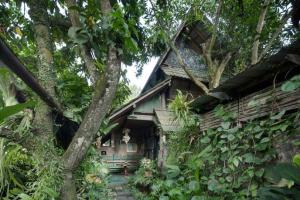
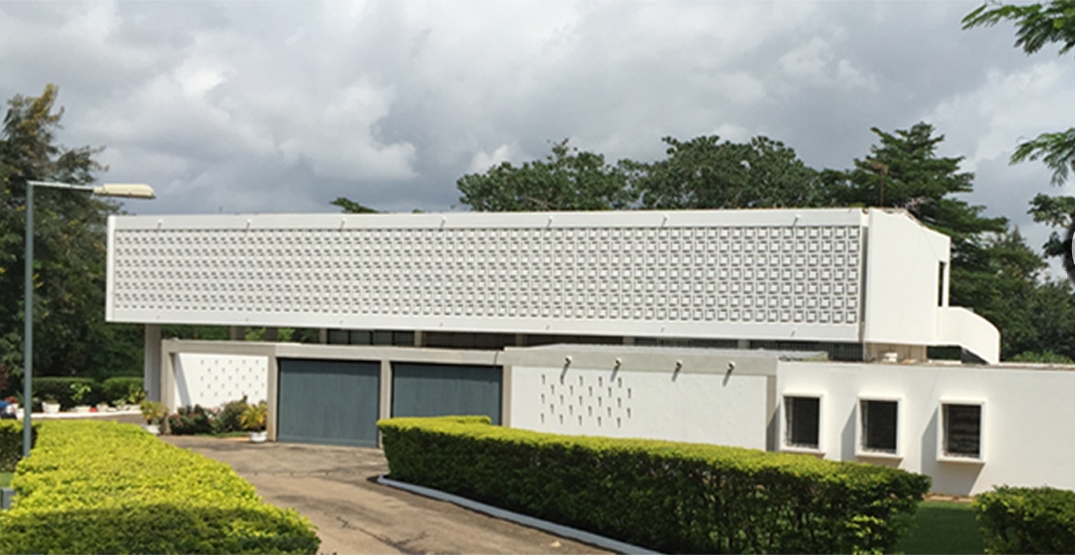
The Vice-Chancellor’s Lodge, KNUST Ghana

The challenges of conservation and documentation raised by Dr Oppong, was a theme which ran through the other presentations. However, in Prof Verpoest’s talk, he suggests that further strands of investigations are needed to be explored on the subject. Rather than being limited to buildings and famous architectural pieces he argues, researching conservation, preservation and documentation should look at the wider picture of processes, institutions, mechanisms and historical context. In essence, it should go beyond the built object as an individual subject of analysis. He therefore discusses this in the light of recent projects by Docomomo, where research is being done to go beyond individual building conservation to urban building conservation. He also explains how the organization is seeking to have regional linkages in selected African countries.
Picture2

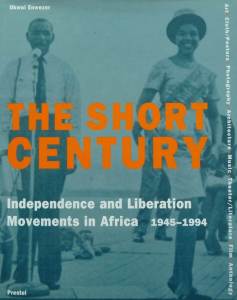
An image of Africa’s changing society as illustrated in Prof Verpoest’s presentation

Prof Verpoest’s  suggestion of research into urban, rather then individual building conservation, preservation and documentation in Africa and globally, is also seen to form the crux of work done by the third key note speaker – Prof Johan Lagae. In his current research in Congo, Prof Lagae looks at various types of infrastructure – Missionary, Railroad and Hospitals, but all within the wider urban form context and everyday living. He also looked at the Post Belgian period in Congo around 1965, and raises the issue of building production and technology – but again questions “where were the Congolese in all these?” On the challenge faced in his research, he stated practical issues of language, electricity, relating with local chiefs etc. He also notes the fantastic data and drawings present in the archives, but which unfortunately lacks infrastructure.
Picture5

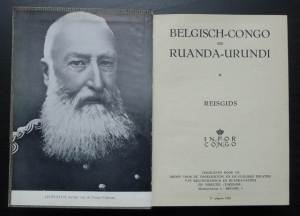
Picture of King Leopold II of Belgium in an archival administrative document on the Congo

Prof Lagae’s question on the contribution of natives, and poor archival infrastructure are two issues which Dr Jackson’s also raises in his presentation on Research Challenges in West Africa. With regard to the native contribution, he suggest that urgent work is required on the works of native architects in particular. While supporting the need for improved archival infrastructure in West Africa, however, Dr Jackson also makes a case for more fieldwork participation – arguing that “We have to get our hands dirty and explore…to create new photographs and records of the buildings”. He also suggest that further to such fieldwork exercises, the adoption of new technologies, like Drones and GPS need be encouraged to produce astonishing results. As seen in Professors Verpoest and Lagae talk, Dr Jackson was also of the Opinion that Architectural history needs to move beyond the conservation and preservation of important buildings. He argues rather, that research in this area become more inclusive of the intangible and the ephemeral, and sample user experiences and opinions. His talk raises several other questions on research challenges in West- Africa, including the theoretical base, further studies into Village plans and the PWD, art works and murals, architectural teaching etc. A most significant point he however raises, is on the need for collaborative research, rather than the lone-wolf and fear of plagiarism approach.

photo (1)

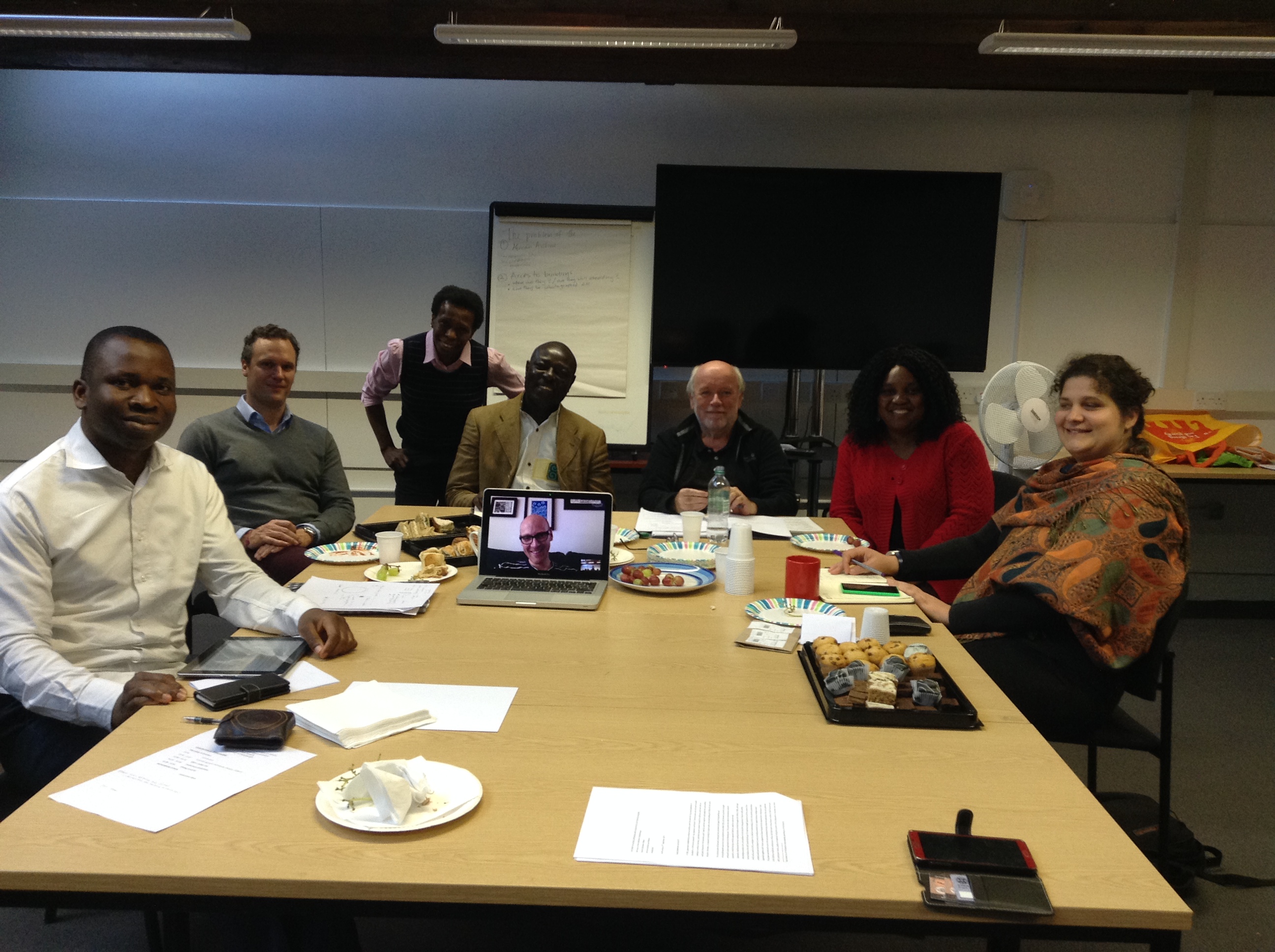
Delegates at the 20 Century Urbanism and Landscape in Africa Conference on 8 Oct 2015; Left to right are Meshack, Dr Alex Brymer, Dr Ola Uduku, Dr Rexford Oppong, Dr Iain Jackson (on Skype), Professor Verpoest, Yemi Salami, Dr Ruxandra

Scheduled for the second day of the conference were two presentations to be given by Yemi Salami and Anthony Folkers. Anthony Folkers was not in attendance at the conference but had his paper presented by Dr Uduku The paper was titled “The Spirit of George Lippsmeier and His Institute for tropical Building”. Yemi, had only recently submitted her PhD and is awaiting her viva to take place. She gave a talk on the challenges of undertaking a doctoral research in Nigeria, and her paper was titled: “Challenges of Conducting a Doctoral Research in Nigeria: Reflections from my PhD work on “the Architecture of the Public Works Department in Nigeria, c1900-1960”. Here she discussed challenges ranging from very slow bureaucratic processes, to ill equipped archives and security and insurgency issues, as some of the hindrances she faced during her research. The symposium then held at the end of Yemi’s presentation, with Dr Jackson joining the debate via Skype.



Exhibition: Tropicality Revisited: Recent Approaches by Indonesian Architects is currently on show at the Deutsches Architekturmuseum , Frankfurt, Germany.

ImageHandler.ashx-2

29 August 2015 – 3 January 2016, 3rd floor
GUIDED TOURS: Saturday and Sunday, 14:00

ImageHandler.ashx

Architecture in the Tropics was never just about offering shelter from rain and sun. “Tropical architecture” suddenly gained global relevance with the emergence of Modernist Architecture and was adapted to suit all climates and cultures. During the post-War period the science of climatic architectural design became an international success. For many generations of Indonesian architects, the tropics has never been a romantic colony, but a harsh reality with its torrential rains, heat, and high humidity. Today, “tropical architecture” is often easily forgotten by the critics, lost behind the glazed and airconditioned skyscrapers or the celebrated designs for tropical tourist resorts. At times, it seems to be taken for granted – pitched roof and overhangs are the ready-to-use answers – but it is also a challenge for architects to find new solutions. In the days of climate change and energy crises, architecture adapted to the climate is making a triumphal comeback.

ImageHandler.ashx-3
12 ARCHITECTS \ 12 PROJECTS

  • Achmad Tardiyana, Jakarta – Rumah Baca, Bandung
  • Adi Purnomo \ mamostudio, Ciputat – Studi-O Cahaya, West Jakarta
  • djuhara + djuhara, Ciputat – Wisnu Steel House, Bekasi
  • andramatin, Jakarta – Andra Matin House, Jakarta
  • Csutoras & Liando, Jakarta – Kineforum Misbar, Jakarta
  • d-associates, Bandung – Tamarind House, Jakarta
  • EFF Studio, Denpasar \ Bali – Almarik Restaurant, Gili Trawangan \ Lombok
  • Eko Prawoto Architecture Workshop, Yogyakarta – Eko Prawoto House, Yogyakarta
  • Studio Akanoma, Bandung – Ciledug Timber House, Ciledug \ Tangerang
  • LABO, Bandung – House #1 at Labo. the mori, Bandung
  • Studio TonTon, Jakarta – Ize Hotel, Seminyak \ Bali
  • Urbane Indonesia, Jakarta – Baiturrahman Mosque, Kopeng \ Yogyakarta

More information at: http://www.dam-online.de/ 

Congratulations to Zaha Hadid for winning the 2016 RIBA Gold Medal and for being the first women to do so in her own right.

zaha-hadid-interview-united-nude-re-inventing-shoes-milan-design-week-designboom-10-818x523

A very interesting radio interview is transcribed here about the fate of construction workers at the Qatar World Cup Stadium. Don’t call Zaha scary and then attempt a series of poor, under researched questions is the moral here.

Read the interview transcript at: http://www.theguardian.com/artanddesign/ng-interactive/2015/sep/24/zaha-hadid-radio-4-interview-sarah-montague-qatar 

Further info at the RIBA site here: https://www.architecture.com/Awards/RGM/RGM2016/ZahaHadid.aspx

This looks like it will be a very informative and productive conference. I look forward to seeing many of you there.

sujaanmukherjee's avatarEnvisioning the Indian City

Envisioning the Indian City: People, Places, Plans
International Workshop
Monday 17th – Tuesday 18th August 2015
Jadavpur University, Kolkata, India

Envisioning the Indian City (ETIC) is a UGC-UKIERI Thematic Partnership Project (2013-15) between the University of Liverpool, UK and Jadavpur University, India. The Project (seehttp://eticproject.wordpress.com/ ) studies Indian cities as crucibles of cross-cultural encounter, with special focus on Goa, Pondicherry, Kolkata, and Chandigarh. Over the past two years, with numerous seminars, research projects, lectures and presentations, and two International Workshops held in Kolkata and Liverpool, the Project has brought together a variety of interdisciplinary approaches to urban studies, cultural history, on-site research, archives, city planning, architecture, the city in art and representation, collective memory and communities in the city.

In the third of our International Workshops, to be held at Jadavpur University on 17-18 August 2015, we welcome presentations on urban encounters and exchanges through individual  and…

View original post 172 more words

Current Research: Tropicality at the Architectural Association

1425394707

The research project takes form of a two week workshop which is open to students as well as the general public. Our agenda is nomadic but we aim to study the tropical dwelling through architectural stories about home, culture and place.

Initially we are planning a 3 year agenda with a specific focus on one country per year, starting with Costa Rica, Vietnam and India.

During the two week field trips, we will visit the homes of people from all walks of life, talking to them about their experiences in the architecture they inhabit, and exploring that same architecture as a character.

At each home we will make a short film as a narrative composition of images (form, space, light, colour, materiality) and sound (voice, story, city, nature). The films will become a unique and perceptive form of architectural construct.

For more information please visit:

http://www.aaschool.ac.uk/STUDY/VISITING/costarica

http://tropicality.aaschool.ac.uk/

West African Modernism & Urbanism Research Conference and Workshop, 13-14 July 2015, KNUST, Kumasi, Ghana

You are invited to a workshop and conference which will focus on developing the conservation of modernist buildings and urban landscapes in West Africa.

This development strategy will be tackled at two levels. Firstly, at urban and edifice level, through the development of the KNUST Architecture Department as a Centre for public engagement with, and professional expertise in, contemporary urban conservation training and research; in West Africa, this discipline is currently not taught at institutional level, despite the existence of a network of architecture and planning schools, and architectural institutes for whom this would be beneficial.

Secondly, with support from DOCOMOMO International’s African group and Urbanism-landscape specialist committee, the workshop will develop a physical archive of modernist buildings in West Africa, using digital technology to scan and record building photographs and plans of the postwar modernist era. The data will be made available both to researchers linked to the proposed urban conservation training project, and, equally importantly, to the local public, as a visual resource of contemporary West African Modernist history.

The workshop will feature outreach presentations from junior secondary school pupils and talks from the eminent keynote speakers and research associates involved in the workshop and archive programme.

Keynote Speakers: Prof. Miles Glendinning [University of Edinburgh] and Prof. H. N. A. Wellington [Emeritus and Former Head of KNUST].

Kumasi_Conference_poster

We acknowledge the support of this event by the Universities of Edinburgh, and of Liverpool, and by the Royal Africa Society.

For more details on the event please contact Dr. Rexford Assasie Oppong [assasie2003@yahoo.co.uk] / Dr. Ola Uduku [o.uduku@ed.ac.uk] for more details.

Graduate Teaching Assistantship in Architectural or Urban History leading to PhD

Applications are invited for a four-year, fully-funded Graduate Teaching Assistantship in Architectural or Urban History, leading to the award of PhD from the University of Liverpool.

Architectural and Urban History is the largest of the research groups at the Liverpool School of Architecture. Recognised in the recent REF 2014 for the excellence of its research, the School of Architecture was placed top of all national schools of architecture for the outstanding quality of its research output, of which 80% was judged to be world leading or internationally excellent.

The Architectural and Urban History Research Group comprises fourteen full-time or Emeritus academics working on a broad range, both geographically and chronologically, of research topics. Between them they currently supervise twelve PhD students. For the Architectural and Urban History Research Group, see: http://www.liv.ac.uk/architecture/research/architectural-urban-history/

The School of Architecture is seeking to appoint a Graduate Teaching Assistant with a good first degree in Architecture, Art or Architectural History, Urban or Civic Design, or a cognate discipline. Preference will be given to candidates with a post-graduate degree or post-graduate work experience in the proposed area of study, as well as, preferably, teaching experience at higher education level

Depending on their experience and background, the Graduate Teaching Assistant will take on limited teaching or supervisory responsibilities but the majority of their time will be dedicated to their PhD research.

The proposed PhD research project should fall within one of these broadly defined areas of interest although candidates who wish to explore other paths will not be immediately excluded:

  • Individuals or movements in nineteenth and/or twentieth-century architecture
  • Technological innovation in nineteenth and/or twentieth-century architecture
  • Concept and process in contemporary architecture
  • Modern architectural heritage
  • Historical and/or current reconstruction in areas of conflict
  • The architecture of poplar music performance
  • The architecture of single or multi-faith communities
  • Housing and urbanism
  • Urban design and sustainable development
  • Cross-cultural perspectives of urban design

In forming their application, candidates should consult the Architectural and Urban History Research Group website and approach one or more of the academic staff with the view to developing a research proposal within their advertised research area. Applications will be judged on the viability and structure of the proposal and the availability and quality of research sources, as well as the appropriateness of the candidate to the position. Candidates should state clearly in their research proposal where they intend undertake this work — whether at the University of Liverpool’s main campus in Liverpool, at the University of Liverpool’s campus in London, or elsewhere. If the proposed project requires long-distance or overseas travel and consequently, residency, candidates should demonstrate how this will be supported.

The stipend is £14,057 per annum for four years. In addition, the PhD registration fees for Home, EU or International student will be paid for the whole period. It is intended that the post will start on 28 September 2015, coincident with the start of Semester 1.

Initial enquiries may be made of Professor Neil Jackson (neil.jackson@liv.ac.uk) but further discussion should be held with the one or more members of the Architectural and Urban History Research Group to discuss both the appropriateness of the proposed project and their willingness to supervise it. To apply, please complete the postgraduate research application form (available from http://www.liv.ac.uk/study/postgraduate/applying/) and email it directly to Professor Neil Jackson (neil.jackson@liv.ac.uk). Please note that for Section 9 you will need to provide two academic references.


The closing date for applications is Friday 5 June 2015.