Archive

Nigeria

Shared Heritage Africa: Call for Applications: Digital Fellowships March-September 2022: https://sha.architectuul.com

We are pleased to announce an open call for 6 Digital Fellowships, to be awarded to students and young professionals in architecture related fields or with demonstrable interest in architecture, who are based in Ghana, Uganda or Nigeria.

Shared Heritage Africa: Rediscovering Masterpieces

The documentation and investigation of buildings can tell us a lot about how politics works, and a lot about the nature of the relationship between state and society – a concern of all partner organisations. The project focuses on the rediscovery of post-war modern buildings from the 1950-1970s. These fall in the period of independence from colonial rule, here from the United Kingdom (Ghana 1957, Nigeria 1960 and Uganda 1962), and have a great educational and socio-political significance. One focus of our discussions with the respective universities, which were founded by the majority during this period of independence and for which new campuses were usually built, among others:

  • Kwame Nkrumah University of Science and Technology (KNUST), Kumasi, Ghana (1952/1961),
  • University of Lagos (UNILAG), Lagos, Nigeria (1962),
  • University of Nigeria (UNN) (formerly Nigeria College of Arts Science and Technology), Nsukka, Nigeria,(1950s),
  • Busitema University (formerly National College of Agricultural Mechanisation), Busitema, Uganda (1968),
  • Kyambogo University (formerly Uganda Polytechnic), Kampala, Uganda (1958).Digital Fellowship ProgramThe 6 month long digital fellowship program involves participants working on documentation, investigation and representation of those post-war modernist buildings from the 1950-1970s in Ghana, Nigeria and Uganda. The fellowship program focuses on development of written and visual material on those buildings through scientific writing, photography and digital publishing using different media (text, photo, film and internet).The fellows will be involved in online tutoring and in-person activities undertaken over the period. They will contribute to the online platform Architectuul and the new digest/Blog “Shared Heritage Africa”, allowing for exchange with the professional actors and society, locally and globally. The results shall be presented and discussed at the 17th International DOCOMOMO Conference (IDC) in Valencia (Spain) in September 2022. Each fellow will receive a travel grant for joining the conference.

  • EligibilityPlease note the following conditions for participation:
    • –  Students and young professionals in architecture related fields or with demonstrable interest inarchitecture and other related disciplines, such as: Architecture, Urban Design, History, Social Science,Journalism, Urban Studies, Creative Writing, are eligible to participate.
    • –  If they are based in Ghana, Uganda or Nigeria.
    • –  Strong written communication skills and/or photography and/or digital publishing skills are required.
    • –  Previous experience conducting and communicating ideas or research publicly (blogs, articles,dissertations) is desirable.

Full Details and Application Form: https://sha.architectuul.com

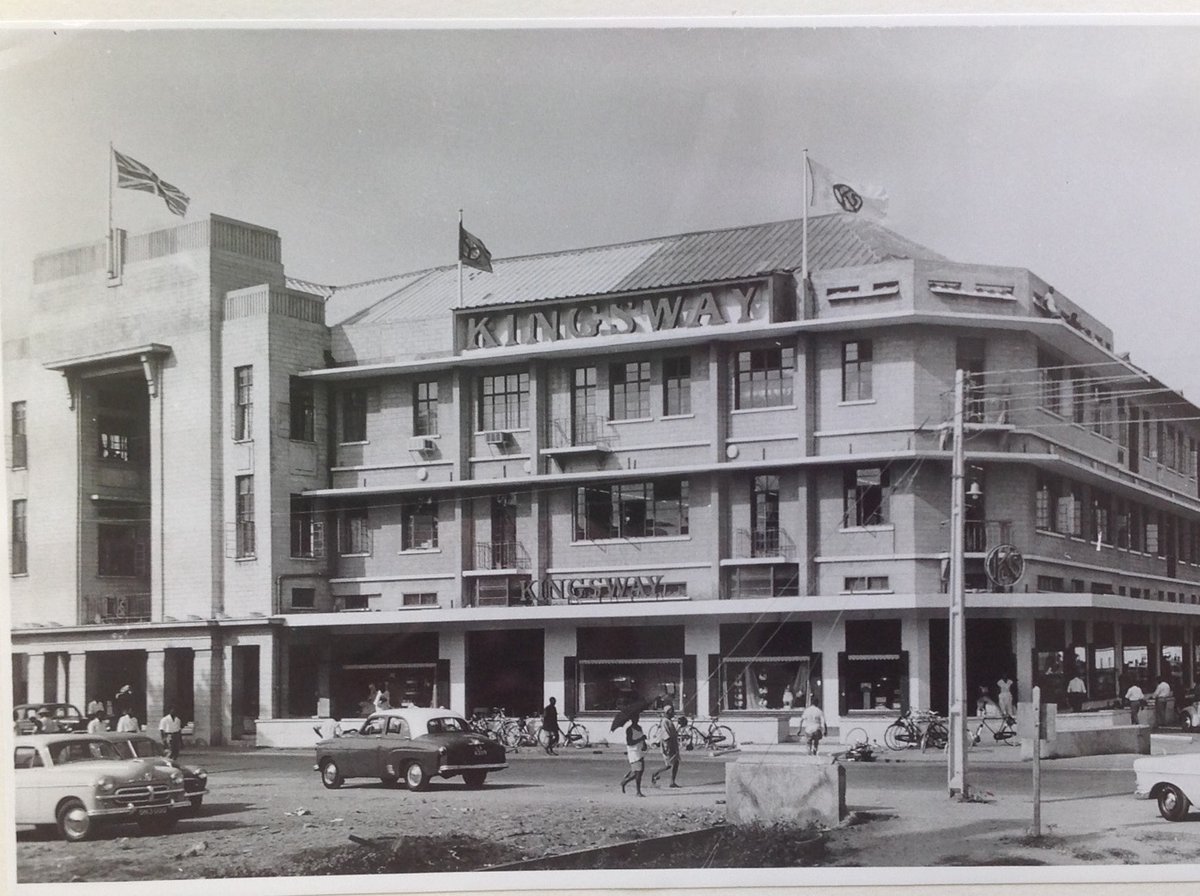
For the past months, we have been exploring the vast United Africa Company (UAC) archive held at Unilever in Port Sunlight. The archive documents decades of commercial activity in West Africa, which left a significant imprint on the built and natural environment. The UAC extracted raw materials such as palm oil and timber, but also exported finished goods such as cars, building materials, and refrigerators. The UAC also sold British products in its department stores across Ghana, Nigeria, and Sierra Leone. Meanwhile, it operated its own shipping line, named Palm Line, that ferried goods between the UK and West Africa. We have come across a variety of different materials, ranging from maps documenting the company’s palm oil plantations in the Congo and architectural drawings showing the modern Kingsway stores in Lagos and Freetown, to detailed notes related to the design of the UAC’s port, Burutu, in the Niger Delta.

Tropical hardwood at Sapele, Nigeria
African Timber and Plywood Concessions in Ghana, ca. 1955

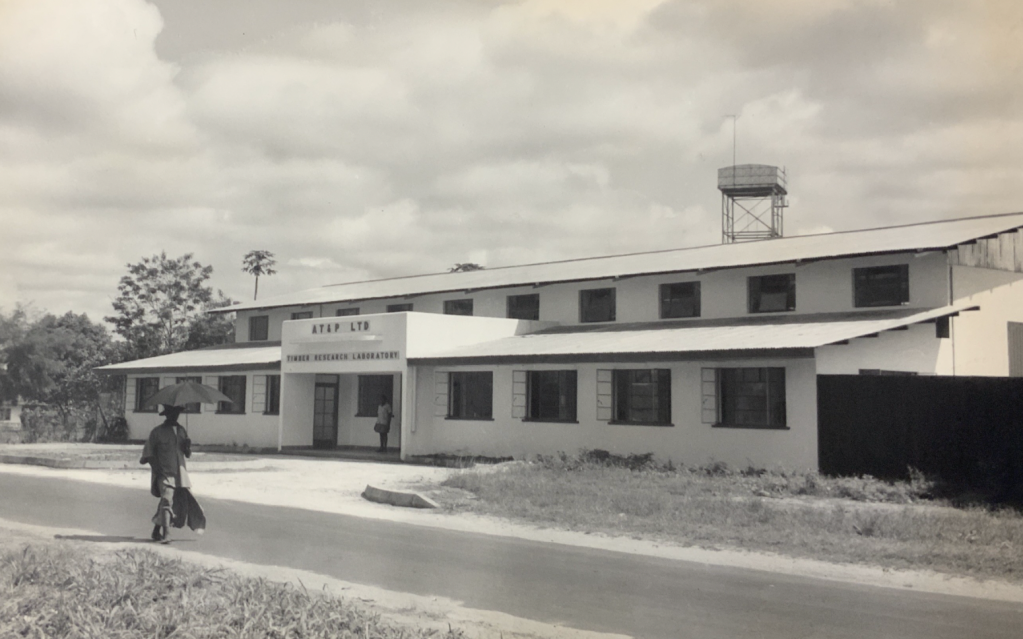
One aspect of the UAC I have been focusing on these past months is the company’s timber operations in Ghana and Nigeria. In the early twentieth century, the UAC founded the African Timber Company (later the African Timber and Plywood Company), located in Sapele, Nigeria. Through a range of concession agreements with local chiefs, they managed to consolidate vast areas of territory around Sapele from which they extracted a wide range of different tropical hardwoods for export to the UK. At the same time, the company began operating in Ghana (then still the Gold Coast), in Samreboi, a hundred miles inland from the port of Takoradi. After World War II, they also built a plywood factory in Sapele—the first of its kind in this area and described as ‘the largest industrial plant in West Africa’—and began producing plywood at a large scale. Using photographs and written documentation, I have begun to explore the construction of these two company towns and their wider infrastructure. While the factories and processing plants were built using prefabricated steel sheds made by Arcon (also responsible for prefabricated houses in the UK during the postwar period), the bungalows for the company’s British employees can be described as traditional. Later, a Timber Research Laboratory was added, as well as showrooms, and several local facilities such as a (plywood) cinema and clubhouse. Through felling hundreds of thousands of logs every year, the company irrevocably left an imprint on these two areas in Ghana and Nigeria and had a devastating impact on the natural environment.

The plywood factory in Sapele, Nigeria
Sapele, Nigeria, in the 1950s
The Timber Research Laboratory at Sapele, Nigeria

What is interesting is how the work of the African Timber and Plywood Company aligns with the British government’s focus on ‘empire timber’, or the push to use timber in Britain from different parts of the empire for furniture as well as architecture and interior design. While the government attempted to promote empire timber through a variety of exhibitions in the first decades of the twentieth century, the UAC archive reveals how widespread the use of tropical hardwood and plywood produced in Sapele and Samreboi was during the postwar period. Often marketed as giving ‘a feeling of warmth’, it was used for modern furniture made by the Conran Design Group, doors, window frames, and outside paneling for a variety of council housing, but also as interior decoration and flooring in buildings such as the Commonwealth Institute in London and the Commonwealth Royal Pool in Edinburgh. The former headquarters of the UAC in London, United Africa House at Blackfriars, is another case in point: the building’s interior functioned as a display of tropical timber, ranging from mahogany to African walnut and Sapele hardwood—all produced by the company.

Modular furniture designed by the Conran Design Group, made of African walnut
Different types of tropical hardwood used for the interior of United Africa House, London, 1960s

Another fascinating aspect is the shift to production for the local, West African market in the 1960s and ‘70s, after Independence. Aside from furniture, one innovation was ATP Systems Building, a prefabricated building system using tropical hardwood and plywood. The company promoted this as an affordable, quick, and flexible way to build without requiring much technical knowledge. Documents I found in the archive point out that ATP Systems Building was widely deployed in, for example, Warri, a rapidly growing oil town in Nigeria, to build houses, offices, and schools.

The ATP Showroom in Benin City, Nigeria (originally built for the Lagos Trade Fair of 1962)
An ATP employee selling an ATP Systems Building bungalow in Nigeria, ca. 1970

Overall, the archive of the African Timber and Plywood company demonstrates, once again, how (modern) architectural construction in Britain was shaped by colonialism and, conversely, how British companies continued to impact design in the former colonies after independence. Many questions, however, are still unanswered. How, for example, was the work of the timber companies related to the colonial government’s efforts to promote empire timber from Nigeria? How should we understand the widespread use of (colonial) timber in postwar Britain? What prompted the shift to focus on the Nigerian market after Independence? How successful was ATP Systems Building? Over the coming months, we will continue to explore these issues.

We’ve been making good progress on our latest research on the UAC architecture. Here’s a quick selection of material from our recent twitter feeds. Next week we’ll be joined by Dr. Michele Tenzon which will finally bring the entire research team together in one place. You can expect to see some of Michele’s maps and visual representations of the UAC activity here very soon.

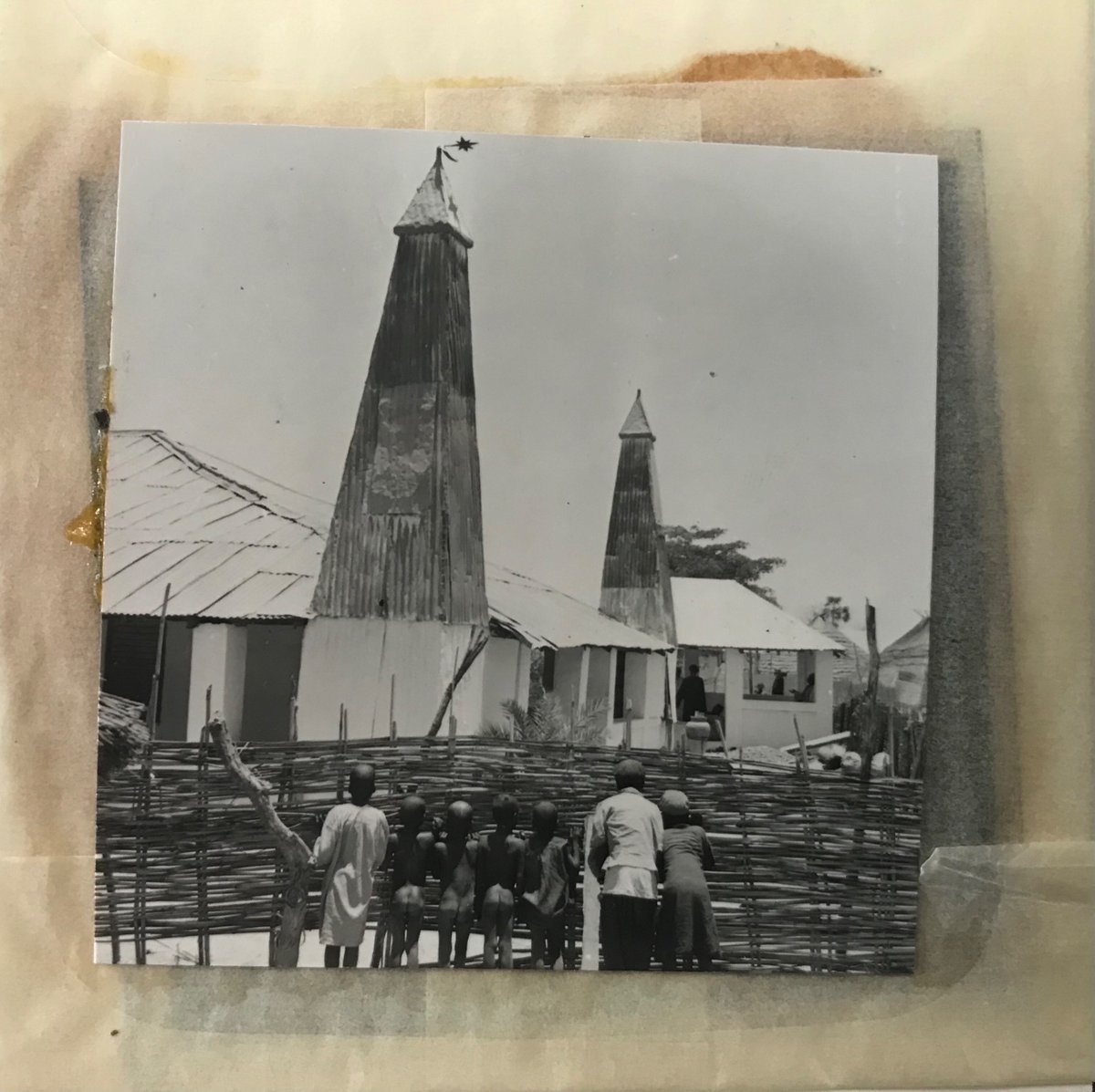
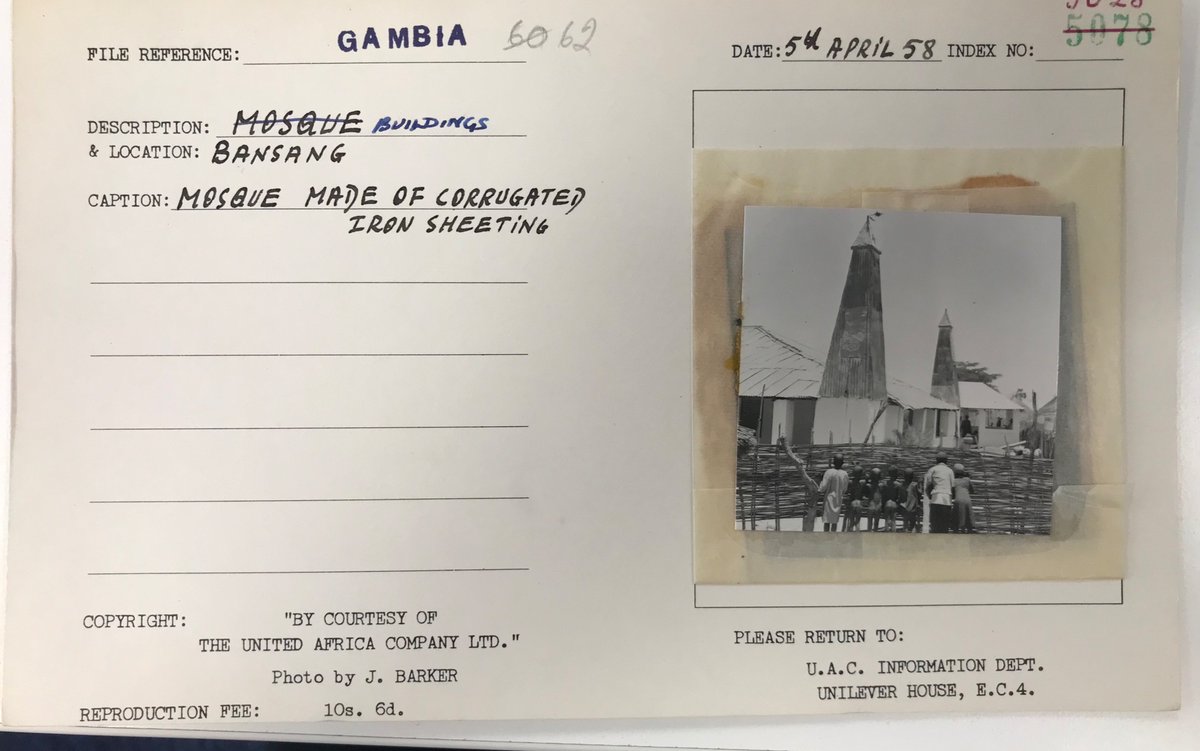
Corrugated iron mosque, Bansang Gambia. C1958.

From a collection of photographs taken by the United Africa Company @LivUniArch @iaindjackson @RixtWoudstra

Originally tweeted by Ewan Harrison (@EwanMHarrison) on September 22, 2021.

It’s a major design departure from the old Kingsway on Lagos Marina. Any ideas who designed this building? #UacArchive #Lagos #Kingsway

Originally tweeted by iainjackson (@iaindjackson) on September 30, 2021.

Online Modernist University Campus Architecture Writing Workshop: A Ghana-Nigeria-UK collaboration

The third iteration of the African Architecture Writing Workshop has involved multi-disciplinary teams of young students and Early Career Researchers (ECRs) from Universities in both Ghana and Nigeria in developing a series short written articles focused on personal views of university campus buildings in Ghana and Nigeria. The ECRs worked directly with the young students as mentors to encourage and develop their writing style. 

The ECRs have also been tasked with compiling and editing student work to create a series of gazette entries for the Modernist University Campus Buildings in West Africa project.  Aside from the written component the ECRs and students have also taken a set of photographs which will form the basis for a future planned photography workshop to be run in association with the International Documentation of Modern Buildings and Landscapes, (Docomomo) team Germany.

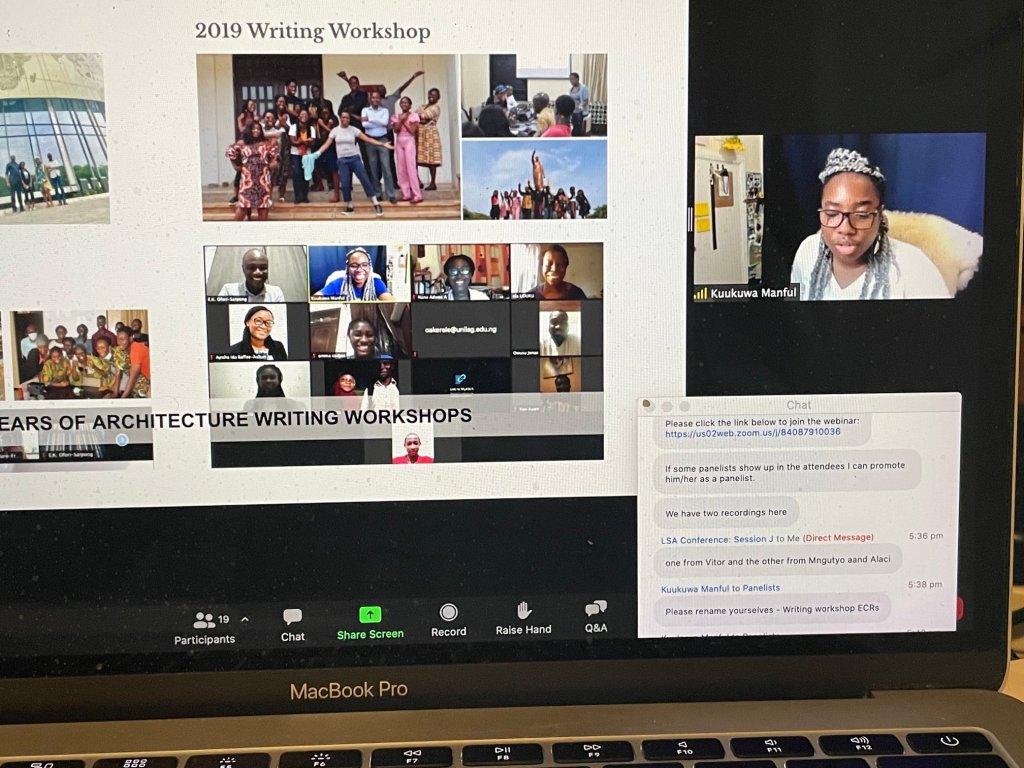
The British Academy-funded workshop took place over two weeks starting at the University of Ghana, Legon led by Co-I Dr Irene Appeaning Addo, with support from ECRs Kuukuwa Manful, Emmanuel Ofori-Sarpong, Dr Ayisha Baffoe-Eshun, and Yaw Asare; as well as guest mentor Dr Joseph Oduro-Frimpong. There was a guest lecture from Professor Lesley Lokko. Students from Kwame Nkrumah University of Science and Technology, University of Ghana, and Central University College took part in the workshop. Arc Ruth Anne Richardson, Arc Tony Asare, Dr Edem Adotey, and Professor Iain Jackson reviewed the students’ final written pieces that were focused on three buildings on the University of Ghana Campus; Commonwealth, Volta and Legon Halls. 

After a hand over day the Nigeria team’s workshop was led by Co-I Dr Nnezi Uduma-Olugu, and involved three institutions, the University of Lagos, University of Jos and the University of Nigeria, Enugu Campus. Each institution had a number of ECRs who worked at mentoring the interdisciplinary group of students who had enrolled at each of the workshops. As with the Ghana workshop a number of guest speakers including Prof Bogdana Prucnal-Ogunsote, (University of Jos) Kofo Adeleke (Legacy-92 organisation Lagos) and Dr Onyekiekwe Ijeoma, Nigeria commission for Museums. For the Nigerian final critical reviews attended by Prof Lukasz Stanek (University of Manchester) and Dr Joseph Oduro-Frimpong (Asheshi University Ghana) the ECRs presented their edited summaries of the student-written work and views on campus buildings in the three cities.

ECRs then presented their workshop experience at the Lagos Studies Association International Online Conference at a roundtable panel on conservation challenges in Africa chaired by Profs Uduku and Lawanson, Manchester School of Architecture, Manchester Metropolitan University, and University of Lagos respectively. 

Whilst students and ECRs met in covid secure ways at their respective campuses all lectures and reviews took place entirely online, with students and ECRs able to work from ethernet-wifi equipped room spaces at the University of Ghana, and all three Nigerian collaborating Universities.  

Currently ECRs are working on the editing and production of the initial phase of the Modernist African University Campus Buildings Gazette, this will be critically reviewed by Prof Miles Glendinning, Docomomo Scotland and Director SCCS University of Edinburgh. Watch this space…