The 7th International Congress on Construction History (7ICCH) will be held in Lisbon, from 12 to 16 July, 2021. As in 6ICCH (Brussels, 2018), the 7ICCH event will adopt a two-step procedure for proposals evaluation:

– First call: a first call for proposals for thematic sessions will be open from 15 April 2020 to 9 May 2020; followed by a

– Second call: a general call for abstracts for the usual open sessions, from 18 May to 28 June 2020.

We are what we build and how we build; thus, the study of Construction History is now more than ever at the centre of current debates as to the shape of a sustainable future for humankind. With the main theme “History of Construction Cultures”, the Congress will provide an opportunity to celebrate and expand our understanding of the ways that everyday building activities have been perceived and experienced in different cultures, times and places.

The general call for abstracts will invite proposals for inclusion in thematic sessions as well as single contributions dealing with a broad range of construction history topics (construction determinants and their relation with design, extraction and processing of materials, site management, works execution processes, knowledge transfer, actors, machines, tools, building legislation, construction – politics, economy and society, etc.). The aim will be to achieve a broad and in-depth assessment of new research in construction history.

The present call, open until 9 May 2020 invites prospective session chairs to suggest topics for thematic sessions. The proposed subjects should contribute to the debate of the latest issues, approaches and questions of research in the field of construction history research, stimulating intercultural and interdisciplinary collaboration and discussion. Proposals should include a description of the theme (max. 400 words), an explanation of the relevance of the theme (max. 400 words) and the CV of the applicant chair demonstrating his/her relevant expertise.

With the support of the Scientific Committee, the Organizing Committee will select up to 12 thematic sessions, limited to one per applicant. Chairs of the thematic sessions are expected to be present at the 7ICCH and give a short introduction to their session. They are, in collaboration with the Scientific Committee, responsible for the selection process of the submitted abstracts and for the editing process of the submitted papers. Four or five papers will be selected for each session.

No more than one paper from the chair’s research team can be selected. The Scientific Committee reserves the right to redirect papers towards other thematic or general sessions. Proposals should be sent to 7icchlisbon@gmail.com until 4 May 2020. Prospective session chairs will be informed on the evaluation of their proposals by the Organizing Committee by 18 May 2020.

More information at http://www.7icch.org

Organizing Committee:
Chair – João Mascarenhas Mateus (University of Lisbon)
Treasurer – Ana Paula Pires (NOVA University of Lisbon)
Sandra M. G. Pinto (NOVA University of Lisbon) Fernanda Rollo (NOVA University of Lisbon)
José Aguiar (University of Lisbon)
Ivo Veiga (University of Lisbon)
Milton Pacheco (Coimbra University)
Manuel Caiado (University of Lisbon)

‘The architectural production of India’s everyday modernism: middle-class housing in Pune, 1960-1980’ in Architecture Beyond Europe Journal, no.16, 2019.

Sarah Melsens, Inge Bertels et Amit Srivastava

img-5

Architects United, Freestanding Bungalow for Mrs. Shroff, Pune, 1966

The large-scale appropriation of modernist architectural features in everyday housing projects in postcolonial India is remarkable. This article examines how regional architects adapted their engagement with architectural modernism to the evolving circumstances of architectural production within the context of the developing world. Drawing on Pierre Bourdieu’s “field theory”, it presents a detailed case study of two decades of residential work by Architects United, a medium-scale architectural practice founded in the Indian city of Pune in 1961. While the architects’ earliest projects demonstrated an opportunity and desire for architectural innovation, this approach became increasingly restricted as new patterns for housing provision emerged, resulting in a more subdued and hybrid form of modernist architecture. The paper makes use of the architects’ previously undisclosed archive and oral history to demonstrate that these architectural adaptations were the indirect result of governance practices and societal change, particularly the government’s stimulation of co-operative housing initiatives and the emergence of a postcolonial middle class with distinct housing expectations. As such, this “peripheral” case exposes some of the processes that have been overlooked in the rhetoric of Architectural Modernism as a Western import in India, which is primarily centered around the discussion of exceptional public building commissions by “global experts” or their Indian disciples. The paper further highlights the need to investigate the processes of architectural production, in addition to the built product itself, so that a pluralistic rather than romanticized understanding of architectural practice may emerge.

The full article is freely available here: https://doi.org/10.4000/abe.7011

Herbert Baker, New Delhi and the reception of the classical tradition

by Soumyen Bandyopadhyay, Sagar Chauhan, in The Routledge Handbook on the Reception of Classical Architecture: https://doi.org/10.4324/9781315171104 

This chapter assesses the work of the British architect Sir Herbert Baker (1862–1946) for the imperial capital of New Delhi, a role he shared with Sir Edwin Lutyens (1869–1944) very much as an equal partner over more than a decade. This assessment is undertaken in the context of the reception and rereading of the classical project and the wider classical tradition among not only the imperialists, but also the colonised in India.

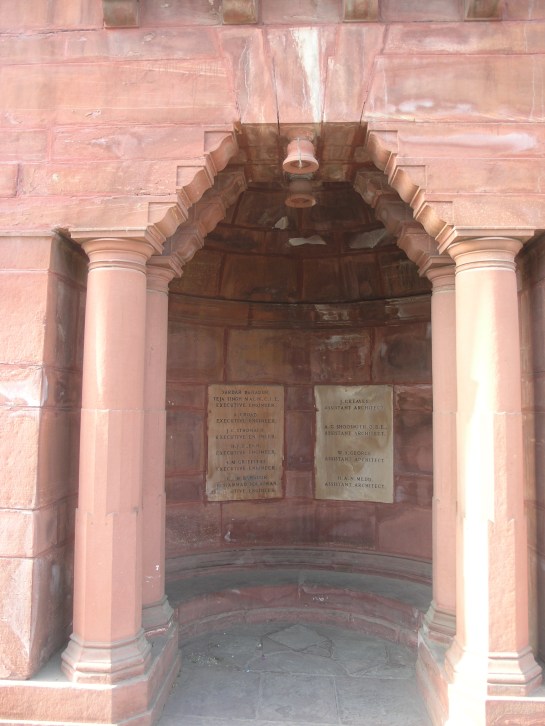
Herbert Baker: corbelled arch in New Delhi

corbelled arch in New Delhi

The reception of the classical tradition in India assumed a character distinct from other British colonies as a result of a long-standing history of interaction with the classical world, as well as the sheer immensity of its diverse historical, literary and material culture traditions. With the consolidation of the British Empire in India, European classical traditions assumed attributes and resonances they did not possess in Europe.

Infrastructure between Statehood and Selfhood: The Trans-African Highway

Kenny Cupers, Prita Meier


Focusing on the 1960s–70s project to build a trans-African highway network, Infrastructure between Statehood and Selfhood: The Trans-African Highway argues for the need to develop a more dialectical understanding of the relationship between people and infrastructure than current architectural and urban scholarship affords. As Kenny Cupers and Prita Meier describe, African leaders imagined infrastructure as a vehicle of Pan-African freedom, unity, and development, but the construction of the Trans-African Highway relied on expertise and funding from former colonial overlords. Based on archival research, visual analysis, and ethnographic fieldwork in Kenya, this article examines the highway’s imaginaries of decolonization to show how infrastructure was both the business of statehood and a means of selfhood.

Map of the Trans-African Highway project, late 1970s (Rolf Hofmeier, “Die Transafrikastraßen: Stand der Planung und Realisierung,” Africa Spectrum 14, no. 1 [1979], 35).

Map of the Trans-African Highway project, late 1970s (Rolf Hofmeier, “Die Transafrikastraßen: Stand der Planung und Realisierung,” Africa Spectrum 14, no. 1 [1979], 35).

From the automobile and the tarmac road to the aesthetics and practices of mobility these fostered, infrastructure was a vehicle for the production of subjectivity in postindependence Kenya. This new selfhood, future oriented and on the move, was both victim and agent of commodification.

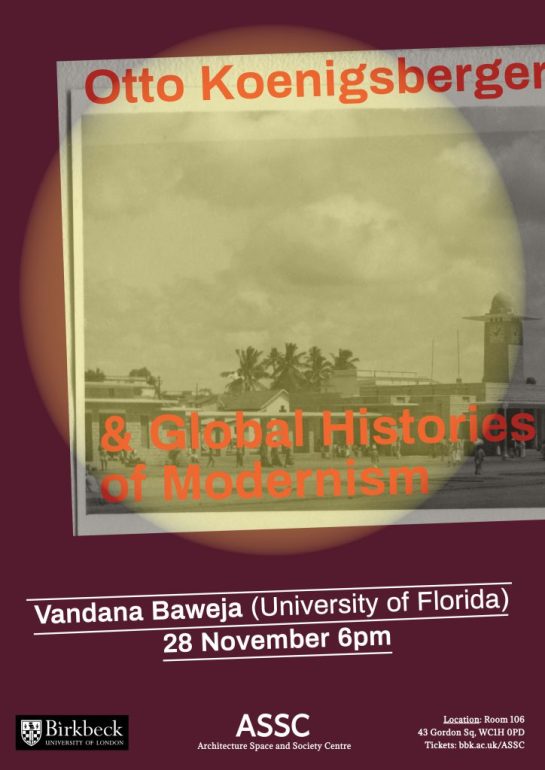
Otto Koenigsberger & Global Histories of Modernism by Vandana Baweja

Thursday 28 November 6pm – 7.30pm

Room 106 – Birkbeck School of Arts
43 Gordon Square, London WC1H 0PD

Koeningsberger_global_modernism_1-724x1024

Otto H. Koenigsberger (1908–1999) was a German émigré architect who worked as the state architect in princely Mysore in British India in the 1940s. Upon emigration to London in 1951, he subsequently became an educator of Tropical Architecture (1954–1971) at the Architectural Association School of Architecture.

This presentation by Vandana Baweja (University of Florida) examines how Koenigsberger’s career can illuminate “global” as a paradigm in modernist historiography.
Book Tickets (free)

New Research:Suzanne Francis-Brown & Peter Francis Norman & Dawbarn, the UCWI, and Tropical Modernist Architecture in Jamaica” in Caribbean Quarterly, 65:1, 27-56, DOI: 10.1080/00086495.2019.1565219

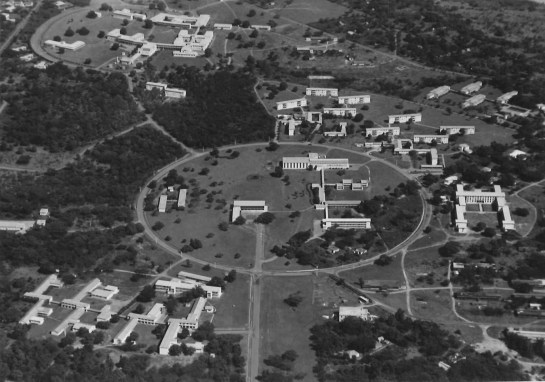
The University College of the West Indies (UCWI) At Mona, Jamaica, established immediately following World War II, was one of the early greenfield university developments among British colonies in the Southern Hemisphere, as the British sought to ameliorate patently negative social conditions.

016

UCWI Designed by Norman and Dawbarn. Image courtesy of Special Collections and Archives at University of Liverpool

It was also one of the early tropical iterations of the modernist aesthetic that affected European landscapes from the early to middle decades of the twentieth century, sparked by the Bauhaus school of design and the work of iconic architects of the modern movement. British architectural firm Norman & Dawbarn received the contract to design the nascent West Indian university and its associated teaching hospital only weeks after the arrival of the first principal on site in Jamaica in 1946, and the overall scheme proposed in 1947, parts of which were built in stages between 1949 and the mid-1960s, remains recognisable today despite differences at the time and subsequent shifts in architectural approach.

Full Paper here: https://doi.org/10.1080/00086495.2019.1565219

The Coloniality of Infrastructure: Eurafrican Legacies:
Call for Papers – 
Conference at the University of Basel, 24-26 June 2020

IMG_0730

When Eurafrica emerged in the 1920s as an intellectual and political project to connect Europe with Africa, its goal was to ensure European colonial dominance in a changing world. Key to the proposed continental merger was infrastructure—not surprising at a time when railways, ports, camps, and other large-scale building projects were facilitating the extraction and movement of things for Europe while curtailing the freedom and mobility of Africans on an unprecedented scale. Recent scholarship has emphasized the centrality of Eurafrica and the type of colonialism it mustered in the history of European integration, from the EU’s founding intellectuals to its Cold-War-era realization. But continental infrastructure also played a role in African struggles for independence. Highways, ports, and dams became tools of state-building and even mobilized hopes of Panafrican integration and international solidarity. In practice, however, large-scale infrastructure required technical and financial aid which further entrenched Africa’s asymmetrical relationship to the Global North.
Today, as Africa enters a new age of development increasingly dominated by China, and the EU is in fundamental crisis, is it still possible to speak of a Eurafrican present? From the physical imprint of cities and the configuration of intercontinental airline routes, infrastructure testifies to the enduring legacies of Eurafrica. Infrastructure shapes territories and governs the mobilities within and across them, but also serves to immobilize and externalize bodies and things. The European infrastructure of the Mediterranean border regime, in which African migrants are systematically being detained or left to die, recalls colonial-era policies that valued life and dictated death along racial lines. At the same time, European aid focused on infrastructural development in Africa is increasingly targeted to counter such unwanted migration—without touching the global extraction economies that have roots in European colonial rule and continue to shape African cities and territories today. Because of these specters of Eurafrica, the EU seems structurally incapable to come to terms with its colonial past.
This conference proposes to explore historical continuities in Africa’s relationship with Europe through the lens of infrastructure. What are the infrastructural histories that bind the unequal destinies of people together across continents, and how do these legacies shape contemporary lifeworlds and international relations? How does infrastructural violence shape international relations between Africa and Europe, and how is the legacy of Eurafrica manifested in the spaces of everyday life? To answer these questions, the conference invites scholars from urban studies, history, political science, postcolonial theory, architecture, border and migration studies, and allied fields. We invite contributions that develop new perspectives of our geopolitical and interconnected urban present through its infrastructural pasts. Such studies of material and aesthetics relationships between Africa and Europe can focus on questions of lifeworlds, urban transformation, migration, territory, citizenship, development, or related themes. We are particularly interested in studies that can reveal the differential entanglements between people and places, and locate alternative forms of infrastructure, imaginaries of belonging, ongoing struggles for decolonization, and practices of world-making that decenter colonial ways of seeing, feeling, and knowing.
Confirmed Keynote Speakers:
Elizabeth Povinelli (Columbia University)
Siba N’Zatioula Grovogui (Cornell University)


Scientific Committee:
Peo Hansen (Linköping University, Sweden)
Edgar Pieterse (University of Cape Town)
Muriam Haleh Davis (University of California Santa Cruz)
Samia Henni (Cornell University)
Charles Heller (Forensic Oceanography, Geneva)
Anne-Isabelle Richard (University of Leiden)
Bilgin Ayata (University of Basel, Sociology)
Julia Tischler (University of Basel, Centre for African Studies)
Lorena Rizzo (University of Basel, Centre for African Studies)
Madeleine Herren-Oesch (University of Basel, European Global Studies)
Selection of Speakers:
Please submit an abstract of no more than 300 words and a short C.V. by 10 December 2019 to Michelle Killenberger (michelle.killenberger@unibas.ch). Applicants will be notified of acceptance in February 2020. We will cover travel and accommodation expenses for speakers in need of financial assistance.
 
Conference Organization:
The conference is organized by Kenny Cupers, Urban Studies, Department of Social Science at the University of Basel, in collaboration with Sociology, the Centre for African Studies, and the Institute for European Global Studies, as well as the African Centre for Cities at the University of Cape Town.
Follow-up Conference:
A follow-up conference will take place in collaboration with Prof. Edgar Pieterse at the African Centre for Cities at the University of Cape Town in June 2021. Entitled “Emerging Infrastructural Worlds: Mapping Urban Research in Africa,” this conference will map research approaches to transnational infrastructure projects across Africa and their consequences on the ground.


More information:

This conference is funded by the Swiss National Science Foundation. For more information about the conference and associated research projects, please visit: 

New Research Paper: I. Jackson, O. Uduku, I. Appeaning Addo, R. Assasie Opong, “The Volta River Project: planning, housing and resettlement in Ghana, 1950–1965”, Journal of Architecture, vol 24 (4), 512-548.

This paper investigates the housing schemes proposed in connection with the Volta River Project, Ghana, in the mid-1950s to early 1960s. The Volta River Project formed part of Kwame Nkrumah’s vision for Ghana’s modernisation and industrialisation in the wake of political independence. Three associated worker housing schemes demonstrated somewhat contradictory design and construction methods, from high specification, extensive amenities, and comprehensive servicing, through to self-build ‘core’ houses amounting to little more than single-room dwellings.

Figure 16.jpg

Core House at New Ajena, Ghana. Built c.1961, photographed in 2017

The paper traces the complex and controversial history of these schemes, supplemented with findings of several field trips to the settlements in question, to unravel the value of the ‘Core Houses’ approach. The most successful project to incorporate indigenous agency and true collaboration was the semi-formal ‘Combined Area’ housing at Akosombo, a positive model for shared agency and collaboration in planning, housing, and facilities delivery. Sitting alongside the carefully manicured plan of Akosombo, with its regulated market, excellent health care and desire to set high standards of cleanliness, the Combined Area has not only provided homes for the lower-paid and labouring workers of the town, but has developed over time into a settlement where professionals and retired government workers are also now residing, not out of necessity but by choice. By actively developing their own homes, shared spaces and amenities there has developed a strong sense of ownership, community, and identity. The success and level of attachment to this settlement clearly extends beyond its material presence and through the shared experience of helping to cultivate a place of one’s own.

Full Article Available here: https://www.tandfonline.com/doi/full/10.1080/13602365.2019.1643389?scroll=top&needAccess=true


Book Review by Robin Hartanto Honggare: “Southeast Asia’s modern architecture: questions of translation, epistemology and power” by Jiat-Hwee Chang and Imran bin Tajudeen, Planning Perspectives.

One to add to the summer reading list….

Full book review is here: Southeast Asia’s modern architecture: questions of translation, epistemology and power

Call for Papers: Architectures of Power: buildings of politics and governance, 1750-2000. Girton College, University of Cambridge 27-28 June 2020

This conference looks very interesting….

https://www.hist.cam.ac.uk/research/conferences/forthcoming-conferences/architectures-of-power-cfp

When: 27-28 June 2020
Where: Girton College, University of Cambridge
Submit abstracts of 250 words to architecturesofpower@hist.cam.ac.uk by 21 October 2019.

Historians have long recognised the importance of architecture within the exercising of political power. Yet the interaction between power and place, between human actor and physical location, is a difficult one to quantify. This conference brings together political, social, cultural, and architectural historians to explore this relationship. Architecture could be mobilised to exhibit and to legitimise political power, but it could also have a profound influence on decision-makers at crucial moments of governance. Architecture has played a fundamental role in performances of statecraft. Accounting for this architectural agency, without resulting to crude spatial determinism, is one of the great methodological challenges that this conference will discuss. As architectural historians have established, the meaning of buildings vary from user to user. Often these reflected hierarchies operating within the building: experiences of the Foreign Office, for instance, differed from a Permanent Under-Secretary to a newly arrived clerk. It is this question of the subjective nature of architectural experience that we are particularly interested in exploring.

Taking broad definitions of political power and the state, we will not only consider the architecture of palaces, parliaments, and administration, but also of commercial, financial, legal, and religious sources of political authority. This conference is interested in the physical seats of power from the private residences of statesmen and women, to legislatures, embassies, and banking houses. Importantly, this conference considers how the architecture of political power evolved over time, reflecting changes in structures of government. In the late eighteenth-century, the majority of states were absolute monarchies or governed by elite oligarchs, but by the mid twentieth-century the rise of popular representation entailed very different types of architecture. Where once palaces like Versailles and Blenheim embodied the authority of ruling elites, parliaments and administrative offices soon reflected accountable styles of government.

We welcome papers on any geographical case study from the mid eighteenth-century until the twentieth. We are particularly interested in proposals that consider the role of gender, race, and class as well as questions of architectural science and technology. We are also interested in the role of architecture in the operation of imperial, economic, and religious political power. Please submit abstracts of 250 words to architecturesofpower@hist.cam.ac.uk by 21 October 2019.