The road to recovery: Old Damascus has a long history of rising from the ashes

Ataa Alsalloum, University of Liverpool

As a Syrian architect, my enjoyment is complete when I wander through the districts of Old Damascus. I used to walk with my daughter and tell her stories about each significant place we passed. In Old Damascus – one of the longest inhabited cities in the world – 5,000 years of history come alive. The tight network of traditional streets are complemented by stunning architectural masterpieces, such as the ancient Umayyad Mosque (completed in 715AD), the Roman Temple of Jupiter and the Byzantine arches. The Conversation

Al Asruniyeh souk was our favourite destination on special occasions. Al Asruniyeh is a commercial neighbourhood located between the Citadel of Damascus and the Great Mosque of the Umayyads, inside the walls of the ancient city. The souks of Damascus are a part of the daily life – bustling marketplaces where political, social and cultural differences are forgotten.

Layers of history in Old Damascus.
Bryn Pinzgauer/Flickr, CC BY

Yet since the start of the armed conflict in Syria six years ago, much has changed in my home town. Although the city remains relatively safe compared to other parts of Syria, many have fled, lives and livelihoods have been lost and treasured cultural heritage has been destroyed.

In April 2016, a fire raged through Al-Asruniyeh. For the local community, losing part of Old Damascus is like misplacing part of their own soul, their memory and identity.

Yet history has shown that despite attempts to destroy Damascus, it has always risen from the ashes, stronger and brighter, powered by the local community. Time and time again, the Damascenes have proven adept at rebuilding their lives and their city in the wake of disaster.

Rising from ashes

For example, in 1860 when Syria was under occupation by the Ottoman empire, the quarter of Bab Tuma in the north-east of the city was ransacked. Over 3,500 houses, churches and monasteries were comprehensively looted and set ablaze. Hundreds of people were killed and thousands were displaced.

The district was rebuilt between 1863 and 1880, by local builders who returned after the clash. Elements of the old Bab Tuma were preserved by using traditional materials to create similar urban forms. Yet innovative features were also added. Builders used new decorative techniques, and added open windows to the façades as a reflection of “new” social needs, opening them up to the street outside.

Again, on October 18, 1925, the city was bombed by the French army in an attempt to quell a revolution against French rule. As a result, the western district – known at that time as Sidi Amoud – was mostly destroyed. Several traditional masterpieces were burned or damaged, and hundreds of lives were lost.

The destruction after the French attack, with the minarets of the Umayyan mosque on the horizon.
Wikimedia Commons

The district was remodelled in 1926 by the French, this time according to modern European characteristics. The local community, who had no voice in this reconstruction, changed the district’s name into Al-Hariqah – which means “fire” in Arabic – to commemorate the terrible event. This rebuilt area has a peculiar character. The orthogonal road network and the heights of the buildings differ from the organic urban fabric of Old Damascus, and the new structures do little to reflect what was lost.

Rebuilding Al Asruniyeh

Today, Damascenes are once again confronted with the task of rebuilding – and this time, they control the outcome. Yet the loss of Al-Asruniyeh raises critical questions about what should rise in its place.

The history of Damascus shows that when ruins are rebuilt by the local community, the new layer is imbued with the soul of the city. Rather than covering the city’s history up, the new buildings become a part of it. For that reason, community input is needed now more than ever before.

The heritage of Syria has been a source of pride and dignity for the Syrians, despite differences in religion and political opinion. Their built heritage has been always a source of shared memory and history, as we all enjoy its authentic and aesthetic character. Old Damascus, with all its souks, khans and districts, embodies Syrians’ cultural, social, educational and economic values.

Because of this, safeguarding the architectural characteristics of the old city should be a cornerstone of the reconstruction process. City authorities must develop a plan to manage Old Damascus’ urban heritage, in a way that upholds its social and cultural integrity.

What’s more, rebuilding the Al Asruniyeh souk presents an opportunity for reconciliation. Although the armed conflict continues, Syria has been enduring it with dignity and pride. Starting the reconstruction now is vital, to encourage Syrians to return and participate in rebuilding their country, spreading a feeling of safety, ownership and pride in the city once more.

Ataa Alsalloum, Research Fellow in Architecture, University of Liverpool

This article was originally published on The Conversation. Read the original article.

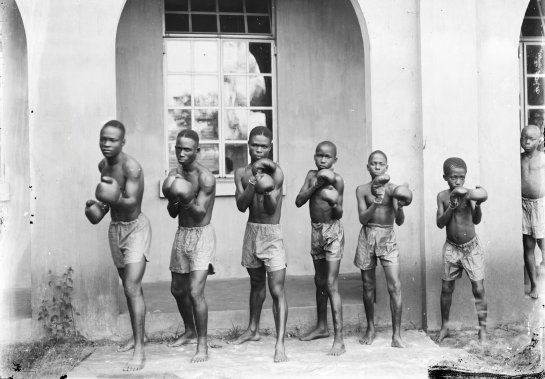
“Founded in 1922, Deo Gratias is the oldest photography studio still in operation in Accra. As the city celebrates 60 years of independence this week, the studio has revealed new photos of life in the 1920s and 1930s”.

Does Achimota School still have such a formidable boxing club?

2464

9789

Empire Day, Accra, 1930

More photos here: https://www.theguardian.com/cities/gallery/2017/mar/07/accra-a-century-ago-ghana-before-independence-in-pictures

Urban Heritage Activism
Thursday 16 March – Friday 17 March, 09:00-18:00
TU Berlin, Hardenbergstr. 16-18, 10623 Berlin
Register: contact@urbannarratives.org
www.urbannarratives.org

urban-heritage-activism-conference_front

The two-day Urban Heritage Activism conference will focus on heritage ‘from below’–urban history as it is lived, represented and transformed by local communities in diverse geographies and cultural contexts. Speakers from grassroots movements, academic and cultural institutions will address political ramifications and power struggles related to heritage and introduce the failures and solutions of various activism projects, especially in postcolonial contexts. Contributors will debate contemporary tensions and future strategies for interventions through a roundtable discussion at the end of each day.

In addition to the stimulating conference programme, the Simulizi Mijini / Urban Narratives exhibition Juxtaposing Narratives: Dar es Salaam and Berlin will open at 8pm on Friday 17 March with a cooking performance, live music and a DJ. Walking tours and film screenings will round off the programme of events.

urban-heritage-activism-conference_back

Speakers and moderators: Erica Abreu, Jully Acuna, Yaşar Adanali, Awami Art Collective, Comfort Badaru, Diane Barbé, Shraddha Bhatawadekar, Vittoria Capresi, Jerome Chou , Rebecca Corey, Gabi Dolff-Bonekämper, Matthias Einhoff, Anne-Katrin Fenk, Zinovia Foka, Susanne Förster, Benjamin Häger, Maj Horn, Anooradha Iyer Siddiqi, Sehr Jalil, Leila Javanmardi, Claudia Jürgens, Georg Krajewsky, Rachel Lee, Farah Makki, Sarita Mamseri, Srdjan Mandić, Mansion, Avehi Menon, Philipp Misselwitz, Monika Motylinska, Rishika Mukhopadhyay, Laura Murray, Marcelo Murta, Naira Mushtaq, Cord Pagenstecher, Luise Rellensmann, Ana Luisa Ribeiro, Juliane Richter, Gözde Şarlak, Jona Schwerer, Annika Seifert, Gülsah Stapel, Samaila Suleiman and Mike Terry

Artists: Rehema Chachage, Cloud Chatanda, Tellervo Kalleinen and Oliver Kochta-Kalleinen, KUNSTrePUBLIK and Jan van Esch, Umesh Maddanahalli, Michelle Monareng, Patrick Mudekereza, Paul Ndunguru, Nadin Reschke, and Alex Römer

Call for Sessions: 6th International Congress on Construction History

The 6th International Congress on Construction History (6ICCH) will be organised in Brussels, from July 9 to July 13, 2018. For the first time, thematic sessions as well as the usual open sessions will be organised. Therefore, a two-step procedure is adopted: the call for thematic sessions is launched first, followed by the general call for abstracts. The general call for abstracts will invite contributions for the special thematic sessions as well
as contributions dealing with a broad range of construction history topics (typology, the action of building, knowledge transfer, process and actors, materials, services, etc.). With this combination, the organisers aim at both a broad and an in-depth assessment of new research in construction history. The present call invites prospective session chairs to suggest topics for the thematic sessions. Their aim is to highlight explicitly the latest themes, approaches and directions in construction history research, and to foster
transnational and interdisciplinary collaboration and discussion on burning issues. Proposals should include a description of the theme (max. 400 words), a motivation of the relevance of the theme (max. 400 words) and a CV of the applicant chair demonstrating his/her relevant expertise. The organising committee will select up to 12 thematic sessions, limited to one per applicant.
Chairs of the thematic sessions are expected to be present at the 6ICCH and give a short introduction to their session. They are, in collaboration with the scientific committee, responsible for the selection process of the submitted abstracts and for the editing process of the submitted papers. For each session 4 to 5 papers will be selected. No more than one paper of the chair’s research team can be selected. The scientific committee reserves for itself the right to redirect papers towards other thematic or open sessions.

Proposals should be sent to info@6icch.org by April 1 2017. Session chairs will be informed about the selection of their proposal by the organising committee by May 1 2017.

important deadlines
Call for sessions: March 1, 2017
Submit sessions: April 1, 2017
Call for abstracts: May 1, 2017
Submit abstracts: June 15, 2017
Submit papers: December 1, 2017

organising committee
KU Leuven (Krista De Jonge)
Universiteit Antwerpen (Michael de Bouw)
Université Catholique de Louvain (Patricia Radelet-de Grave, Denis Zastavni)
Université Libre de Bruxelles (Rika Devos, Bernard Espion)
Vrije Universiteit Brussel (Inge Bertels, Stephanie Van de Voorde, Ine Wouters)

See the PDF here for more info: 6icch-2018-call-for-sessions

The Road Less Traveled is the overarching title given to a  yearlong series of exhibitions programmed at the Kohler Arts Center to celebrate its 50th Birthday Anniversary  – including a major exhibition on Indian artist and visionary environment creator, Nek Chand. The Arts Center has the largest collection of Nek Chand sculptures outside of the Rock Garden in Chandigarh – and they’ve put 200 sculptures on show in an extraordinary exhibition.

img_0960

Curator Karen Patterson was looking for a more collaborative and creative approach to curating the shows and selected a responder for each exhibition to bring new and unique insights to the work and the final shows.

Karen asked me to send her a few ideas on how Nek Chand’s sculptures might be presented and exhibited. We met in Liverpool and discussed a range of concepts, including developing a virtual reality film of the Rock Garden [something I’m really eager to do]. We spoke about the experiential, almost cinematic nature of the Rock Garden – and how it is arranged as a series of distinct ‘outside rooms’ or events. Moving through the space and watching the sculptures being ‘revealed’, hidden, and glimpsed through this process is crucial in Nek Chand’s work.

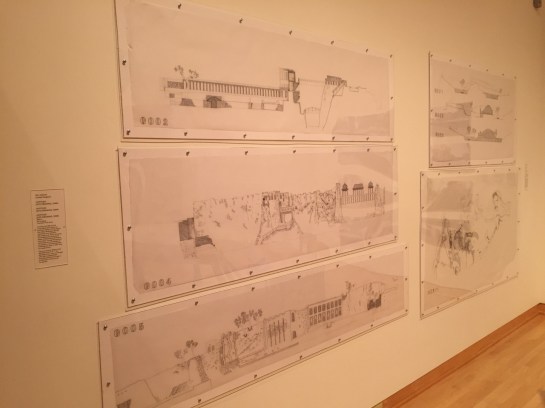
It was also a decade since I completed my PhD research – and I felt it was a good time to revisit my measured drawings and catalogue of the Rock Garden. Karen agreed to exhibit my survey work and I got the catalogue reprinted at A3 size and its 250+ pages hard bound. I really enjoyed ‘re-discovering’ my old work. The survey drawings had been kept rolled up in a plastic tube for ten years, and I carefully extracted the coil of drawings, not knowing in what condition they might be in. Thankfully, they were exactly as I’d left them- tattered at the edges, full of rips, holes and dog-eared corners. I sent them off to the Arts Center, hoping they wouldn’t get lost in the post…

img_0897

The catalogues of Nek Chand’s work


I arrived at the Arts Centre a few days before the official opening, having seen the CAD drawings of the proposed show, produced by the exhibition designer and co-curator Amy Chaloupka. There’s always a disconnect between an architectural drawing and what it represents – and this was no exception. The scale of the exhibition is vast – and the amount of work required to produce, install and prepare the ‘terrain’ is incredible. One really gets a sense of what it is like to be in the Rock Garden – without there being any sense of pastiche or mimicry. The sculptures are arranged according to type on a series of terraced podiums that sweep through the space, compressing the visitor into a narrow gorge-like passage where the sculptures are densely arranged facing into the walkway. This approach puts the sculptures at eye level and really enables a dialogue to emerge between the viewer and the figures.  As well as the concrete sculptures there is a collection of the cloth works – an often overlooked component of Nek Chand’s work – they are again arranged as a group and tightly gathered so that they read as an ensemble of works that need to be walked around, and examined.

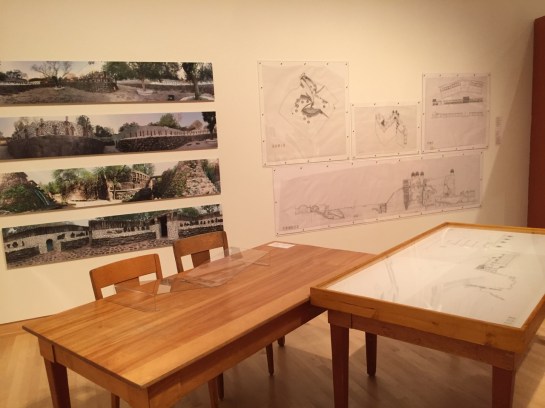
In addition to Nek Chand’s sculptures there is an archway reminiscent of the Phase-3 part of the Rock Garden. Contained within this segment of the exhibition are four panoramic photographs, the catalogue and the survey drawings.

img_0994

Installing the Drawings…

img_1013

Panoramic photos and drawings. The catalogue sits on the perspex stand.

img_1012

Survey drawings of the Rock Garden

You can find out more about the other wonderful exhibitions here: https://www.jmkac.org/exhibitions/theroadlesstraveled and there will be a conference on 26th-28th September 2017. None of this is to be missed….


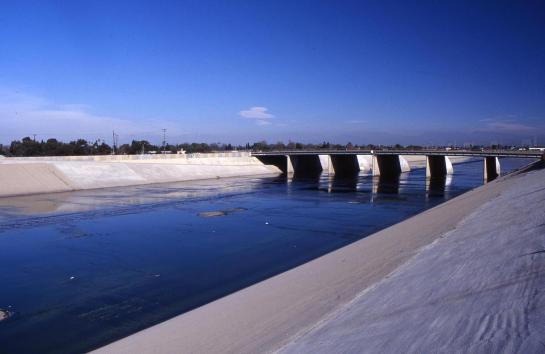
Los Angeles_LA River (2003) (002) (002).jpg

The modern usage of the term infrastructure has gone through a series of permutations from early emphasis on logistics, organisation, and the expanding scope of technological networks to more recent interest in the intersections with landscape, ecology, and alternative theorisations of urban materiality. In this event we will explore questions relating to the meaning and conceptualisation of urban infrastructures. The question of infrastructure will serve as an entry point for wider reflections on the changing experience of nature, modernity, and urban space.

This event is part of the Urban Salon – a London-based seminar series exploring urban experiences within an international and comparative frame.

Speakers:
Dr Jiat-Hwee Chang, Assistant Professor, Department of Architecture, National University of Singapore
Professor Dr Jochen Monstadt, Chair for Governance of Urban Transitions and Dynamics, Department of Human Geography and Spatial Planning, Utrecht University
Dr Manuel Tironi, Assistant Professor, Department of Sociology, P. Universidad Católica de Chile
Professor Jane Wolff, Associate Professor, Daniels Faculty of Architecture, Landscape, and Design, University of Toronto

Chair:
Professor Matthew Gandy FBA, Professor of Cultural and Historical Geography, University of Cambridge

To book see: http://www.britac.ac.uk/events/imagining-infrastructures

Lou Moon:   Viewing tropical materials, renewable technologies and local community engagement at a coastal resort.  

Ola Uduku Writes:

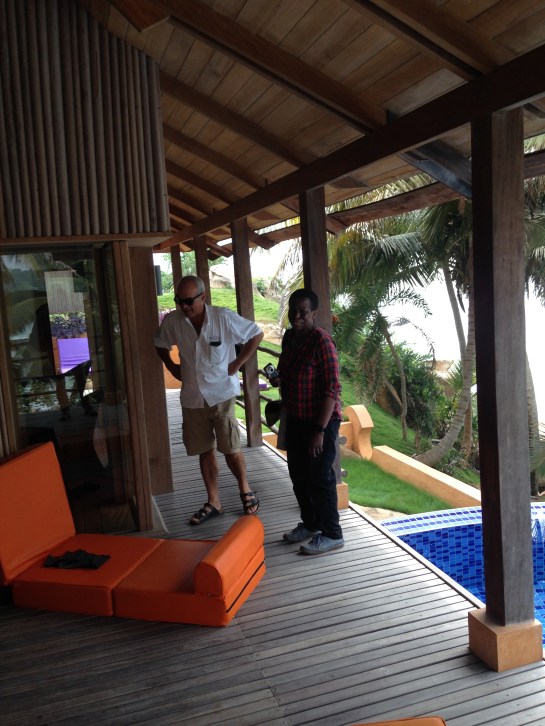
Climate responsive, tropical architecture using locally sourced materials remains a rarity in West Africa, therefore setting foot at the remote coastal Lou Moon resort was a revelation. At first glance this seemed like yet another ‘safari-architecture’ beach resort on the Ghanaian coastline [20 minutes drive from Axim]. The first view of a dining area with non-local thatch roofing initially suggesting a copy of an aesthetically pleasing safari ‘hang out’ for expatriates and daring local tourists willing to get to this off-the-beaten-track location.

img_0710

“Are we nearly there yet?” The track to Lou Moon

On closer inspection and conversation with Lou Moon’s designer and owner Paul Ramlot, it was explained to us that the roofing is not indigenous to Ghana’s coastal communities but was indeed an import from the middle to northern part of Ghana. He had worked with northern Ghanaian thatchers and local craftsmen to ensure the construction of a watertight roof covering. He explained that this had been achieved successfully, and the only problems that had been encountered since it had been completed were with with local bats and grass cutters, that from time to time nest and forage in the thatch. Catching them was tricky  – but sonic deterrents were now being successfully used.

img_0719

Architect and owner of Lou Moon, Paul Ramlot with Ola Uduku

After a good lunch from an impressive menu boasting  European – Ghanaian ‘gastro’ cuisine and the option of good French wine (which we declined) we were shown more of the resort. The owner had worked hard to tame the land jutting out to the sea and create a number of secluded chalets, using locally sourced building materials and oriented to allow local ventilation and lighting. Whilst specialist bath fittings were imported, 90 % of the materials were sourced locally and the owner worked  with local craftsmen to develop the accommodation at the resort. This was a textbook demonstration on what is possible but has rarely been achieved in contemporary West Africa.

By working with local craftsmen, and employing local staff at the resort he had also both given employment opportunities in a part of Ghana where there are few such opportunities available. He also had a working arrangement with the ‘chief’ and ultimate owner of the land on which the Lou Moon Resort has been built. A share of the profits is paid to the chief and his community.

Resort chalets had solar photovoltaics incorporated into their design, and wireless communication, and electricity were freely available along with a large satellite dish in clear view. Interestingly on arrival we noted a number of vehicles with diplomatic number plates, possibly the remoteness of the location had in the past made it the perfect retreat, one wonders whether this remains so appealing, now that it is hooked up to the world via its telecommunications systems. Judging by the resident clientele at the resort in the January off peak season this didn’t seem to be the case.

We left musing that it took a Belgian expatriate to rediscover local materials and encourage local design talent in this remote part of Ghana. His design model had been so successful that he was in conversation with local elites to develop a similar resort on private land to reap these benefits. What was his most serious problem we asked him? He responded that it was the noise from the local community at funerals and other festivals…

We hope that a cordial arrangement can be agreed to secure the serenity of this snapshot of tropical architectural paradise. We made ‘design attribution’ peace with the non-local indigenous thatch roofing, we saw no vermin, enjoyed the shade and couldn’t fault its aesthetic contribution to what had been a truly revealing ‘Lou Moon’ experience.

timescape1

Testing the Timescape Bengaluru app at Kempegowda Tower in Lalbagh Park. Watch the video here

In November and December 2016 Rachel Lee and Anne-Katrin Fenk were in Bengaluru working on the augmented reality Timescape app that the Envisioning the Indian City team developed for Kolkata in 2015. Supported by Goethe Institut Bangalore (Max Mueller Bhavan) and MOD Institute, and partnered by Bygone Bangalore and Centre for Public History at Srishti, we spent five weeks looking through image collections, selecting locations, conducting interviews, geo-referencing photographs, writing entries and testing out and evolving the app in the city. We discussed our progress and the interim results at a public presentation at the Max Mueller Bhavan on 16 December.

ashoka-pillar

Real time transparency corrections at the Ashoka Pillar with Martin Winchester of Liverpool University

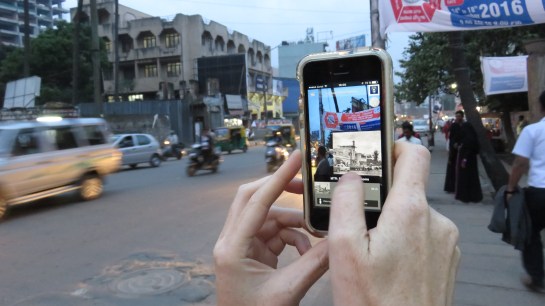
Timescape, a smartphone/tablet app, draws on the real, existing fabric of India’s cities, combining it with archival image material and historical data to communicate urban heritage through an immersive augmented reality experience. Using geolocation services and push notifications Timescape is a serendipitous tour guide, an armchair heritage portal, and an educational resource. Informative and easy to navigate, the AR app brings evocative, vintage photographs from museum collections, such as the British Library, online databases, like the Facebook group ‘Bygone Bangalore’, and family archives to India’s streets, living rooms and classrooms. Images of tangible heritage, such as buildings, are complemented by documents relating to intangible heritage, for example music recordings, poetry, and recipes. Timescape aims to become an innovative forum for recording, exchanging and remembering the evolving urban cultures of Indian cities across the subcontinent. Timescape will develop an infrastructure that enables people to upload their own historical photographic collections and stories.

avenue-road

Screenshots of the app taken while walking up Avenue Road

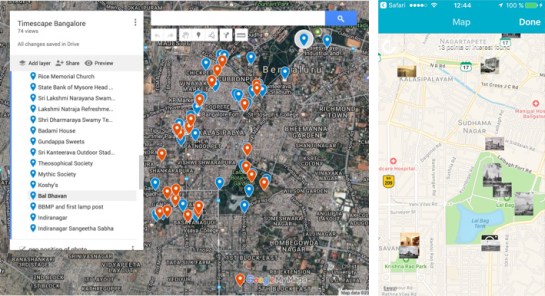
As Bengaluru continues growing at an unrelenting pace, the historical fabric of the built environment is increasingly threatened. When, for example, nineteenth century bungalows are demolished to clear space for office towers, places that contribute to the foundations of the city’s and its citizens’ sense of collective identity and public memory are destroyed. In Bengaluru we focused on a central area including Chickpete, the Fort, Jayanagar and MG Road, which is particularly threatened by redevelopment. Features on buildings, such as the Rice Memorial Church or Krishna Rao Pavilion, were augmented by cultural institutions like the Indian Institute of World Culture, monuments like the Ashoka Pillar or the statue of Maharaja Chamarajendra Wodeyar X, and legendary local cultural hubs such as MTR Tiffin Rooms, Vidyarthi Bhavan and Koshy’s. As well as historic images, textual descriptions accompany the points of interest and in some cases sound files were added. We would like to expand the app to include edited oral histories collected in the neighbourhoods. Some of the points of interest have been archived on the MOD blog.

map-copy

Google map showing chosen points of interest and a screenshot of the app showing geolocated images in map mode

The presentation at Max Mueller Bhavan began with Anne-Katrin Fenk giving an introduction to archiving and curating urban history. Rachel Lee followed with a report on how the time in Bangalore had been spent and what progress we had made on the app, then Kiran Natarajan of Bygone Bangalore talked about the need for the app through his rather amusing “shock therapy” presentation, and finally Avehi Menon from Centre for Public History discussed the importance of oral history and how it could be integrated into the app through sound files.

In 2017 the next step is to apply for funding to move up a level and be able to devote adequate time to the development of the content and technology. We have a great team in Bengaluru, Berlin and Liverpool who are very enthusiastic to take it further.

after-presentation

The Timescape Bengaluru team and friends celebrating in Indiranagar after the presentation at Max Mueller Bhavan. From left to right: Kiran Natarajan, Anne-Katrin Fenk, Avehi Menon, Katerina Valdivia Bruch, Vivek Jain, Cop Shiva and Rachel Lee

A short video of Anne-Katrin Fenk and Kiran Natarajan testing the app in Lalbagh Park is available on youtube.

Article in the Times of India from 20 December 2016.

Article in The Hindu from 10 January 2017.

img_0133-kopie

img_0060-kopie

Adjena Revisited

Ola Uduku writes;

It was a long and dusty journey, we soon understood why the taxi wouldn’t haggle down from the amount he quoted. The road definitely existed, it was just in very poor condition and work was being done near the end of the journey to Adjena to re-grade the laterite. We finally pulled into a gathering of housing on each side and slowed down, I said this looks likes ‘tropical designed housing’.

dsc_0456

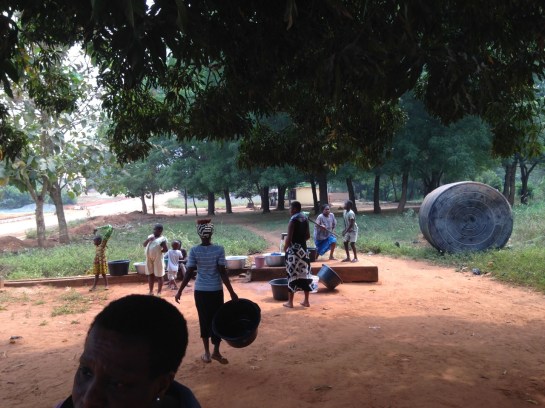
A hand-operated water pump caught our eyes and we watched a small gathering of  women and children pump up their water into buckets and containers and then take them away for use.  We walked to two elderly men dozing under a tree and asked the throng if we could wake one up.

img_0727

‘Is the Adjena resettlement area?’, we asked.

‘yes’ came the reply.

Our first informant was in his eighties and  had arrived when the first set of resettled villagers were moved to the site in 1957. He explained that there was a school further along and more housing.

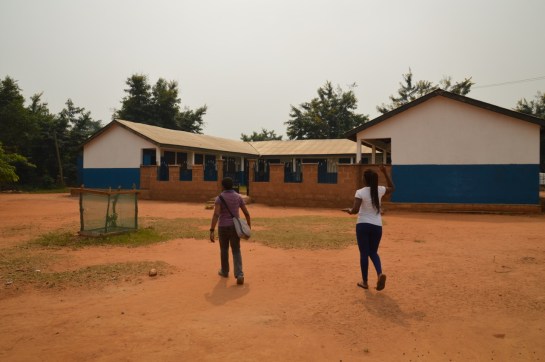
We went further into the clearing and hit gold – a small school designed around a courtyard to specific tropical standards. Windows were deep and allowed light to penetrate through the classrooms, and the verandas were ample to enable their use in teaching.  The school was foregrounded by a number of trees which seem to have been planted to a specific format, unfortunately they seemed to be dying, but they still helped frame the school and looked as if they were very much part of the school grounds.

dsc_0439

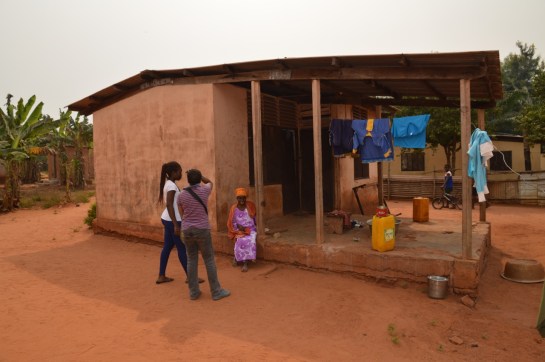
Moving on from the school we came to a clearing with a designed kitchen–cooking area central to a number of small dwellings. We stopped and talked to Agnes, whom we asked about what she remembered about moving to Adjena. She immediately recounted that she had been 27 when the move had taken place and she was 87 now. A quick date check confirmed that these dates tallied with the move of the settlement in the Volta valley to Adjena. As we chatted with her on the step to the kitchen she explained that she preferred the new settlement to the old as the new buildings were  ‘Cortex’, the name given to the company who built the settlement made up a concrete frame with infill breeze block walls.

dsc_0443

We passed a number of small dwellings designed as part of the scheme. All dwellings now had electricity with television sets to prove it, however water was only available via the standpipes that we had seen when we walked into the settlement. The communal WCs did not seem to well used, one supposes that in this very remote rural area this option was unlikely to be popular.

For a resettlement scheme approaching its 6th decade Adjena was in good condition, it now had a junior secondary school and the road carried both the electricity lines and also the mobile phone masts. The road also ran through to the community council offices and there were other settlements which were now part of the greater extended Adjena community.

Developments were coming to Adjena, and we had been made welcome guests to this sleepy, yet thriving community. What would Leo De Syllas and the other designers of the then New Adjena think of their creation more than half a century on? An understated success we’d say as we made our dusty way back to the town.


Field Work: Axim and Dixcove

Heading west from Takoradi along the coast-road towards Côte d’Ivoire there are a number of fishing towns and natural harbours, such as Axim and Dixcote.

img_0697

Dixcove Harbour

IMG_0692.jpg

Fishing Boats at Dixcove

Axim was a major port during the early 20thC, exporting £250,000 worth of goods in 1913, and the mail boat from Liverpool (as well as ships from the US, Germany and Belgium) called every 10-15 days before heading on to Sekondi. Before the British occupied the Fort at Axim (Fort St. Anthony) it was held built by the Portuguese in 1515 and then captured by the Dutch from 1642. The Fort was conceded to Britain, along with the other Dutch forts east of Elmina on the 6th April 1872.

A European hospital was established in the town in 1901, and the British Bank of West Africa opened a branch, having traded in Accra from 1897. There are still some colonial buildings to be found, and a photograph of the District Commissioner’s bungalow (c.1914) is held in the UK National Archives.

axim-bungalow

Type B Public Works Department Bungalow in Axim

Besides the Fort, the Quandahor Building dominates the town from its elevated position. The building (according to some sources) was built in the 1920s, but with what purpose and by whom?

dsc_0426

Quandahor Building in Axim

Nearby Dixcove also has its fort (macabrely named Fort Metal Cross after the slave branding iron used there) and the town still retains its thriving fishing industry. The fortress was constructed from 1683 by the Royal African Company and continues to resemble the 1806 print below. Needless to say, it is a harrowing structure, and a surviving relic of what must be one of the lowest points of British history.  By 1868 the Fort was under Dutch control, before being returned to the British just four years later. It was made a World Heritage Site in 1979 and has recently been inhabited by an Englishman intent on refurbishing the place.

phpthumb_generated_thumbnailjpg-2

1806 Print depicting Dixcove

DSC_0414.jpg

Dixcove Fortress

It was only in 1911 that a Customs Warehouse was completed and a market shed was erected in the Dixcove – is the image below the customs warehouse? A few other Colonial period buildings survive and we will endeavour to find out more about this fascinating place.

dsc_0423

The Customs Warehouse in Dixcove?