Archive

Tag Archives: Ghana

Maxwell Fry, the architect and planner of Ibadan University, considered the campus to be the highlight of his career, although he confessed that he found the Kenneth Dike library elevation too ‘lace-like’.

It is an extraordinary structure and we’ve covered it on the TAG blog previously, as well as printing a 3D sectional model of the structure. Taking a more retro step, I’ve now produced a hand-drawn (rotring, ink wash) front elevational drawing of the building (minus the small reading room on the RHS and smaller structure on the LHS, for clarity).

Kenneth Dike Library at Ibadan University, Nigeria

The drawing stretches over 2 x A1 sheets and has been scanned, pieced together, and the blue ‘sky’ added in Photoshop. I’m going to follow drawing with some additional studies into various libraries in Ghana – especially the Children’s Library in Accra (Nickson and Borys); Sekondi Regional Library (James Cubitt); Koforidua Library (also by Cubitt); KNUST Library (?) and the iconic Bolgatanga library by Max Bond.

Junior Staff Quarters Plan View
Junior Staff Quarters, near Christianborg Castle, Accra


New Buildings in the Commonwealth edited by Jim M. Richards in 1961 pulled together many articles from earlier editions of the Architectural Review. It formed an important set of essays, photographs and illustrations with each geographically themed chapter written by an architect familiar with that part of the world. Maxwell Fry wrote the West Africa section and he selected some of the best buildings from the proceeding decade to feature in his piece, including some lesser known works from relatively unknown architects.

Junior Staff Quarters, Accra

The opening project for the Ghana section was a housing scheme from Accra designed by the Public Works Department Chief Architect, G. Halstead with architects-in-charge D. A. Barratt and W. J. Clarke. Very little is known about these architects, apart from Halstead worked with S. Bailey (townplanner) on the new layout of Tamale in 1953..[1]

The Accra housing project is a very carefully designed set of 24 apartments arranged across three blocks. Each dwelling faces into the courtyard space and are one room deep to maximise cross ventilation. Each house also has its own private balcony/court for sleeping outside and cooking.

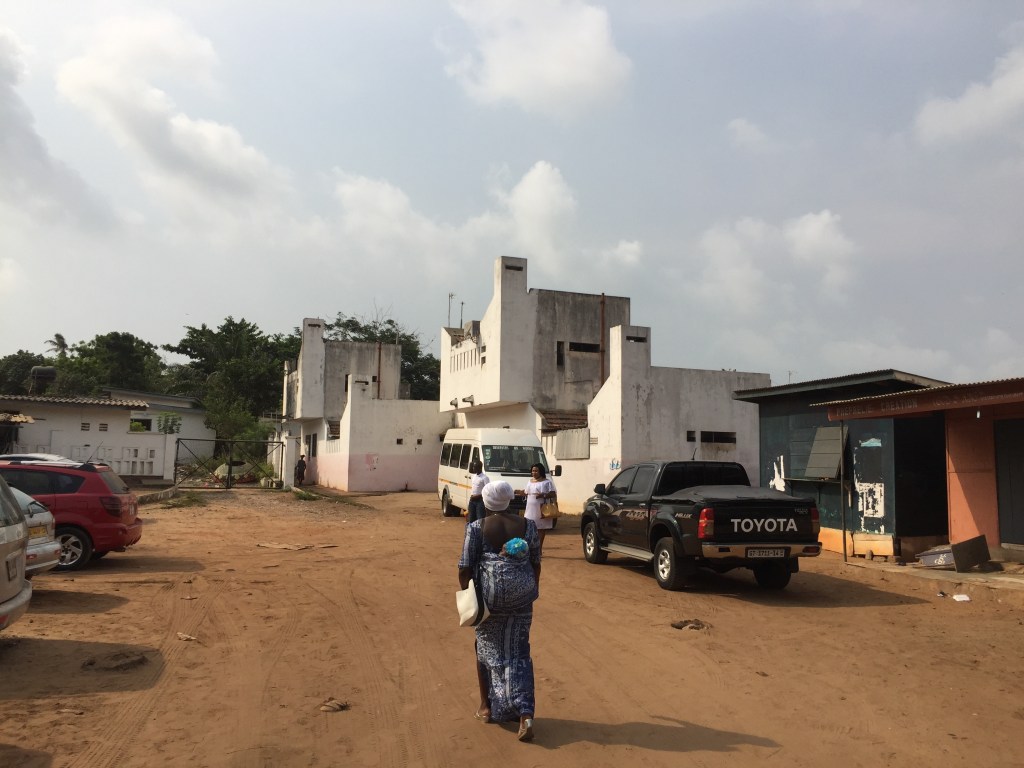
The formal arrangement and sloping roofs are all carefully arranged and the quality of the build is exceptional. I’ve wanted to see these houses for some time now and it was a special moment to see them come into view as I made my way from the 17th Century Danish ‘Christianborg Castle’. The houses were constructed as ‘Junior Staff Quarters’ for people working at the Castle (which was then used as the Prime Minister’s Residence) during the early years of Ghana’s independence.

The houses remain largely unaltered from the original design, albeit lacking some basic maintenance. I spoke to a number of the current residents and they very much enjoy living here. The sense of community is strongly felt, and overlooked internal courtyard adds security. Parts of Community 1 at Tema have a similar feel but don’t quite achieve the ‘walled city in miniature’ qualities of this project.  It marks a significant shift from the compound and ‘village-housing’ projects built elsewhere at the time, and continues to offer many clues for how we might design inexpensive housing in Ghana today.

Junior Staff Quarters, 2019

[1]Tamale Town Planning [1948-54], British Library, EAP541/1/1/333, https://eap.bl.uk/archive-file/EAP541-1-1-333

Sharing Stories from James Town and the Creation of Mercantile Accra
Forthcoming Exhibition at James Town Cafe, 17th May 2019

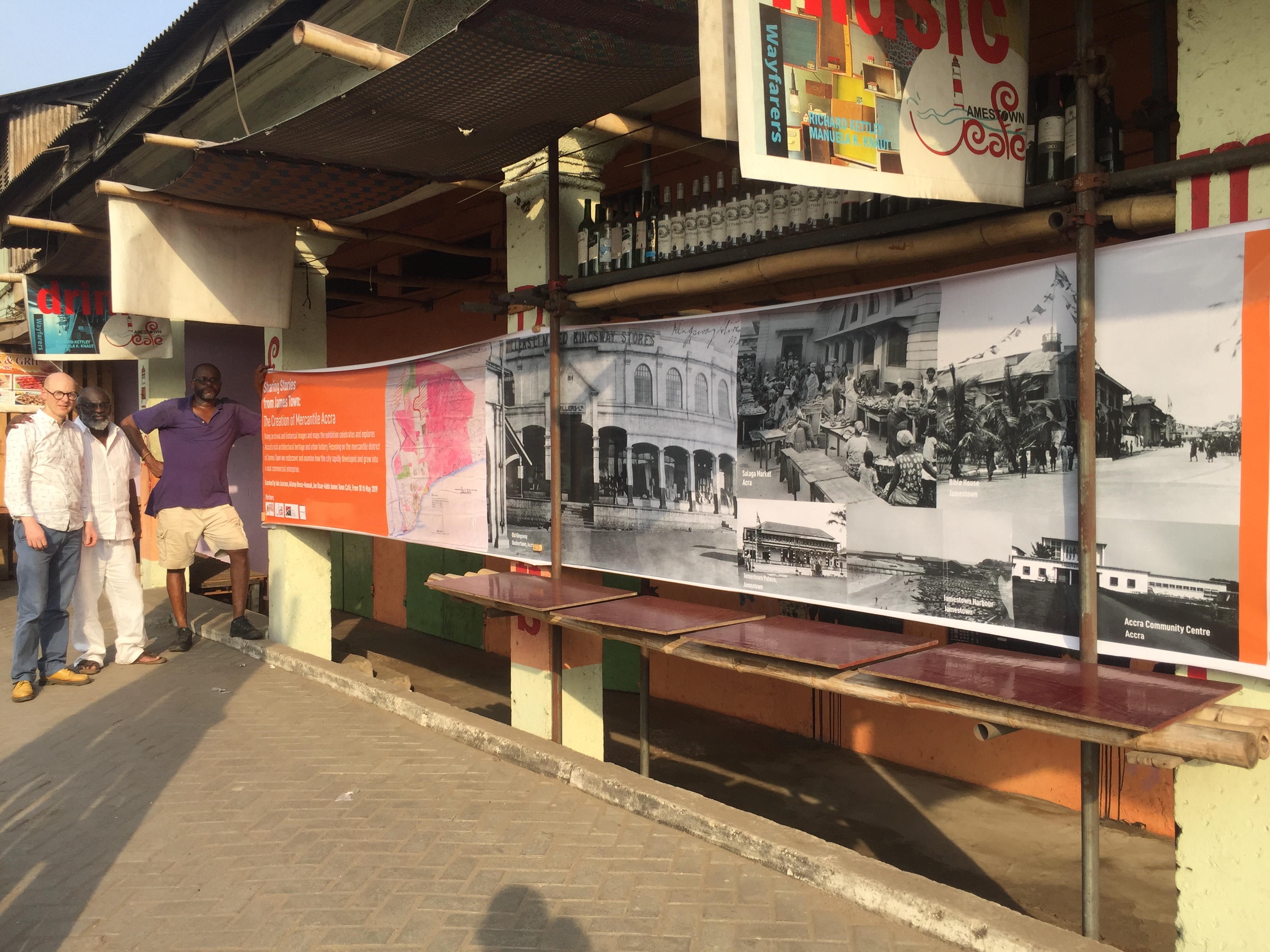
I’ve been working in Jamestown, Accra to start planning an exhibition on the colonial and mercantile architecture of the district. Using archival and historical images and maps the exhibition will celebrate and explore Accra’s rich architectural heritage and urban history. The exhibition will focus on the warehouses, stores, factories and offices of James Town and examine how the city rapidly developed into a vast commercial enterprise.

The images for the exhibition have been generously provided by Unilever, Barclays, UK National Archives, The British Museum and private collections. Most of these images have not been exhibited before and we’re delighted that they will be shown in Accra, and in very close proximity to where they were originally taken.

IMG_4426 (1).jpg

Exhibition Promotional Banner outside James Town Cafe with Iain Jackson [L], Joe Osae-Addo [C] and Allotey Bruce-Konuah [R]

There will be a printed/PDF catalogue to accompany the exhibition showing both archival and modern photographs of the buildings, along with historical maps, and we will hang large photographic banners of the archival images directly onto the historic buildings in James Town.

The main exhibition (co-designed with architect Joe Osae-Addo and designer Allotey Bruce-Konuah) will be hosted by ArchiAfrika at the James Town Café, from 17th May 2019. We’re also hoping that it will go on tour to University of Ghana (details to be announced). In June there will be an additional exhibition hosted at the James Town Café  curated by Lukasz Stanek and Ola Uduku of Manchester School of Architecture – and we’ll include more on both exhibitions here.

We’ve also started a new project to produce 360 degree panoramic photographs (and films) of some of the key sites and streets in James Town (and its environs). The images have been captured with a Ricoh Theta camera and we’ve taken over 200 photographs/ short films to date. The clips will be pieced together as a series of films and overdubbed with a commentary on the history and significance of the buildings in view. The films may be viewed with a VR headset for a more immersive experience. Allotey Bruce-Konuah already gives tours of James Town, and these films will enable his expertise to reach a wider audience, as well as encouraging new visitors to make the trip to this unique and highly important portion of Accra.


I’ve been spending some time working in and around Accra, and in particular at the Public Records and Archives Department. This archive has undergone major changes in the last five years and is a great place to undertake research with helpful staff and quick responses to queries. Located in a distinctive building with bold concrete brise soleil and a brave concertinaed roof over the entrance space, its interiors rely exclusively on passive ventilation. I was looking mainly at the late colonial records including those of the Public Works Department, sanitation, land, and town planning.

Experimental Swishcrete blocks at Kibi
Experimental Swishcrete blocks at Kibi from 1945
IMG_1003.jpg
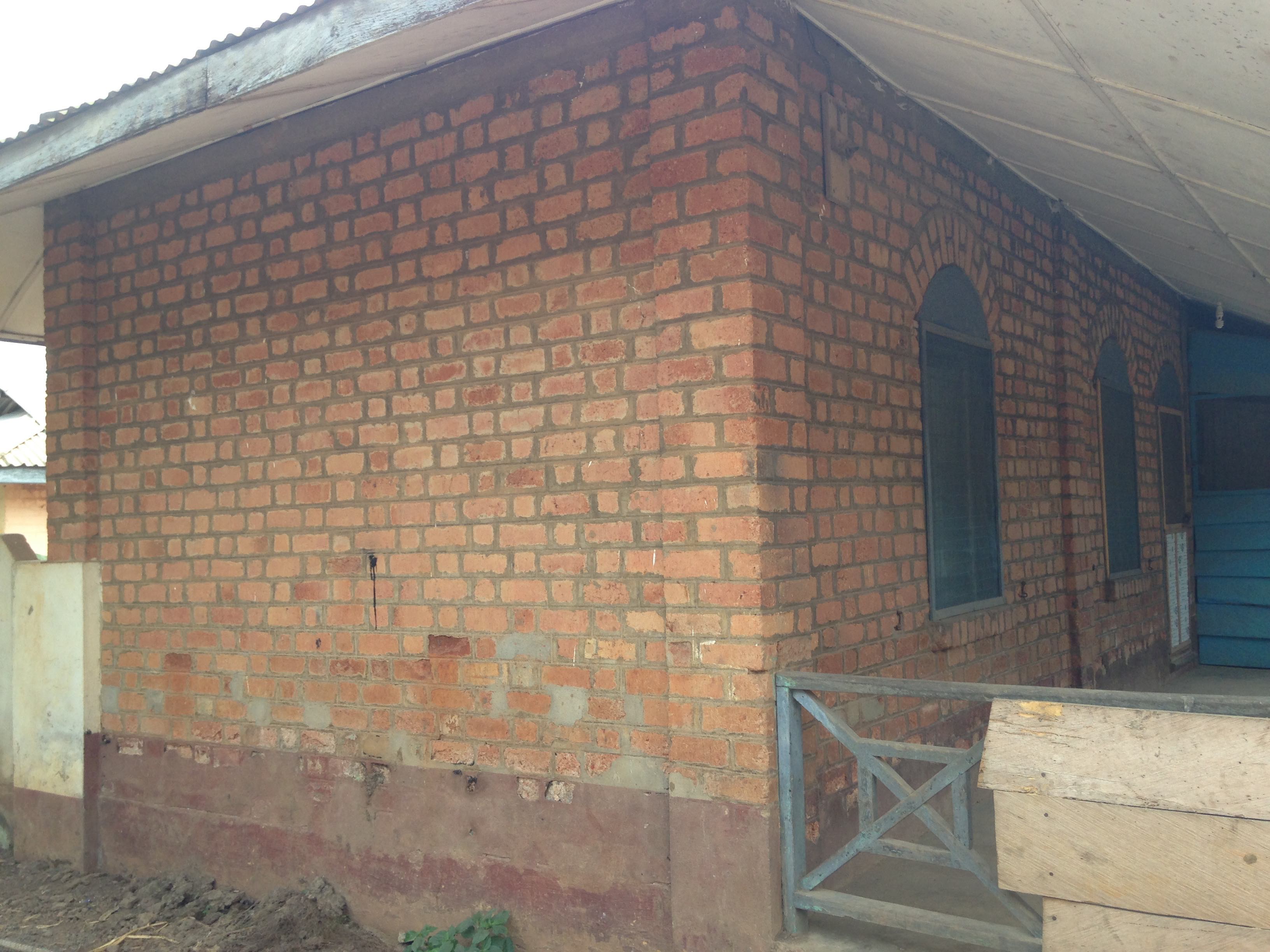
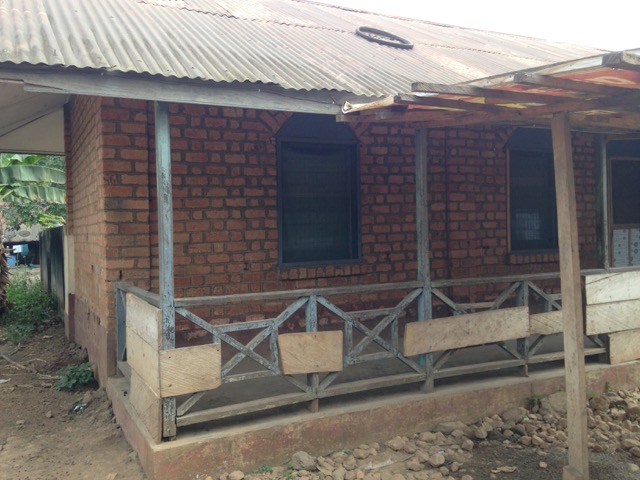
Experimental Swishcrete housing at Kibi from 1945. Note the arches above the windows and doors

There were many discoveries and lots to celebrate (and eventually publish), but one particularly interesting find related to a folder called ‘Experimental housing at Kibi’. This gave lots of details on an attempt to build a couple of dwellings in swishcrete (i.e. laterite and concrete mix) blocks in the gold mining town of Kibi, with a view to saving on cement costs and also creating an aesthetic that was more in keeping with the vernacular. It was a particularly exciting find, as we had stumbled across these houses earlier this year, and were taken by their unique construction. The archives revealed that Jane Drew was involved in their design and that she visited the site in early April 1945. It must have formed part of her work on village housing. Although modified and extended the houses still stand and clearly demonstrate the strength of this construction method having survived over 70 years.

Outside of the archives, I managed to finally track down Denys Lasdun’s Paterson Simon’s Office in Accra, 1962 (thanks to the help of their current Managing Director John Traynor). It was formerly a supermarket and toyshop called Farisco.

I was hoping to see the Optimist Club in Sekondi, but as suspected, I was too late and the influential African club has been demolished and now replaced with a large youth centre. Fortunately, Nate Plageman did manage to visit the club before it was demolished and you can see his photos here. Despite this loss, it was good to use copies of the early plans of Sekondi from 1900-1920, housed in the UK National Archives, to further explore the town. I was particularly taken by the Venice Cinema located at the edge of the settlement by the lagoon (was this how the cinema got its name?) and the wonderful merchant villas and stores that can still be found in dilapidated abundance throughout the town.

Venice Cinema, Sekondi

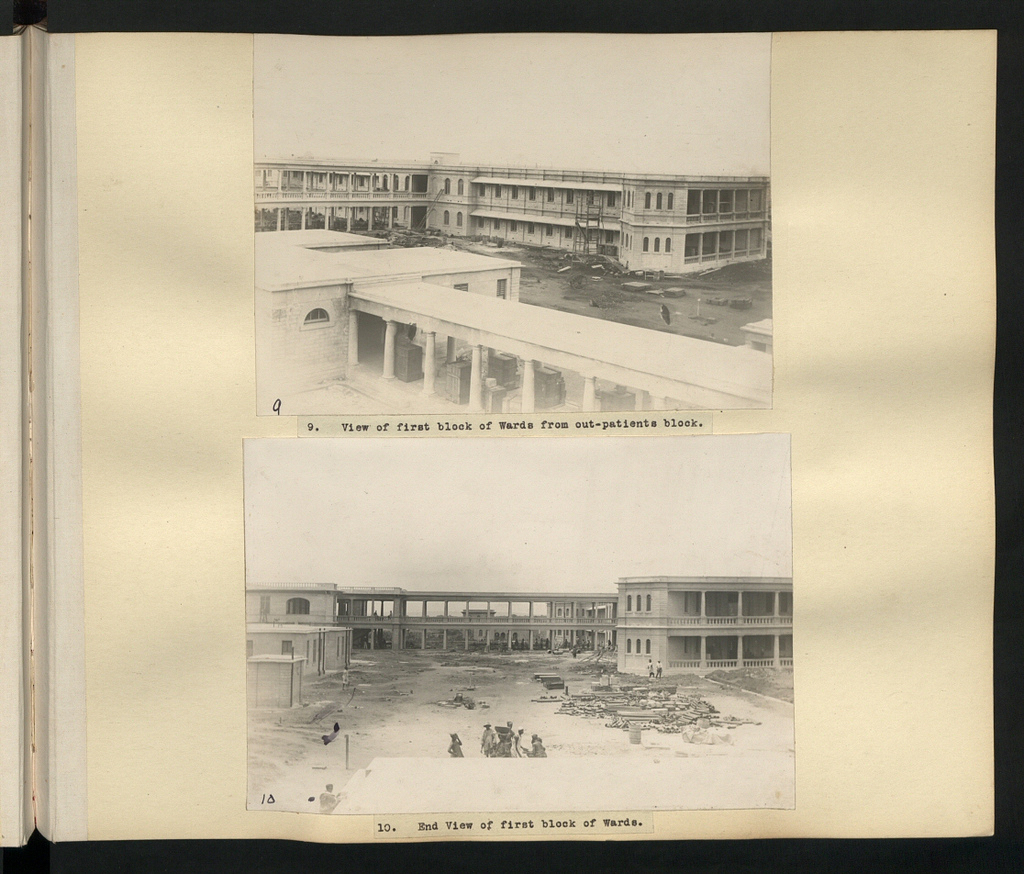
Accra continues to seduce with its array of late colonial structures and modernist set pieces. At Korle Bu just west over the lagoon from Jamestown the hospital dominates the landscape. The hospital forms part of the trilogy of projects developed by Gordon Guggisberg in the 1920s (along with Achimota Schooland Takoradi town and docks). The old hospital structures remain, looking almost like they did when built (and similar to the harbour board buildings in Takoradi) – as captured on Africa Through a Lens. The later brutalist addition to the hospital was by Kenneth Scott, looking more restrained and orderly than the edgier and abrupt Effia Nkwanta hospital in Takoradi by Gerlach and Gillies-Reyburn. If you visit Korle Bu hospital continue to walk through the grounds and head out to the staff housing, tennis courts and garden sanctums that lie secretly beyond – it is a hidden, gentile world of privilege that still manages to exist just a couple of miles from the excitement and paucity of Jamestown.


Korle Bu Hospital, Accra
Korle Bu Hospital, Accra photographed shortly after completion, 1928


Two New Buildings in Accra

How are we to build today in Ghana? What is our architectural syntax and how are we to generate form, meaning and qualities that somehow resonate with Ghanaians today? This is of course a difficult question, and not all architecture has to be reflective of the country in which it is built. Indeed, it is very problematic to think of architecture in terms of geo-political territories, especially when the architecture of the West is rarely presented like this. It is unusual to hear of architecture referred to as European, or Luxembourgian for example, but the architectures (and architects) of the global south are frequently labelled according to country or region of origin (Indian, South East Asian, West African for example – see http://blog.nus.edu.sg/seaarc/symposium/), furthermore when ‘modern’ architecture is produced in those countries it is labelled as mimicry, inauthentic, or somehow borrowed, imported, or not belonging.

This is the difficulty architects face when working in places like Ghana. However, architects must take a stance and adopt a position. They should be self-conscious of the designs that they are making, and conceive of a direction, or ambition for their work. There were two recent buildings that we visited in Accra that are attempting to deliver a new response to architecture.
One Airport Square

One Airport Square

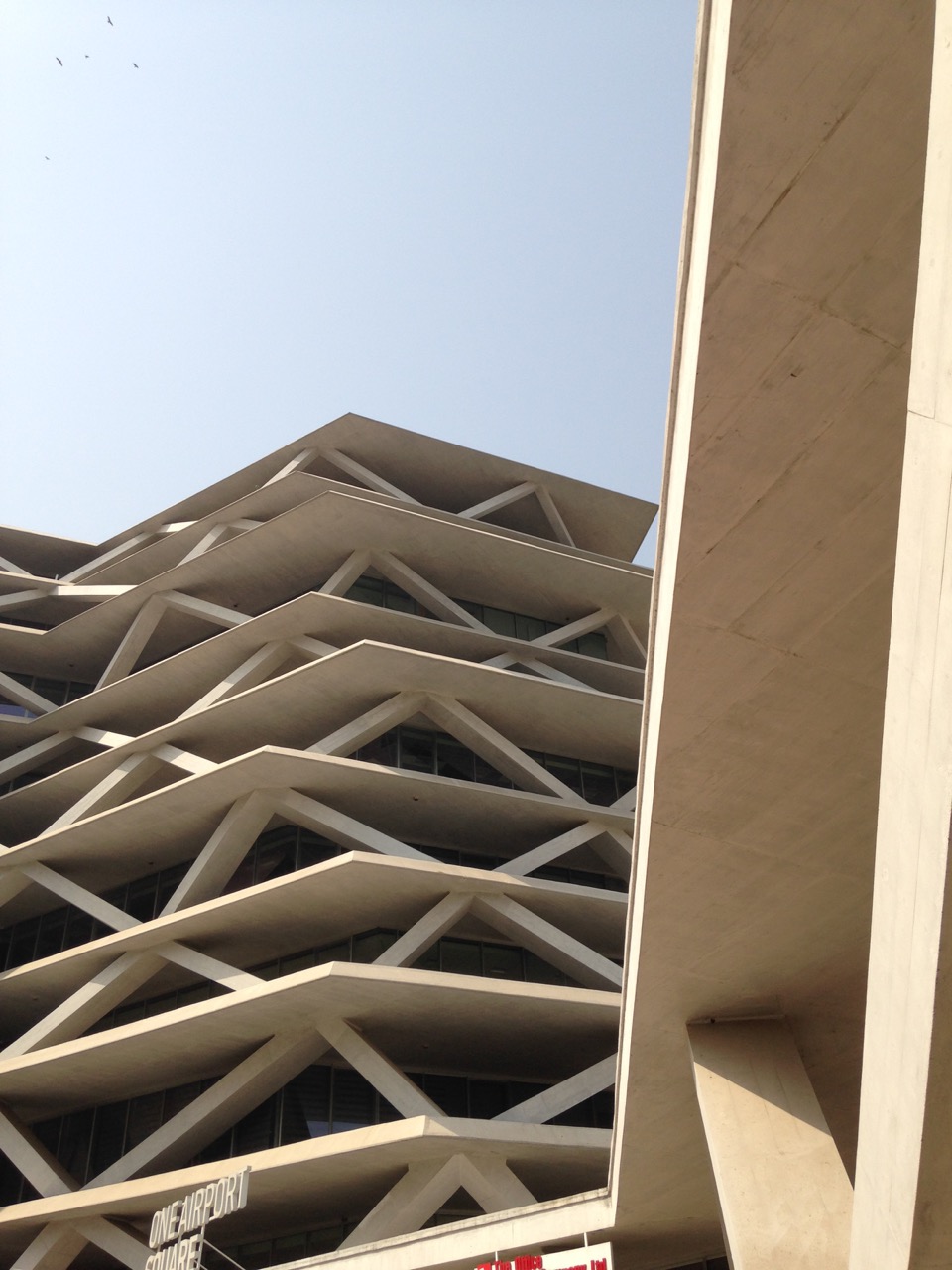
One Airport Square  (designed by Mario Cucinella Architects) has gone for the attention-seeking approach. A complex façade composition made up of diagonally arranged structure with horizontal fins. The fins and ‘columns’ project from the building’s envelope by almost 2m, acting as a vast brise soleil they provide much needed shade, as well as absorbing heat externally whilst reflecting sunlight light into the building.

IMG_0838

Atrium of Airport Square One

Internally there is a large atrium space that holds the circulation as well as bringing light into the deep plan and pulling fresh air through the courtyard. This kind of building works well when set amongst other less adventurous forms. It is also helping to create a new context for that part of Accra, and is distinctive enough to become a reference point and landmark. I just hope it doesn’t become part of a silly form-making game with each bank trying to out-do each other in the quest for the next distinctive shape.

IMG_0840

Ecobank, Accra

Another new building that has just reached completion is the vast Ecobank Headquarters located adjacent to the Efua Sutherland Children’s Park. This provocative building was designed by a consortium of Ghanaian and South African architects (http://arc.co.za/project/ecobank-ghana/), the local and site architects being Mobius, lead by KNUST graduate Augustus Richardson. A lightweight metal brise soleil is used to protect the glass façade where the sun strikes, and a perforated metal jali screen offers solar protection at the lower levels, as well as being used to depict a map of the world, and a larger drawing of Africa.

DSC_0549

Augustus Richardson with the model of Ecobank

At ground level the building is clad with limestone firmly rooting it into the earth and forming tactile surfaces. The two forms reflect the public banking space, and the private offices of the bank HQ. The bank is orientated on an axis leading towards the concrete obelisk in Africa Liberation Square, and there is a real declaration of optimism in this building. Mobius are an exciting firm to follow, and Richardson kindly took us on a tour of the bank, giving behind the scenes access. The quality of the finish is exceptional and build quality excellent. Richardson clearly cares about architecture and his city; there is a charged excitement in the way he talks about design (see http://www.design233.com/oldhtml/works/augustus_richardson_the_bridge_mobius.html for more on this).

But what of the building envelope? Is it an appropriate response to design an almost entirely glazed building in Accra?

In 1957 Anthony Chitty gave the opening address to the new school of architecture at KNUST and posed this question,

‘Is a regional architecture, a truly African style, possible for West Africa; for Ghana in Particular? I believe the answer to this question is “yes” : not only possible but desirable, something to be striven for.’

In many ways the Ecobank is the perfect response to the clients wishes – they wanted a modern, international office space to reflect their brand, and clearly Ghanaian architects and engineers can deliver this type of work as well as anyone, but, if we are to be critical, are we guilty of what Chitty spoke about 60 years ago when he demanded,

‘Not just a pallid and mediocre edition of the international style, not just the half considered European solution trotted out to make do here, but a real and living architectural answer to your own local problems, social, technical and political, drawing the maximum from such origins as do exist here, a true Ghana aesthetic.’

I don’t think the Ecobank is at all mediocre, or half-considered, and Chitty was over-playing the Ghana aesthetic idea in light of the nationalist tendencies from the time-  but there must be an approach that can make the architecture of this region specific to this place. Other large projects are rapidly springing up (and unlike the Ecobank) they parade the hackneyed multi-coloured cladding approach that is tormenting every city, whereas Ecobank is clearly searching for something more.

The difficulty is how to scale-up ‘tropical’ design. Tropical architecture stems from the bungalow, barracks, and hospitals – it works well for small-scale low-rise buildings, as the Children’s Library, George Padmore, KNUST Senior Staff Club House demonstrate – it wants to be a ground hugging solution set within leafy gardens and evaporation pools.

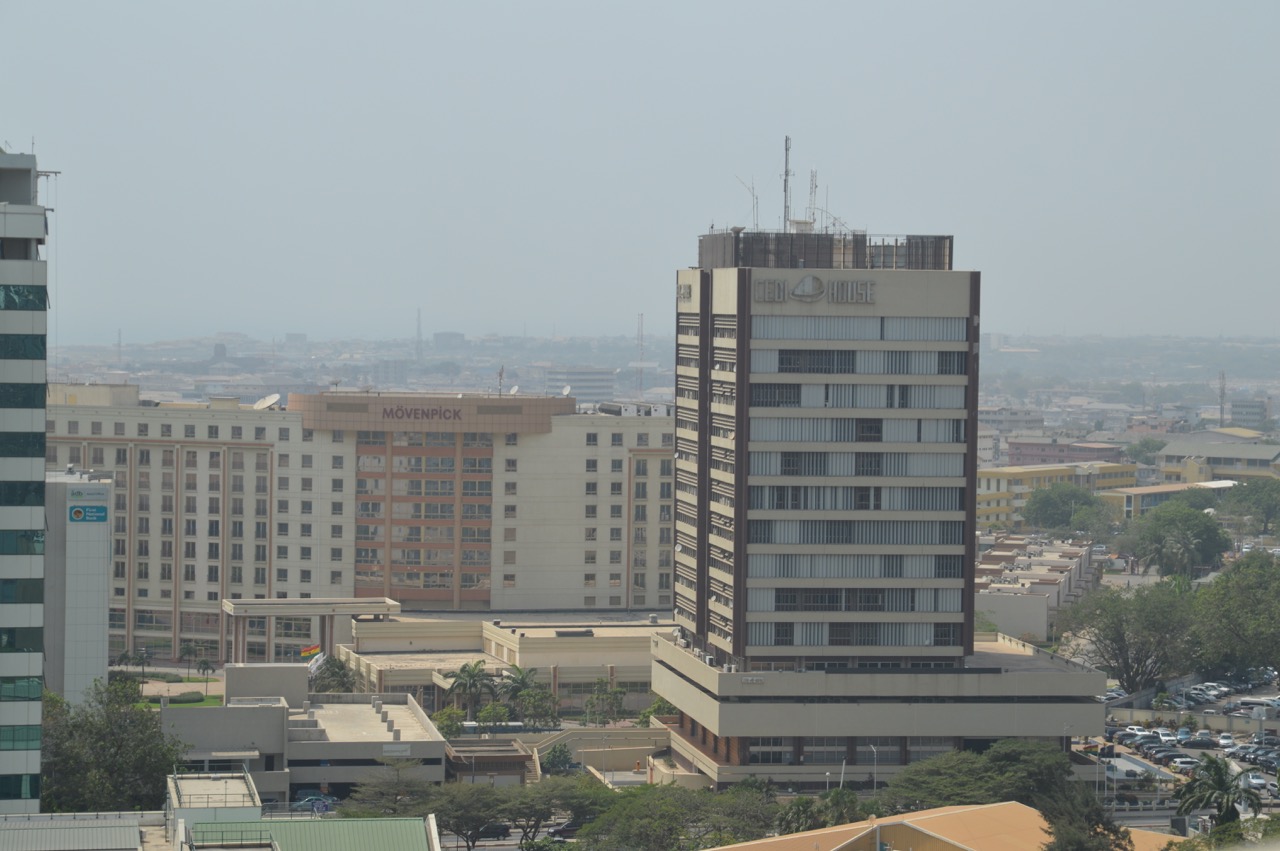
A bank today however cannot rely on loggias and verandahs, and rising land values and the ability of buildings to generate substantial rental incomes stimulates the high-rise approach.  This was something that Fry and Drew encountered in West Africa. They worked for the Co-op Bank in Nigeria and placed louvres on the facades of multistory buildings, a technique also used by John Addo at Cedi House in Accra. The library at Ibadan presents another alternative – with its delicate screen and effectively double-façade-cum-circulation zone. Fry found the façade too ‘lace-like’ and pursued something more strapping and formal in later works, such as the library at Girls College in Chandigarh’s Sector-11.
DSC_0553

Cedi House viewed from Ecobank roof garden

Fry also set himself the challenge of using a glazed façade in a hot climate, again in Chandigarh. At the Government Printing Press he used glass on the north facing façade only, and included adjustable louvres on the interior to reduce glare. The south facing façade was protected by the walkways and an external aluminium louvre system based on the traditional jalousie reduces solar gain.

There is perhaps just the germ of historical precedent in the two recent Accra buildings – and both reveal a confidence in the city, as well as an ambition to test this type of architecture. The next step will be to put some data-loggers into these buildings and to see how they perform. Their critics might be pleasantly surprised.


Ghana’s housing – an historical retrospective.
Ola Uduku writes:

Visiting Ghana gives one the chance to step back through time – there is an abundance of housing which has survived the vicissitudes of the temporal, physical and socio economic life of more than fifty years; and in certain cases an entire century of existence in the unforgiving tropical climate which comprises much of Southern Ghana’s landscape. In two weeks we came across these special gems.

 Timber housing: Colonial Ghana, then called the Gold Coast along with Nigeria had significant swathes of forests which were sources of tropical hardwood. The Colonial government established significant agro-forestry concerns in both countries, which resulted in timber research stations. The two houses in this post are examples of experimental worker housing that these research stations were responsible for developing. We think that the Kibi house, near the market town of Koforidua,  is over one hundred years old. The other lapped wood house was found at the Aburi botanic gardens, which had previously been the site of a sanatorium. Interestingly both buildings have substantial elements preserved including; walls, casement windows, wooden flooring and roofing elements. Generally only the non ‘wood’ roofing sheets have had to be replaced.

Brick Housing: At Kibi also across the road from the ‘forestry’ house we found an example of a demonstration brick building. This was a semi detached pair of worker quarters set out as a single depth bungalow with a wide verandah and walls one brick thick. The first building retained the balcony format whilst the second had its balcony appropriated to create more space for the larger families who now occupied these buildings.


Experimental Brick Housing in Kibi

Experimental Brick Housing in Kibi

Impregilo Prefabricated Housing
Going to Akosombo Community One  – which was where the elite staff and also the contractor Impregilo had its staff quarters revealed a further rare find.  Built on a higher part of the Community One hill ridge are the original staff quarters for Imregilo staff, we assume these would have been for the Italian foremen and remain in near pristine condition. The original prefabricated lightweight wall-panels can be seen clearly in the neat avenue of houses which looked in some ways like a re-created Italian village scene. A number of the houses had the individually built ‘sit out’ verandah areas with views to the Akosombo landscape and the staff club below.

Impregilo Housing in Akosombo

Prefabricated housing for Italian contractors at Akosombo

View of the Akosombo Dam

View of the Akosombo Dam from Community 1

Today’s domestic architecture in Ghana as in much of West Africa unfortunately seems to have not incorporated much of the ‘environmental design rules’ that these and other residences of this early post independence era were able to employ. The site orientation, use of lightweight materials, utilisation of large areas of operable fenestration, and shading, have all contributed to make these now historic houses exemplars of how domestic buildings could be built to ensure thermal comfort without reliance on today’s ubiquitous air conditioning systems. Surely it is now time to re-evaluate the principles so aptly demonstrated in these houses and use them as a basis for developing a more sustainable response to tropical housing in Africa today.

Notes from James Town, Accra.

Hansen Road, James Town

Hansen Road looking towards the Methodist cathedral

James Town is an old district in Accra running along the coast and associated with the British during the early colonial period – when the Dutch and Danish were also grappling for control of the town. Set behind the Usher Fort are many warehouses, trading posts and residences. A fine array of historical buildings can still be found here, but much of its rich tangible and intangible heritage is at risk through insensitive development, lack of maintenance and the departure of large businesses from the area. Despite this, it remains a vibrant and charming district full of markets, traders and the cultural epicentre that is the James Town Café, recently frequented by Emmanuel Macron during his visit to Accra.

James Town Cafe

James Town Café

Led by the charismatic Allotey Bruce-Konuah we weaved our way through the markets and informal structures that now occupy the gaps and leftover sites, punctuated by a vast collection of colonial-era buildings. Our first stop is a stone obelisk encased within an old market hall. The obelisk was built shortly after 1900 to commemorate the last of the Anglo-Ashanti wars. One of the plaques is in Arabic script, perhaps in recognition of Nigerian-Islamic troops who fought the Ashanti with the British. From here we went to the adjacent market hall. It was used until quite recently – and with some minor repairs could make for a very fine market venue today, perfectly sited on a strong axis and at the centre of the district.

We visited Azumo house, built in 1914 – the original owner’s escapades of shipwrecks and ‘salvaging’ are apparently recorded in the Red Book of West Africa. The quality and number of historical buildings is surprising – a case of preservation by leaving-be. The warehouses of the Compagnie Francaise de L’Afrique Occidentale (based in the Royal Liver Building in Liverpool) occupy a prominent site, and Ellen House built in 1918 boasts a rich history – we will attempt to uncover more.

Our trip concluded with a visit to the studio of Deo Gratias. You may remember some of the photos from this studio featuring in The Guardian (and here) not so long ago. It was extraordinary to see these images printed and in large format. Kate Aku Tamakloe, the granddaughter of the studio’s founder, JK Bruce Vanderpuije, and curator of the collection kindly gave us a tour. Kate told us there are many, many more images to scan, some from glass plates. We look forward to seeing more of this important work.

Deo Gratias Studio

Deo Gratias Studio James Town

Notes from Tema, Ghana

We visited Tema, the new port and town built 10km east of Accra in the 1950s and early 1960s. Planned as part of a suite of infrastructure projects including, an aluminium smelter, docklands, and hydroelectric dam, the town was to provide model housing in a series of self-contained neighbourhoods, called ‘Communities’. Each has its own central market area and Community Building surrounded by a series of residential areas. The houses are set around schools and recreation areas, and grouped according to size and occupant income.

We began at Community 1 and explored the market area, complete with extended community centre, before finding some of the distinctive ‘Type iv’ housing. The housing has been extended and in-filled but the original basic form is just about discernable. Other housing had been supplemented by gardens and painted facades. The low-rise flats with central access staircase have been well-maintained and there is a strong sense of pride in the neighbourhood here.

Michael Hirst designed the Type iv housing. He studied at the Architectural Association in the Department of Tropical Architecture before moving out to Ghana (then known as Gold Coast) in the mid 1950s. He worked for the Tema Development Corporation, and lived in the Denys Lasdun designed flats in Tema. We had a good look for these flats and hoped to track them down – but alas, they eluded us….

Community 2 Housing

Community 2 Housing

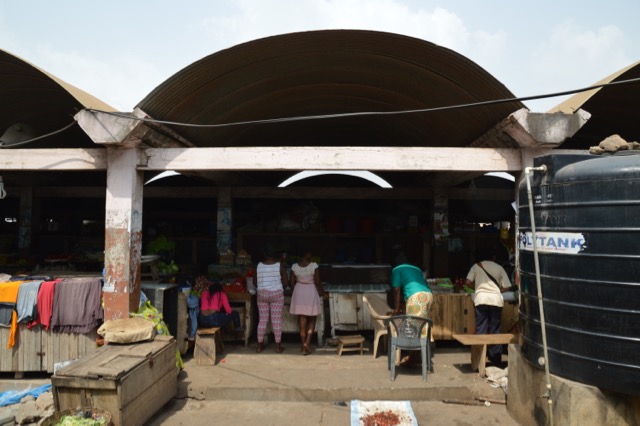
At Community 2 we saw some grander properties (surely inspired by Maxwell Fry’s work in Chandigarh), as well as a market with vaulted roof and carefully detailed concrete and guttering system. The structure is, however, badly corroded and in need of urgent repair. The traders informed us that the market is likely to be demolished and replaced shortly.

Community 2 Market

We moved on to Tema Manhean, the ‘replacement fishing village’ built to house the Ga People who were displaced with the building of Tema (see our paper for more detail). The settlement wraps around the light house and is made up of a series of compound houses designed by Maxwell Fry and Jane Drew. We found one compound that was built in 1961 (as noted by the date etched into the concrete during construction) and barely modified since. It was a perfect example of just how successful and adaptable the compound typology can be.


SaveSave

Ola Uduku and colleagues at Edinburgh University hosted an excellent workshop this week on West African Modernism, combining some of the sessions with Docomomo Africa. The result was a very rich series of encounters, exchanges and discussions.

IMG_1676

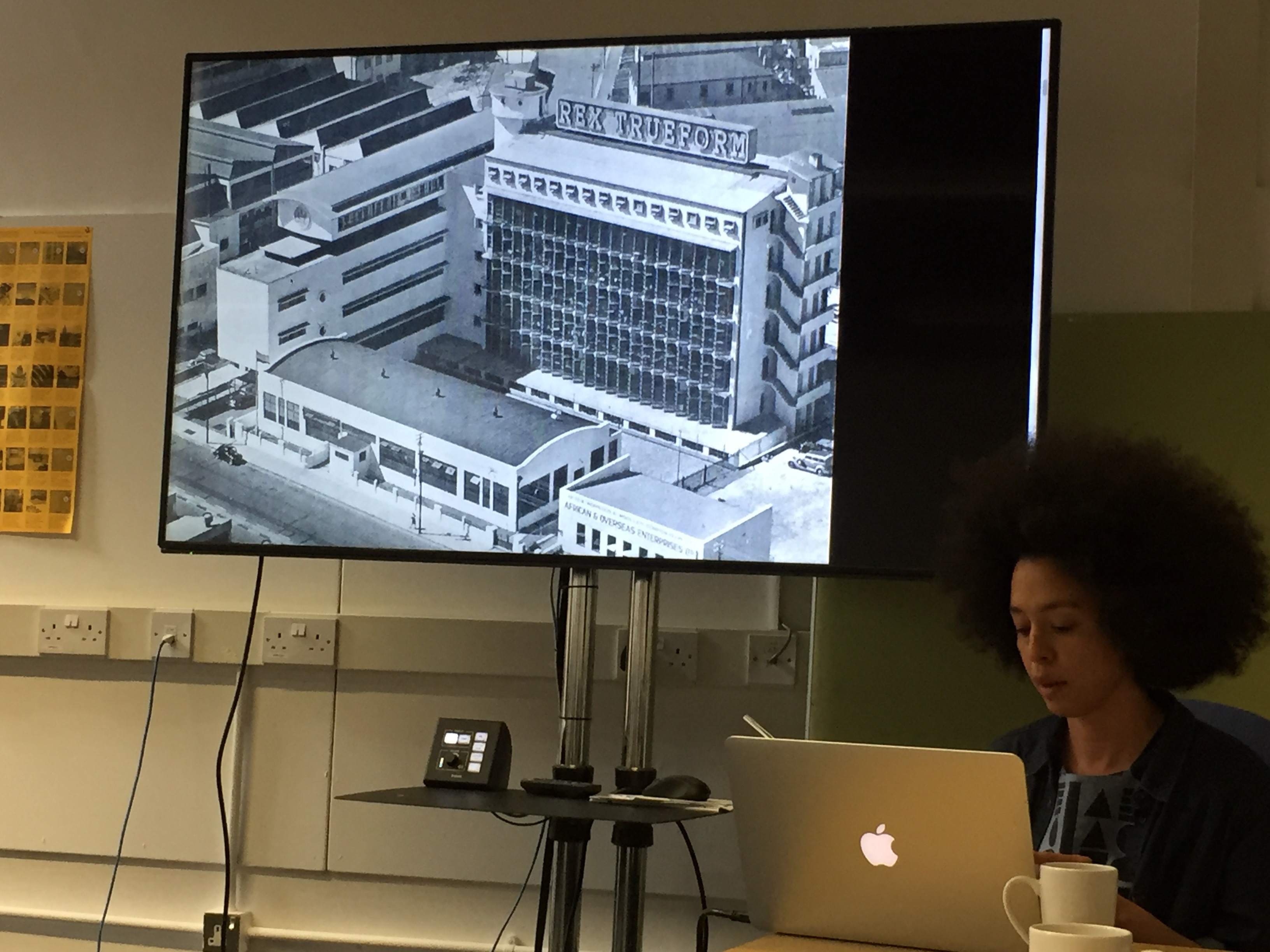
Ilze Wolff presenting Rex Truform’s factory in Cape Town

Ilze Wolff gave a very poignant paper on Rex Truform, the clothing factory in Cape Town designed by Max Policansky in 1937. Ilze’s investigation goes beyond the built fabric and stylistic qualities of the structure – it considers the workers’ stories and what it was like to be a part of the everyday life of this significant building in the city. Ilze is also publishing her findings and interventions through a series of booklets: see Open House Architecture for more details.

IMG_1674

Shantanu Subramaniam’s presentation on Community Centres and Libraries in Ghana

Shantanu Subramaniam presented his recent fieldwork on the community centres and libraries of Ghana. In addition to architectural surveying and cataloguing Shantanu is also considering the environment performance of these structures and testing their ability to modify climate and interior temperatures.

IMG_1675

Joe Addo’s skype presentation on modern architecture in Accra

Joe Osae-Addo joined us via Skype and shared his film on modern architecture in Accra. The film presented an autobiographical account of Accra and its modern architecture, as seen and experienced by Joe from his childhood onwards. It is a compelling piece that will deliver far more impact in changing ‘hearts and minds’ than reports and conservation legislation.

You can watch the film here: https://stream.liv.ac.uk/s/hav96uun

We also discussed the DOCOMOMO presence in Africa and whether there should be regional groups [such as West Africa, Southern Africa and so on], to generate a more critical mass and greater influence. The reliance on the fiche methodology was also questioned – or at least its limits acknowledged – and we considered the use of ‘narrative’ and social history as a means of generating meaning, significance and connection to these structures beyond the fetishisation of the physical attributes, and tangible qualities.

IMG_1697

Cumbernauld townscape

On the final day we were treated to a site visit to the new town of Cumbernauld, and Stirling University.

The 6th Conference on Infrastructure Development in Africa, has just concluded with a particular focus this year on ‘Building Resilience through African Urban Culture’. Held at KNUST in Kumasi, Ghana the conference welcomed speakers from Nigeria, South Africa and UK, as well as a host of research papers presented from scholars based in Ghana.

Key note speakers (including Prof. Chike Oduoza, Dr Obuks Ejohwomu and Prof. Mugendi M’Rithaa) lucidly presented the varied and many challenges facing African cities today – with particular focus on energy use, digital infrastructure and the internet of every/things.

Prof. M’Rithaa’s presentation included some very striking map visuals, including the image below that shows the true size of Africa relative to other countries – something that Mercator projection of the world fails to reveal. You can just make out on the poor quality photo below the outlines of USA and India. He also spoke very eloquently on how our solutions must be people centred, rather than imposed solutions. Dr Ejohwomu also challenged us with many provocative questions and themes – including a cartoon showing an emaciated cow and a worker abandoning it in pursuit of an obese cattle. His challenge was that we can’t simply walk away from the problem and that Africa needs us to focus on its problems rather than attempting to flee them in the ‘global north’. This message also reinforced by Prof. David Edwards and Dr. Erica Parn in their presentation.

IMG_1313

IMG_1322

I gave a presentation on the rich modern architectural history of Ghana, and the infrastructure of culture that exists here. I focused on a series of building types including education, community centres, and libraries, as well as the town planning and historical development of Kumasi.

IMG_1309

Nearly 50 papers followed on a vast array of topics as well as a striking art installation on the plight of the African Giant Snail’s ecosystem. A new journal was launched ‘Journal of Built Environment (ISSN: 2026-5409) and next year the conference will migrate to Lagos – we look forward to hearing more from this important gathering.