Archive

Tag Archives: India

Herbert Rowse Research Project, funded by the RIBA.

Iain Jackson and Peter Richmond have been awarded a research grant from the RIBA to investigate the work of Herbert James Rowse (1887–1963). He was without doubt one of the most outstanding architects of his generation and through his work on a number of high-profile commissions he shaped the inter-war cityscape of Liverpool in a way that no other architect has done since. Whilst the trajectory of the evolution of his stylistic preferences can be clearly traced in the work he undertook in Liverpool, his output was not confined to the city and in the course of his career, he worked on major projects in Britain, Europe, Asia and North America. After local pupillage, in 1905 Rowse entered the school of architecture at Liverpool University, where Charles Reilly had just been appointed Roscoe professor.

DSCF0539

Mersey Tunnel Ventilation Shaft, Liverpool, 1931-

Gaining a first-class certificate in 1907, Rowse was also the joint winner of the Holt travelling scholarship, which took him to Italy and started a lifelong interest in Italian Romanesque and Renaissance architecture. A set of measured drawings arising out of his Italian studies won him an honourable mention in the silver medal competition of the RIBA in 1910. In the same year he became an associate of the RIBA whilst employed as an assistant to Frank Simon, who in 1912 had won the competition for the Manitoba parliament building. Rowse worked in Simon’s Winnipeg office in 1913. He also travelled extensively throughout North America and worked briefly in Chicago and New York. On his returned to Liverpool, Rowse opened his own practice in 1914 and during the First World War he worked for the Admiralty designing ‘purely functional buildings’.

DSCF0534

Woodside Tower for Mersey Tunnel, Birkenhead, 1931-

Following the War, he re-launched his practice with a commission for the Fairrie sugar refinery in Liverpool. Rowse’s competition-winning design for the Liverpool shipping office (the India Buildings) in 1924 was the first among a series of large-scale commercial commissions in the city, often carried out in partnership with other individuals or firms; these included Martins Bank (1927–32), Lloyds Bank (1928–32), and the Bibby Shipping Line offices (1930). The Lloyds Bank branch in Church Street was in Italian Romanesque, while for bigger buildings Rowse used a rich, eclectic classicism, often with a distinct American Beaux-Arts flavour – a style that was simultaneously being promoted by Reilly at the Liverpool School. In 1931 he was appointed consultant to the Mersey tunnel authority, and designed the tunnel approaches, arched entrances, and ventilation towers. The largest tower housed the tunnel authority offices, and was a distinguished addition to the group of tall buildings at Liverpool’s pierhead; whilst the Woodside tower on the Cheshire side of the Mersey won Rowse the 1937 RIBA bronze medal. His tunnel authority schemes featured low-relief sculpture and art deco work, leaning towards the stripped classical style favoured by both European totalitarian regimes and American New Deal designers. At this time Rowse was working closely with Tyson Smith, Liverpool’s leading modern sculptor.

The Philharmonic Concert Hall (1936–9), with its simplified brick massing and its restrained decoration, was much closer to mainstream European modernism, and is apparently inspired by W. M. Dudok. It was this approach which informed his designs for the British pavilion at the Empire Exhibition, Glasgow (1938), the Pharmaceutical Society headquarters in Brunswick Square, London (1937), and the Pilkington Glass Company offices in St Helens, Lancashire (1938–9) all of which displayed similar Dudokian influences combined with American Streamline Moderne styling. War again frustrated Rowse’s professional career just when he was beginning to win substantial commissions outside Liverpool. In 1947 he completed the Pharmaceutical Society building (now London University’s pharmacy school) and secured the Woodchurch cottage housing scheme, in Wirral, upstaging his mentor Charles Reilly with a scheme ‘traditionally English in character … modified to suit contemporary limitations and resources’. Woodchurch was one of the biggest regional projects in the era of post-war austerity, and won Rowse a bronze medal for housing from the Ministry of Health. However, the architect resigned before completion, following a dispute with the client. Rowse designed diplomatic buildings at Delhi and Karachi in 1951. He also advised the Belgians on post-war reconstruction, and was awarded the Order of Leopold II in 1950. However, he took no further recorded part in British practice until he won the competition for the renovation of the ‘Rows’ in Chester (with Thomas Harker) just before his death in 1963.

http://www.architecture.com/RIBA/Becomeanarchitect/Fundingyoureducation/Researchfunding/ResearchTrustAwards/2014Recipients/IainJacksonandPeterRichmond.aspx

European Architectural History Network Conference in Turin

The European Architectural History Network (EAHN) held their third international conference in Turin from 19th-22nd April. The conference included several papers with a transnational theme and thanks to the generosity of the presenters/authors we’ve included some of their abstracts below:

S3.1 Concrete Conduits in Gandhi’s Ashram. Tangled Environmental Aesthetics in Post-Independence Indian Modernism

Ateya Khorakiwala Harvard University, USA

Post-independence India’s conception of nature as risk-resource system fuelled its project of modernization. Dams were construed as techno-scientific operations in systems designed to circumvent disaster. The corresponding cultural project of architectural modernism borrowed anti-colonial politics’ essentialist strategy, foregrounding a search for identity and taking its cue from climate and vernacular technology. Although driven by resourcedearth, Indian modernists wrought scarcity into an aesthetic language: louvers, chajjas, verandahs, and lattices came to dominate Indian modernism’s vocabulary. For Charles Correa, climate provided raw material for a new, yet ancient, aesthetic language. His early conceptual project – the Tube House (1962) – a unit designed to be low cost and easily multiplied, used deep louvers, a courtyard, and shaded windows to regulate the internal climate. The prototype has been called “ahead of its time”, as if it were a proleptic part of sustainability; however, the project was rooted in a different set of political and aesthetic lineages that came into play in a parallel project, a museum commission that he won right out of MIT. The Sabarmati Ashram, built on the site of Mahatma Gandhi’s home in Gujarat, in homage to the leader, sat at the intersection of three distinct intellectual lineages – Gandhi’s politics, Tagore’s aesthetics, and Nehru’s techno-science. This paper uses Correa’s Sabarmati Ashram project to interrogate the threads of environmental consciousness nested within the decolonization paradigm to argue that although these threads look like sustainability, they belong to a different history, and although they seemed to be a counter-narrative to big science and big dams, they were wrought of the same anti-colonial political origins. Although the Gandhi/Nehru/Tagore lineage was politically contradictory and certainly never resolved, this paper will look for architectural and aesthetic references to limn the alternate possibilities for what environmental consciousness may have been before the 1970s.


S3.4 Experiments on Thermal Comfort and Modern Architecture: the Contributions of André Missenard and Le Corbusier

Ignacio Requena Ruiz Ecole Nationale Superieure d’Architecture Nantes, France

Daniel Siret Ecole Nationale Superieure d’Architecture Nantes, France

The early scientific researches into the thermo-regulative response of the human body during the 1920s and the 1930s normalized thermal conditions in working and educational environments to improve user’s performance. The European and American contexts of housing promotion and industrial development during post-war extended this approach to different environments. Geographers, physiologists and engineers encouraged manufactured indoor atmospheres that could overcome human shortcomings resulting from environmental and biological conditions. Climate, indoor atmospheres and human body were interlinked to develop the ideal environment for modern society. Paradoxically, these original notions and researches have been used to promote both bioclimatic and weatherized architectures along the second half of the twentieth century. The French engineer, researcher and industrialist Andre Missenard was a prominent contributor to the study on the thermo-physiology of comfort as well as its experimental application to engineering and architecture. As a collaborator of the architect Le Corbusier, his influence not only attempted technical fields, but to the whole notion of the ideal environment for modern society. Consequently, Le Corbusier’s works during the post-war became a collective laboratory on hygro-thermal control, where passive and active systems were constructs of what Missenard called “artificial climates”. Based on an original research at the Foundation Le Corbusier archives and the French National Library, this communication presents the design method of the Grille Climatique and the buildings for the Millowners Association (Ahmadabad, India) and the House of Brazil (Paris, France) as study cases. As a result, the paper discusses the influence of physiology and environmental technology in the early approaches to thermal environments in architecture, what afterwards supported both bioclimatic and mechanical viewpoints.


S3.5 The United Nations Headquarters and the Global Environment

Alexandra Quantrill Columbia University, USA

The realization of the United Nations Headquarters between 1946 and 1952 marked the onset of a complex relationship between environmental management and global development in the postwar period. Designed by an international committee of architects, the headquarters were a vexed monument to world peace. At the same time the work of the fledgling institution reflected its incipient stance on environmental and economic concerns of a global order. The 1949 United Nations Conference on the Conservation and Utilization of Resources promoted international cooperation in allocating scientific research to resource disparity as a means of keeping the peace. Scientists, engineers, and technical experts offered strategies for prosperous member states to address resource deficiencies within developing tropical and arctic regions, which were presented as the last frontiers of cultivation. Lewis Mumford remained highly circumspect regarding the UN Headquarters’ representation of a new global order, questioning its unconscious symbolism of the “managerial revolution” and monopoly capitalism. Indeed, Mumford pitted the degradations of mechanization against his theory of organic synthesis, in which science and the machine support life processes rather than diminishing them. By contrast, in his presentation of the UN headquarters Le Corbusier presented the organic in terms of an exact biology facilitated by new technology. Purportedly to address the diverse climactic origins of the UN delegates, the envelope of the UN Secretariat was designed to function as a manipulable environmental control system accommodating the global population housed within, thereby fostering harmonious relations. Internationally published and widely imitated, the details of this thin, flat, smooth surface of modernism embodied enmeshed aesthetic and technical ambitions. Drawing from contemporary discourses on technology and the organic, this paper will scrutinize the ways in which the UN invoked science to address environmental management at a global and a highly proximate level.


PhDRT2.1 Ahmedabad. Workshop of Modern Architecture: The National Institute of Design

Elisa Alessandrini Universite degli Studi di Bologna, Italy

The subject of this research is the National Institute of Design (known as NID) designed by Gautam Sarabhai and his sister Gira in the city of Ahmedabad, India. This project has been selected because it highlights the two faces of post-colonial India; a nation that sought to amalgamate modern institutions with traditions from the past. Designed in 1961-1964 and built in 1966-1968, NID is one of the most convincing examples of this synthesis. The decades 1940-1960 are the time frame of this study, corresponding to a period of great intellectual upheaval in India following independence from British rule. In these years, the first generation of Indian postcolonial architects created buildings of considerable importance and had close contact with Western modern masters. NID is part of this chronological framework. The wider survey is restricted to educational buildings constructed by Indian architects in Ahmedabad, and highlights the influence of masters such as Le Corbusier, Louis Kahn, and other Western professionals who participated in this climate of cultural exchange. While Frank Lloyd Wright and Walter Gropius welcomed talented young Indian architects into their schools or studios, they themselves never went to the sub-continent. Their American and European colleagues, however, such as Richard Neutra, Charles and Ray Eames, Buckminster Fuller, Enrico Peressutti, Harry Weese, and Frei Otto, had a direct dialogue with the emerging generation of Indian architects through their presence on site in India. The architecture designed by Achyut Kanvinde, Gautam and Gira Sarabhai, Balkrishna Doshi and Charles Correa, just to name a few Indian architects of that new generation, are a clear evidence of these contacts. The National Institute of Design found its seat in Ahmedabad, a city favoured by young Indian architects and a centre of decolonization. The thesis examines some aspects of post-colonial Indian architecture and its outcomes, in particular in Ahmedabad, which must be considered a real laboratory of Indian modernity. NID is a national institution of great importance which, like its designers Gautam Sarabhai (1917- 1995) and Gira Sarabhai (1923), has never been the subject of research and rarely mentioned in history books of post-colonial India. With this study, the author aims to restore NID’s value and reputation and give voice to its designers, investigating the central role of the Sarabhais in the modernization of Ahmedabad and more generally of the country. Thanks to their wide national and international network, Gautam and Gira Sarabhai were key figures in the cultural development of Ahmedabad, and the creation of NID is one of the most significant examples of intellectual exchange between East and West. The study illustrates how the fertile friendships between Indian and Western architects, but also traditions from the past, are reflected in the NID project. This thesis is based on archival research in a number of archives in India, Europe and North America.


S23.5 “Housing Before Street”: Geddes’ 1925 Plan for Tel Aviv and its Anarchist Disruption of the Dichotomy between Top- Down Planners-Ideologues and Bottom-Up Urban Citizens

Yael Allweil, Technion, Israel

A founding member of the city planning movement, Sir Patrick Geddes was largely marginal to the movement for his anarchistic challenge of the very idea that new cities form “of thin air” due to the powerful actions of statesmen, capitalists and planners (Hall, 2002; Rubin, 2009). Geddes self-distinguished from conceptions of modern planning, insisting that “urban planning cannot be made from above using general principles […] studied in one place and imitated elsewhere. City planning is the development of a local way of life, regional character, civic spirit, unique personality […] based on its own foundations” (Geddes, 1915). Geddes’ urban vision was affected by issues of housing in the industrial city, yet compared with other theories of urban planning, Geddes’ “city of sweat equity” approach to urban housing “contributed to planning theory the idea that men and women could make their own cities” (Hall, 2002). A perfect match with Tel Aviv founders’ ideas of the city as accumulation of future-citizens as a vehicle for self-government (Weiss, 1956), Geddes’ 1925 plan for Tel Aviv, based on detailed survey of the town as housing estate, accepted Tel Aviv’s use of housing as building block to produce a “Housing before Street” urban planning. Geddes’ Tel Aviv plan poses alternative to accepted models of modern planning: technocratic-capitalist Haussmanism, aesthetic City Beautiful, Corbusian “radiant cities”, or utopian Garden City. At the same time, contrary to the phenomenon of makeshift housing predating formal settlement and creating the city de-facto, as in the auto-constructed peripheries of Cairo, Brasilia or Calcutta (Holston, 2008), Tel Aviv’s formation via housing was the result of a conscious, anarchist, planning process where Geddes fully realized his ideas: not merely challenging top-down mechanisms, but disrupting the very dichotomous perspective of modern urbanism as a clash between topdown planners-ideologues and bottom- up urban citizens.


S13.1 The Afro-Brazilian Portuguese Style in Lagos

Ola Uduku, The University of Edinburgh, UK

This paper seeks to re-evaluate the categorisation of “Brazilian” style architecture on Lagos Island. For long the notion of the Brazilian style, Aguda houses on the island has allowed for an exotic reading of the built form, allegedly transmitted to Lagos through the labour and construction skills of mainly Yoruba repatriated African slaves from Brazil and elsewhere in South America. Whilst the original owners of these buildings would have had contact with Brazil, the essential styling can be traced back to Portugal, and indeed is seen in earlier traditional architecture in locations such as Benin (Nigeria) and parts of coastal West Africa, which had centuries earlier had contact with Portuguese traders. The paper seeks to question the labelling of the Afro Brazilian style on these buildings in Lagos, with no reference to earlier Portuguese-European influences on their styling. What does this tell us about the embodied identity of the built form and its presentation within a richer African mediated cultural discourse related to past remembered and forgotten histories? I will be relying on the use of textual histories of Lagos, as well as existing records of buildings in areas such as Campos Square in Central Lagos, the epicentre of what was considered to be Lagos’s Brazilian Quarter.


S13.3 Architecture of Sun and Soil. European Architecture in Tropical Australia

Deborah van der Plaat University of Queensland, Australia

Substituting climatic theories of difference, a conception that was common to the eighteenth century, with biological propositions – an approach advanced in the nineteenth century by Victorian theorists of race – aided Britain’s territorial interests in tropical India (Harrison 1999). Breaking the association between racial distinctiveness and climate and identifying difference and superiority with biological attributes effectively negated questions relating to the viability of white settlement within the world’s tropical regions. Parallel strategies, as Evans (2007) and Anderson (2002) have argued, were also evident within early twentieth-century Australia. Here a “series of influential scientific and medical writers boosted a vision of virile whites defeating the sickness and neurasthenia in the tropics”. Previously positioned as a “hot bed of disease”, tropical Australia now became the “staging ground” for a “higher type” of white Australian – a distinctive “tropical type […] a new race, bred of sun and soil” (Evans 2007: 173-175). The aim of this paper is to consider the strategies developed in the first half of the twentieth century that permitted the acclimatisation of the white man and his architecture to tropical Australia. A particular focus will be the correlation between an emerging discourse on a tropical architecture in northern Australia and the writings of Anton Breinl, Rapheal Cilento and Jack Elkington, directors of the Australian Institute of Tropical Medicine. Demonstrating the Institute’s interest in theories of racial segregation and eugenics in addition to preventative medicine and hygiene (Anderson 2002), the paper suggests these writings offer an alternative “Rationale” for the tropical architecture of twentieth-century Australia revealing a logic which extends beyond the instrumental concerns of comfort and amelioration to consider more broadly theories of race, culture, politics and place.


S13.4 Health, Hygiene and Sanitation in Colonial India

Iain Jackson Liverpool University, UK

Using guidebooks, pamphlets and government reports this paper will investigate British notions of health, sanitation and hygiene in India with respect to city infrastructure and housing, focusing on the late nineteenth and early twentieth centuries. Nearly all colonial planning, housing and large infrastructure projects were concerned, if not obsessed, with providing “clean” and “healthy” solutions for their European residents. Of course, notions of cleanliness are far from fixed or absolute. Whilst scientists and the medical profession looked for cures to the many diseases and ailments that afflicted the European populations in the Tropics, running in parallel was a belief that the built fabric and wider city planning also had a significant impact on the health of its visitors and occupants. It is this kinship that tropical architecture and tropical medicine share that I want to investigate. Moving beyond the mere separation of local and European dwellings, what other tangible attempts were made to improve sanitation, hygiene and health? The annual public health and sanitation reports for all the major cities and provinces of India provide an acute picture of the correlation between disease, sanitation and city infrastructure. Is there any connection with the outbreak of disease, perceptions of filth and attempts to prevent such an occurrence? In addition to the citywide governmental approach what of the domestic arrangement and smallscale adjustments to residences? What practical tips and advice were dispensed to those about to embark to India from Britain and how were British notions of domesticity tempered to suit the Indian conditions? Again, within publications devoted to health a chapter is frequently included on “the house”. It is through these two extremes of scale that this paper hopes to contribute to the historicizing of the tropical architecture canon and to explore the connection between health and architecture in the tropics.


S13.5 Climate, Disaster, Shelter: Architecture, Humanitarianism, and the Problem of the Tropics

Anooradha Iyer Siddiqi New York University, USA

This paper presents a little-studied history of exchange between architectural practice and humanitarian intervention, predicated upon a technology and rhetoric around climate formulated between actors in Europe and the tropical zones in the second half of the twentieth century. Materially, humanitarian activity during and after the Cold War left a vast global footprint, with planned spaces and designed artifacts responding to tropical environments at local levels. Rhetorically, an abstracted notion of climate masked international development agendas inherent in this activity, embedding them within an architectural discourse around environmental disaster in the tropics that contributed to broad anxieties of the period. Culturally, congregations from the early 1950s to the present in the legacy of “tropical architecture” consistently directed a professional architectural gaze upon issues of hygiene and biopolitics in the global South, providing urgent claims for a discipline flirting with postmodernism. These constructions will be examined in three episodes, beginning in the 1990s with an international workshop convened by the United Nations High Commissioner for Refugees to study cold climate architecture, moving to research endeavors by academic, private sector, and United Nations actors in the 1970s in tropical sites, and finally, studying delays, perversions, and other descendant practices and discourses in twenty-first- century camps for “climate refugees”. Drawing evidence from archival and oral history research in Geneva, Nairobi, Oxford, and along the border of Somalia, this paper traces events, genealogies and a wide network of figures through hard and soft architectural exchange. It examines the configuration of a space around the empirical and conceptual problem of tropical climate as translated through the European problem of humanitarian intervention.


Tectonics of Paranoia: The Matshed System Within the First Fabrication of Hong Kong

Christopher Cowell, GSAPP, Columbia University, USA

The matshed was the earliest building system used in the construction of colonial Hong Kong from 1841. Seeming to arise from indigenous southern Chinese construction, this bamboo-framed, palm-leaf-roofed, and woven-cane-walled entity had started life as an endlessly adaptable construction kit suited to the pragmatic needs of both the Anglo-Indian military and Anglo-Chinese commerce. Rapidly deployable, it transformed into almost every building typology conceivable: from the storage of troops (the barracks), to the storage of cotton (the godown); and from the place of mammon (the market bazaar), to the place of worship (the colonial ‘mat church’). However, following the ‘Hongkong Fever’ of 1843, more solidly constructed buildings were demanded as being both safer and more morally respectable. The matshed, therefore, began to acquire a dubious character. It turned into an object of paranoia: as if a progenitor of disease, criminality and conflagration. Subsequently, the matshed became an anachronism, the dated component of a founding mythology. The physical state that urban Hong Kong had been a mere three years before was now viewed through the collective memory lens of European residents with some incredulity. And yet, the matshed stubbornly endured.

This paper will trace the environmental politics of this early set of transformations and how they fed into a founding narrative used by a split community unsure of the island’s permanent viability as a British possession. Sitting chronologically between two significant architectural theoretical models of neoclassical rationalism and tectonic romanticism: respectively Marc-Antoine Laugier’s primitive hut (Essai sur l’Architecture, 1753) and Gottfried Semper’s Caribbean hut (Der Stil, 1860-63), the subtropical Hong Kong matshed was a significant device of European colonial encounter that both absorbed and contributed to the shift between these models, from origin myth to degenerate present.


‘Charles Correa India’s Greatest Architect’

This review was originally published (without the photographs) in the JSAH Journal, Vol 73, no.1, March 2014.


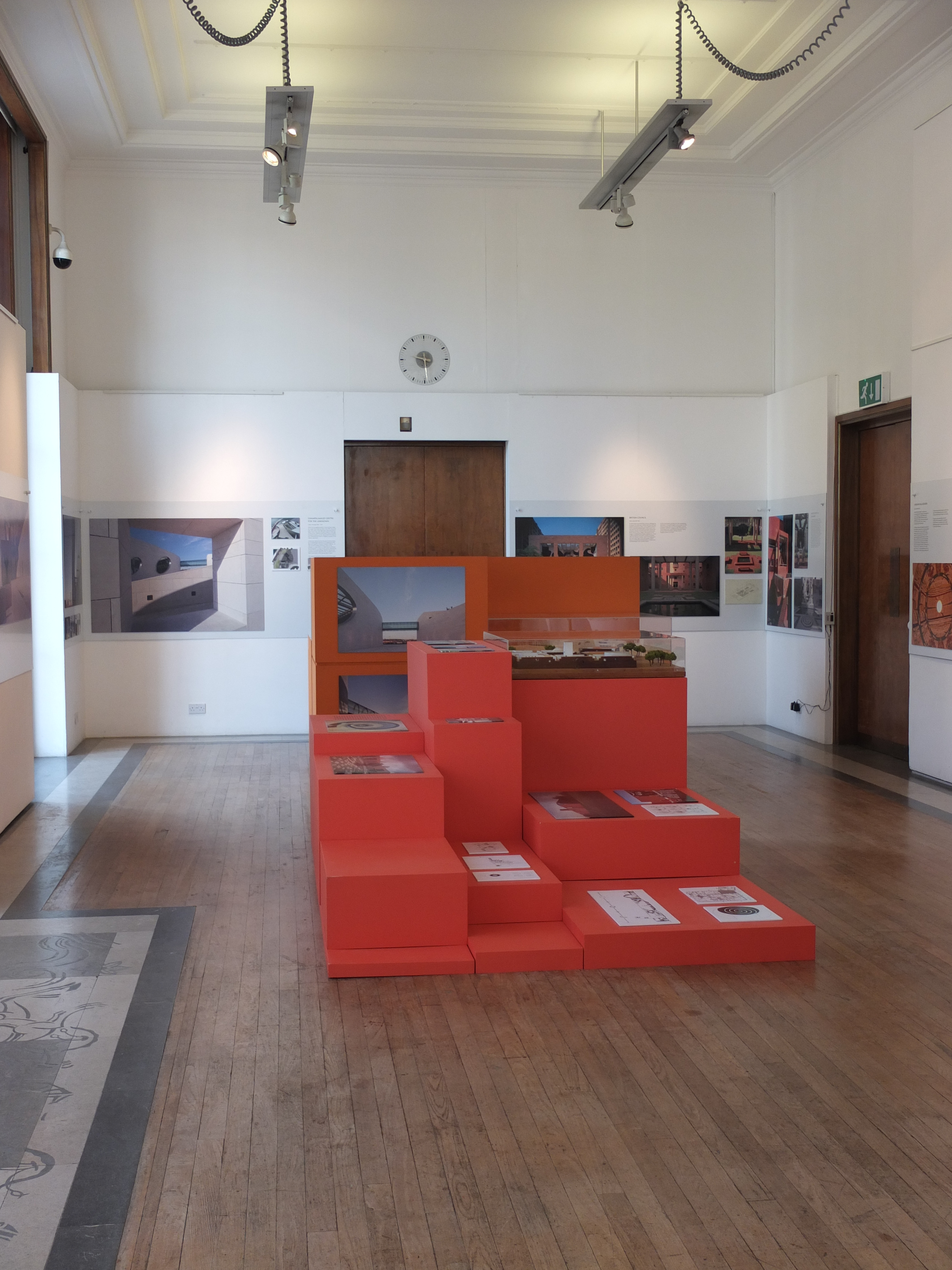
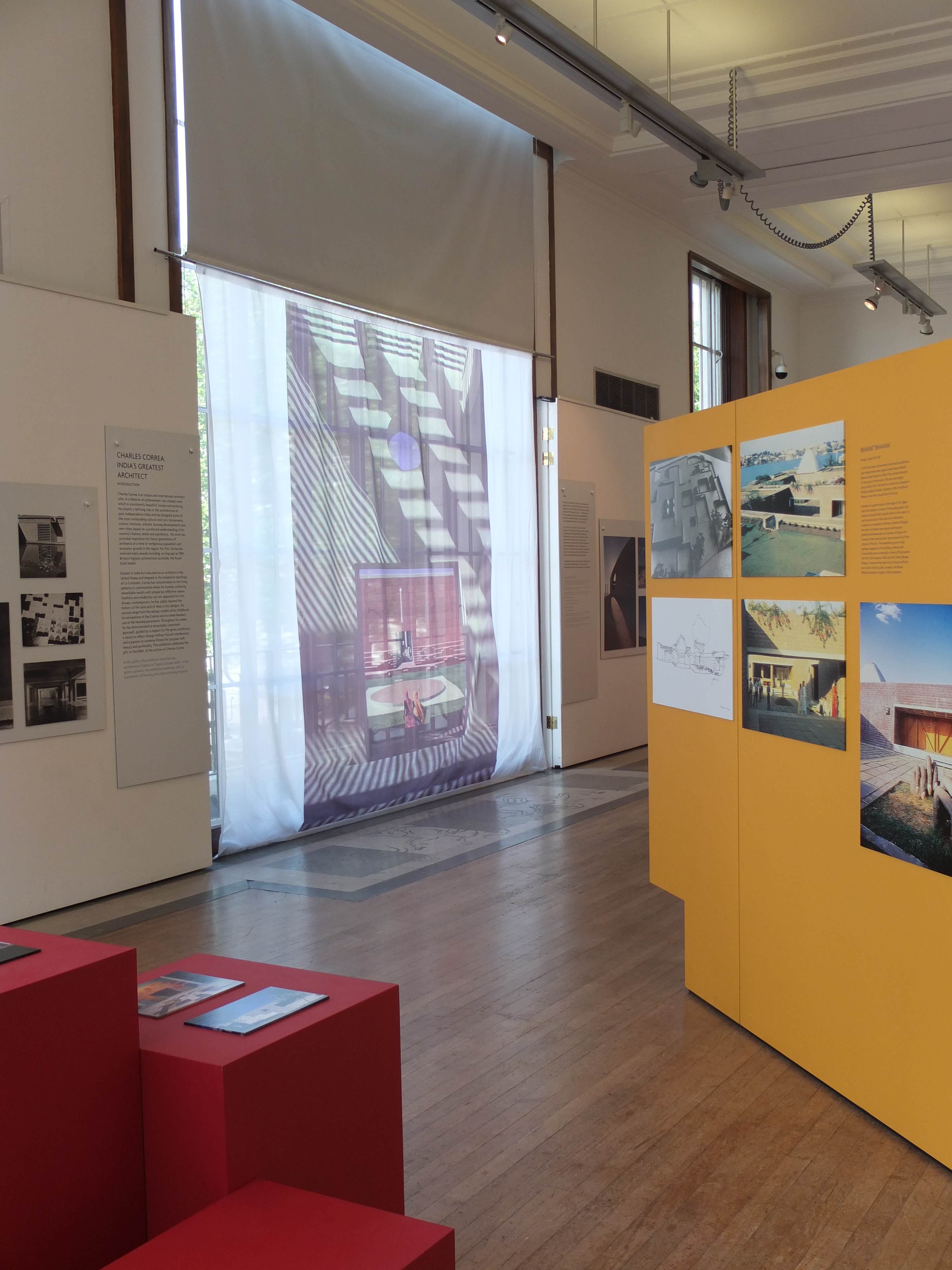
‘Charles Correa India’s Greatest Architect’ exhibition featured at the RIBA, London, as part of its ‘Out of India’ season, that also included numerous events running throughout the summer. Film screenings, discussions, a symposium with Charles Correa, and a lecture by the great man himself will subject the work to an extended period of interrogation where proper debate can ensue.

India has become something of a hot topic, with recent high profile visits made to the country by Prime Minister David Cameron, coupled with numerous television programmes and radio broadcasts, trade delegations and educational visits; the UK is hungry for all things Indian.

DSCF0426 DSCF0427

The exhibition at the RIBA forms part of this renewed interest, but was largely triggered by Correa’s decision to donate his personal archive of over 6,000 artifacts to the RIBA – the largest single donation to their collection by a non-British architect. This fine array of drawings, models and written ephemera spanning from 1958 to the present, promises to be a most valuable resource to scholars and students, and for those unable to visit London, has been digitized in its entirety (more about this later). Correa is at liberty to give his work to whomever he pleases, but the choice of a British Institution, and a Royal one at that, may raise some eyebrows and probably came as a shock even to the RIBA. Correa was born during the colonial era and his work has consistently looked to develop an architecture that was modern, firmly entrenched as Indian, and certainly not European. Despite this, Correa felt that the RIBA would look after the work and ensure that it is properly catalogued and preserved – a feat that sadly would be difficult to achieve in India (a visit to the Chandigarh City Museum demonstrates how Le Corbusier’s drawings have been treated…)

DSCF0429 DSCF0430

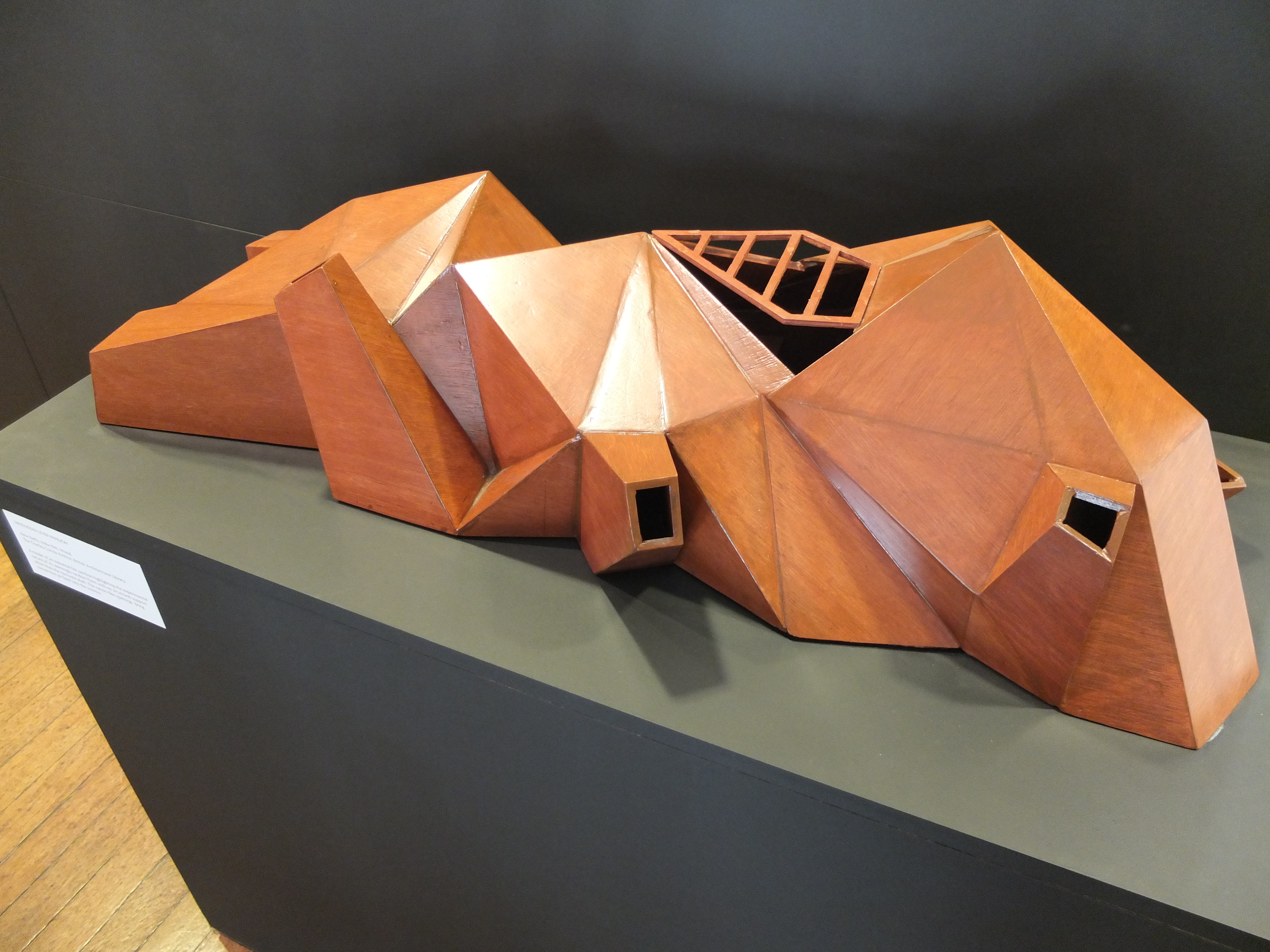
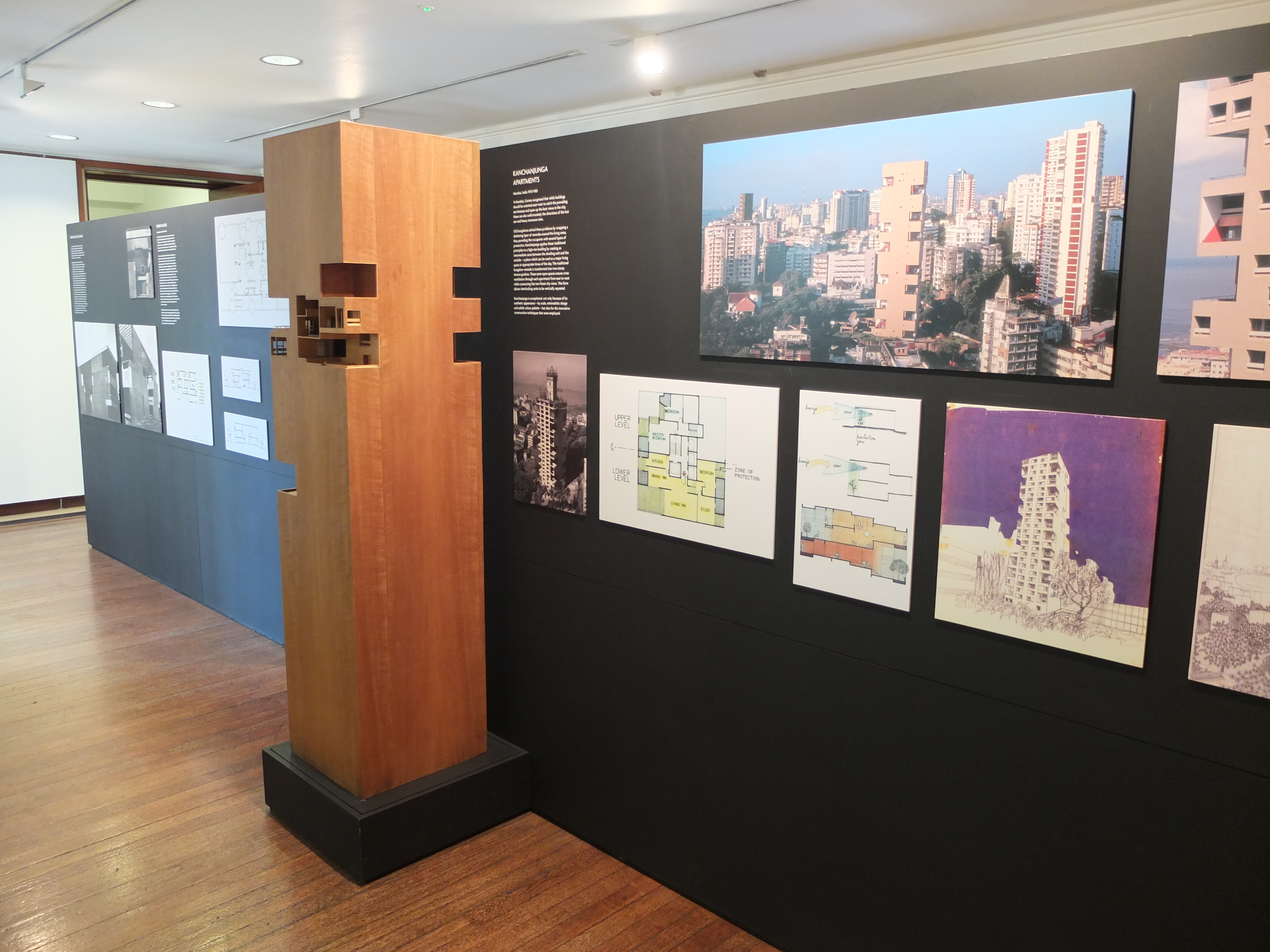
The exhibition, designed by David Adjaye and curated by Irena Murray, is spread over two floors with the lower level including a series of timber plinths painted in the delightful hues of paprika, turmeric and saffron invoking the Jawahar Kala Kendra project. It is a dramatic introduction to the work that leaves one expectant of something really special but sadly the exhibition fails to do justice to this enigmatic architect. Architecture exhibitions are peculiar affairs, not least because the architecture rarely features in architecture exhibitions, instead, we see the machinery created as a result of, or to enable the production of, the artifact in question – what Correa calls the trail left by a snail. The gap between drawing and architecture is especially apparent when viewing Correa’s work; the buildings and spaces (‘the empty centre’ in Correa’s parlance) really need to be moved through, set against an open sky and as Adjaye describes in the catalogue, absorbed through the soles of the feet. His work is not really captured by a rendered elevation or static photograph, nevertheless, considerable pleasure is gained from studying his sketches that go someway in connecting us to the person behind the drawings. Through the pencil lines and coloured crayons we can discern something of the architect who made the marks – but at this exhibition we are not even looking at the actual drawings. Instead, they are scanned reproductions on mountboard. Perhaps this would not matter if they were not so grossly enlarged to the point that they are pixelated. I found this to be most distressing, as when viewed in the catalogue (which is excellent and highly recommended) they look wonderful. As the original drawings could not be displayed due to the lighting at the RIBA it might have been a better idea not to show any at all, or just to reproduce the images as the small drawings that they are, rather than distorting them in this manner. The photographs are more forgiving, but some of them are also pixelated and not really of exhibition quality. Despite these distractions, the models go a long way to make things better. The Hindustan Lever Pavilion model in tropical hardwood is spectacular and still a radical design despite being over fifty years old, and the model of the Kanchanjunga Apartments stands at over 6ft tall putting the apartments at eye-level and immediately showing the vantage points and interiors. The housing section is the real strength of the exhibition, and arguably of Correa’s career – from the ‘Tube House’ and one-off houses in the Ahmedabadian brick and concrete style, through to the courtyard houses of Belapur and the PREVI experimental houses in Peru he has demonstrated how to design dwellings. It is these schemes, along with Correa’s analysis and proposals for Mumbai that put him up there as one of India’s greatest architects (what will the RIBA call the exhibition if Doshi follows suit with his archive? India’s Greatest Architect 2?)

DSCF0432DSCF0436

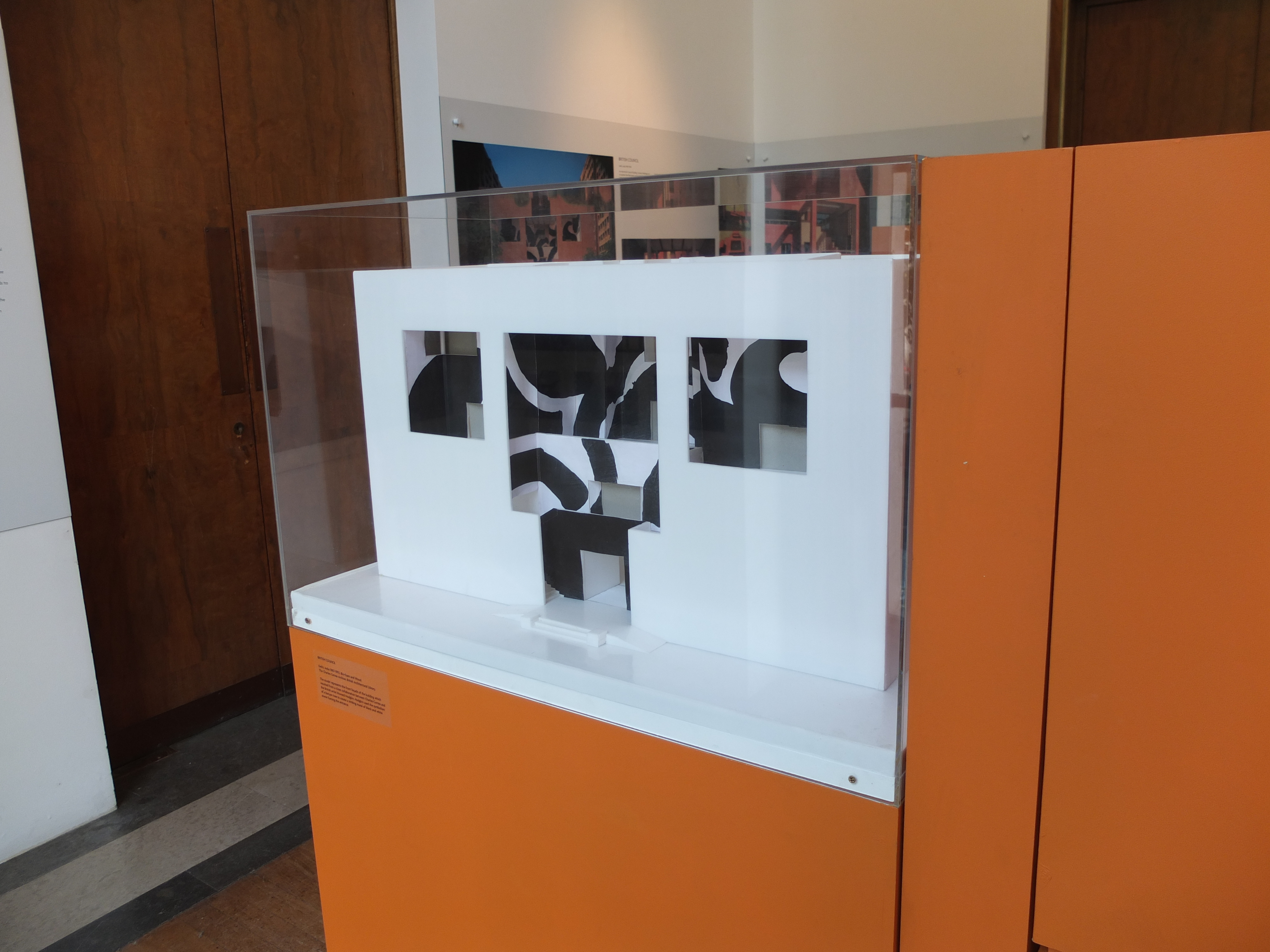
The rest of the content I found lacking and slightly predictable; I was hoping to see some of the less well-known designs, or greater analysis of some of the larger projects. For example, the confrontational LIC building in Delhi is sadly missing from the exhibition – how does that building fit with Correa’s objective of site and context, for instance? In many ways the designer and curator have played it too safe, and other than the outstanding project in Lisbon, Portugal, and the Po-Mo British Council building in Delhi we are not shown much of the playful later work.

The digital archive interface has been carefully crafted and as well as including the entire collection of drawings contains photographs of the models, buildings and scans of magazine articles and books that discuss the projects in question. The digital archive should have played a central role in the exhibition and broken away, at least in part, from the static mode of exhibiting and the passive role of viewing an exhibition – it was the perfect opportunity to project all of his work in a small space and to use the displays to critically examine the work, and perhaps to further explore why Correa might just be India’s greatest architect.

DSCF0431

The catalogue: Irena Murray, Charles Correa India’s Greatest Architect (London, RIBA Publishing, 2013), price £9.95

European Architecture Beyond Europe ; E-Cost Action

The final conference for the ‘Architecture Beyond Europe‘ network has just finished in Palermo, Sicily. We met in the wonderful Scarpa restored Palazzo Chiaramonte Sterri, and as usual it was a very interesting gathering with participants, contributors and audience members hailing from all corners of the world. Six packed sessions covered the Transnational, Development Aid, Tropical Architecture, Identity, Methods and Exile. In addition two keynotes were given by Sibel Zandi-Sayek (William and Mary, Virginia) on the Ottoman-British Networks and Lukasz Stanek (Manchester) on Architects from socialist countries working in Ghana. The full programme is attached here: FC_program_final

DSC_0052 DSC_0120

The network has opened up many new opportunities and collaborative endeavours, as well as a high quality new journal (eager to receive submissions): for more details see:  ABE.

Chandigarh Exhibitions in Canada and Belgium

There are two exhibitions on the architecture and planning of Chandigarh currently on show – one at the Canadian Centre for Architecture, Montreal, and the other by Archipel at Kortrijk, Belgium.

The CCA exhibition is entitled How architects, experts, politicians, international agencies and citizens negotiate modern planning: Casablanca Chandigarh, and has been curated by Maristella Casciato and Tom Avermaete. It runs until 20th April 2014 and a publication to accompany the exhibition is to be released early 2014. I haven’t seen the CCA exhibition, but its extensive use of Pierre Jeanneret archival material promises to open up new vantage points from which we can view this intriguing city.

The Archipel exhibition has been curated following a visit to Chandigarh by 130 Belgian architects who descended onto the city, and captured not only the architecture but also something of the daily life of the place. Using a series of projectors rather than still photographs, the exhibition is constantly in flux as the large images switch from historical details through to the latest buildings, housing and street scenes. Interviews and films are also broadcast and sound recordings captured in India help to transport a little bit of Chandigarh into Europe. In addition to displaying images and sounds of Chandigarh a side exhibition investigates the relationship between the urbanism of Kortrijk and Chandigarh. An extraordinary collection of material has been gathered as a result of the visit to Chandigarh and I hope it can be collated and published.

Chandigarh continues to provoke, inspire and challenge. It was refreshing not to see the original plan of the city critiqued, nor the hero worship of Le Corbusier; rather the exhibition considered how this great experiment has been adapted, modified and inhabited, and celebrates these interventions.

http://www.cca.qc.ca/en/exhibitions/1984-how-architects-experts-politicians-international-agencies

http://archipelvzw.be/agenda/456


Call for Papers: Crossing boundaries: Rethinking European architecture beyond Europe

13-17 April 2014 Palermo

The International network “European Architecture beyond Europe: : Sharing Research and Knowledge on Dissemination Processes, Historical Data and Material Legacy (19th-20th centuries)”, chaired by Mercedes Volait and Johan Lagae, and supported by EC funding through the COST Action IS0904, is opening calls for papers for its final Conference to take place on 13-17 April 2014 at Palermo (Italy).

The conference will have the 6 following sessions:

Transnational studies and cultural transfers” (chaired by Kathleen James-Chakraborty).

Methods and methodologies: Writing the histories of European imperial/colonial architecture” (chaired by Alex Bremner and JoAnne Mancini). 

“Looking eastward, building identities. The architecture of European diplomacy beyond the Mediterranean in the age of Empire” (chaired by Paolo Girardelli and Mercedes Volait).

Tropical architecture” (chaired by Ola Uduku and Iain Jackson).

Architectures of exile: Visions and re-visions of the global modern in the age of the refugee” (chaired by Regina Göckede and Rachel Lee).

Architecture as development aid: Modernization, technical assistance and the design of institutions” (chaired by Tom Avermaete and Kim de Raedt).

The deadline for proposing a paper (300-word abstract) is 1 December 2013. Submissions to the chairs of the sessions should be accompanied by a short biographical note (max. 150 words). Acceptance decisions will be communicated by mid-December. Please note that invited speakers are expected to submit their complete paper by 15 March, 2014, to be circulated among the conference’s participants. Speakers based in countries participating in the Action (refer to the website http://www.architecturebeyond.eu for the complete list) will be able to claim reimbursement of their expenses. A few grants will be available for speakers based in other countries. For further information, please contact the sessions’ chairs or write to is0904@inha.fr.

Transnational studies and cultural transfers

Chaired by Kathleen James-Chakraborty (University College Dublin)

European architects have worked beyond Europe since the time of the Crusades.  Many architectural historians have documented these practices. In recent years particular attention has been paid to architects who emigrated to escape authoritarian regimes and who are widely credited with having brought modernism with them.  Most of this literature, however, floats independently of social science scholarship on transnationalism, and much of it focuses on the movement of forms and theories, rather than on how people structure their own identity in relationship to their experiences of other places and cultures.  Moreover, relatively little of this writing engages the role of the client, although the role of local building cultures is beginning to receive the attention it deserves.  And finally, very little of it is comparative.  What is the difference between Genoese settlements on the Black Sea, for instance, and Portuguese ones on the African coast?

This session seeks papers that rectify this situation. Particularly welcome are contributions that consider current anthropological investigations of transnationalism and theories of cultural transfer and their applicability to architectural history. What can architectural historians learn from methodologies developed largely to analyze more portable forms of artifacts, not to mention ideas?  Also desired are papers that seek to conceptualize the ways in which transnational architectural practice has changed across time.  What, for instance, distinguishes the German architects that came to the United States following 1933 from those who emigrated after 1848?  Papers might also examine the problem of determining what role biographical experience plays in the designs of any architect.   This is particularly important in the case of a profession that is profoundly collaborative, engaging clients, builders, and users as well as designers.  Other questions that might be addressed include what motivates clients to hire architects from other countries and how do these architects operate once they have such commissions.  Are they employed because of technical or stylistic expertise gained abroad, or are other factors at work?  What types of information and ideas travel with them, and under what circumstances are what local conditions taken into account?

Kathleen James-Chakraborty kathleen.JamesChakraborty@ucd.ie

Methods and methodologies: Writing the histories of European imperial/colonial architecture

Chaired by Alex Bremner (Edinburgh School of Architecture and Landscape Architecture) and JoAnne Mancini (National University of Ireland Maynooth)

This session seeks to explore and debate the ways in which we write (and have written) the history of ‘European architecture abroad’, particularly in the context of European imperial expansion. For some thirty years now the study of European imperial and colonial architecture has largely been refracted through the theoretical lens of post-structuralism—mainly appropriated from philosophy, literary  and cultural studies—in the form of the ‘Orientalist’ critique of Edward Said and other forms of Foucauldian discourse analysis, nominally referred to as ‘post-colonial theory’. As powerful and seductive as these modes of analysis may be, and as useful in their opening new ways of seeing and interpreting forms of cultural production such as architecture, they have become formulaic, predictable, and even orthodox. They have also received trenchant and sustained criticism from the wider scholarly community in historical studies (especially outside art and architecture circles) for their inherent limitations.

This leaves us with the question of where the study of European imperial and colonial architecture might turn next.  On the whole, other scholarly and cognate traditions, such as early modern and modern European history, have developed more diverse and wide-ranging approaches to the study of empire and culture, adapting insights from geography, environmental studies, anthropology, and other disciplines; and have devoted significant attention to integral concepts such as networks and agency. Although not necessarily opposed to discourse analysis, these scholarly frameworks—including regional approaches (‘Atlantic’, ‘Pacific’, ‘Indian Ocean’, and ‘World/Global’ histories), network theory, and ‘connected’ histories—provide new and very different insights than those provided by post-colonial theory.  However, just as architectural historians have not fully engaged with scholars in these fields, early modern historians have also been somewhat reluctant to engage fully with architecture and the built environment as agents and repositories of social practice and social change.

Can, indeed should, architectural history engage more with these alternative scholarly traditions and modes of analysis? What can we learn from them, and how might we apply them?  How might architectural historians interact more productively with colleagues in history and historical social science disciplines to encourage more architecturally-informed analysis in those fields?  Or, ought post-colonial theory remain the key concept and frame of reference that underpins our study of the colonial built environment?  This session welcomes papers that address any aspects of these key questions, either by dealing specifically with methodological approaches that enhance, progress, and/or transform our understanding of European imperial and colonial architecture, or by exploring case studies that allow for these methodological concerns to be elaborated in specific contexts. Put simply: where are we, where are we going, and where do we want to be as scholars of the colonial built environment.

Alex Bremner alex.bremner@ed.ac.uk & JoAnne Mancini JoAnne.Mancini@nuim.ie

Looking eastward, building identities: The architecture of European diplomacy beyond the Mediterranean in the age of Empire

Chaired by Paolo Girardelli (Boğaziçi University) and Mercedes Volait (CNRS/INHA)

Embassies are, by definition, representative institutions, but the share of their architectural shelters in this signifying function is a complex and still understudied issue. By transferring a fragment of the nation beyond its frontiers, embassies, consulates and other officially “foreign” architectures engage in a complex cultural dynamic of encounter, estrangement or integration. Symbolic, identitarian and political meanings may be variously inscribed in their architectural fabric; balances in social topography may be altered – all the more when
such buildings were constructed or adapted by European powers in countries with a remarkable degree of geographical/cultural distance. The stylistic heterogeneity resulting from the interactions and constraints inherent to diplomacy is all the more bewildering in such cases.

This session is meant to develop a critical and comparative reflection on a rather neglected aspect of architectural and urban history that informs the global spread of European forms and aesthetics through an unusual lens. It proposes to do so by concentrating on the geography that lies East of the Mediterranean and on places and structures located outside the direct colonial confrontation. We are interested in contributions looking at buildings related not only to the main Western European players, but indeed to Eastern and Central European agency. Empirical as well as conceptual and theoretical research on European diplomatic structures in the Ottoman, Persian and non-colonial Asian geography, as well as in peripheral cities of the Russian empire, can be presented and discussed in this session.

We invite papers assessing the ways in which European diplomacy, international relations, and changing power balances shaped important parts of the built environment outside Europe, in a space/time framework characterized by expanding European penetration eastward and corresponding roughly to the long 19th century and beyond. We are particularly interested in contributions that address the architectural embodiment of encounters and representational strategies within innovative frameworks, exploring new ground beyond the conventional critique of Orientalism. Preeminence will be given to proposals reflecting on the appropriate methods and sources for this kind of trans-national investigation, and addressing the history of diplomatic buildings as a constant reworking of images, styles, spaces and political messages, affecting each other in unpredictable ways.

Paolo Girardelli girardel@boun.edu.tr & Mercedes Volait mercedes.volait@inha.fr

Tropical architecture

Chaired by Ola Uduku (Edinburgh School of Architecture and Landscape Architecture) and Iain Jackson (The Liverpool School of Architecture)

‘Tropical Architecture’, used as a term here to define a particular strain of construction that seeks to address the hot, humid, and dry climes found between the Tropics of Cancer and Capricorn, is inextricably connected with the colonial endeavours of Europe. Traditional scholarship has sought to historicise the canon and to look to early encounters between travellers, missionaries, military engineers and local populations. This seems like a sensible mode of enquiry from which to begin. Participants are encouraged to present research papers that have examined how ideas have travelled, been interpreted and eventually built, with particular interest on the indigenous perspective. We are also however seeking papers that take us beyond the archive; thus in addition to examining records of the indigenous contribution to tropical architecture, what of those forced to live in tropical dwellings, or to occupy schools, courts, and other such buildings? How did they modify or enhance the tropical capabilities of the buildings they occupied and what recorded or pictorial evidence do we have that shows what they thought of their surroundings? Finally, and importantly we are interested in the domestic setting; what constituted the ‘everyday’ what were the female, (and possibly youth) perspectives, on life in these new tropical dwellings. Also how was environmental comfort and hygiene, evaluated by local residents, as compared with the plans and expectations of the tropical research establishments in the home countries?

Tropical Architecture is a blunt, but useful term. Can we begin to draw out some revealing tributaries? The architecture of Port Cities and ‘sailor towns’, will inevitably vary to that of the hinterland, hill station, administrative centre or desert. What about the island, archipelago, peninsula, and mainland as specific places of exchange, encounter, settlement and isolation- can we begin in a more concerted manner to consider the architecture of these territories and conditions whilst thinking about the tropical? The architecture of trade, railways, stations, warehouses, dock walls and shipping offices all need further investigation.

Tropical architecture ‘at the edges’ is also pertinent; beyond the cosmic boundaries imposed by Cancer and Capricorn, what happens at the edges of the tropical – the subtropics and other such regions that form the imagined boundary. Is the architecture of these almost-tropical places of note, and how does it borrow or contribute to the broader debates. Other boundaries seem to exist at The Americas and Caribbean; they have not featured to the same extent as other geographic areas in recent scholarship. Is there a reason for this? Is the architecture of Rudolph and Polevizky in Florida, or Ossipoff in Hawai’i, or Kurchan and Hardoy in Buenos Aires not the right type of tropical architecture, or is there simply less to say about these, often glamorous, projects or places?

Biography is a contested historiographical method, but can we look more closely at the indigenous architects who have contributed to this canon often working alongside European architects, or should we accept that they should retain their anonymity in light of our concerns about biographical narratives? Equally should we continue to explore the life stories of Europeans who worked in the tropics? Should we be placing them more carefully within a broader narrative? Or indeed when does biography become hagiography – to what purpose and for what audience is it really meant.

Colonies within colonies, or neighbouring territories may offer new insights. For example, was the French Indian colony of Pondicherry culturally isolated from its surroundings, or can were discern ‘knowledge transfers’ and modes of exchange? How did the French differ in their approach to tropical design to the British, or Portuguese in Goa, for example? Taking this premise to its other extreme, what characterises early Indian labour settlements in Durban, or Chinese settlement in areas like San Francisco on America’s Western Seaboard, or West Indian/returnee African settlements in Sierra Leone, Liberia and other countries on the West African coast.

Ola Uduku o.uduku@ed.ac.uk and Iain Jackson Iain.Jackson@liverpool.ac.uk

Architectures of exile: Visions and re-Visions of the global modern in the age of the refugee

Chaired by Regina Göckede (BTU Cottbus) and Rachel Lee (TU Berlin)

The emergence of what is today known as international architecture is to a large extent related to the global impact of exiled European architects, who, scattered throughout the world, contributed decisively to its theoretical debates, institutional formations and built manifestations from the early 1920s onwards.

The historiography of exiled modern architecture has long focused on cases of purportedly successful and unidirectional cultural transfer as represented in the master narratives of prominent US immigrants such as Walter Gropius and Mies van der Rohe. The dominant focus on individual biographies and histories of linear stylistic innovations has all too often overlooked the importance of discrepant discursive contexts (material and non-material alike), marginal geographical destinations, the effects of critical self-reflection, as well as the numerous tragedies of loss, disruption and failure under the conditions of forced dislocation. In the last two decades, there have been, however, several important studies that have contributed to a much more complex understanding and significantly extended knowledge (temporal as well as geographical) of the fragmented dynamics of architects’ and urban planners’ exilic dislocations (including re-migrations and transmigrations) and modern architecture and planning. In addition, new approaches from the fields of post-colonial and cultural studies have stimulated the emergence of conceptually de-centered and ideologically de-nationalized perspectives.

This session focuses on the intersection of exile and architectural practice as a historical phenomenon in an increasingly globalizing world. It seeks to re-examine both the exilic histories of our architectural present and the concept of exile as an analytical tool for interpretively grasping the so-called globalization of modern architecture.

We invite contributions by historians of architecture and art history as well as by scholars from related fields such as literary studies, anthropology, human geography and political history. Papers can address the many individual lives and works of 19th and 20th century exiled European architects with a view to their role in the transformation of international architecture, trace (discursive) modes of production and reception (including non-European resistance to Western cultural hegemony), test specific (historical) experiences for links with and relevance to current, or possibly earlier, exilic modes of planning and building, or investigate the research field’s historiographical overlaps and collusions with related interpretive paradigms like diasporic, (trans-)migrant, (post-)colonial, transnational, cosmopolitan, global, or international architecture. We are particularly interested in comparative perspectives and theoretical-methodological approaches that consider temporal/geographical variants, discrepant political-ideological conditions, and institutional and personal networks. We also invite papers that explore exilic careers of non-European architects within Europe or analyse the architecture produced, commissioned or inhabited by exiles who were not architects.

Regina Göckede goeckede@tu-cottbus.de & Rachel Lee rachel.lee@gmx.net

Architecture as development aid. Actors, networks and mechanisms in the design of institutional buildings in the postcolonial global South.

Chaired by Kim De Raedt (University of Ghent’s Faculty of Engineering & Architecture) & Tom Avermaete (Delft University of Technology)

This session deals with the theoretical and practical architecture expertise which emerged through development aid in the ‘global South’ after decolonisation. By looking specifically at development aid organisations, the aim is to unravel mechanisms of architecture and knowledge production specific to the postcolonial context, characterized by shifting political and economic conditions as a result of the Cold War. Through a particular focus on the design of institutional buildings (schools, universities, hospitals, etcetera), the session seeks to produce a mapping of postcolonial networks of expert(ise)s which substituted former métropole-colony relations.

Questions that could be addressed by the papers are: How did a specific type of ‘global expert’ arise through development aid? What was the role and position of such architect-experts within the highly institutionalized aid bodies they worked for, and to what extent could they operate autonomously within those organisations? What kind of architectural discourse was implicitly or explicitly constructed by development aid bodies? How did this lead to a particular approach to the design of institutional buildings? What was the role of African players in the production of those buildings?

Ultimately the session seeks to understand the specificity of the architecture production realized through development aid, and recognize the particularity of the role of the ‘architect-expert’ within aid organisations. This will allow identifying the continuities and shifts in discourse, mechanisms and architectural language with respect to the production of institutional buildings in the late colonial period, while also tentatively putting the increasing globalisation of the architecture practice today into a historical perspective.

Kim De Raedt kim.deraedt@ugent.be & Tom Avermaete T.L.P.Avermaete@tudelft.nl


Liverpool India Fellowships

Life changing, world shaping

The University of Liverpool has recently launched a search for up to 10 outstanding early career and established researchers from India to spend 3 – 6 months at the University of Liverpool.  The fellowships offer funding for living costs plus a travel grant.  Applications will be welcomed across all three Faculties; referencing one of the seven research themes (http://www.liv.ac.uk/research/research-themes/) may assist you.

Full details of the programme can be found at: www.liverpool.ac.uk/research/liverpool-india-fellowships/, closing date for applications is 6th December 2013.

Kashmir House, Prithviraj Road, Delhi (1927-29)

Richard Butler

Chetwode photo 1     Chetwode photo 2

Main entrance (left) and South façade, showing loggias (right), Kashmir House, Prithviraj Road, Delhi (1927-29). Photographed by Penelope Chetwode, c. 1931.

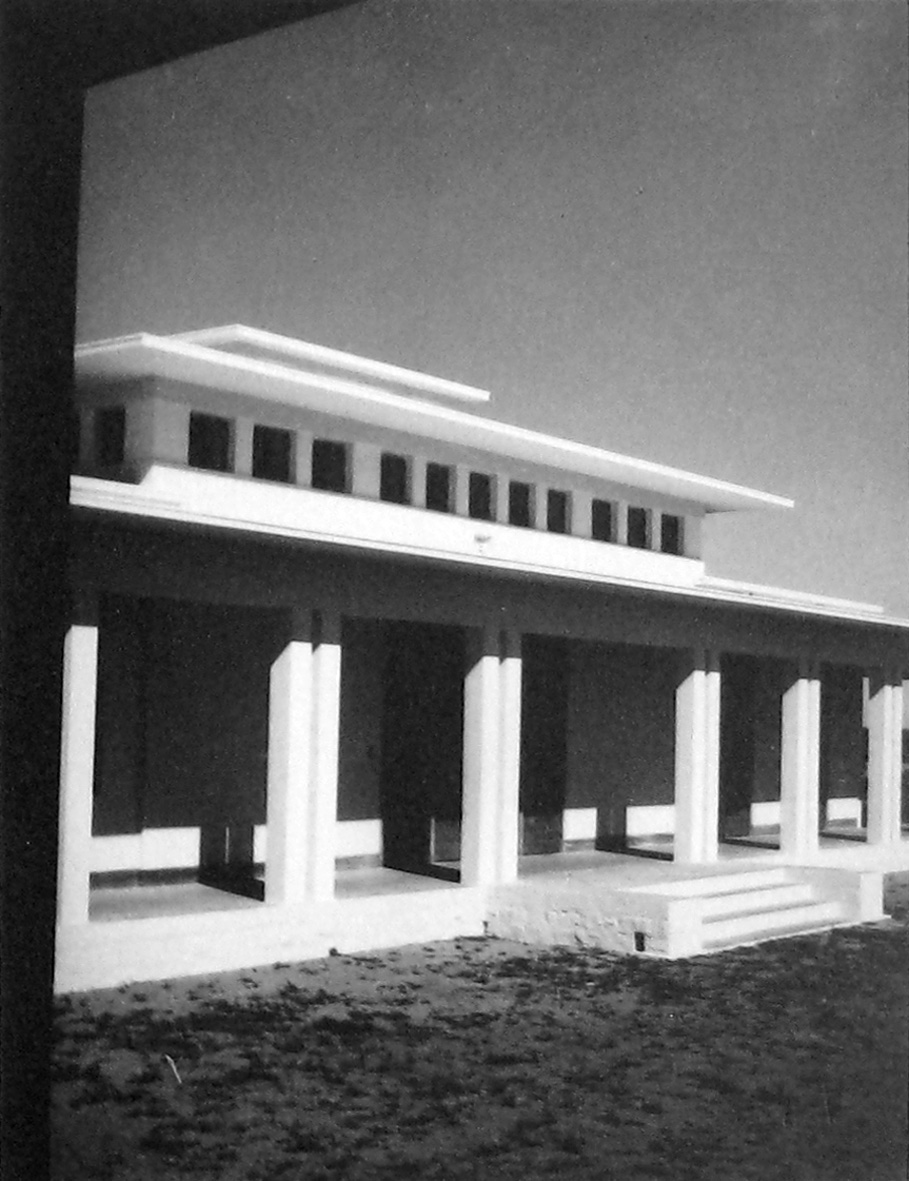
Designed by Walter Sykes George (1881-1962), with significant early input from Edwin Lutyens, Kashmir House is one of Delhi’s most engaging inter-war private residences. The house was designed for a wealthy Hindu banker, Sultan Sing, but his untimely death before the project was completed resulted in it being sold to the maharajah of Patiala, and later to the state of Kashmir.

Sing first asked Lutyens for a design in 1927, but relations between the two were strained and he soon approached George, who maintained a close friendship with Lutyens (his greatest influence). ‘I would like you to build a house for me’, he said, ‘to show what an Indian gentleman’s house should be’. Lutyens eventually backed out of the commission on the grounds that George, having lived continuously in India since 1915, would ‘understand better how an Indian gentleman liked to live’ (George’s words). ‘The banker’, he added, ‘wished to entertain in western fashion, and to have western guests to stay with him, while he, and his family, lived in orthodox Hindu fashion, and he gave dinners in that fashion.’

The building is a fascinating hybrid of Indian and western traditions. Almost all the important rooms are located on the ground floor – only bedrooms are upstairs. The space is laid out around an enclosed courtyard with open loggias to the south. A ground-floor corridor runs the entire length of the house, connecting the ‘western’ and ‘orthodox’ dining rooms, the smaller dining room, the drawing room, some of the bedrooms, and the main west entrance. In an effort to keep different kinds of foods separate – meat especially – the ‘Hindu’ and ‘English’ kitchens are in completely separate wings, though communication is possible between the two dining rooms, when required. There is also a Puja room for daily worship, and segregated entrances allow a more private entrance for the family and their servants, in contrast the more public porch or the trio of loggias, which open onto a garden.

Kashmir House plan first floor Kashmir House plan ground floor

Floor plans (with new labels superimposed), Kashmir House, Delhi. Originally published in Walter George, ‘The Architecture of Walter George’, Design (Bombay) (Sept., 1960)p. 21.

George used small windows and thick walls to counter the effects of the hot climate. The use of a courtyard and south-facing loggias meant that all the ground floor bedrooms, including the principal ones, are shaded and lit indirectly. Furthermore, the upstairs windows are sunken and mostly hidden from view from the garden and entrance driveway, which would have ensured privacy for Sing’s family, and the upstairs was likely reserved for family quarters. Curiously, George said he was aware of what Frank Lloyd Wright was doing at this time in America, but he could not copy them in India as both English and Hindu uses ‘require privacy, and there is little privacy in Wright’s houses.’

Kashmir House still exists, though much altered. With Sing’s death went the opportunity to use the building’s plan as originally intended.

..

More information on the architecture of Walter George can be found in Richard Butler, ‘The Anglo-Indian architect Walter Sykes George (1881-1962): a Modernist follower of Lutyens’, Architectural History, vol. 55 (2012), pp. 237-68.

All images reproduced courtesy of Professor Gavin Stamp (original Chetwode photographs now kept by RIBA, London).

Designing Buildings in 15 Minutes: A day in the life of Otto Koenigsberger, Government Architect to the Govt. of H.H. the Maharaja of Mysore

by Rachel Lee

The following extract is from a private letter written by the architect, planner and educator Otto Koenigsberger (1908-1999) to his family in 1940.  He probably typed it in his small room in the bungalow he shared with the Brinitzer family at 42 Infantry Road, Bangalore, India. Like the Brinitzers, Koenigsberger, a native Berliner with a Jewish background, was in exile.

  1948_Koenigsberger and colleagues at the PWD

Due to a fortuitous family connection, in 1939 Koenigsberger had been contracted to work as an architect in Princely Mysore, a South Indian state with a limited amount of independence from British colonial rule. Thus his boss was not a member of the British Raj, but the ambitious Dewan (Prime Minister) Mirza Ismail, whose favourite pastime was building. In November 1939 Koenigsberger was promoted to Government Architect, the highest position for an architect in the state. As the humorous extract reveals, although his job kept him very busy, it did not prevent Koenigsberger from trying to build up a private practice or enjoying himself in his new home . . .

“I shall give you a short review of one day in the life of the Government Architect to the Govt. of H.H. the Maharaja of Mysore.

My boy appears at 6:30 am in my room in order to wake me up. This has the result that I go on sleeping till quarter to or quarter past seven. Which of the two depends on the situation whether I must go and see the Dewan in his Bungalow or not. He belongs to those immorally hard working people whom I thoroughly dislike and has already one hour of hard work finished when I come to see him at 7:30. The next item is an enormous breakfast at 8 and instruction of my private draughtsman at 8:30 – Yes I have a private draughtsman and ‘secretary’. He is an Angloindian with the nice name Eric J. Crane, is rather shy, not too bright, and of course very unreliable. He comes for three hours in the morning and three in the afternoon and tries hard to learn how to do architectural drawings, so that I may be well armed and prepared when the great wave of private work comes of which I am daydreaming.

If there are no other inspections (on most days there are, my average is about 30 miles a day inside Bangalore only) I go to the office between 9 and 10 in order to have some quiet hours before my six men arrive at 11.

1940_Serum Institute

The morning post brings about 5 to 6 requests for designs per day, say one hospital, one bungalow for an officer, one railway station, one cinema, and a number of smaller tasks and alterations. In addition comes a tray full of files, for all building plans, small or big must go through my hands before they can be sanctioned by Govt. In Europe I would have worked about a week to design a hospital and about another week or fortnight to prepare the drawings. Here the main idea and the sketch must be ready in ten to fifteen minutes and then the assistant or draftsman must prepare the plans within two to four days. Of-course these designs cannot be so well worked out as mine were at home. To keep up at least a certain standard of exactness and efficiency I must permanently go round from one to the other to correct the plans and to tell them what they must do. In the intervals between my wanderings from one drawing board to another I try to attend to my files, to answer letters, and to make a number of sketches and small plans which I can finish myself in less time than it would need to explain to somebody else how to do them.

1940_Dispensary Bangalore

At 1:15pm I go home for lunch and for new instructions for my home-draftsman and back to the office at 2 or 2:15. The afternoon is usually filled with visitors who want all sorts of technical instructions or come discussing of new building schemes. Of-course only a very small percentage of our many designs will be built, and if they are it will take at least half a year or a year till they are started. That gives the Dewan who plays the role of ‘Bauherr’ [client] in this game ample time to ask for new schemes and accordingly revised designs.

Usually I am home at 6 in the afternoon. I sit down for a late but very big tea which usually takes about half an hour, not because I eat so much, but because I am just lazy and enjoy my rest. Every second day a Kanareese lesson follows from 6:45 to 8 or 8:15. If there is no lesson this time should be spent with learning what we had the day before, but so far I have always found an excuse not to learn so that the result of a fortnight of lessons with a very good teacher is very poor.          

1939_Municipal Swimming Pool

Dinner is celebrated from 8:30 to 9:30 when we hear the news from England. As it usually is a very good and rich dinner you can imagine that there is not much energy left for letterwriting in the evening.          

This description of my life is unadequate in two points: (1) it sounds boasting and at the same time complaining. But it is certainly not meant to do so. I thoroughly enjoy my work. I only tried to explain that a day of permanent designing is somewhat exhausting. (2) It gives the picture of rather a dull and narrow (English for ‘spiessig’) life. But actually I am meeting interesting new people nearly every day, studying a most interesting country, reading a few good books (for instance the latest Aldous Huxley ‘After many a Summer,’ which I enjoyed very much), seeing a film once in a while and hearing a good deal of Indian and European (gramophone) music.”[1]

Note: Although Koenigsberger’s native language was German, the outbreak of World War II forced him to communicate with his family, who were by then living in the USA and UK, in English – letters in German were censored or confiscated.

 The images are reproduced with the permission of the Koenigsberger family.

Email Contact: rachel.lee@gmx.net


[1] Koenigsberger Papers at the Jewish Museum Berlin: Extract from a letter from Otto Koenigsberger to Kaethe Koenigsberger dated 7 February 1940