Archive

Global Architecture

Dar es Salam Tour

Annika Seifert kindly took a group from the Urban Narratives (Simulizi Mijini) Symposium on a walking tour of the city. We met at the Old Boma and after a briefing on the history of the city plan we set off taking in the Post Office, and Anthony Almeida’s modernist St. Joseph’s school and the colonial White Fathers’ house.

DSCF1191

L: St Joseph’s School. R: White Fathers’ House

DSCF1193

National Bank of Commerce

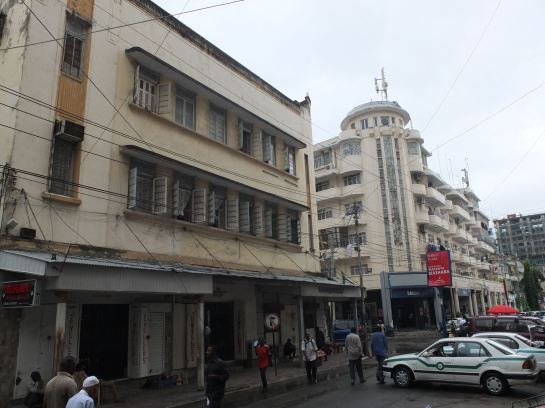
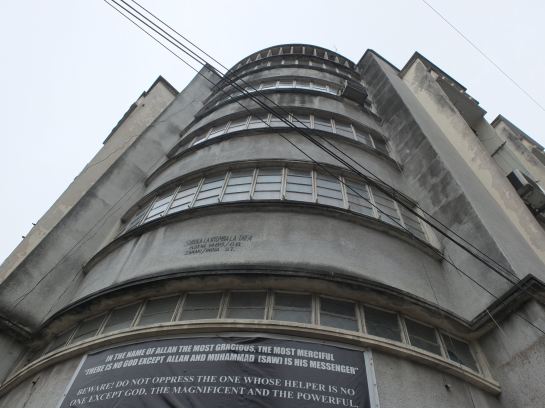
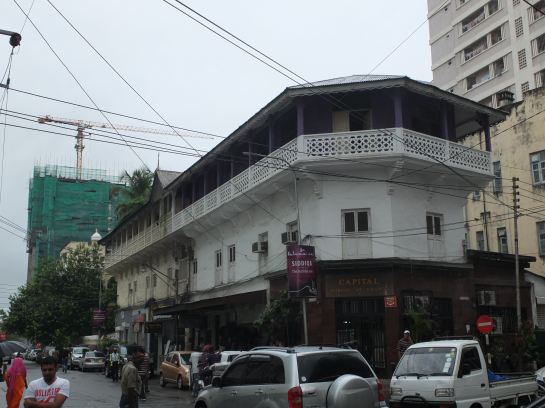
Further along the dock road is the National Bank of Commerce designed by Charles Alfred Bransgrove (who also designed the British Legion Offices in Dar, 1952). From here we visited Walter Bgoya’s wonderful book shop (picking up a copy of Dar es Salaam. Histories from an Emerging African Metropolis, Mkuki Na Nyota Publishers,2007) and then venturing into the wonderful commercial district that contains outstanding architecture from the inter-war period. Some of the buildings display hints of Indian influence, others definitely deco, sweep around the corner sites with great confidence.

DSCF1223DSCF1217DSCF1211DSCF1207

From the city centre we crossed the old colonial cordon sanitaire (now an ‘open space’) to venture into the Kariakoo district to take in the brutalist market designed by Beda Amuli.

DSCF1238

Inside Kariakoo Market

DSCF1230

Exterior of Kariakoo Market

Many thanks to Rachel Lee and Diane Barbé from The Habitat Unit at TU Berlin for organising this event. Great Job!

Urban Narratives (Simulizi Mijini) Symposium

Urban Narratives (Simulizi Mijini) Symposium was held at the British Council building in downtown Dar es Salam on 1st April. Accompanying the event was a small exhibition of short stories – compiled by Masters students from TU Berlin and Ardhi University. During the past four weeks the students have been exploring and mapping the city as well as interviewing and recording the everyday and extra-ordinary narratives of life in the city. The result is a very special collection with some insightful, and often deeply moving, recollections. The stories should be on-line soon and we’ll post a link to them.

The symposium was arranged in 15-minute presentation slots, so the pace was fast and varied, starting with the international perspective (Jackson on India and Ghana, Lagae on curating an open air architecture museum in Lumbumbashi, Adanali offering a wonderful but at times disturbing insight into the plight of Istanbul, see http://reclaimistanbul.com).

IMG_0182

Yasar Adanali presentation

Part 2 considered the Eastern and Southern African context with Hannah Le Roux considering the notion of movement and heritage in South Africa and Johannesburg in particular. She also shared a wonderful image from the South African Automobile Association revealing the road networks that traversed the continent in the 1950s. Joy Mboya spoke about a festival created by local communities called Nai ni Who http://nainiwho.co.ke. This was followed by a discussion of the neighboring island of Zanzibar by Muhammad Juma, and the problems of preserving and building, in and around the historical context of Stonetown. Zanzibar was explored further after lunch with a project that is seeking to catalogue and document the built fabric of stonetown as well as associated memories and stories.

IMG_0185

Colonial Road Networks of Africa

Annika Seifert shared the vision for the new DARCH building and exhibition spaces located in The Old Boma, including how the material was selected and curated (https://www.facebook.com/DARCHTZ/). The new museum located in a historical colonial building, located opposite the Zanzibar ferry terminal, will be a great resource for the city with its roof top café and ‘public space’.

DSCF1183

The Old Boma

The session and roundtable was wrapped up by Walter Bgoya, who kept things lively, very entertaining and sharply to the point. It was a very enjoyable day and stoked lots of ideas for future research as well as fuelling the desire to take action. As Muhammad Juma reminded us, it is never too late to start campaigning for heritage and making the case to protect and preserve our built environment.

INVITATION – International Symposium on Urban Heritage: Simulizi Mijini/Urban Narratives

The Dar Centre for Architectural Heritage (DARCH) in collaboration with the Technical University Berlin and the Architects Association of Tanzania have the pleasure of inviting you to participate in the:

International Symposium “Simulizi Mijini/Urban Narratives“

1 April 2016, 9:00 – 17:00 hrs
@ The British Council, Samora Avenue
urban narratives
Urban Heritage: What is it? Whose is it? Who defines it?
How can it build inclusive cities?
We will look at international examples of inclusive heritage practices and discuss their relevance for the context of Dar es Salaam.
The detailed programme will follow soon, kindly share with your network and RSVP to darch.tz@gmail.com
We will be delighted to welcome you to the event!
Sincere regards,
Aida Mulokozi
CEO DARCH

Fabrications Journal: Tropical Zone: people, practices and pedagogies (27:2)

Two decades of architectural debate on environmental issues have cast new light on climatic responses, with very different interpretations of the meanings and constructions of the ‘tropical’ zone. Colonial, modernist and regional responses have been scrutinised as genealogically linked. Scientific discourses, cultural prejudices and social approaches intertwined to produce a resilient dialectic that has been reproduced, augmented or interrogated in research. This issue of Fabrications invites contributors to address the theme of the tropical zone as an architectural construct created and disseminated by a range of actors including educators, practitioners and their clientele, and state and institutional networks. Who were they/what were these and how did they approach this subject? What was their contribution to architectural production? How was that contribution received? How is it viewed retroactively in the light of new scholarship?

This issue anticipates papers that interrogate the term, its application and its imprint in regional histories, during the colonial and modern periods and after decolonisation in environments identified by the descriptor ‘tropical’. However, it also seeks new definitions of the term and its usage, in the context of contemporary environmental debates. It looks for new analyses of discursive trends from metropolitan centres of imperialism, from former colonies and from regions that regard themselves as climatically distinct. This issue is also open to papers that discuss how an understanding of the tropical zone relates to green architecture and new techno-scientific building processes, both in terms of aesthetics and politics.

Guidelines for Authors

Papers should be submitted online at  www.edmgr.com/rfab  by 10 October 2016, 6-9000 words, full details at http://www.tandfonline.com/toc/rfab20/current

New Research: Gyoji Banshoya (1930–1998): a Japanese planner devoted to historic cities in the Middle East and North Africa, published in Planning Perspectives by Kosuke Matsubara

Gyoji Banshoya (1930–1998) was a Japanese urban planner whose life-work was urban planning in the Middle East and North Africa. The purpose of this paper is to provide an overview of his work, which still remains unknown. His early masterpiece, the ‘Square House’, shows how he was influenced by Kiyoshi Seike to apply historic spatial composition to realize width and convertibility in low-cost housing.

Gyoji Banshoya
K. Shinohara, M. Yamada, K. Seike, G. Banshoya, and S. Miyasaka. Source: Hayashi, “Seike Kiyoshi to Gendai no Jukyo Design,” 6

Following this, Banshoya studied under the supervision of Gerald Hanning and George Candilis at Ateliers de Baˆtisseurs in Paris, and went to Algiers to engage in the study of ‘evolutionary habitat’. As a United Nations Development Programme (UNDP) expert, he began working with Michel Ecochard in 1962 in Beirut, Damascus, and Aleppo. They were responsible for the elaboration of master plans for these three cities, and that of Damascus still remains as a legally active master plan today. Coupled with the Syrian political struggle since the 1980s, there has been some reaction against their modernist policies. However, the case is made for a detailed examination of Banshoya’s work, and re-evaluation of its legacy for the urban planning history of the Middle East and North Africa.

You may read the full article here: http://www.tandfonline.com/doi/pdf/10.1080/02665433.2015.1073610


EAUH Helsinki 2016

European Association for Urban History 2016 Conference: 

Reinterpreting Cities

24-27 August 2016, Helsinki, Finland


CALL FOR PAPERS

Deadline: 31 October 2015

Session:

M19. Settler Cities: A Useful Concept to Reinterpret Transnational Urban History?

In the opening lines of his massive Replenishing the Earth: The Settler Revolution and the Rise of the Anglo World, 1783-1939, James Bellich presents a challenge to historians eager to reinterpret cities in a transnational framework: do cities like Chicago and Melbourne on opposite sides of the planet share characteristics by virtue of their foundation and political rule by white settlers intent on dwelling permanently upon lands forcibly taken from their indigenous inhabitants?
This panel will explore this question by calling upon scholars to reflect on the concept of “Settler Cities.” What defines such a city? Are their clear boundaries, or does the definition involve a subtle degrees of separation form the broader category of colonial city? Are there broad commonalities in the histories of these cities that merit singling them for scrutiny as a group? Are they best seen as a special subset of colonial cities or is there a way in which they expand or transcend that long-used concept? Are there webs of connections between these cities and between them and the imperial metropoles that make this concept especially useful as a subset of the new subfield of transnational urban history? What if we go beyond Bellich’s focus on the “Anglo World,” and consider Algiers, Elizabethvillle/Lubumbashi, Windhoek, Batavia, Jerusalem, and even Mexico City or Rio de Janeiro in the same universe as Cape Town, Chicago, Vancouver, San Francisco, Belfast, and Sydney? Are there non-western settler cities? Why did the settlers in some cities abandon their project of settlement while others stay, helping to cause some of the most intractable conflicts on earth?
Participants should not only bring their research on individual settler cities to the table, but also contemplate several themes underlying the concept of settler cities: especially dense connections and flows between these cities and between them and metropolitan hubs; the diversity of flows between these cities, including not only people, money, ideas, and urban practices, but also jurisprudential systems, organizational forms, urban economic structures, group identities, and political cultures; especially complex forms of urban politics that includes conflicts between settlers, between settlers and metropolitan governments as well as with indigenous people; real estate practices involving people who plan to invest in urban land for future generations unlike the more transient European populations of non-settler colonial cities; and interventions in urban spatial politics that include especially complex forms of segregation and law-of-conquest authoritarianism.

Keywords:
colonial cities, segregation, settler colonies, transnational urban history, urban politcs

Period:
Modern

Type:
Main session

Session organisers:
Carl Nightingale, University at Buffalo SUNY, United States of America
Vivian Bickford-Smith, University of Cape Town, South-Africa
Johan Lagae, University of Gent, Belgium

EAUH Helsinki 2016

European Association for Urban History 2016 Conference:

Reinterpreting Cities

24-27 August 2016, Helsinki, Finland


CALL FOR PAPERS

Deadline: 31 October 2015

Session:

Women on the Edge: Mobility and Regionalism from the Margins

 Leading Question: How did transnationally mobile female actors engage and shape the development of a regionalism discourse in the fields of architecture and planning in the twentieth century?

From the mid-twentieth century, the expanding discourses on regionalism in a globalizing field of architecture championed and eventually canonized the works of architects such as Charles Correa, Geoffrey Bawa and Muzharul Islam. In addition to working in emerging nation-states, the family backgrounds, educations and client bases of these architects ensured that they were actively involved in powerful transnational networks.

In this session we will investigate the significance of such transnational mobility in the development of the regionalism debate, shifting the focus critically from canonized male actors to “marginal” female actors—opening this term and the actors it may describe as platforms for debate—including architects, planners, patrons, and users, in order to explore the fringes of architectural and planning history. We aim to find a more inclusive angle from which to examine connections between transnational mobility, regionalism and local lived environments, as well as the geopolitical, social and economic events and processes that catalyzed their intersection.

As a factor of globalization that accompanied the modern colonial and postcolonial moments—whether a function of privileged access to international networks or the result of forced migration—transnationalism and an emerging landscape of cosmopolitan sites offered women new proving ground outside established social, cultural, and commercial spheres. We are particularly interested in the modalities of this peculiar confluence of labor, politics, and culture, noting as examples the practices of Jane Drew in West Africa, Catherine Bauer in India, Minnette de Silva in Hong Kong, and Erica Mann in Kenya, which were contoured by transgressions of the borders of colonies and new nations. We also see that the transnationalism of certain female figures—Jacqueline Tyrwhitt, Sibyl Moholy-Nagy, Margaret Michaelis—resulted in their profound discursive engagement in modernist debates on regionalism and vernacular or everyday architecture. By studying village housing in the Gold Coast and anonymous architecture in North America and Europe, establishing cottage industries in rural Kenya, or writing histories on Asian regional architecture, many of these agents operated independently of the expected dialogical frameworks between colony and postcolony.

We seek papers that explore the roles, practices, and networks of transnational female actors from the margins; the reception and transmission of their work; and their imbrication with architecture and urbanism discourses on regionalism and the vernacular in the twentieth century.

Keywords:

gender, global south, mobility, postcolonial, regionalism

Period:

Modern

Type:

Specialist session

Session organisers:

Anooradha Iyer Siddiqi, New York University, USA

Rachel Lee, TU Berlin, Germany

Submission Guidelines:

  • Paper proposals can only be submitted online. Proposals and texts sent by post or email will not be considered. To submit a paper proposal, please create a user account on the abstract system on the EAUH2016 website https://eauh2016.net/.
  • Abstracts of paper proposals should not exceed 300 words.
  • Deadline for paper proposals submission: October 31, 2015
  • Notification of paper acceptance: December 15, 2015

The 20th Century Urbanism and Landscape in Africa conference recently held at the Edinburgh School of Landscape Architecture (ESALA), University of Edinburgh. It took place from 7 to 8 October, and focused on the subtheme of ‘Research Challenges and opportunities’.

The first day of the conference was dedicated to presentations by the four Key Note speakers, who were Dr Rexford Oppong of KNUST Ghana, Prof Luc Verpoest of KU Leuven, Prof Johan Lagae of Ghent University and Dr Iain Jackson of University of Liverpool. Although their presentations all brought the conference’s key theme of ‘Research Challenges and Opportunities’ to the fore, their various approaches and contexts had provided more divergent and interesting perspectives to the discussion.

The areas of interest covered by the four speakers ranged from Dr Oppong’s  “Challenges and Opportunities of Conservation Research and Documentation on the Urbanist and landscape heritage of KNUST”, to Prof Verpoest “Mind the gap: from historiography to [urban] preservation. The African case” and Dr Jackson’s “Research Challenges and opportunities in West Africa”. Prof Johan Lagae also presented a talk on the challenges of his on-going research on urbanism in Congo.

Picture2

Cover picture for Dr Jackson’s “Research Challenges and Opportunities in West Africa”

In Dr Oppong’s talk, he presents the KNUST as a campus set, and much preserved in the Modernist architectural theme of the 1950s. However, the current state of its architectural drawings archives as highlighted in his presentation, need urgent conservation and documenting for posterity. He therefore gives insights into his current research in this regard, and the challenges of the project. One main challenge he sights is in getting the current University and secondary school students (who also played a part in the survey) to recognise the input of indigenous Ghanaian Architects in the building designs.

vc lodge

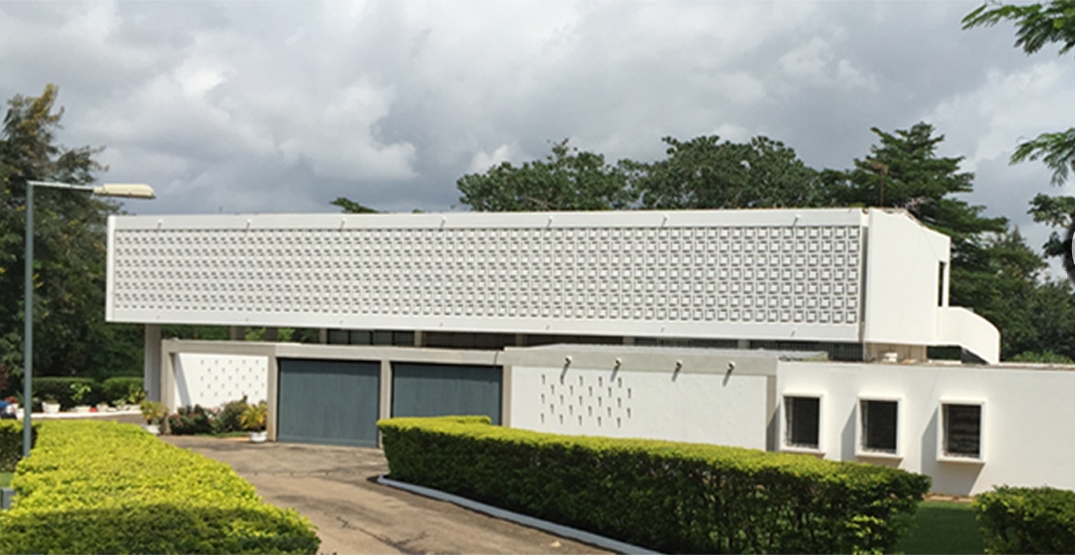
The Vice-Chancellor’s Lodge, KNUST Ghana

The challenges of conservation and documentation raised by Dr Oppong, was a theme which ran through the other presentations. However, in Prof Verpoest’s talk, he suggests that further strands of investigations are needed to be explored on the subject. Rather than being limited to buildings and famous architectural pieces he argues, researching conservation, preservation and documentation should look at the wider picture of processes, institutions, mechanisms and historical context. In essence, it should go beyond the built object as an individual subject of analysis. He therefore discusses this in the light of recent projects by Docomomo, where research is being done to go beyond individual building conservation to urban building conservation. He also explains how the organization is seeking to have regional linkages in selected African countries.
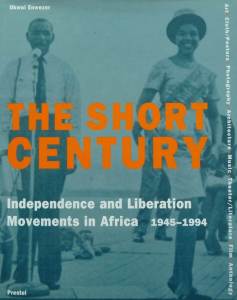
Picture2

An image of Africa’s changing society as illustrated in Prof Verpoest’s presentation

Prof Verpoest’s  suggestion of research into urban, rather then individual building conservation, preservation and documentation in Africa and globally, is also seen to form the crux of work done by the third key note speaker – Prof Johan Lagae. In his current research in Congo, Prof Lagae looks at various types of infrastructure – Missionary, Railroad and Hospitals, but all within the wider urban form context and everyday living. He also looked at the Post Belgian period in Congo around 1965, and raises the issue of building production and technology – but again questions “where were the Congolese in all these?” On the challenge faced in his research, he stated practical issues of language, electricity, relating with local chiefs etc. He also notes the fantastic data and drawings present in the archives, but which unfortunately lacks infrastructure.
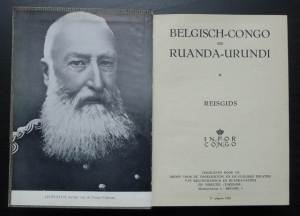
Picture5

Picture of King Leopold II of Belgium in an archival administrative document on the Congo

Prof Lagae’s question on the contribution of natives, and poor archival infrastructure are two issues which Dr Jackson’s also raises in his presentation on Research Challenges in West Africa. With regard to the native contribution, he suggest that urgent work is required on the works of native architects in particular. While supporting the need for improved archival infrastructure in West Africa, however, Dr Jackson also makes a case for more fieldwork participation – arguing that “We have to get our hands dirty and explore…to create new photographs and records of the buildings”. He also suggest that further to such fieldwork exercises, the adoption of new technologies, like Drones and GPS need be encouraged to produce astonishing results. As seen in Professors Verpoest and Lagae talk, Dr Jackson was also of the Opinion that Architectural history needs to move beyond the conservation and preservation of important buildings. He argues rather, that research in this area become more inclusive of the intangible and the ephemeral, and sample user experiences and opinions. His talk raises several other questions on research challenges in West- Africa, including the theoretical base, further studies into Village plans and the PWD, art works and murals, architectural teaching etc. A most significant point he however raises, is on the need for collaborative research, rather than the lone-wolf and fear of plagiarism approach.

photo (1)

Delegates at the 20 Century Urbanism and Landscape in Africa Conference on 8 Oct 2015; Left to right are Meshack, Dr Alex Brymer, Dr Ola Uduku, Dr Rexford Oppong, Dr Iain Jackson (on Skype), Professor Verpoest, Yemi Salami, Dr Ruxandra

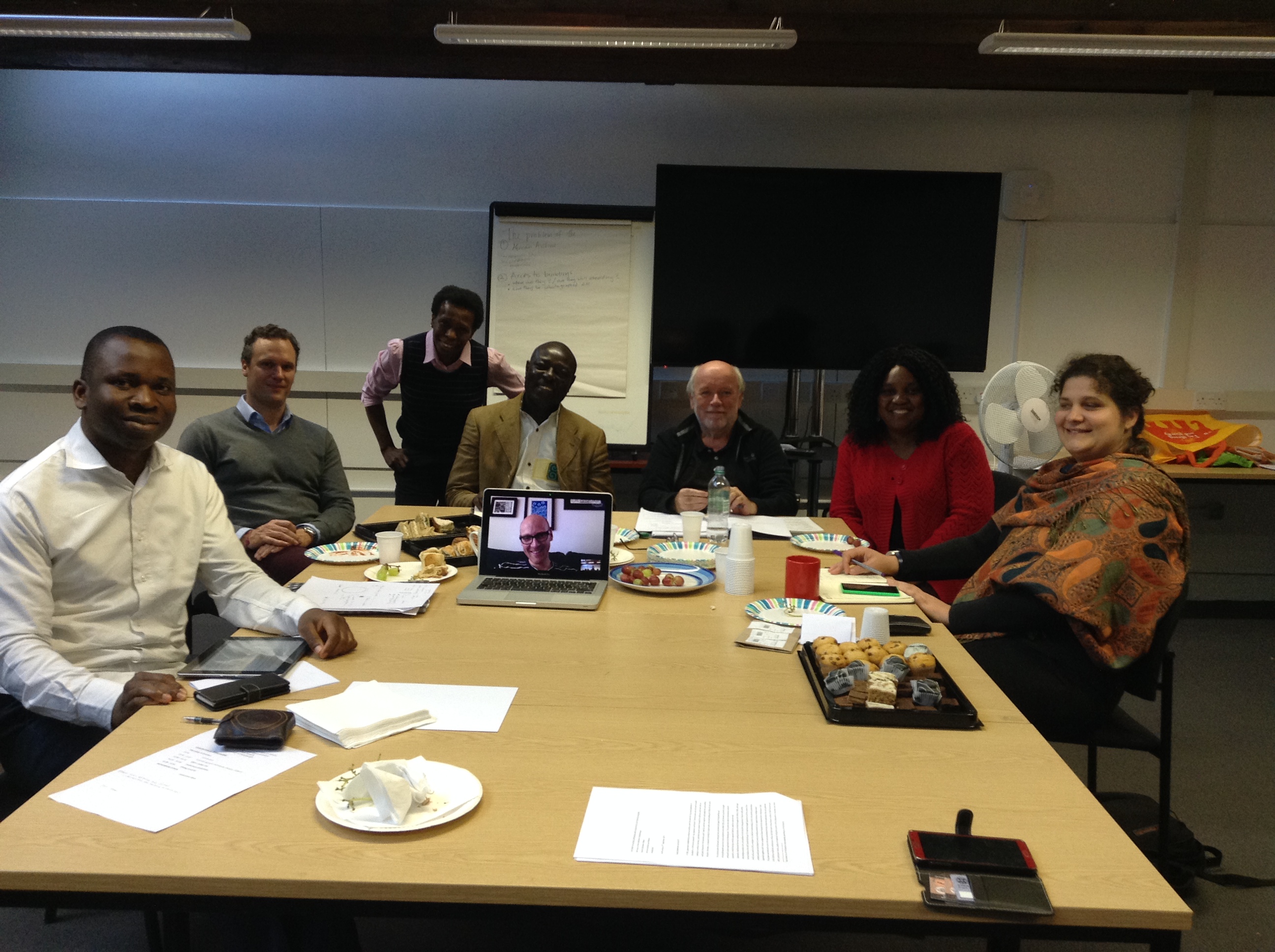
Scheduled for the second day of the conference were two presentations to be given by Yemi Salami and Anthony Folkers. Anthony Folkers was not in attendance at the conference but had his paper presented by Dr Uduku The paper was titled “The Spirit of George Lippsmeier and His Institute for tropical Building”. Yemi, had only recently submitted her PhD and is awaiting her viva to take place. She gave a talk on the challenges of undertaking a doctoral research in Nigeria, and her paper was titled: “Challenges of Conducting a Doctoral Research in Nigeria: Reflections from my PhD work on “the Architecture of the Public Works Department in Nigeria, c1900-1960”. Here she discussed challenges ranging from very slow bureaucratic processes, to ill equipped archives and security and insurgency issues, as some of the hindrances she faced during her research. The symposium then held at the end of Yemi’s presentation, with Dr Jackson joining the debate via Skype.



Exhibition: Tropicality Revisited: Recent Approaches by Indonesian Architects is currently on show at the Deutsches Architekturmuseum , Frankfurt, Germany.

ImageHandler.ashx-2

29 August 2015 – 3 January 2016, 3rd floor
GUIDED TOURS: Saturday and Sunday, 14:00

ImageHandler.ashx

Architecture in the Tropics was never just about offering shelter from rain and sun. “Tropical architecture” suddenly gained global relevance with the emergence of Modernist Architecture and was adapted to suit all climates and cultures. During the post-War period the science of climatic architectural design became an international success. For many generations of Indonesian architects, the tropics has never been a romantic colony, but a harsh reality with its torrential rains, heat, and high humidity. Today, “tropical architecture” is often easily forgotten by the critics, lost behind the glazed and airconditioned skyscrapers or the celebrated designs for tropical tourist resorts. At times, it seems to be taken for granted – pitched roof and overhangs are the ready-to-use answers – but it is also a challenge for architects to find new solutions. In the days of climate change and energy crises, architecture adapted to the climate is making a triumphal comeback.

ImageHandler.ashx-3
12 ARCHITECTS \ 12 PROJECTS

  • Achmad Tardiyana, Jakarta – Rumah Baca, Bandung
  • Adi Purnomo \ mamostudio, Ciputat – Studi-O Cahaya, West Jakarta
  • djuhara + djuhara, Ciputat – Wisnu Steel House, Bekasi
  • andramatin, Jakarta – Andra Matin House, Jakarta
  • Csutoras & Liando, Jakarta – Kineforum Misbar, Jakarta
  • d-associates, Bandung – Tamarind House, Jakarta
  • EFF Studio, Denpasar \ Bali – Almarik Restaurant, Gili Trawangan \ Lombok
  • Eko Prawoto Architecture Workshop, Yogyakarta – Eko Prawoto House, Yogyakarta
  • Studio Akanoma, Bandung – Ciledug Timber House, Ciledug \ Tangerang
  • LABO, Bandung – House #1 at Labo. the mori, Bandung
  • Studio TonTon, Jakarta – Ize Hotel, Seminyak \ Bali
  • Urbane Indonesia, Jakarta – Baiturrahman Mosque, Kopeng \ Yogyakarta

More information at: http://www.dam-online.de/ 

Congratulations to Zaha Hadid for winning the 2016 RIBA Gold Medal and for being the first women to do so in her own right.

zaha-hadid-interview-united-nude-re-inventing-shoes-milan-design-week-designboom-10-818x523

A very interesting radio interview is transcribed here about the fate of construction workers at the Qatar World Cup Stadium. Don’t call Zaha scary and then attempt a series of poor, under researched questions is the moral here.

Read the interview transcript at: http://www.theguardian.com/artanddesign/ng-interactive/2015/sep/24/zaha-hadid-radio-4-interview-sarah-montague-qatar 

Further info at the RIBA site here: https://www.architecture.com/Awards/RGM/RGM2016/ZahaHadid.aspx